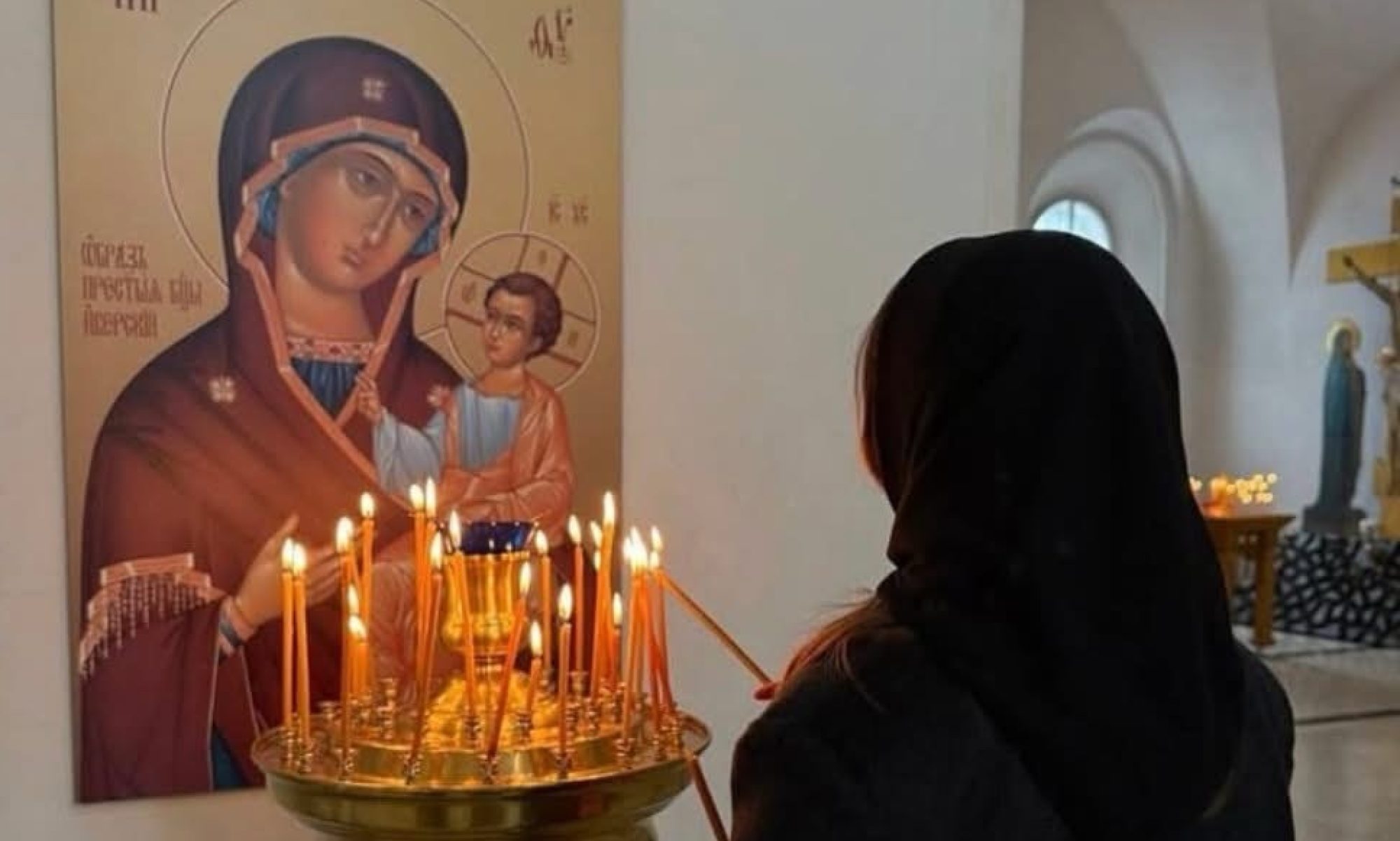
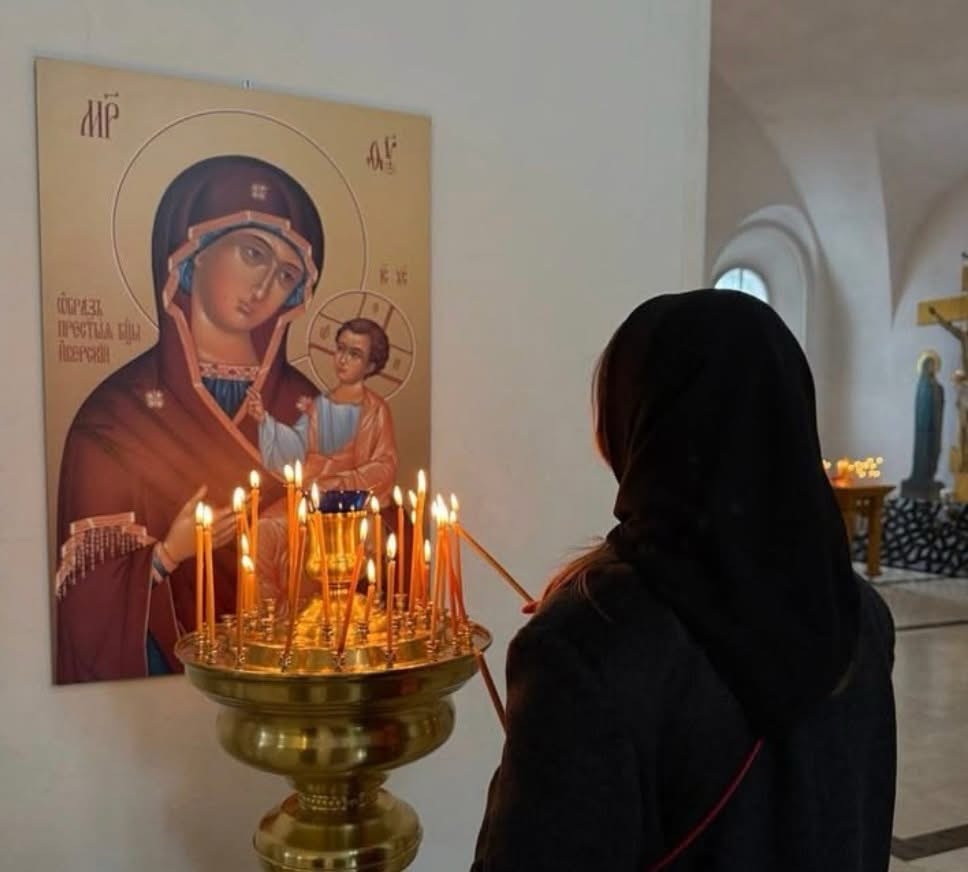
Why I Choose to Veil
I’ve been thinking a lot about veiling in Christianity, particularly now that I’m living within Orthodox Christianity.
There are arguments on both sides, and I think it’s important to acknowledge that.
Historically, women covering their heads was already a normal part of life in the ancient world. When Paul speaks about women covering their heads in 1 Corinthians 11, he wasn’t introducing some completely unfamiliar concept. Women were already accustomed to covering their heads, and Paul’s teaching placed the practice within the context of Christian prayer, worship, reverence and order.
Christian women continued to veil for centuries. Even when we look at traditional representations of the Virgin Mary, she is almost invariably depicted with her head covered. In Orthodox Christianity, the practice of women covering their heads in church has also remained much more visible than it has in many Western Christian denominations.
But Christianity today isn’t uniform on this.
Some Christians believe Paul’s teaching remains relevant as a practice for women during prayer and worship. Others understand his instructions within their first-century cultural context and don’t believe that Christian women today are required to cover their heads.
And I think that’s okay.
I grew up Roman Catholic, and I never saw ordinary women veil. The only women I really remember seeing veiled were the nuns, and I thought they were beautiful. There was one particular nun, Sister Philomena, whose way of veiling I absolutely loved. There was something about it that I found incredibly beautiful and reverent.
Then, six years ago, I took my shahada and became Muslim. So I’ve experienced head-covering from another religious tradition as well. And now, as I find myself living within Orthodox Christianity, I’m discovering what veiling means to me as a Christian.
It’s interesting how easily a head covering can make people think of another faith. Muslim women may wear the hijab, and Jewish women may cover their hair with a tichel or other forms of head covering. But I’ve lived within those worlds myself, so I don’t see a veil as belonging exclusively to any one religion.
And I think sometimes Christians can become so concerned about what something might make them look like to other people that they forget to ask a more important question:
How do I want to appear before God?
I’m not interested in whether somebody sees my veil and thinks I’m Muslim, Jewish, Catholic, Orthodox, or anything else.
My faith isn’t determined by what somebody might assume when they look at me.
For me, veiling is a personal choice.
I choose to veil when I pray, whether I’m at home or in church. But I don’t believe I have to cover my head every minute of every day.
Sometimes, though, I will choose to veil while I’m simply going about my everyday life — running errands, shopping, or doing ordinary things. Those are often the moments when I feel that I need it most. If I’m feeling distant from God, unsettled, vulnerable, or simply in need of a greater sense of His presence and protection, putting on my veil becomes a physical reminder to draw myself back towards Him.
For me, it becomes a quiet act of prayer.
It reminds me to be reverent. It reminds me to be humble. It reminds me that God is present even in the most ordinary parts of my day.
And perhaps that’s why I love it.
I’m not wearing it because someone has forced me to. I’m not wearing it because I believe women who don’t veil are somehow less faithful. And I’m not wearing it to imitate another religion.
I veil because I choose to.
I find something deeply beautiful about taking something outward and allowing it to express something inward.
For me, the veil isn’t about hiding my femininity or being ashamed of my hair. It’s about reverence, devotion, humility and drawing closer to God.
I wear it when I pray.
I wear it when I walk into church.
And sometimes, in the middle of an ordinary day, I put it on simply because my soul needs the reminder.
It isn’t about how I look to the world.
It’s about how I choose to stand before God.




You must be logged in to post a comment.