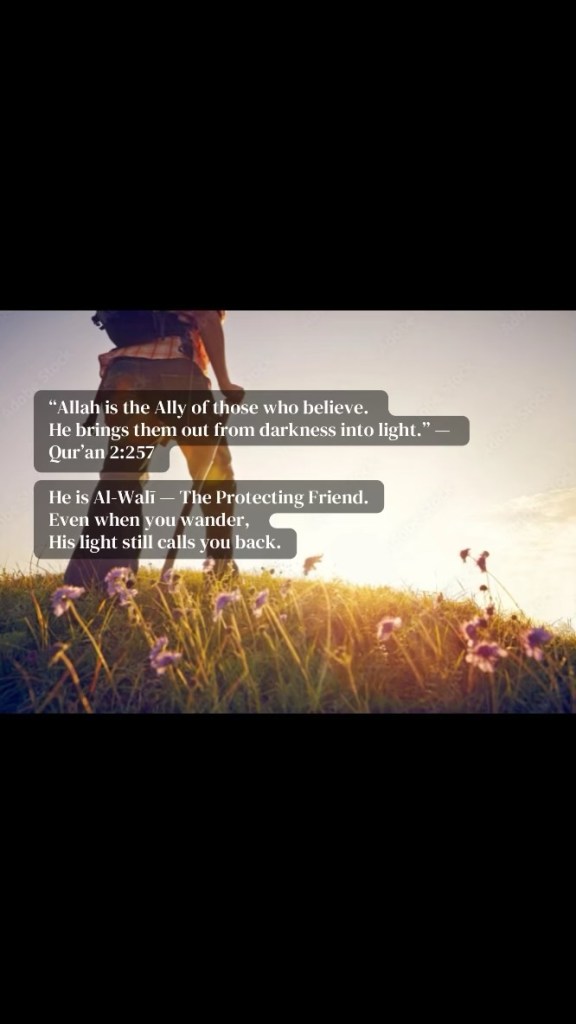
The Week Before Ramadan

This week did not ask for permission. It arrived like wind through an open door —and by the time I realized what was happening,everything that was not anchored had been moved.

It has been a humbling week. A stripping week. A week of letting go with hands that did not want to open —and opening them anyway.

There have been personal changes,spiritual changes,physical changes. Rooms feel different.Silences feel different. Even my own reflection feels different.

It has been a clearing.

Not gentle spring cleaning —but the kind that empties shelves,removes what once felt essential, and leaves you standing in a space that echoes.

There has been guilt. Hurt. Resentment. The ache of being misunderstood. The sting of being accused. The sorrow of releasing what once felt woven into my daily life. There has been the kind of grief that doesn’t shout — but hums beneath everything.

And yet…

There has also been grounding. A coming back down to earth.

A realization that sometimes we are uprooted —not because we are being punished, but because we have outgrown the soil we were in. Sometimes we must be replanted in terrain we did not choose so that our roots can deepen in ways we never would have allowed.

This week I questioned everything.

Was this my fault? Was this consequence? Was this mercy in disguise? Was this the will of Allah?

And somewhere in the middle of the questioning,

I found myself returning — almost overnight —back to my faith with a force that startled me. Not dramatically. Not performatively. But deeply.

The Qur’an has not been a book on a shelf this week. It has been the rope of Allah — something to hold when the ground felt uncertain. In its words I felt reminded that Allah is gentle and subtle with His servants, providing in ways we do not always recognize at first (42:19). What I first experienced as loss began to feel like quiet rearrangement — provision disguised as subtraction.

I was reminded too that even those closest to revelation navigated human complexity — trust, discretion, misunderstanding — and that difficulty does not mean abandonment (66:3). Trial does not mean rejection.

And when I reached the words, “So remind — you are only a reminder. You are not over them a controller” (88:21–22), something inside me unclenched.

I am not in control of hearts. I am not in control of outcomes. I am responsible for my intention, my sincerity, my standing before Allah.

Nothing more. And that has brought a strange, steady peace.

Alhamdulillah.

Peace has become obvious. Not loud — but obvious.

In my home. In my breath. In the faces of those around me. In the quiet moments where I would once have spiraled.

Even my neshab — my small discipline, my return to prayer — has become an anchor. A rhythm. A steady reminder that I am held even when everything feels like it is shifting.

This week has brought me back down to reality — not the harsh kind, but the honest kind. The kind where you realize you cannot carry everything. The kind where you accept that some doors close because they must. The kind where forgiveness becomes lighter than resentment.

It is almost Ramadan. And instead of entering it cluttered, I am entering it emptied.

Not empty of feeling —but empty of illusion.

There is grief here. There is tenderness. There is acceptance forming where resistance used to live. And over all of it rests this truth that now feels written across my entire week:

Perhaps you dislike something and it is good for you, and perhaps you love something and it is bad for you. And Allah knows, while you do not know. (2:216)

Allah knows. Even when I do not. Especially when I do not. And so I step toward Ramadan humbled, replanted, cleared out, and quietly at peace.

Alhamdulillah.
On Amanah, Self-Defense, and the Difference Between Healing and Performance

Recent events have reminded me that trust is not only fragile—it is sacred.

I am someone who keeps my guard up with intention. So choosing to engage in a daily gratitude practice with another person was not casual or performative; it was a meaningful act of trust. In Islam, what is shared in private is an amanah. It is not content. It is not material. And it is certainly not something to be repurposed publicly without consent.

When that trust is broken, it is not only permissible to speak—it is allowed to defend oneself. Islam does not require silence in the face of harm. Allah permits the one who has been wronged to name that wrong, without excess or injustice. There is a difference between backbiting and boundary-setting. There is a difference between slander and truth.

What deepens the hurt is not only the breach itself, but the mindset behind it: a way of moving through the world where other people’s vulnerability, words, and creative labour are treated as resources for visibility. Where being seen and heard is prioritised over being ethical. Where integrity is sacrificed for relevance.

We are living in a time where many call themselves “on a healing journey,” yet use that language as cover for careless behaviour. Healing is not branding. It is not selectively done. It is not completing only the comfortable parts of the work and abandoning the rest. Surface healing avoids accountability. Deep healing requires discipline, humility, and the willingness to sit with one’s own shadows rather than exporting them onto others.

True healing does not leave a trail of wounded people behind.

I choose to respond without cruelty, but also without self-erasure. I will continue to make duʿāʾ for those who act from unhealed places—that they are granted the courage to do the deeper work, and that they do not repeat these harms with others. But making duʿāʾ does not mean accepting injustice, and forgiveness does not mean silence.

Integrity is shown not by what we claim to be, but by how we treat what was entrusted to us when no one is watching.

And Allah is Witness over all trusts, all intentions, and all accounts.

From Intuition to Tradition: Discovering My Path

Five years ago — maybe slightly longer — I took my Shahada, declaring my faith in Allah, Subḥānahu wa Ta‘ālā. I entered Islam as a revert, and like many of us, I believed that the only way to practice was to follow what I had been shown at the start: the Sunni practices, the hadith collections, the rules everyone seemed to adhere to. I thought this was the path — the one true way — and I clung to it because I was afraid. Afraid of standing out, of being called a Kāfir or a Munāfiq, afraid that to question or to explore would mean rejecting Islam itself.

For years, I followed the herd. I ran with the crowd. I obeyed not always because I understood or felt it in my heart, but because the fear of judgment loomed larger than the call of truth within me. But the Qur’an itself reminds us that we must not simply accept things blindly. Allah Subḥānahu wa Ta‘ālā commands us to seek knowledge — ʿilm — and to reflect, to ask, to question, and to understand:

“Say, ‘Are those who know equal to those who do not know?’ Only they will remember [who are] people of understanding.” (Qur’an 39:9)

It is ḥalāl and encouraged in Islam to seek knowledge, to ponder, and to discover the truth for oneself. And it is this pursuit of ʿilm — this flow of learning, reflection, and honest self-inquiry — that has carried me over the past six months into the depths of my own understanding. It has been a slow, sometimes frightening, but ultimately liberating process of self-discovery.

Through this journey, I realized that it is very easy to follow the crowd. To conform. To accept without questioning. And it can be dangerous for some reverts; some may cling so tightly to a single path that they never stop to wonder if it aligns with their conscience, with their heart, with their understanding of the Qur’an. But I could not stay silent with myself. I could not simply repeat practices that felt hollow or disconnected from my soul. I had to be authentic — honest — in what I believed, in what resonated, in what connected me to Allah.

Even the simplest acts of worship, the things I had always struggled to make sense of, became clearer in this exploration. For years, I could never fully grasp the logic or meaning of some Sunni wudu practices. Repetition felt mechanical, and certain steps seemed confusing or disconnected. But over time, I realized that the ways I naturally performed these acts — guided by my heart, by sincerity, by reflection — had a place. Only today did I discover that these practices align beautifully with the Jaʿfarī school of thought. Everything I had been doing intuitively, from a heartfelt point of view, has a home within this tradition. That realization was profoundly validating: my inner compass, my natural spiritual inclinations, were not random or wrong — they were part of a living, thoughtful, and deeply ethical school of Islamic practice.

Around the year 2024/5, I discovered Shi‘ism and began to follow the Shia path. Everything started to align and fall into place, even my ability to speak my prayers in Arabic. I remember vividly: where previously I had not been able to speak a word of Arabic as a Sunni, suddenly I could recite my prayers in the language of the Qur’an with connection and sincerity. And now, today, to realize that all the natural practices I had been following over the last five years aligned with a school of thought and a marjaʿ — a guiding figure — gave me such an incredible sense of belonging, of anchoring. This anchoring does not rigidly dictate my faith; rather, it strengthens it, giving me confidence, direction, and a home within Islam that resonates with the way my heart and conscience naturally operate.

The very name, Jaʿfarī, speaks to me: it means “flowing stream” — a river, always moving, always alive, never stagnant. That is exactly how I have felt on this journey. My faith has not been fixed in one rigid channel; it has moved, it has flowed, it has explored, and now, seeing that it has a home within the Jaʿfarī tradition, it has returned to the Source — Allah, Subḥānahu wa Ta‘ālā.

The Jaʿfarī approach is, in many ways, like myself. It is quieter, inward, reflective. Ethical, intentional, and thoughtful. Less obsessed with surface conformity or performing rituals for the approval of others. It emphasizes understanding, reason (ʿaql), and the teachings of the Ahl al-Bayt, rather than the pressure of habit or inherited cultural expectation. In finding that my practices naturally fit here, I have found a mirror of my own spiritual self: contemplative, seeking, flowing, alive.

And that is the beauty of this journey. Islam is not one river, nor one rigid channel. It is a multiplicity of streams, all flowing back to the One God, Allah Subḥānahu wa Ta‘ālā. And it is a profound gift to be able, as a human being, to explore the variations within Islam, to navigate these streams, to find the channel that nurtures your soul while keeping your heart rooted in the Qur’an, in sincerity, and in love for Allah.

I cannot help but think: if more Muslims were allowed — even encouraged — to seek their own path to Allah, to explore, to question, to reflect, there would be far less struggle, far less fear, and far more connection to the Divine. There would be less worry about fitting in, about performing, about being judged. There would be more peace, more authenticity, more rivers flowing freely toward the Source.

And so here I am, 5/6 years after my Shahada, standing in the stream I have discovered for myself. It is quiet, it is reflective, it is alive. It is my faith — flowing, moving, reaching toward Allah, Subḥānahu wa Ta‘ālā, with sincerity, intention, and ʿilm. And I am learning, every day, to flow with it, to embrace it, and to trust in the mercy and guidance of Allah, the Most High.

The Hypocrisy of Western Feminism

Once, feminism was simple in its promise: equality, autonomy, and the right to choose. Women should have the freedom to live, to think, to speak, and to dress as they wish — without coercion, without judgment, without interference. That was the meaning. That was the point.

But today, something has shifted. Western feminism has become a double-edged sword. It preaches liberation — loudly, performatively, selectively — but it rarely asks the people it claims to champion whether they actually want saving. It rarely asks if they feel oppressed. It rarely listens.

Take the hijab in Iran. Overnight, Western feminists scream about oppression, framing it as the ultimate symbol of female subjugation. Yet the women in Iran are not protesting the hijab as an obligation to God. They are protesting state enforcement by men, the policing of their bodies, and the criminalization of choice. Muslim women understand the hijab as a religious practice — an obligation to God, not man. The problem begins when man enforces it, and that is what Iranian women are resisting.

Even when choice is at the center, Western narratives erase it. Many Iranian women wear the hijab or niqab by choice, exercising autonomy in a society that still limits them in countless other ways. Their voices are overpowered by stories that demand oppression where it might not exist — or where it is complex, layered, and self-defined.

Meanwhile, Western feminists are silent about Palestinian women navigating occupation, surveillance, and militarized violence daily. Afghan women forced into the burqa are abstracted into hashtags, their experiences flattened into a single narrative of oppression. Worst-case scenarios are presented as universal, as if they define the lives of all women in a country. Afghan women in regions not under Taliban control, or Muslim women choosing to wear the hijab as a matter of faith, are erased. Hijab-wearing women are portrayed as universally oppressed, when in fact many understand it as a religious obligation to God — a choice, not submission to men.

Closer to home, in Europe, women who choose to wear the burqa or niqab are vilified, legally restricted, and socially shamed. Where is their freedom of choice? Where are the feminist voices defending them? Choice, it seems, only matters when it fits a preferred narrative. Western feminism assumes its standards — nakedness, hypersexualized visibility, rebellion, and indulgence — are the universal measure of liberation, erasing the autonomy of women who choose modesty, privacy, or observance of faith.

Worse still, freedom has been reduced to exposure and excess. Liberation is celebrated as being naked, hypersexualized, publicly performing private acts, drinking, taking drugs, rebelling without restraint. Modesty, self-restraint, and moral accountability are dismissed as oppression, while indulgence and exhibition are glorified as liberation. Freedom without discipline, autonomy without responsibility, becomes a rebellion that mirrors a perpetual teenager screaming against authority. True freedom is not measured by exposure or indulgence; it is the ability to choose what to reveal, how to act, and how to move through the world with integrity.

This is the hypocrisy: feminism now screams for liberation in places it can romanticize, moralize, and perform for, but ignores the autonomy of women who make different choices. Feminism has become a theatre of judgment, not a movement for equality. It has lost its meaning — it has lost the principle that made it radical: the right of every woman to decide for herself.

The niqab, the hijab, the veil — whatever you call it — is a double-edged act. A woman who sees but cannot be seen frustrates the coloniser, asserts power quietly, and preserves her own autonomy. That choice is real freedom. Western moralizing, hashtags, and performative outrage? That is not freedom. That is hypocrisy.

Feminism should be about listening before screaming. About supporting before judging. About amplifying voices, not replacing them. About teaching women how to own themselves, not how to expose themselves or indulge without boundaries. About recognizing that autonomy, modesty, and faith are choices too. The movement that once demanded equality must return to its first principle: women must have the right to choose — even if their choices don’t fit your narrative of liberation. Anything less is not feminism — it is colonialism dressed as concern.

Al-Qamar – The Moon Splits: Guidance Beyond the Literal

Surah Al-Qamar unfolds like a mirror of human consciousness, reflecting our patterns, our blind spots, and the rhythms of life itself.

It begins with the moon split in the sky—a striking image, unsettling and undeniable. This splitting is not a record of a historical event; it is a prophetic warning, a sign for those who demand proof yet refuse to open their hearts.

It calls to the disbelievers of every age, reminding us that reality does not bend to doubt, and that turning away from the signs, whether they are written in nature, in history, or within the conscience, carries consequences that are inevitable.

The Surah guides us through the patterns of humanity, through the rise and fall of civilizations that ignored truth. Noah’s people, swallowed by their own flood of neglect and denial; the people of ‘Ad, carried away by the wind of arrogance and pride; Thamud, fractured by defiance and disregard for natural law; and the people of Lot, undone by injustice and moral blindness. These stories are not distant history—they are archetypes that continue to unfold in every era.

In our time, we see them mirrored in the world around us: societies that ignore climate warnings, communities that neglect the suffering of others, systems that prioritize power and profit over justice and empathy.

The Hour, ever near, reverberates throughout the Surah. It is both a warning and a call: moments of rupture will come, moments when truth can no longer be ignored. This is the prophetic message of the moon’s splitting—not an event bound to history, but a signal that awakening is inevitable, that reckoning is part of life’s cycle. In our personal lives, in the natural world, in society, the signs are all around us: floods, storms, the trembling of social structures, and the fractures within ourselves. The splitting is a call to see, to recognize the patterns, and to act before imbalance becomes irreversible.

Yet the Surah is not only a warning. It is a guide.

It shows that the consequences of ignoring truth are not arbitrary punishment but the natural unfolding of cause and effect. And it offers a way forward: alignment with conscience, with justice, and with the rhythms of the natural world. Compassion, ethical awareness, and responsiveness to the signs in life are the paths through fracture. They are the ways to navigate a world that is always in motion, a cosmos that cycles through light and darkness, growth and decline, calm and upheaval.

Surah Al-Qamar reminds us that guidance is present in reflection, in memory, in the lessons of the past. History is not merely to be read—it is to be pondered, internalized, and applied. The Prophet was not a performer of miracles, but a messenger of clarity, a guide whose words illuminate the patterns of life, the cycles of societies, and the inner landscape of the human heart.

The Qur’an itself is the enduring miracle—a book of guidance that shows us how to live with awareness and responsibility.

The Surah calls for awakening, reminding us that cycles of reckoning and renewal are continuous. The ruptures we see—ecological, social, personal—are signs, invitations to reflection and action. Ignoring them only deepens fracture; responding with awareness, empathy, and responsibility restores balance.

Life, like the moon, moves through phases; darkness always passes into light, yet growth requires attention, humility, and conscious choice.

Ultimately, Surah Al-Qamar is a meditation on awakening and responsibility. It teaches that the Hour is always near, that truth will manifest, that guidance is offered not as fear, but as clarity. It shows that reflection on the past—on history, on patterns, on human behavior—is the path to understanding and transformation. It calls us to see clearly, act justly, and live consciously in alignment with the cycles of nature, society, and our own hearts.

The splitting of the moon is both a warning and a promise: that awareness is inevitable, that reckoning comes, and that in every era, including our own, guidance is present for those willing to notice, reflect, and act.

Seeking Depth: My Journey with the Quran

Lately, I’ve been reflecting on my relationship with the Quran, and I’ve realized just how separate I feel — not only from mainstream Islamic circles but even from what are often called “open-minded” groups. I’ve had to step back, twice now, because I’ve found myself frustrated by dynamics that distract from what really matters: understanding the Quran itself.

For me, the Quran has never been about memorizing exact words or perfect recitation. Arabic is beautiful, and context, tone, and nuance matter — a single word can mean very different things depending on the situation, the tone, or the surrounding words. Living abroad, I’ve seen how a single word in Arabic can shift meaning dramatically depending on context and tone. Arabic is a deeply contextual language, and even tone, emphasis, or word placement in a sentence can subtly shift meaning. For example, سَلام (salaam) can mean peace as a greeting, a state of being, or a prayer for safety; قَوِيّ (qawiyy) can mean physical strength, moral fortitude, or divine power; and علم (‘ilm) can mean knowledge, knowing, or science, depending on context. That’s why classical Arabic scholars spend years mastering fiqh of language, grammar, rhetoric, and context, not just memorizing words. Literal translations rarely capture these subtleties fully. Even someone who doesn’t speak perfect Arabic can still engage deeply with the Quran and understand its guidance, wisdom, and hidden meanings.

The Quran, for me, is a book revealed in 7th century Arabia. Some verses are deeply tied to that historical and cultural context, and they can’t always be applied literally today. But the spiritual and ethical lessons — about patience, mercy, gratitude, reflection, and justice — are timeless. These lessons can be understood, applied, and lived out now, without needing to replicate 7th-century circumstances exactly. The Quran is intentionally layered and open to interpretation, which is why it can guide different people, in different times and places, in ways that are meaningful and relevant.

I’ve watched people debate pronunciation and correct each other, often relying on internet sources that vary widely in reliability, and it exhausts me. These debates, and the posturing that comes with them, pull my attention away from the essence of the Quran and my connection with Allah. It’s not that my faith is weak — it’s that I don’t want it to be shaped by ego, competition, or endless argument. I want clarity, depth, and understanding.

I’ve facilitated and led group circles for years, so I know group dynamics well: there’s always someone trying to dominate, someone people-pleasing, someone who wants to override leadership. It’s normal, but it isn’t for me. I want to engage with the Quran on a level that informs life, society, and self-understanding — the hidden meanings, the wisdom, the guidance — and that doesn’t require debating words or performing in a certain way.

I want to arrive at Ramadan grounded, ready to meet its challenge. Ramadan tests us physically, mentally, spiritually, and emotionally — on every level. Approaching it stressed out, weighed down by debates and unnecessary tension, isn’t the way to do it. Stepping back allows me to clear the noise, focus on what truly matters, and meet this sacred month with presence, reflection, and connection.

Ultimately, the Quran is about understanding, reflection, and connection. That’s what I seek, and stepping away from the noise allows me to cultivate it.

Men abusing Islam and Allahs house.

Some men engage in repeated, manipulative behaviors toward women that are deeply harmful and systematic. They pursue multiple women simultaneously, making promises of marriage or commitment in sacred or emotionally charged spaces, only to later gaslight and emotionally abuse these women.

When confronted or rejected, they often treat refusal as a challenge, intensifying their pursuit, as though relationships are a game to be won rather than partnerships grounded in respect.

Projection is common: they accuse women of jealousy, malice, or even spiritual corruption to deflect accountability, while deliberately pitting women against each other. Women with less confidence or fragile boundaries may internalize these narratives, believing that other women are scheming, and fall further into manipulation and division.

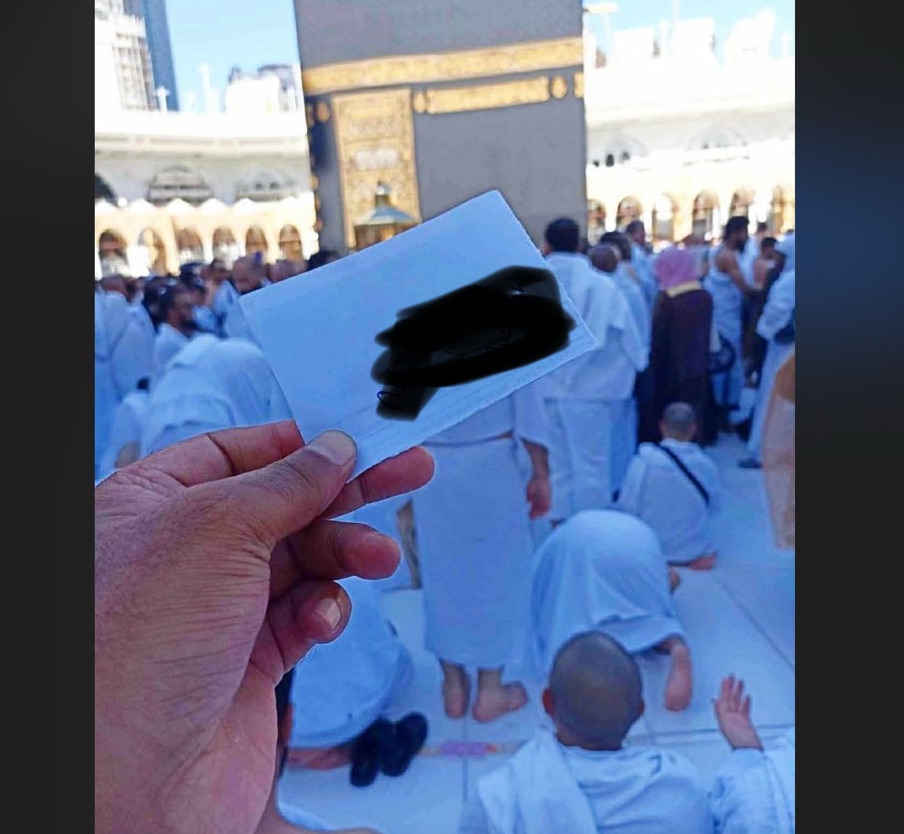
Some of these men cloak their manipulation in religion, claiming divine sanction for their actions. Men who do this in the name of Islam often have no true fear of Allah; their behavior directly contradicts the Quran, the rights of women, and the ethical guidance of the Prophet ﷺ. Islamic scholars are unanimous that abusing sacred spaces, such as the Kaaba, for personal gain, deception, or manipulation is among the gravest violations a person can commit.

The Kaaba is the most sacred site in Islam, meant for sincere worship, prayer, and reflection, and to exploit it as a tool for personal desire is considered one of the worst forms of disrespect and corruption of faith. Standing before the Kaaba with multiple women’s names on pieces of paper and sending these images to convince women that marriage or commitment is divinely guided is not faith—it is deception, coercion, and spiritual exploitation, behavior indistinguishable from that of disbelievers, making one a kāfir by action. Repeating this with multiple women on the same day compounds the abuse and demonstrates a willful perversion of sacred acts.

These patterns are often rooted in unresolved trauma from childhood, particularly in cultural contexts where guilt, shame, and emotional repression are normalized, such as in parts of Kashmir or Pakistan. Experiences of neglect, unprocessed grief, or family dynamics that reward stoicism while punishing vulnerability can produce men who are needy, emotionally immature, and unhealed. Early experiences of betrayal, unreciprocated love, or family-based trauma may remain unexamined, leaving them stuck in a mindset where their own suffering justifies punishing or controlling others.

From a mental health perspective, these behaviors align with traits of narcissistic and antisocial personality disorders, attachment disorders, and emotionally dysregulated behavior stemming from early trauma.

Such individuals lack empathy, manipulate others to meet their needs, and rationalize abusive behavior as harmless. Recognizing these patterns is critical for protection: women targeted by such men are not at fault for being manipulated, and education, support networks, and boundaries are essential for their safety and recovery.

The key takeaway is that these behaviors are not merely “bad character” or poor judgment—they are part of a recognizable psychological pattern, compounded by the abuse of religious authority. Understanding both the mental health and spiritual dimensions helps survivors and communities respond effectively, protect themselves, and prevent further harm.

Be safe sisters.

New year ? Or is it

Last night , many people across the world count down the seconds to midnight and welcome what they call a “New Year.” Fireworks will crack the sky, glasses will clink, resolutions will be spoken into the dark. And yet, for all its noise and certainty, January 1 is nothing more than a number turning over — a date inherited from Rome, later carried and enforced through Christian Europe, and eventually normalised across much of the world as if it were universal, ancient, and natural.

It isn’t.

The idea that the year begins in the depth of winter, when the land is still, when seeds sleep underground and trees hold their breath, is not rooted in nature. It is rooted in administration. In empire. In paperwork. And yet people speak of it as if it is spiritually aligned, as if something within them is meant to reset simply because a clock says so.

What troubles me is not that people celebrate it — celebration is human — but that so many people living in the West adopt Western customs without question, and then complain that they are losing their own cultures. These two things cannot sit comfortably together. If we replace our inherited calendars, seasonal markers, and ancestral rhythms with imported systems, we should not be surprised when our sense of cultural grounding begins to thin.

Most of us come from very mixed cultural heritages. I certainly do, and so do many people I know. That is not something to apologise for. It is fine — absolutely fine. What matters is not purity, but consciousness. Knowing what we are participating in, and why.

I have many friends who follow earth-based religions whose New Year begins in October, with darkness, ancestors, and rest. Others mark it in spring, when balance returns and life stirs again. I know people whose New Year is lunar and shifts every year, and others who follow calendars rooted in agricultural cycles or solar turning points. None of these are wrong. They simply arise from different relationships with time, land, and meaning.

All of this highlights something simple: a New Year is not universal. It is a human agreement layered on top of nature — and sometimes aligned with it, and sometimes not.

Even within Islam, the Islamic New Year in Muharram has never fully sat comfortably with me. Not because it lacks meaning, but because it is entirely lunar. It moves through the seasons without anchoring itself to them. It does not align with solstices or equinoxes. And while there is wisdom in that, it can feel out of tune if one is seeking harmony with the land itself. This is not a rejection — it is simply a personal observation.

The Qur’an repeatedly calls us to look — not just to count.

“The sun and the moon move by precise calculation.

And the stars and the trees prostrate.

And the heaven He raised and set the balance,

so that you do not transgress the balance.”

(Qur’an 55:5–8)

Time and balance are written into creation itself. The warning is clear: do not override that balance with human systems that pull us out of alignment.

For many years now, you will not find me celebrating January 1. I am polite — I return greetings, I do not judge those who mark it — but that is where it ends. And this has nothing to do with religious prohibition or moral superiority. It is about wanting to live more peacefully, more consciously, and more in tune with the land around me.

For a long time, I felt the New Year most clearly in spring — as many earth-based traditions do. And when we look to Iran, we see this embodied beautifully in Nowruz, the New Year celebrated at the spring equinox. It is not based on a number, but on balance. Day and night stand equal. Light returns. Life begins again.

Homes are cleaned, not symbolically but practically — winter released. Tables are laid with living symbols: sprouts, fruit, mirrors, fire, poetry. It is a celebration that mirrors what is actually happening in the world. And here in the UK, the same truth is visible if we pay attention: bulbs pushing through cold soil, birds rehearsing new songs, the land loosening winter’s grip. A true beginning can be seen.

“You see the earth lifeless, then when We send down water upon it, it stirs, swells, and grows of every beautiful kind.”

(Qur’an 22:5)

No committee decides when this happens.

No calendar commands it.

And who governs this turning? Not Rome. Not the Church. Not the state.

“So direct your face toward the way of life, inclining to truth — the fitrah of Allah upon which He has created humanity. There is no altering the creation of Allah.”

(Qur’an 30:30)

To live in harmony, we must live in harmony with the nature Allah subḥānahu wa taʿālā created. Not everything handed down through history deserves automatic obedience. Some things are simply habits of empire that we have mistaken for truth.

So perhaps the question is not when the New Year is, but whether we are willing to step back from inherited assumptions and listen again — to the land, to the seasons, to the signs written into creation itself.

The land knows when the year truly begins.

And if we are quiet enough, we can remember too.

Sisters bringing Islam back to its centre

I am literally falling back in love with Islam right now. And it’s because of the women in our Ummah.

These women are reclaiming their power—not superficially, not by adopting western feminist ideologies, but purely from within their rights as Muslimas. They are standing on the foundation of the Quran, the teachings of Allah, and the example of the Prophet Muhammad, peace be upon him. They are learning their Deen inside and out, and in doing so, they are raising their voices, defending sisters, and speaking truth to power with clarity, confidence, and faith against these men that would seek to twist and distort it.

At their core, these women are the Khadijahs and Zaynabs of our time. I see Khadijah’s wisdom, her independence, her uncompromising spirit, and Zaynab’s fearless courage—standing in the court, speaking truth with a voice that leaves only beauty in its wake. This is the energy these women are embodying today: standing firmly in their Islamic rights, without having to decenter men unnecessarily, without needing external ideologies to justify their strength.

And here’s the remarkable thing: these women still uphold the core Islamic principles of family. They respect the man as the head of the household, they value the unity and structure that Islam encourages, and yet—they are dismantling the toxic patriarchal distortions that have been pushed by certain men in our Ummah. The Dawah bros, the self-proclaimed Salafis, the ones who twist the Quran and the teachings of the Prophet to feed ego and control—these are the only men who feel threatened by these women.

These women are not anti-Islamic men—they are restoring Islam to its core, reclaiming the faith as it was given to us. They are standing strong, asserting their rights, embodying empowerment, and reminding everyone that true authority, true leadership, and true guidance come from knowledge, faith, and sincerity—not ego or dominance.

Watching this unfold overwhelms me with awe and gratitude. Sisters standing for sisters, rooted in the Quran, the Sunnah, and the examples of Khadijah and Zaynab—it is inspiring, righteous, and profoundly beautiful. And I have never been prouder of the women in my Ummah than I am right now. Honestly, I really haven’t.

The Quiet gift of being a revert

There is a particular strength that comes with finding faith rather than inheriting it.

To come to Islam as a revert is to arrive without the weight of sect, tribe, or cultural ownership. It is to meet the Qur’an as it speaks, not as it has been filtered, weaponised, or narrowed by wounded egos and power struggles. Many of us come bruised, questioning, and alert — not empty-headed, not submissive in the unhealthy sense, but awake.

And because we were not carried into belief by habit, our faith is not easily shaken by noise.

When someone hurls labels like kāfir as an insult, or tries to weaponise Islam to assert dominance, it does not undo us. We recognise that behaviour for what it is: human injury dressed up as piety. Islam does not need such defenders, and Allah does not require cruelty spoken in His name. The Qur’an itself warns us that oppression and arrogance are not signs of closeness to God, no matter how loudly someone speaks about Him.

What anchors reverts is that our relationship with Allah is direct.

Allah says in the Qur’an:

“And when My servants ask you concerning Me — indeed, I am near. I respond to the call of the caller when they call upon Me.”

(Qur’an 2:186)

Near. Not mediated. Not guarded by gatekeepers. Not owned by scholars, sects, or loud men with microphones.

This is why the faith of a revert often feels unshakeable. We did not arrive because we were told to believe — we arrived because we answered a call. We searched, resisted, doubted, circled back, and then recognised truth when it stood before us. When belief comes that way, it settles deeper in the bones.

Many reverts naturally gravitate to the Qur’an first — not out of rebellion, but out of instinct. The Qur’an is Allah’s own speech, unambiguous in its call to tawḥīd, justice, humility, and mercy. It repeatedly corrects the very human tendency to elevate messengers beyond their station. The Prophet Muhammad ﷺ is honoured, loved, and followed — but never worshipped. He, like Jesus before him, called people away from himself and toward God.

The Qur’an reminds us:

“Say: I am only a human being like you, to whom it has been revealed that your God is One God.”

(Qur’an 18:110)

To honour the Prophet is to follow his message — not to replace Allah with reverence so intense that it slips into something else.

Reverts often sense this intuitively because nothing in us is inherited. There is no fear of “betraying tradition,” no reflexive loyalty to hadith over Qur’an, culture over conscience. This doesn’t make reverts superior — but it does make the faith cleaner at the point of contact. Fresh water at the source.

And yes, among reverts there are disagreements, half-formed ideas, unpolished theology. That’s natural. But what binds us is a shared understanding: the Qur’an is the criterion. Opinions may exist, but they bow to revelation. Hadith may inform, but they never outrank Allah’s words. This hierarchy matters — especially in an age where Islam is often reduced to rules, outrage, and identity warfare.

There is also something quietly powerful in knowing that we were not “chosen” in the way people sometimes romanticise.

We chose.

We stepped toward Allah — and He drew near.

The Prophet ﷺ narrated (in meaning) that Allah says: “Whoever comes to Me walking, I come to them running.” While this wording comes through hadith, its spirit is already alive in the Qur’an’s promise of nearness, response, and mercy. It captures something many reverts feel in their chest: the sense that when we turned, even hesitantly, we were met with overwhelming gentleness.

This is why external hostility does not undo us.

This is why insults do not hollow us out.

This is why wounded voices cannot steal our peace.

Our Islam is not borrowed.

Our faith is not second-hand.

Our conviction was earned through seeking.

And perhaps that is the quiet gift of being a revert:

to love Allah not because we were raised to —

but because, after everything, we recognised Him.