Not a religious blog just a revert and her struggles
Author: Aryana Darya
My name is Aryana Darya, and I’m a revert to Islam. I write about faith, growth, and navigating both struggle and guidance on this journey—sharing my personal experiences, not as a scholar, but as someone learning and growing along the way
There is a point in life where everything else fades—
the missed texts, the unanswered calls, the fleeting judgments of others.
At this point, only one thing matters: pleasing Allah subḥānahu wa ta‘ālā.
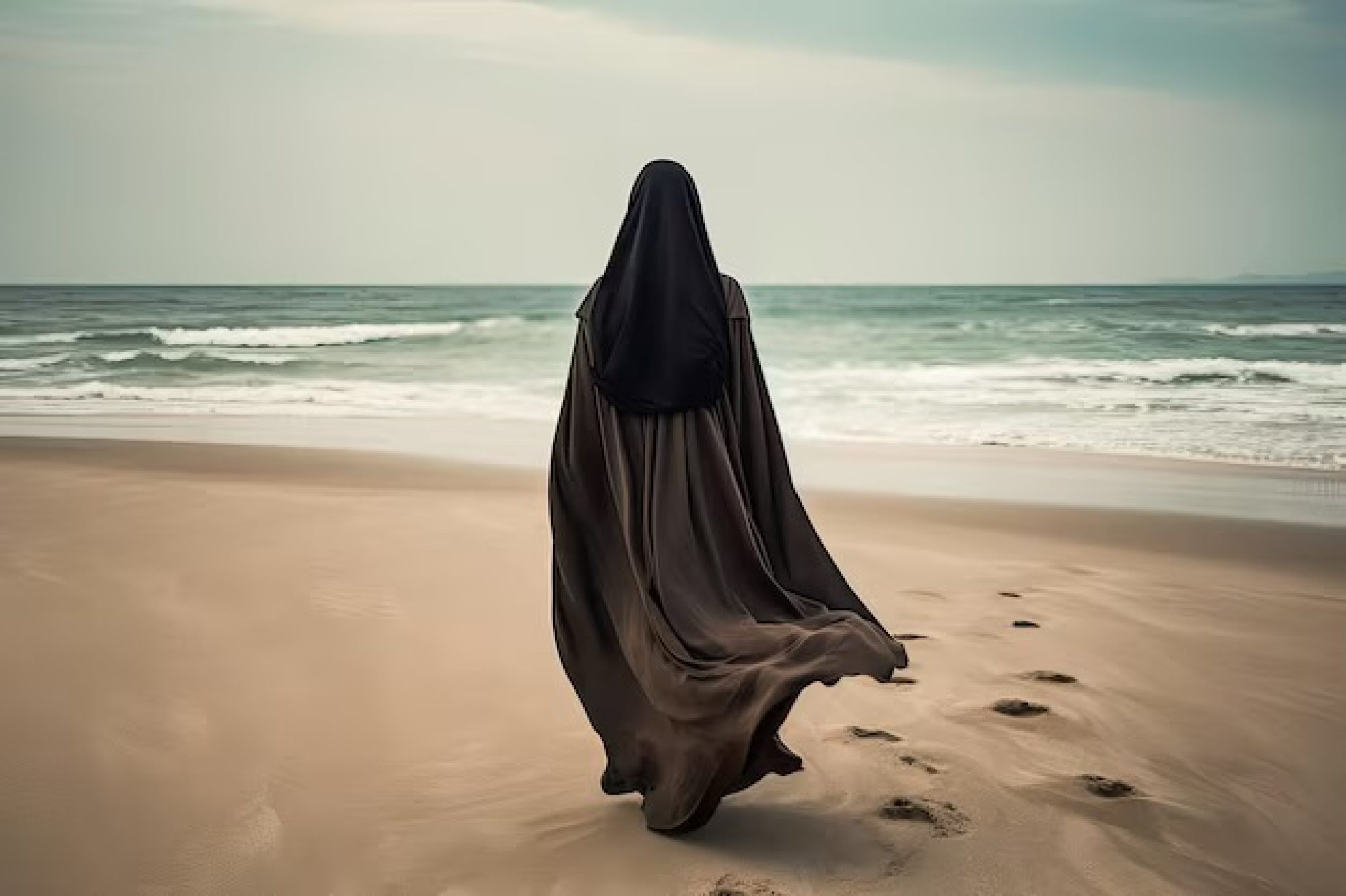
The niqab calls to me again but on a much deeper level this time.
It is a challenge, yes, and I know there will be days when its weight feels heavy, when the world’s gaze feels sharp,when my human heart whispers, “Not today.”
Yet wisdom guides me: I will wear it when I seek closeness to Allah, in spaces where I feel safe, where devotion can breathe,in the mosque, in my car, in corners of the world that hold my sanctuary.
I do not aspire to perfection.I am human, fragile, flawed—but striving.
Striving to be better than yesterday, to make every choice, every change, every breath for Him alone.
I do not seek knowledge for status, nor through division or sects. I seek it through the Qur’an, through a personal, intimate relationship with the One who knows all.
I know I will never fully understand Allah subḥānahu wa ta‘ālā, yet the striving, the yearning, the awe—these threads bind my heart to Him.
Six years on, the zest for knowledge burns brighter than ever: the closer I feel, the more I realize how vast His wisdom is.
This is not discouragement, but devotion.This is iman, tawakkul, and tawhid alive in my heart.
Dua from my heart ❤️
O Allah, grant me strength and courage to wear the niqab with confidence and devotion, to dive deeper into this path of knowledge and closeness to You.
Protect me in my striving,let my heart find peace in surrender,and let my choices reflect nothing but love for You alone.
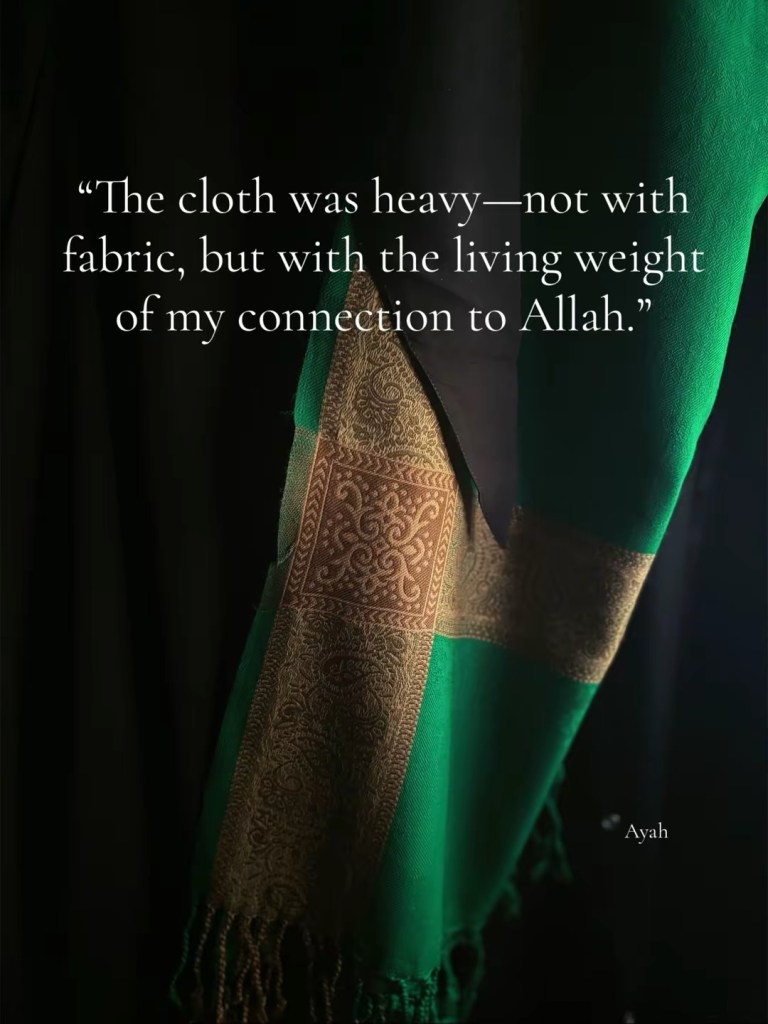
Tonight, I wore a different veil, a shayla for prayer—a heavy one. As I bent into sujood, the cloth fell over my face, layer by layer, until I could see nothing but the veil and feel only the ground beneath my forehead. It was as though, in that moment, I shared a vision with Fatima alayhi salam, and all the veils of devotion across history unfolded around me.
The veil is not merely fabric. It is a screen, a boundary, a focus. It softens the world so the soul can lean closer to Allah, so every whisper of prayer lands fully. Once I finished my salah, I hung the shayla on the edge of my bed. At that moment, I realised the weight I had felt was not the weight of the cloth, it was the weight of my connection, the gravity of love, devotion, and surrender to Allah subhanahu wa ta’ala.
In that heaviness, I learned something essential: that devotion has weight, and the closer one leans, the more it is felt.
There is a quiet pull toward the niqab that doesn’t always begin with certainty. It doesn’t arrive fully formed with clear answers or neat reasoning. Sometimes, it begins as a feeling—persistent, gentle, and difficult to explain.
And the questions come:
Do I really understand this? Am I missing something?
Is it extreme? Is it unnecessary? Is it oppressive?
What will people think when I walk outside?
Will I be judged, stared at, misunderstood?
Am I putting myself in danger? Are my children safe beside me?
These questions are real and weighty, shaped by a world that often frames the niqab as restrictive, something imposed, something to be feared. But beneath all that noise, there is something else—a quieter truth.
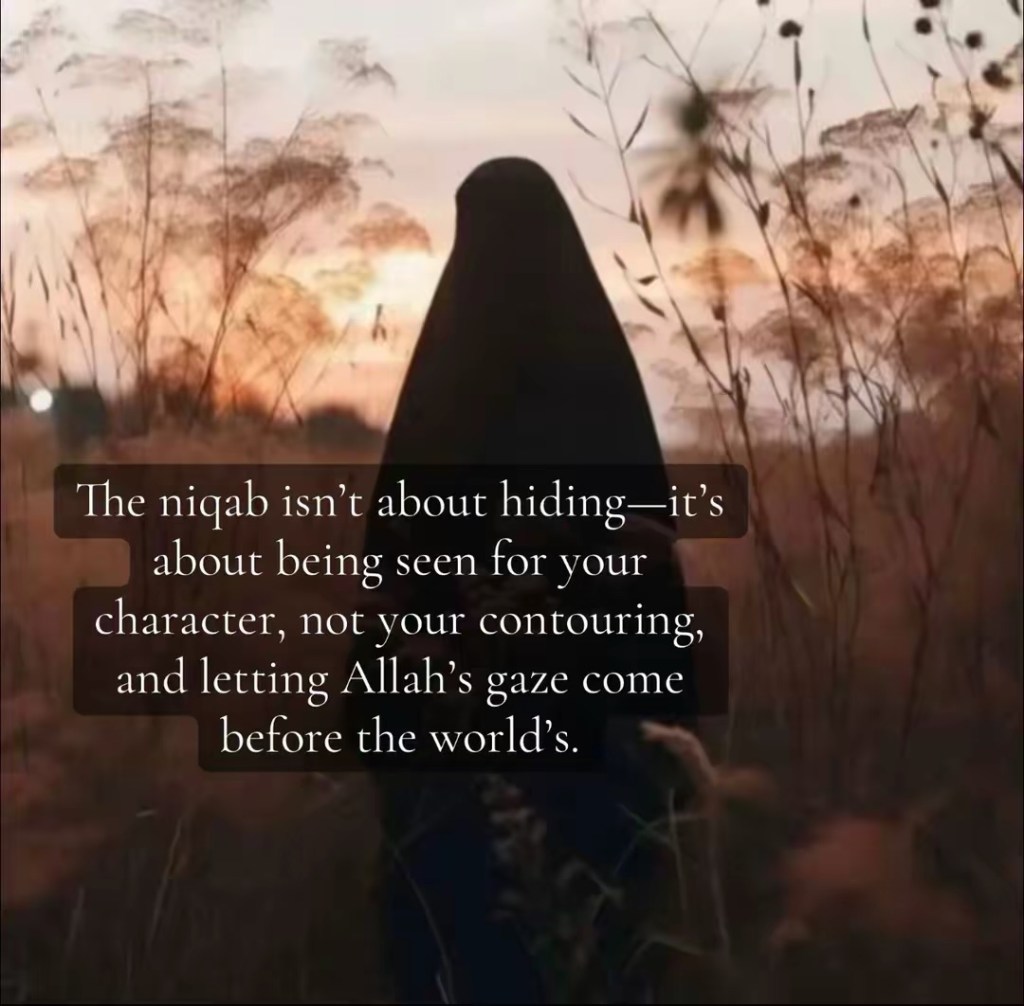
Because wearing the niqab does not feel like hiding. It is not about disappearing into the background, stepping out of sight, or erasing oneself. It is about being seen differently. It is about choosing the lens through which the world encounters you.
You want to be perceived for your character, not your contouring.
This distinction matters. Hiding is born from fear or shame. It carries the weight of withdrawal, a desire to escape observation. But covering, as an intentional act of devotion, is different. It is choice. It is intention. It is a form of turning inward toward Allah while still being fully present outwardly.
The niqab does not remove you from being seen—if anything, it can make you more noticeable. But what shifts is the basis of that perception. Without immediate access to the face, a woman is encountered through her words, her presence, her character. The face is no longer the first introduction; intention, behavior, and essence take precedence.
And in that space, a different awareness emerges: the awareness of being seen not just by people, but by Allah. This touches directly on the concept of Ihsan—worshipping Allah as though you see Him, and if you cannot see Him, knowing that He sees you. In the presence of the veil, the social gaze softens, and the inner gaze—His gaze—becomes more central. The niqab becomes a physical reminder that the most important observation is not external approval or judgment, but the awareness of Divine sight.
The questions about safety, about perception, about societal judgment do not vanish. They coexist with the pull toward this form of devotion. But the internal shift is clear: the niqab does not erase a woman; it redirects how she is known. It is not hiding. It is covering. It is living intentionally in a space where the first encounter is with Allah, and only then with the world.
And in that quiet, intentional space, the pull toward the niqab can be understood—not purely as a rule or a requirement, but as a lived experience of being known for what truly matters: the heart, the character, the devotion.
This morning, I logged onto my personal blog—a small space where I share my journey as a Revert, the struggles, the questions, the quiet moments of reflection. And yet, I was met with something unexpected: a reply to another commenter that read more like a thesis than a comment—A4-sized paragraphs, video links, citations, and an insistence that the original commenter “correct” themselves according to the responder’s view.
I couldn’t help but pause. Why do some feel entitled to occupy someone else’s personal space with a full lecture, especially when it’s a space meant for reflection and shared experience? Why, in the name of “guidance” or “truth,” does the digital age encourage people to step into someone else’s corner of the world, not to share, but to dominate? do they not have their own platform or have they taken upon themselves the role of online sheik to correct others and for what purpose?
Social media has a strange way of inflating egos while deflating empathy. It whispers that our knowledge, our perspective, our opinion, is urgent and must be imposed—especially in matters of faith. And yet, Islam, in its depth, does not call for such displays of performative authority. The heart of Tawheed, the oneness of God, is not served by blind imitation, nor by clipping the wings of someone trying to find their own understanding. As Ayatollah Ali Khamenei writes, true faith does not merely dwell on recitation or rote learning; it demands reason, reflection, and questioning. To follow another blindly, without question or understanding, is not humility—it is a form of shirk.
When someone steps into another’s personal space online and delivers a monologue meant to “correct” or “instruct,” it often reflects not wisdom, but ego. It is far removed from the spirit of Tawheed, which asks us to align ourselves sincerely with God, not to assert our dominance over another’s journey. Faith is cultivated in the heart, nurtured by reflection, not dictated by the keyboard of a stranger.
Before we rush to respond, before we craft that long monologue meant to correct or instruct, perhaps the first step should be reflection. Pause and ask: Where am I actually coming from as I write this? What is my intention? how does this rest in the arms of divine unity and Tawhid ?
Islam calls us to check our hearts as much as our words. Are we speaking to guide, to share, to illuminate—or are we simply asserting our own ego? Too often, a lengthy, impassioned reply does little for anyone else, and everything for ourselves. It becomes a public performance, a monument to our knowledge, rather than an act of sincere dialogue or support.
Questioning ourselves, being mindful of intention, and stepping back before pressing “reply” is not weakness—it is wisdom. It is the heart of humility in Islam, the very humility that Tawheed calls for. When we write from ego, we may convince ourselves we are teaching, correcting, or guiding—but in truth, we are only displaying our own sense of authority.
Faith, reflection, and true understanding grow in spaces of patience and respect. So before we take over another person’s corner of the world with a lecture, we owe it to ourselves—and to the Divine—to pause, reflect, and ask: Am I here to elevate understanding, or simply to elevate myself?
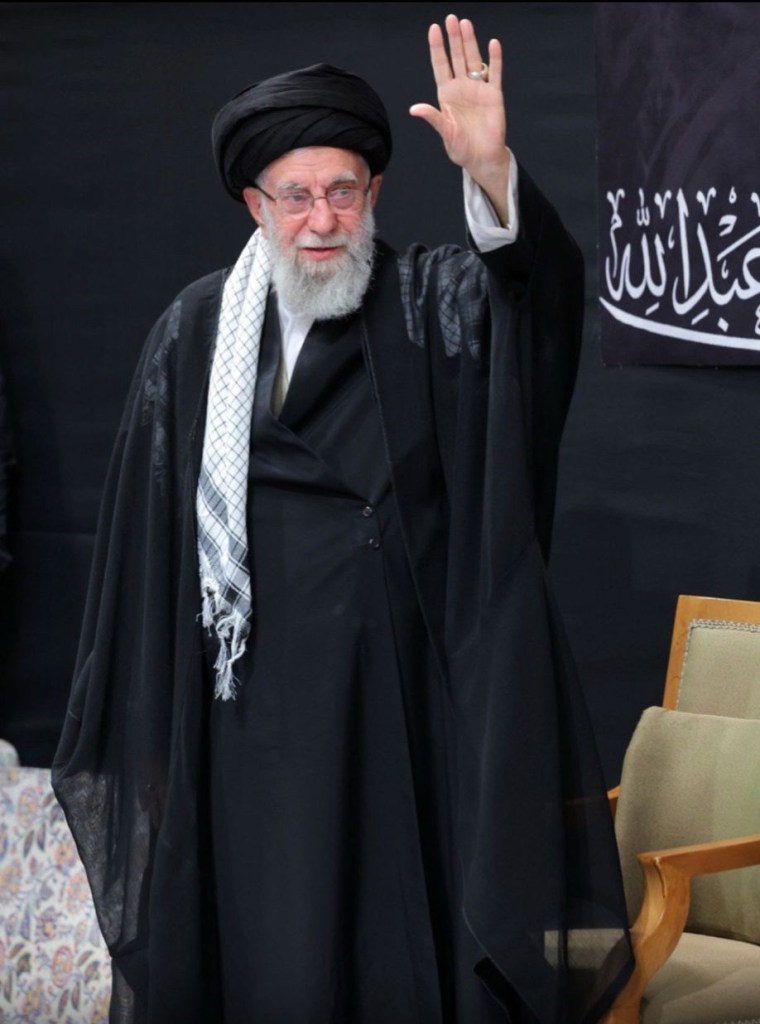
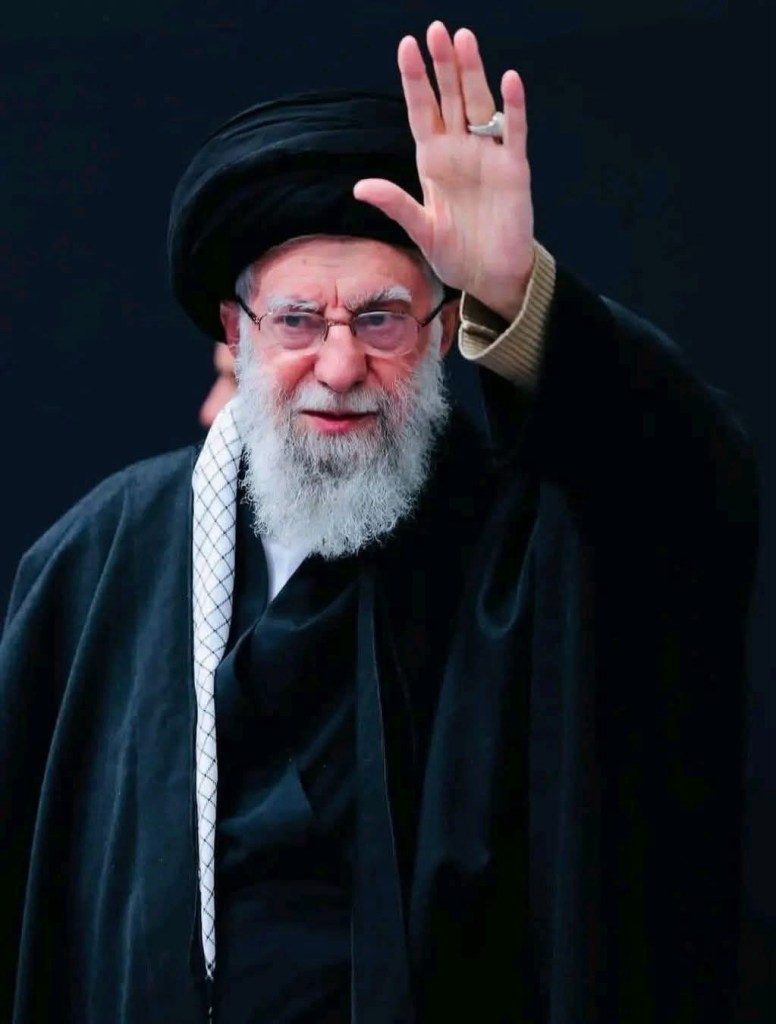
This morning I woke to the most heartbreaking news: my majah, the Supreme Leader of Iran, Ayatollah Ali Khamenei, has been martyred. I woke, and I cannot stop crying. Even now, I sit clutching the book I had just begun reading, and the words on these pages feel different — alive, sacred, heavy with meaning I never fully understood before. Each line is a treasure I hold to my chest, each sentence a whisper of a life that shaped so many hearts.
He was a great man — a truly great man. Not in the way the world measures greatness, but in the way that counts before God. Gentle. Patient. Steadfast. Wise. His presence was not about power or authority, but about service, about faith, about guiding others to the truth. Everybody loved him, except those who could not stand against the light of Islam itself.
He taught us the most profound lesson: that we bow only to God. At eighty-six years old, when the rest of the Muslim ummah bowed to worldly powers, when pressures and alliances threatened to make compromise seem easy, he refused. He refused, not for pride, not for ego, but out of devotion, love, and courage. He stood firm, alone if necessary, and showed the world that integrity, faith, and God above all else are worth everything.
He lifted his country not with force, but with vision and heart. He raised the status of women, expanded education, and created opportunities where there had been none. Women in Iran now lead in science, medicine, and culture, walking paths that were once closed, thanks to the foundations he built. Critics may say otherwise — some may even feel relief at his passing, calling it liberation — but they do not see the reality: Iran has long struggled under severe sanctions, external pressures, and challenges meant to destabilize it. He guided his people through these storms, striving always to keep the nation’s head above water, while navigating life through the light of God, through Islam, and through faith.
This loss is not merely the passing of a leader; it is the departure of a soul who taught so many how to look at faith differently. In this moment of mourning, I grieve not only for what is lost, but for the beauty of what he gave — an example of faith unwavering, devotion unyielding, and love for God that transcends all else. I share in this grief, yes, but I also feel gratitude — gratitude for his teachings, his courage, and the way he shaped a generation of hearts to seek truth above all else.
Even as my tears flow, I hold his words, his life, his example close. I feel his guidance still, whispering in the pages of his book, in the lessons he gave, in the quiet insistence that integrity matters more than acclaim, that God’s truth is above all else. His life was a beacon of light, and though he has departed, the glow remains, inspiring devotion, courage, and steadfast faith.
I mourn, yes, but I also resolve — to carry forward his teachings, to live in a way that honors his life, to act with patience, integrity, and love. His life was not merely a life; it was a gift, a call, a reminder of what it means to be faithful, to be courageous, and to love God above all.
Now we observe a 40 day mourning period below is something to help support you through it
There is something subtle happening in our public conversations about hijab, and it deserves reflection.
In the West, hijab is often portrayed as a symbol of oppression. We know this narrative. It is shaped by political imagery, by cultural practices in certain regions, and by a broader misunderstanding of Islam.
But if we are honest, we must also look inward.
Increasingly, hijab is being framed — even by Muslim women — primarily as a tool of protection from men. We say: We wear it to protect ourselves from the male gaze. We say: It shields us. We say: It prevents objectification.
There is truth in these statements. Divine law contains wisdom. Modesty carries dignity.
But wisdom (ḥikmah) is not the same as obligation (farḍ).
The reason we wear hijab is not because men look.
The reason we wear hijab is because Allah commanded it.
If tomorrow there were no men on earth, the obligation would remain.
When protection becomes the primary narrative, the axis shifts. Hijab begins to sound like a reaction to male behavior instead of an act of devotion. It moves from worship to sociology. From obedience to explanation.
And that shift has consequences.
Externally, it reinforces the very critique used against us:
“If women must cover to protect themselves from men, then the burden is on women.”
Hijab becomes framed as defensive — something women must do because men cannot control themselves.
But hijab is not a response to men.
It is a response to Allah.
Internally, this framing creates confusion — especially for reverts and young Muslim women. When hijab is presented primarily as functional — protective, empowering, socially beneficial — it subtly becomes conditional. And anything conditional becomes negotiable.
But obligation is not negotiable.
Hijab is not worn because society is flawed.
Hijab is worn because Allah is worthy of obedience.
That obedience stands whether society understands it or not. Whether it is politically convenient or not. Whether it feels empowering in a given moment or not.
And What of “Hijab Is a Journey”?
Here we must speak carefully.
Struggle is real. Fear is real. Family pressure is real. Workplace discrimination is real. The vulnerability of new Muslims navigating identity shifts is real.
Growth takes time. Implementation can require courage.
But we must distinguish between spiritual growth and redefining obligation.
It is one thing to say:
“I know this is an obligation, and I am striving toward it.”
It is another to say:
“It is not obligatory until I feel ready.”
The first is humility.
The second reshapes theology.
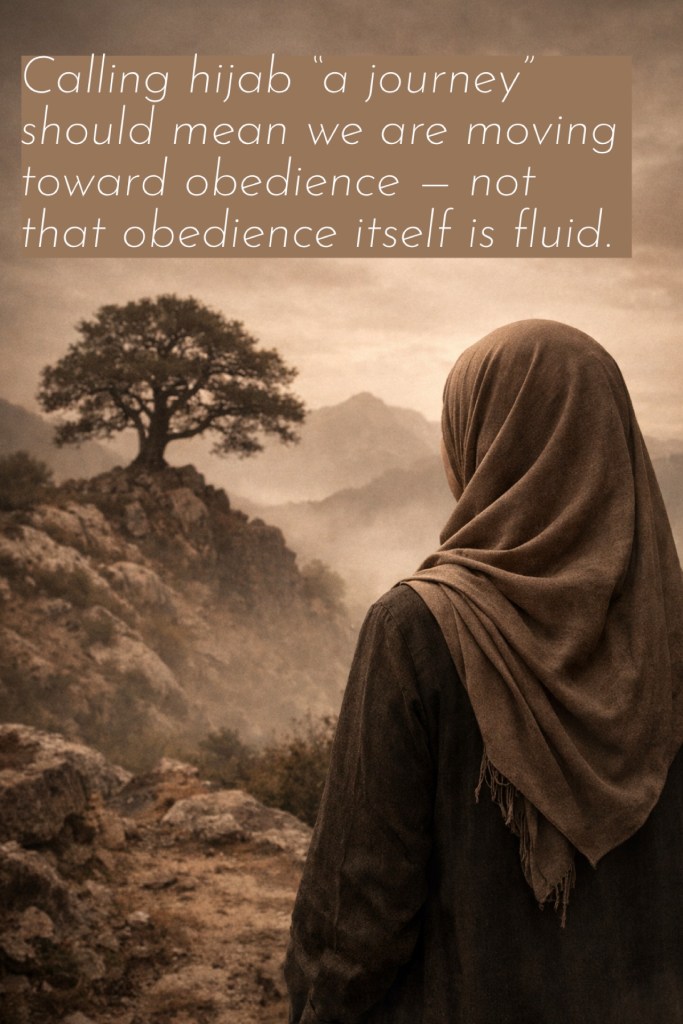
Calling hijab “a journey” should mean we are moving toward obedience — not that obedience itself is fluid.
We all fall short in different ways. Our shortcomings do not change what Allah has commanded.
Compassion must not blur clarity.
The Language We Use Matters
There is a deeper danger here.
When we rush to explain hijab in ways that are palatable to a Western audience, we subtly begin to center their comfort over our creed.
We start saying:
“It’s for protection.”
“It’s empowering.”
“It’s cultural.”
“It’s a personal choice.”
And while pieces of these statements may contain truth, they are not the foundation.
The foundation is obedience.
If our primary explanation avoids saying “because Allah commanded it,” then we have already shifted the center.
Islam does not require sociological justification to stand.
An obligation does not need to be marketed.
We do not soften divine law so that it is easier to defend in interviews or on social media reels.
We do not recalibrate farḍ to survive criticism.
And we certainly do not frame women’s obedience as a response to male weakness.
Hijab is not a negotiation with society.
It is an alignment with revelation.
And revelation does not bend to public opinion.
When we speak publicly, we are not only defending ourselves from critics. We are teaching. We are shaping how Islam is understood by reverts. We are forming the theological instincts of the next generation.
If we center hijab on male behavior, we hand critics a narrative that is easy to weaponize.
If we center hijab on ʿubūdiyyah, the conversation changes entirely.
We are not covering because we are afraid of men.
We are covering because we submit to Allah.
That submission is not weakness.
It is allegiance.
There is dignity in obedience.
There is stability in clarity.
And when the root is firm, the fruits will speak for themselves.
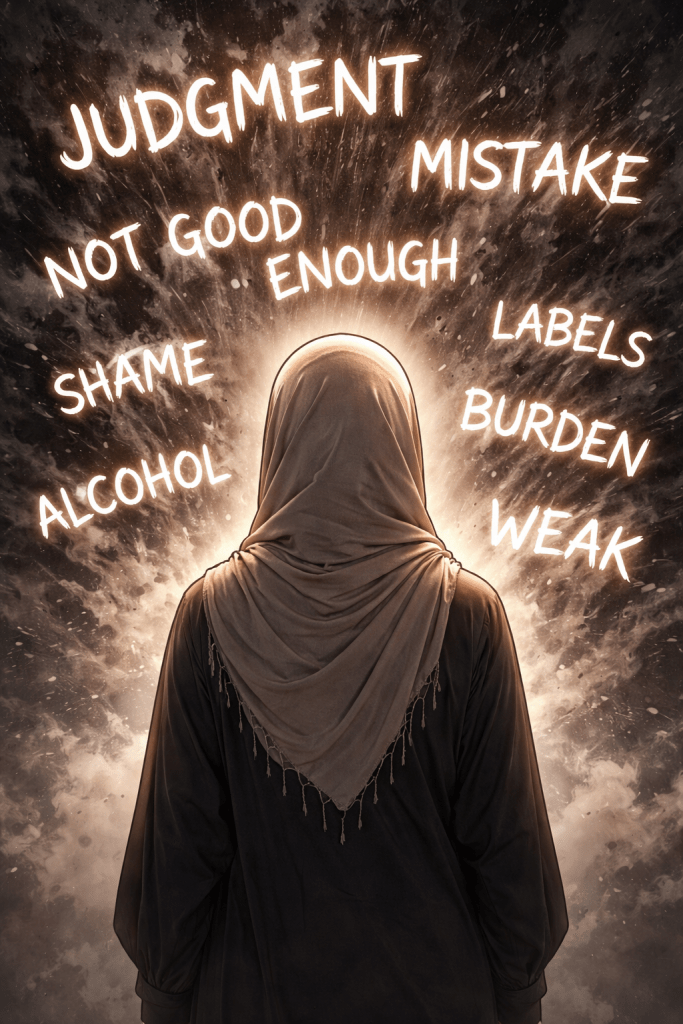
One moment, one word, one glance—they reach into me and drag me back into a version of myself I no longer live in.
I have healed, I have grown, I have fought to rise and yet they see only the fall.
The slip. The “mistake.”
It is like a tide pulling me under,over and over, and I am gasping,and I have to remind myself I am not that girl anymore. I am here. I am now.
But the labels—they stick like mud.They cling.They suffocate.
How can they not see the struggle,the prayers I whisper, the nights I sit trembling, the courage it takes to walk this path,the hijab that is a shield against a world I once drowned in?
And yet, words come like blows.
Judgment delivered without pause, without reflection, without mercy.
My father, my family—they cannot see,cannot pause,cannot hold their tongues. And I am left with the bruises no one else can see.
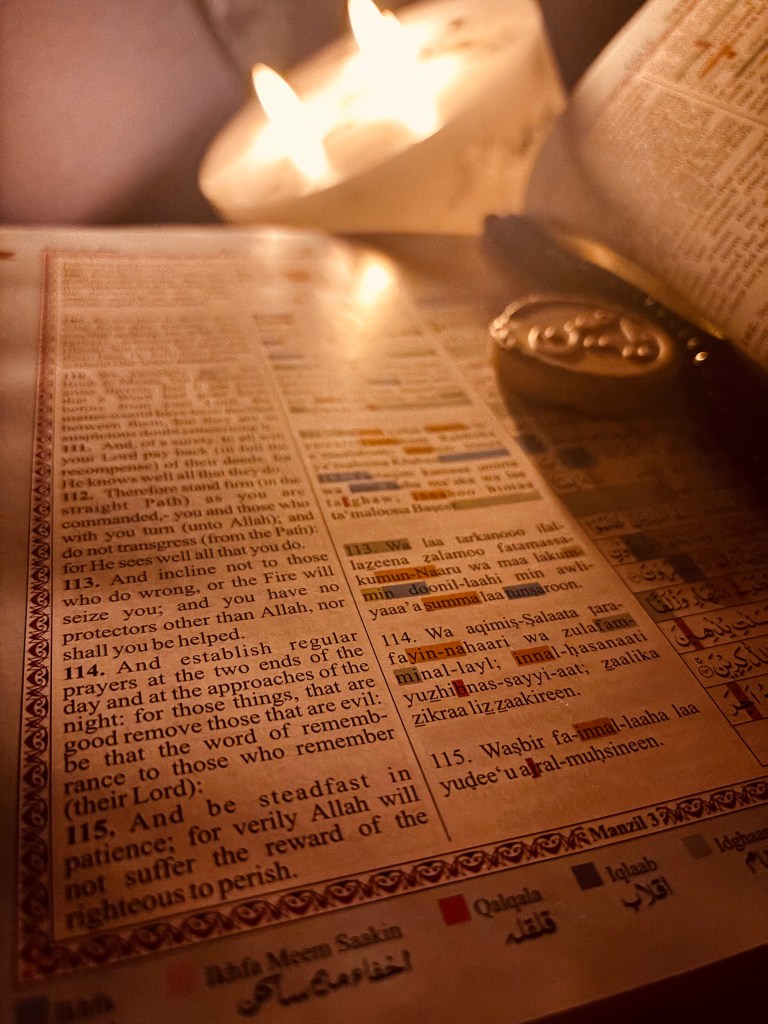
I turn to Allah, to the Qur’an, and I see it reflected in every moment I endure. I am living the examples of patience, of steadfastness, of mercy, of endurance.
I am embodying the teachings of the Qur’an in the way I hold myself, in the way I rise again after each blow, in the way I protect my heart even when others cannot see. This is not just feeling—it is action, it is living, it is practice.I am walking the path it lays out,even when the world around me is harsh, even when judgment rains down, even when the ones I love cannot understand.
I am tired, and I am angry, and I am hurt,and yet I rise. I rise because my worth is not in their eyes.I rise because my path is mine alone.I rise because faith is not the absence of struggle,it is the hand that guides me through it.
Let the tide come, let the words crash,I will not drown. I will not be undone.
I am held. I am steady. I am enough,because Allah is my protector, my guide, my strength, and He does not leave me.
I woke up in the middle of the night and my body was in severe stress. Systemic stress. Severe inflammation triggered by dehydration. As someone with Crohn’s, I already live in a heightened state of inflammation, and my body requires more care and fluids than most. I tried to be brave this year. I truly believed I could fast… but I couldn’t.
Now, I’m in bed with what can only be described as fever, headache, nausea, stomach pain, and cramping. It’s the kind of exhaustion that makes you feel like you’ve been hit by a truck. My whole body is protesting. My head is pounding. My stomach is rebelling. Fatigue hits all at once. It’s overwhelming.
Last year this happened on day three. This year… day one. It’s a sign of just how intense the hidden inflammation in my body really is.
I won’t lie — I’m heartbroken. But I’ve had to accept that my health comes first. And that it doesn’t mean I cannot participate in Ramadan. Fasting is not just abstaining from food and water. Ramadan is about so much more — patience, reflection, discipline, gratitude, prayer, compassion, mindfulness, connection to Allah.
I’ve been reflecting on the fact that our bodies are a trust from Allah (Amanah). They are sacred vessels. We are commanded to nurture, protect, and care for them. When fasting causes my body stress — when it pushes me beyond what it can safely handle — I am not honoring that trust. I’m doing the opposite of what Allah Subhanahu wa ta’ala has commanded.
And you know what? That’s okay.
When your body tells you it cannot fast, when it says “I need more care, more gentleness”, that is mercy from Allah. It’s a reminder to practice self-love and self-care. And yes — it’s okay to feel frustrated, even angry, at your own body. I know how soul-destroying it can feel when the very vessel meant to carry you through life becomes the barrier to your worship.
But here’s the truth: this is not defeat. It’s redirection. Allah has reminded me — gently, through my body — that taking care of myself is part of worship. Respecting the limits He has set for me is obedience. Nourishing myself when I am weak is devotion. Caring for my body, my mind, and my spirit is part of my connection to Him.
Some may clutch their pearls, thinking fasting is a simple pillar to uphold. But not everyone can. Nobody raises an eyebrow when someone cannot perform Hajj because of finances — so why judge someone whose body cannot fast without harm? For some of us, fasting can trigger real physical complications. And that is okay.
This Ramadan, my focus is on finding peace, seeking forgiveness, drawing closer to Allah, tracing the Quran, understanding it on a deeper level, and praying Salah five times a day without fail. It’s about embodying Islam — living it fully — not just carrying it as a title or wearing it visibly.
To anyone else feeling defeated because they cannot fast: take a deep breath. You are not failing. This is not defeat. This is redirection. There is so much more to Ramadan than abstaining from food and drink. Your connection with Allah, your prayers, your reflection, your intentions — these are the heart of Ramadan.
Your body is a trust. Honor it. Care for it. Love it. And know that in doing so, you are worshipping too.

 Seeking Sakina