Peace

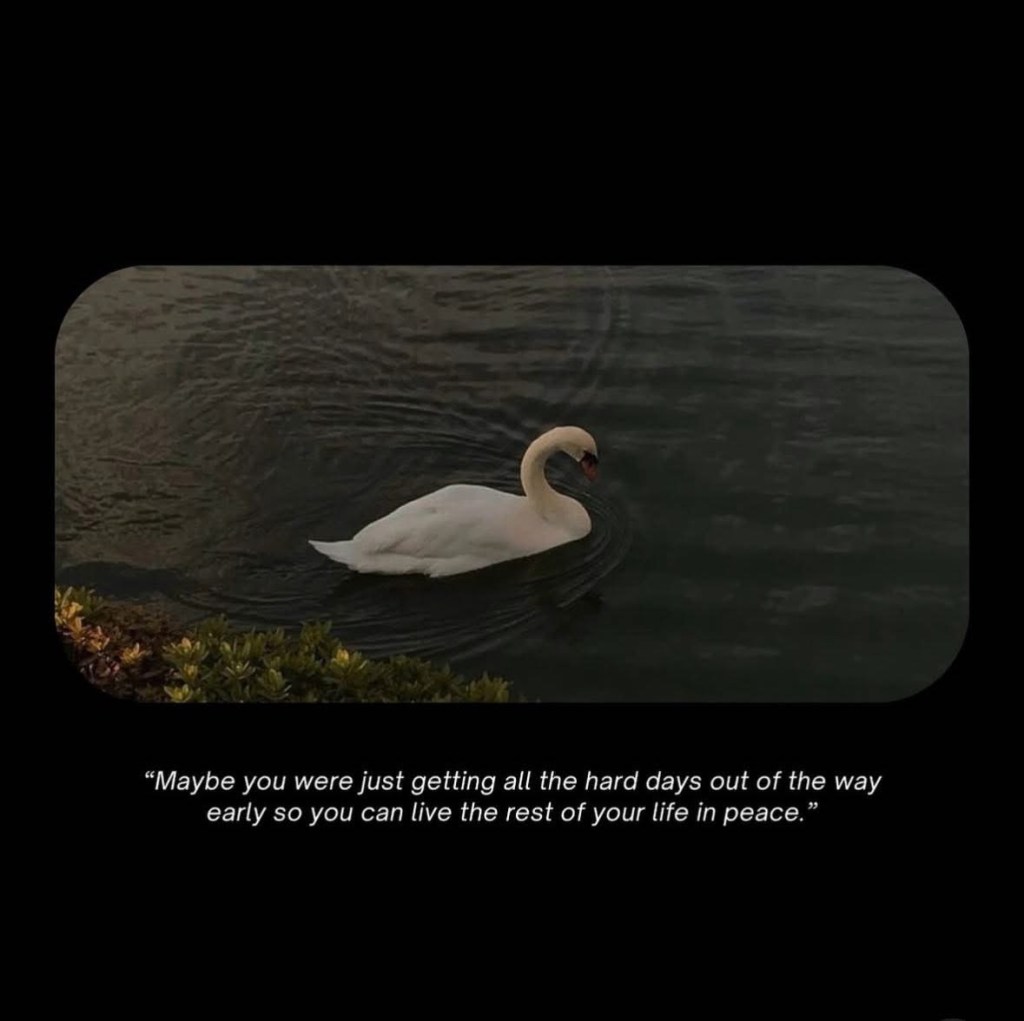
Maybe I was meant to get all the hardest days out of the way early.

I feel like that lone swan, gliding alone over dark, restless waters—carrying every struggle, every wave of pain. From the very beginning, life hasn’t been kind. It’s tested me — my strength, my patience, my heart. Fighting every day just to keep my children safe, protected and supported. Battles no one sees, but that have shaped me deep inside.

Sometimes I wonder if all this suffering is a kind of mercy — maybe I’m being prepared, hardened, so that I can finally find peace someday.

Yet even through all these struggles I know this is my moment to truly trust.

Inna maya rabbi sayyadeen. My Lord is with me. He is guiding me.

I repeat it over and over, because sometimes it’s all I have. I don’t know the way forward clearly, but I’m trying to trust His plan — even when the darkness feels so heavy.

I want freedom. I want a life where I can breathe, where my children can smile without fear. I want to work, to travel, to give them everything I never had. I hold onto this hope fiercely, even when it feels fragile.

Allah says, “And whoever fears Allah — He will make for him a way out. And will provide for him from where he does not expect.” (Surah At-Talaq 65:2-3)

I cling to that promise like a lifeline. I believe He tests those He loves not to break us, but to raise us up — to make us stronger than we ever thought possible.

Maybe this new chapter is already beginning, even if I can’t see it yet.

Maybe this feeling inside me — the quiet, fragile hope — is the first soft light of dawn after a long, dark night. It starts with trust. It starts with whispered prayers that only my heart knows. It starts with faith that Allah will open doors no one else can see.

It begins with one small step — uncertain, trembling — but mine.

I remind myself: every hardship holds a hidden wisdom. Every tear carries meaning. Every moment of struggle is seen by the Most Merciful.

So I keep walking forward. I keep praying. I keep believing.

I am not alone. Allah is with me in every breath, every step. As I search for freedom, for peace, for a new life — I hold tight to this truth:

“Indeed, with hardship comes ease.” (Surah Ash-Sharh 94:6)

I hold onto that promise with everything I have. It is my light in the darkest moments. The peace I long for is coming — just like the swan glides peacefully over the dark water, graceful and strong, even when the depths below are shadowed.
A Full Moon, A New Chapter, A Dua

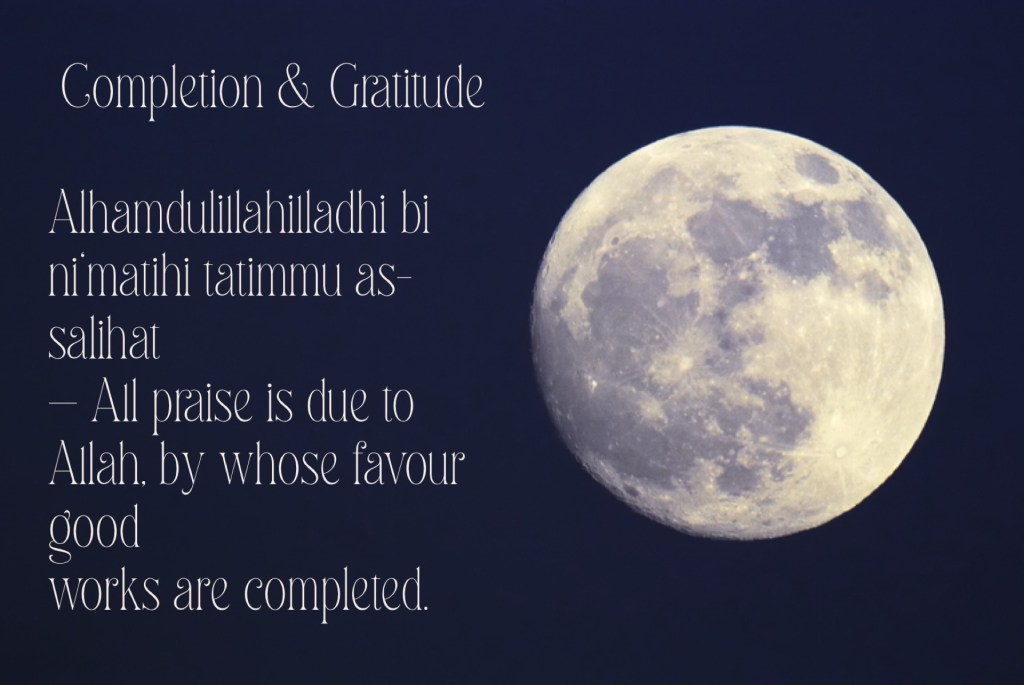
This morning, under the light of a full moon, I felt the closing of a chapter in my life. The full moon is a powerful symbol — not a time to manifest, but a time of completion, gratitude, and release. It marks the moment to let go of what no longer serves, and to prepare the heart for what lies ahead.

As a revert, I have come to understand that it is not necessary to discard everything from my past life. There are threads of meaning that can be woven into the fabric of my faith — as long as Allah remains at the centre. The moon is one of those threads. What once held deep significance for me now takes on a new meaning — not as a source of power itself, but as a creation of Allah, a sign pointing back to Him.

Islam, too, holds the moon in its rhythm. The lunar calendar guides our days of Ramadan, marks our Eids, and determines the sacred days of Hajj. The moon is not to be worshipped, but honoured as part of Allah’s perfect creation — a reminder of the cycles of time and the constancy of His presence.

Tonight, as the full moon shines brightly overhead, I reflect on the words:

“Allah is the Light of the heavens and the earth…” (Qur’an 24:35)

In this light, I find peace in the path ahead — not through wishing or manifesting, but through sincere du’a, trust, and gratitude.

This full moon reminds me to honour Allah’s creation, to be thankful, to let go, and to open my heart to a new chapter illuminated by His light.

When Chains Become Wings of Prayer

For many women who enter Islam later in life, the journey begins not just with faith—but with fire.

Fire in the form of resistance, judgment, loss, and loneliness.

Because while reversion is often spoken about as a beautiful awakening,

it is also the unraveling of everything that came before it.

Reverts frequently face disapproval from their families—

a quiet grief that lingers in the spaces once filled with warmth.

Islam, for them, is not just a new chapter,

it’s a decision that sometimes severs ties to their past.

And that disconnection?

It feels like a chain.

A chain of unspoken disappointment.

A chain of being misunderstood.

A chain of navigating the weight of loyalty and truth.

Beyond the family, there are the societal chains.

The pressure to marry quickly,

the expectation to learn everything overnight,

the assumption that being a revert means being someone’s project.

The unsettling reality that reverts are often fetishized,

treated not as whole human beings,

but as idealised symbols of piety or submission.

All of these expectations form chains.

Chains made of external voices telling her who she should be,

how quickly she should grow,

and where her worth lies.

But Islam—when experienced sincerely—

is not a cage.

It is a release.

Because those very chains,

when brought into the presence of Allah,

begin to transform.

The judgment becomes clarity.

The grief becomes closeness to Allah.

The loneliness becomes prayer.

And slowly, the chains are no longer holding her down—

they are lifting her up.

Because the tests faced after reversion are not punishments.

They are tools of refinement.

They are the means by which Allah detaches the heart from the dunya

and attaches it solely to Him.

When a woman turns to Allah in pain,

she doesn’t come away empty.

She comes away with wings.

Wings that allow her to rise above the noise.

Above the pressure.

Above the assumptions.

Above the past.

Islam does not erase the chains.

It transforms them.

And in doing so,

it teaches her to fly.

Islam doesn’t belong in the west

You can’t avoid it anymore.

Open any comment section — whether it’s a hijabi doing something mundane, a revert sharing their journey, or just a post mentioning the word “Islam” — and it’s there.

The same slogans.

The same hate, dressed up as patriotism:

“Go back to your country.”

“This is a Christian nation.”

“Islam doesn’t belong in the West.”

And if you’re unfortunate enough, you don’t just read it — you hear it in real life too.

Sometimes muttered under breath.

Sometimes shouted with rage.

Sometimes wrapped in “friendly advice” or passive-aggressive conversation.

What shocks me isn’t that the hatred exists — it’s how deep it runs.

It’s not just ignorance.

It’s a mindset that assumes faith should follow bloodline.

That religion is a cultural artefact — not truth, not revelation, not guidance.

They say:

“Why don’t you just believe in the God of your people?”

As if God belongs to certain nations more than others.

As if your soul is supposed to stay in line with your passport.

But let me ask you:

Does guidance come with a national anthem?

Does truth depend on the colour of your flag?

I didn’t choose Islam because it was familiar.

I chose it because it was true.

Because in the quietest, most honest moments of my life —

when I stripped everything back and stood alone before God —

I knew I had to follow what was right.

Not what was easy.

Not what made sense to others.

But what was true.

Faith isn’t something you inherit like an accent.

It’s not a family recipe passed from generation to generation.

Real faith is discovered — through searching, struggling, questioning.

Through being brave enough to ask:

“Is this really the truth, or just what I was told?”

And sometimes, that journey leads you far from everything you knew.

Away from what feels safe.

Toward something that calls to your soul with clarity — even if the world around you doesn’t understand.

That’s what people don’t realise about reverts.

We didn’t stumble into Islam.

We fought for it.

We walked away from the familiar.

We lost relationships, identities, even parts of ourselves —

not out of rebellion, but out of obedience.

Obedience to what’s right.

To what’s eternal.

To Allah.

So when people tell me that Islam doesn’t belong in the West,

I ask — where exactly do you think the truth is supposed to belong?

Because the truth doesn’t recognise borders.

It doesn’t speak only one language.

It isn’t British, or Arab, or Pakistani, or African.

It’s Divine.

And when it reaches your heart — no matter where you are —

you follow.

So no, I won’t shrink my faith to make you more comfortable.

I won’t apologise for leaving behind what I outgrew.

And I won’t pretend that truth can be limited by culture, country, or expectation.

I chose Islam with open eyes and a sincere heart.

And no matter what continent I live on,

no matter what assumptions people make —

I’m home with Allah.

To My Dearest Sisters,

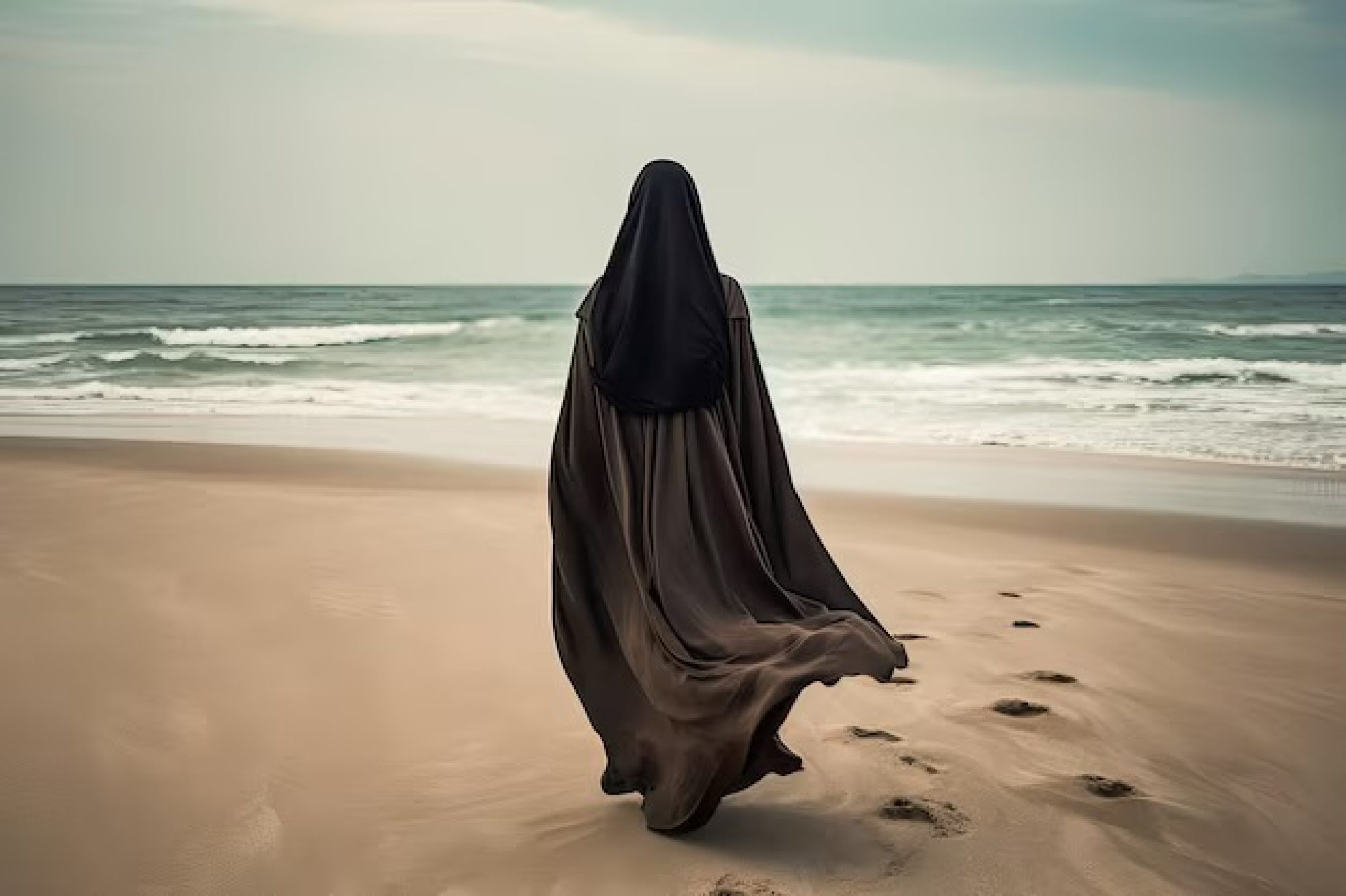
To that sister in the abaya.

To that sister who’s trying.

To the one who left behind everything she knew, and still sometimes wonders where she belongs — I see you.

But more importantly, Allah sees you.

You weren’t always like this. Maybe you were the hoodie and jeans type, the one who never imagined herself wrapped in an abaya. Maybe dressing modestly doesn’t feel natural yet — maybe it even feels like a costume some days. But still, you put it on. Still, you showed up. Not for people. Not for praise. But for Him.

That alone speaks volumes about your heart.

You’re a revert. You left behind a life, a mindset, a world — and now you’re walking a new one, brick by brick, often alone. And some days, it hits you hard: the loneliness, the confusion, the weight of not quite fitting in anywhere. Your īmān dips. You question whether you’re doing enough, whether you even belong here. You wonder: Who am I now?

Let me tell you, from one sister who knows that feeling too well — you are not lost. You are not an imposter. You are in the middle of becoming.

We don’t talk enough about this part of the revert journey. The quiet grief of leaving behind your old life. The silent tug-of-war between who you were and who you’re trying to be. The courage it takes to obey when everything inside you is still catching up.

And yet, even in that chaos, you chose Allah.

“Allah chooses for Himself whom He wills, and guides to Himself whoever turns to Him.”

(Qur’an 42:13)

He saw something in you — even when you didn’t see it in yourself. You didn’t stumble into Islam. You were chosen, handpicked by the Most Merciful. And if He brought you here, He will carry you through.

But here’s the reminder we all need:

This journey isn’t about how others see you — it’s about how deeply you turn to Allah.

It’s not about being perfect. It’s not about looking the part. It’s about seeking Him with a sincere heart.

So when it gets too loud, when the dunya pulls you back, when the whispers say you’re not good enough — quiet them with dhikr. Drown them in sujood. Let your heart fall in love with your Lord again and again.

“So flee to Allah.”

(Qur’an 51:50)

Turn to Him not just when you’re strong, but especially when you’re weak. That’s when He is closest.

You don’t have to be graceful. You don’t have to have it all figured out. You just have to keep going.

You in your abaya, unsure but sincere.

You in your prayer, dry-eyed but trying.

You, choosing obedience over comfort.

You, learning to let go of this dunya, piece by piece.

That is strength. That is beauty. That is īmān.

So focus your gaze, your heart, your everything — on Him. Not on the world. Not on your past. Not even on the version of you that you haven’t met yet.

Because in the end, it was always about Allah.

And He is always enough.

With love, understanding, and du‘ā’ from a sister who truly sees you,

Your sister,

U.A. Noor

🌸 The Silent Cry of Sayyida Ruqayyah (as) — A Reflection

As the anniversary approaches to honour this little girl I’m struck by the core similarities between her and the children of Gaza like them She was only a child — just four years old, some say even younger — yet her name echoes through the centuries with the weight of grief and sanctity.

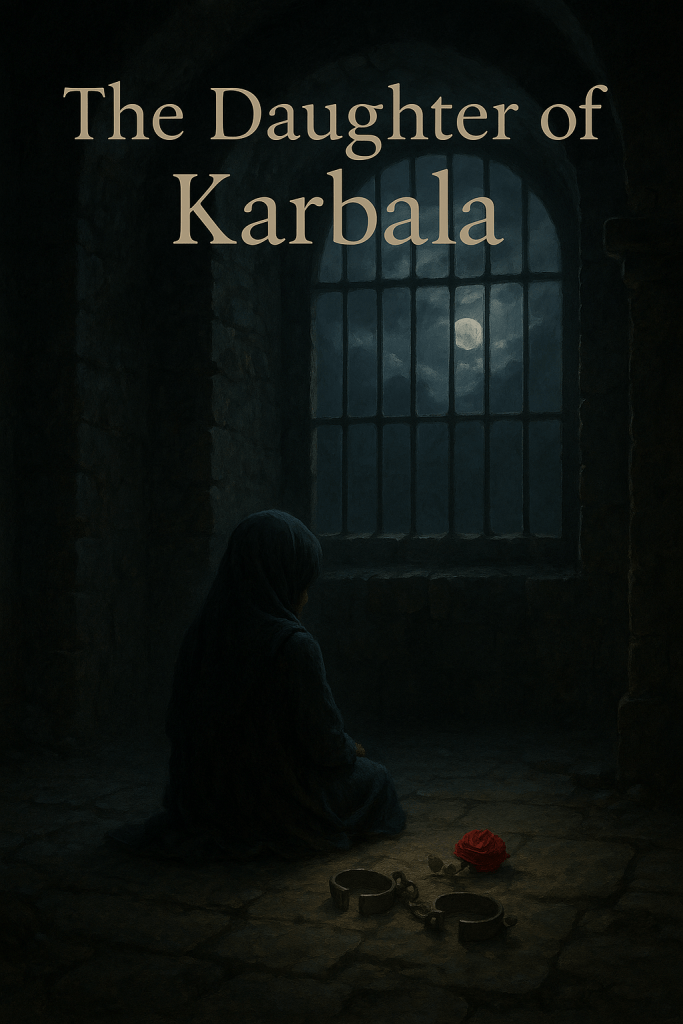
Sayyida Ruqayyah bint Husayn (as), daughter of the Master of Martyrs, walked a path that no child should ever walk — the path from Karbala to Kufa, and then to Damascus, shackled not by her own sins, but by the cruelty of those who tried to extinguish the light of the Prophet’s family.

She was born into light, into love — the cherished daughter of Imam Husayn (as) and a grandchild of Fatima al-Zahra (as). Her small world was filled with the fragrance of worship, truth, and purity. But the love of Ahl al-Bayt came with a price in a world intoxicated by power and tyranny.

On the 10th of Muharram, she witnessed what no soul should bear: her father standing alone in the desert, bleeding yet radiant, calling for help that never came. The cries of “al-‘atash!” — “I am thirsty!” — from children like herself, still echo. And when her beloved father fell, she no longer had anyone to shield her from the storm.

Dragged in chains through the streets of Kufa and Shaam, Sayyida Ruqayyah was not only a prisoner of Yazid — she became a witness. Her small voice, her cries for her father in the dark prison cell, pierced the hearts of even the cruel. And when they brought her the severed head of Imam Husayn (as) in a cold box, her tiny heart could bear no more. That night, she left this world, reuniting with her father in the Hereafter, where there are no chains, no pain, no parting.

💔 Her Story, Our Mirror

Ruqayyah’s story teaches us that innocence is not always protected in this world, but it is always honored by God. She reminds us that even the smallest among us can bear witness to great truths, and that grief itself can be a form of resistance.

In her cries, we hear the voice of every oppressed child. In her shackles, we see the cost of speaking the truth in a world ruled by falsehood. And in her martyrdom, we are reminded that Allah sees the brokenhearted, and that the oppressed will rise again — with dignity, with divine reward, and with their names forever engraved in the hearts of the faithful.

🌹 What Can We Learn?

Love for the Ahl al-Bayt must be active — it must move us to speak out against injustice, to comfort the vulnerable, and to uphold truth no matter the cost. Spiritual strength does not depend on age. Even a child, nurtured in faith, can bear immense trials with patience and purity. Grief is not weakness — Ruqayyah’s tears became a testimony that outlived empires. Our pain, too, can be a form of worship when it is rooted in love for Allah and His chosen ones. Martyrdom is not always on the battlefield. Sometimes it is in the prison cell, in the silent suffering, in the dignity of a soul that refuses to bow to tyranny.

May we never forget her.

May we raise our daughters with her name on our tongues and her light in their hearts.

And may we meet her, one day, in a place where no children are ever hurt again — in the gardens of Jannah, under the mercy of Allah, near the ones who were never afraid to stand alone for truth.

Peace be upon you, O Ruqayyah bint Husayn.

You did not die in vain.

“When Men Get Defensive: The Quiet War Against Women Who Set Boundaries”

In all my years of working with women — through the rawest parts of their lives, in women’s circles, in rape and domestic violence recovery, in community empowerment — one thing never fails to amaze me:

The moment a woman sets a boundary with a man —

The moment she says, “No, I’m not accepting this,” or challenges a harmful narrative —

His entire mask falls.

Suddenly, she’s not a woman with insight.

She’s “emotional.”

She’s “damaged.”

She’s “projecting.”

She’s “a man-hater.”

She has “issues she hasn’t resolved.”

It’s predictable. It’s exhausting. And it’s deeply revealing.

Because here’s the truth: this type of man is everywhere.

He appears well-spoken, often says he “cares about the ummah,” and claims to want healthy relationships and strong families.

He frames his opinions as “truth” and his criticism of women as “concern.”

But when you look closer, you realise:

He lacks emotional depth. He blames women for divorce and failed relationships, never once reflecting on men’s roles. He talks endlessly about how women “choose scum,” yet never questions why men behave like scum in the first place. He claims objectivity, but his tone is steeped in resentment — often the residue of his own past betrayals, heartbreak, or rejection.

And perhaps most ironically —

he’ll often be the one preaching “love.”

That everything should be about love, that the world needs more love, that Islam is love, relationships should be love…

But for him, love is just a word — not an energy he knows how to carry.

Not a frequency he’s learned how to embody.

Because real love requires accountability, softness, vulnerability, and emotional safety.

And these are not qualities he’s mastered.

He hasn’t done the inner work.

He’s still carrying wounds, but rather than healing them, he’s dressing them up as “insight.”

His masculinity is brittle. Easily threatened.

And when a woman — especially a strong one — challenges his view or sets a boundary, he lashes out.

That’s exactly what happened to me recently.

This man began sending me content shaming women for their relationship choices. Repeatedly.

I asked him kindly but clearly to stop — and explained why.

And in return?

He told me I was projecting.

That I had unresolved trauma.

That I “exposed myself” as a man-hater.

That I was defensive.

That I had issues.

That I “contradicted myself.”

That I had “unresolved wounds.”

But here’s the thing:

My wounds are not speaking.

I’ve been through my trauma. Serious trauma.

And I did the work — over 25 years ago.

Nothing in this exchange triggered me because nothing in the last four years of my life has been traumatic — including my divorce in 2023, where I had enough emotional intelligence to commit to two years of work with both a life coach and a therapist.

I made sure I left that relationship — and that chapter — without any unresolved trauma to carry forward.

By the time my healing work concluded, I was clear, whole, and grounded.

I responded not from pain, but from clarity.

Not from emotion, but from grounding.

Not from reaction, but from values.

Because that’s what healing does. It gives you your peace back — and your voice.

And let’s talk about the contradiction too —

This same man who criticised women for being “reckless” in relationships was also flirting with me.

Trying to arrange a meet-up.

Trying to cross boundaries.

So which is it?

Am I broken, or desirable?

Am I too damaged, or too independent to control?

Because here’s another truth:

Men like this are often drawn to women like me.

Women who surf.

Women who raise children on their own.

Women who think, live, and thrive in their own lane.

They are attracted to the image of strength —

But threatened by the reality of it.

They want the aesthetic of independence —

But not the substance.

Because the substance won’t shrink.

It won’t flatter ego.

And it won’t stay silent to keep the peace.

And yet, they still say we make poor choices.

But let’s be real:

If we chose you —

You were the poor choice.

Women do sometimes make bad decisions in love.

But the moment you make that your entire narrative —

The moment you erase your own accountability as a man —

You become exactly what you claim to critique.

It takes two for a marriage to break down.

Two for a betrayal to happen.

Two for healing to take place — or not.

We, as women, are no longer sitting in silence.

We are no longer absorbing blame.

We’re no longer tolerating men who weaponise their pain and shame us for theirs by calling us men haters simply because they cannot own it.

We will continue to rise, to heal, to hold our ground, and protect our peace.

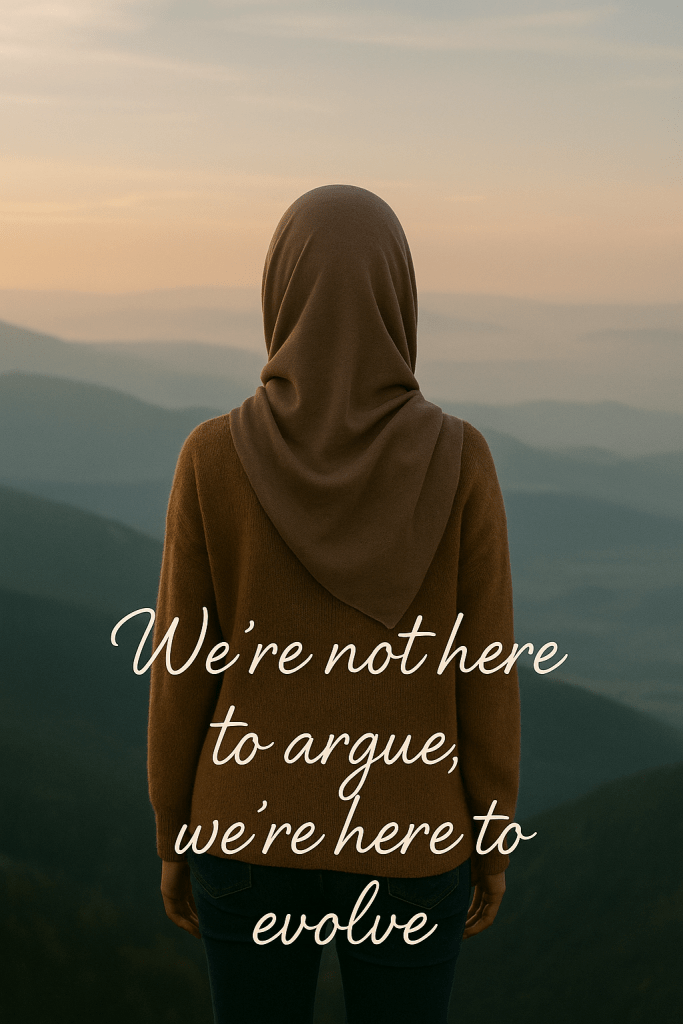
We’re not here to argue.

We’re here to evolve.

If our strength threatens your ego, then maybe it’s not strength that’s the problem —

Maybe it’s your ego.

And no — we’re not going to shrink to accommodate it anymore.

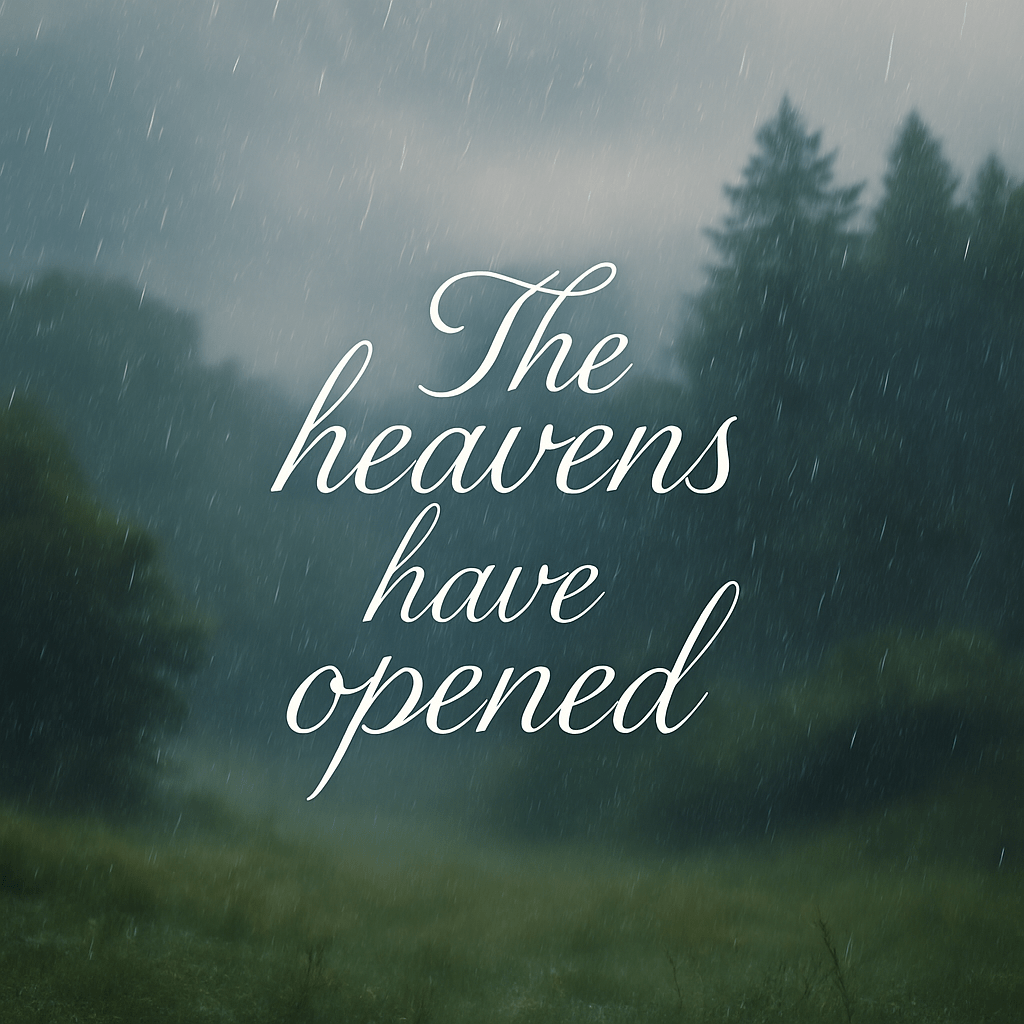
“When the Heavens Open”

I’m sat here today after a few weeks of immense heat and surgery a few days ago resting and so grateful alhamdulillah for the rain outside.

As a child in the UK, when the rain poured suddenly and without pause, someone would always say, “The heavens just opened up.” And we’d laugh, or run for cover, or press our faces to the window.

I never knew then how true those words really were.

Because in the Qur’an, Allah tells us that He sends rain after despair, that He revives dead earth with a single drop. That the sky does not just fall — it gives.

“And He is the One who sends down rain after they have despaired, and spreads His mercy…”

— Qur’an 42:28

The Prophet ﷺ once walked into the rain and let it touch his skin. He said: “It has just come from its Lord.” (Sahih Muslim)

And in that moment, I realise — rain is not weather. It’s a moment of divine nearness. The heavens really do open. And when they do, it’s not chaos — it’s compassion.

Rain is a du‘a answered. A dry earth forgiven. A soul reminded that even when things die, Allah can bring life again.

So now when I hear it — “The heavens have opened” — I smile, because I know something deeper:

That the sky weeps not in grief, but in mercy. That the One above is still near. Still responding. Still reviving.