When Debate Turns into Drama: A Reflection on the Evil Eye and Ego

Over the past few weeks, I’ve found myself dragged into situations I can only describe as drama. And while I accept that regardless of faith we are all human, I admit I had expected better conduct from Muslims. We often say, Islam is perfect, Muslims are not. Yet in the five years since I embraced Islam, I have encountered far more drama within the Ummah than outside of it. It is particularly disappointing when it comes from intelligent, educated people—because in those cases, it so often seems ego is at play.

Most recently, this unfolded during a live discussion about the evil eye. I joined the session and stated my opinion. A debate is healthy, and everyone is entitled to their view. But what happened went beyond debate. After sharing my perspective in the comments, I was invited up to the live itself. At that point, instead of genuine discussion, I found myself in the middle of a circle where disagreement was not really welcomed. Sisters—including niqabis—responded not with openness, but with dismissal. They said my opinion and my comment were wrong. That hurt, because a difference of opinion does not mean someone is wrong. In Islam, we are encouraged to seek knowledge and to discuss matters openly.

My view was simple: the evil eye is real, but it is not an independent power. As someone who came from another faith tradition that also spoke heavily about the evil eye, I can say confidently that it is nothing more than envy and jealousy. If we start to believe that the evil eye itself holds power, we risk attributing power to creation rather than the Creator. Everything comes only by Allah’s permission. Tawheed teaches us this clearly.

The sisters argued that people should not post celebrations online—like a new car or a new house—because of the evil eye. But I put forward another view: perhaps the problem lies not with those posting, but with those who feel envious or unsettled by it. To feel disturbed by someone else’s blessing is itself a sign of envy, and that is the real danger.

From the Shia perspective, the evil eye (al-‘ayn) is acknowledged, but never as something separate or greater than Allah. Anything that touches us—whether good or bad—comes only from Him. To believe that the evil eye itself has power is to forget Tawheed, for there is no strength and no harm except by Allah’s will. Envy and jealousy may exist within people’s hearts, but they do not act independently. They have no force of their own. If something reaches us, it is because Allah has allowed it, and in that recognition is both humility and protection: La hawla wa la quwwata illa billah.

What troubled me even more than the theological disagreement was the conduct. The niqabi sister leading the live presented herself as a person of peace and modesty, yet when I voiced a different view, she brought me up onto the live not for true dialogue, but in a way that felt more like being put on display before her circle. And as the conversation went on, I realised that many of those engaging were speaking from a very limited frame of reference. Their religious experience seemed narrow, shaped almost entirely by what they had been taught within a closed setting. By contrast, I come from a background shaped by varied experiences and wider study, which is why I see the topic differently. It was not malice in that moment, but rather a kind of unwillingness—or perhaps inability—to see beyond their own frame. That is why I chose to leave the live. But what did feel malicious was what came afterward—when I was no longer present, and they continued to comment about me and dismiss my opinion. That was not debate, it was backbiting.

So I left that connection, and I will not entertain it again. What her behavior amounted to was not sincere debate, but ego and exclusion dressed up as religious discussion.

But here is the beauty in all of this: rather than push me away, the experience has drawn me closer. Closer to my study of Islam. Closer to the teachings of Ahl al-Bayt. Closer to standing firmly in my truth that the evil eye is not a separate force with power of its own. It is envy, jealousy, and the weaknesses of human hearts. To give it any more weight is to give power where it does not belong.

Moving forward, I will be more wary in my friendships and connections within the Ummah. True sisterhood uplifts and protects, not tears down. And my focus will remain where it belongs: on Allah, on knowledge, and on guarding my heart from the very envy others try to project outward.

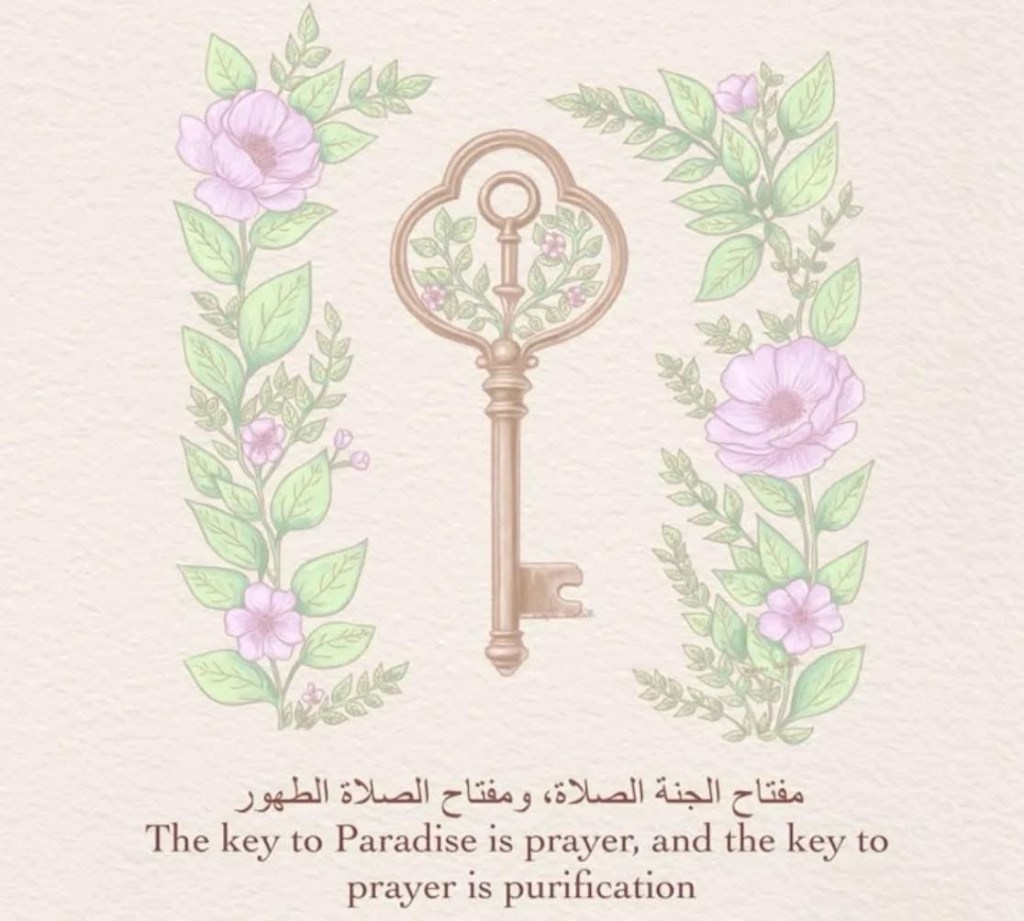
Be mindful of your words as you walk

Sometimes it isn’t others who are toxic — it’s us. We are quick to label others — harsh, cruel, insensitive — before looking at the parts of ourselves that are wounded or insecure. Many misunderstandings arise not from what was said, but from how our insecurities reacted to it. A simple word can feel like an attack because it touched a hidden pain we carry.

We react before we pause. We judge before we reflect. And in doing so, we hurt others and ourselves, building walls where there could have been bridges. Jannah is not reached through proving we are right, but through humility, reflection, and the purity of our hearts. The believer asks: Am I reacting to them, or to my own insecurities? Am I speaking from clarity, or from pain?

Self-reflection is the key that guides us to growth. It teaches us to recognize our mistakes, seek forgiveness for our part, and sincerely apologize to those we’ve hurt. Allah commands us in the Qur’an:

“And the servants of the Most Merciful are those who walk upon the earth easily, and when the ignorant address them [harshly], they say [words of] peace.” (Surah Al-Furqan 25:63)

The verse reminds us that gentleness, patience, and accountability are the path of the believer. Seeking forgiveness and apologizing is not weakness; it is the heart preparing itself for Jannah. Every choice to reflect, forgive, and mend a relationship plants a seed of mercy that will carry us closer to Allah.

At the gates of Jannah, it will not be our defenses, excuses, or sharp words that matter. It will be the honesty of our hearts, the patience of our reactions, the humility to admit our faults, and the weight of the words we left behind.

Returning

Tonight was unlike any night I’ve had in a long time. Lately, I’ve been struggling—really struggling—with my faith and my connection. Being a revert, alone in this journey without a community to lean on, has been incredibly difficult. I think I’ve reached one of the lowest points in my life in a very long time. My spiritual life had become filled with excuses, with distance, with a heaviness that I could no longer ignore.

And tonight, for the first time in a long while, I returned to my prayer mat. I performed wudu and came back to that sacred space, to the act of returning. It reminded me of the verse in the Qur’an: “And when My servants ask you about Me, indeed I am near. I respond to the call of the caller when he calls upon Me…” (Surah Al-Baqarah, 2:186). It was as if Allah Himself was waiting, ready to meet me halfway.

As I began praying Isha, the tears wouldn’t stop. They fell without restraint, with each rakat, with every bowing and sujood, they fell heavier and heavier. Lifting my head from sujood grew harder with every movement. By the time I reached the final rakat, the weight of sadness was overwhelming, all-encompassing. I realised, with a sinking heart, that this was my last rakat—and I didn’t want to leave that space.

After finishing Isha, I stayed on my mat longer than I ever had before. I didn’t want to leave. The connection I had rediscovered with Allah felt too precious to let go. It was a profound realisation: even when we stray, even when we struggle, Allah is always there. All it takes is for us to return, and He comes running. The magnitude of that truth overwhelmed me, and I placed my head on the floor and cried harder than I have in years. I asked for forgiveness, I made du’a, and I said “I’m sorry.”

And I realised something important about du’a: it doesn’t have to come from a book, from a scripted prayer, or from someone else’s words. Du’a is a conversation between you and Allah. It must come from the heart. It can be in your own language, spilling straight from your soul. That is the most sincere du’a you can make. And the tears we shed in that space—the tears that fall freely in sujood—reflect the pureness of our hearts, the sincerity of our love and our need. The tears we express in that space are the pureness that our heart contains.

Even as I struggled to leave that space of Salah, I knew it wasn’t because Allah would leave me if I did. He is everywhere. But it was because in that space, I felt a profound closeness, an intimacy with Him that I had not felt in a long time. I didn’t want to leave Him. That, more than anything, is what struck me: I didn’t want to leave Him. And for the first time in a long while, I felt a genuine fear of losing that connection.

When your forehead is on the ground, when you are crying in sujood, when you are begging for forgiveness, there is a palpable rush of closeness, of reunion with Allah. Not because He has gone anywhere, but because the connection is renewed. That is the lesson I carried away from tonight: He is always there. He never leaves. And no matter where we are, in the quiet of our homes, in the chaos of our lives, in the depths of despair, He is always near. He responds when we call, and His nearness is a constant, unwavering presence.

Narcissism: The Arrogance That Destroys Souls

Bismillah ar-Rahman ar-Raheem

Narcissism is more than a personality flaw — it is a sickness of the heart, a disease of the soul. Its roots are arrogance (kibr), pride (takabbur), and the desire to dominate others. This same arrogance drove Iblis to refuse the command of Allah, blinding him to truth and casting him from divine mercy.

The Qur’an tells us:

“Indeed, Allah does not love the arrogant.” (Surah an-Nahl, 16:23)

“And do not walk upon the earth exultantly. Indeed, you will never tear the earth [apart], and you will never reach the mountains in height.” (Surah Al-Isra, 17:37)

Arrogance is not confined to the heart; it reaches outward, touching relationships, families, and communities. When pride becomes cruelty — when it manipulates, belittles, and wounds others — it is zulm (oppression).

Imam Ali (ع) warned:

“He who has pride is deprived of wisdom, and he who has vanity is deprived of reason.” (Nahj al-Balagha, Wisdom 68)

“The one who oppresses is an enemy to himself first.” (Nahj al-Balagha, Letter 31)

Karbala: The Mirror of Arrogance and Humility

The tragedy of Karbala illustrates this truth. On one side stood Imam Hussain (ع) and his companions — humble, sincere, and resolute in truth. On the other stood Yazid’s army — intoxicated with pride, blind to justice, and consumed by arrogance.

Imam Hussain (ع) proclaimed:

“I have not risen to spread corruption or oppression, but to reform the Ummah of my grandfather. I enjoin good and forbid evil, following the path of my father, Ali ibn Abi Talib (ع).”

Humility is the heart of faith. Arrogance is the poison that blinds the soul. The world saw it in Karbala — oppression leading to destruction, and humility leading to eternal honor.

Lessons for Today

Narcissism in families, marriages, and communities is less bloody but just as destructive. It belittles, manipulates, and crushes the spirit — and Islam condemns it. Imam Ali (ع) reminds us:

“He who has an atom’s weight of pride in his heart will be far from the love of Allah.” (Nahj al-Balagha, Saying 187)

“Avoid the one who boasts, for he is dead while alive.” (Nahj al-Balagha, Saying 197)

Enduring abuse silently is not true patience. True sabr is what Lady Zaynab (ع) embodied — steadfastness in faith, courage in truth, and protection of one’s heart and dignity.

Guarding the Heart

Your heart is sacred, an amanah from Allah. It is not meant to be shattered by those who are arrogant. Islam calls us to protect it, to nurture it, and to stand firm against oppression. Imam Ali (ع) said:

“Do not let your tongue speak what your heart wishes to conceal, nor let your heart hide what your tongue utters.” (Nahj al-Balagha, Saying 234)

If someone seeks to dominate or belittle you, remember that your worth is with Allah, not with those blinded by arrogance. Imam Ali (ع) said:

“The most complete gift of God is a life based on knowledge, free of arrogance.” (Nahj al-Balagha, Saying 195)

Final Reflection

Narcissism is a spiritual disease that destroys hearts and societies. Islam calls us to cultivate humility, seek justice, and protect our souls. Follow the path of Ali (ع), Fatima (ع), Hussain (ع), and Zaynab (ع). Guard your heart from arrogance, resist oppression, and walk humbly before Allah, for He loves those who seek truth and justice, and He does not love the arrogant.

Al-Raqīb and Al-Shahīd: Walking in the Awareness of Allah

So I’ve been struggling with my iman recently, as many of us do time to time and I have decided to work on that connection by reflecting upon the names of Allah to deepen that bond and increase my knowledge.

Some recent events have made me choose the following for a very specific reason. It’s easy to fall into the trap thinking we are not being watched when we don’t wear the hijab or we choose not to pray or when we speak or act in a way that doesn’t align with our usual self or morals but we are seen and our actions are witnessed;

God is always watching over you (4:1)

Among the beautiful Names of Allah are al-Raqīb — the All-Observant, and al-Shahīd — the Witness. These two Names remind us of a profound truth: Allah is always present, always aware, always watching over His creation. The Qur’an tells us, “And be patient, for indeed, you are under Our watchful Eye” (52:48). In another verse, Allah asks us gently but firmly, “Does he not know that Allah sees?” (96:14).

Al-Raqīb is the One who observes every detail, nothing escapes His care or His knowledge. He is not only the Watcher from afar, but the One who holds all things in His gaze with wisdom, precision, and mercy. Al-Shahīd is the One who bears witness — to our actions, our words, and even the quietest whispers of our hearts. He is the ultimate Witness who will testify to all that has passed on the Day of Judgment.

Yet, alongside this watchfulness and testimony, Allah is also al-Laṭīf — the Subtle, the Gentle, the Kind. His watching is not cold or harsh, but full of care. His witnessing is not simply record-keeping, but an expression of His closeness and concern for us. To know Him as al-Raqīb and al-Shahīd is to never feel abandoned or unseen. We are, at every moment, under His compassionate gaze.

When we remember these Names, we are invited into the practice of murāqabah — spiritual mindfulness, the awareness that Allah is near, that He sees and knows what is within us. This awareness is what nurtures ihsān, the state of worshipping Allah as if we see Him, and if we cannot see Him, knowing with certainty that He sees us.

Living with this consciousness softens us. It encourages us to guard our thoughts, our words, and our deeds — not out of fear alone, but out of love, reverence, and gratitude. It reminds us to be responsible and caring, especially toward those whom Allah has entrusted to us — our families, our neighbours, even the blessings and property in our care. Just as Allah is the Watchful and the Witness, we too are called to be mindful and trustworthy in our daily lives.

And so, these Names do not burden us — they free us. They remind us that we are never alone. Every sigh, every effort, every tear, and every silent prayer is seen, heard, and remembered by the One who is the All-Observant, the Witness.

But this awareness also poses gentle questions to us:

How mindful are we of our everyday actions? How careful are we with the words we release into the world? How sincere are the intentions we carry in our hearts? And how present are we with Allah, the One who is always present with us?

In remembering al-Raqīb and al-Shahīd, may we learn to live with greater consciousness, greater sincerity, and greater love — under His ever-watchful, ever-compassionate eye.

Art is a soul’s surrender to Allah—a dance of sabr and tawakkul.

Art is the purest expression of the soul. It doesn’t have to be perfect, and you don’t need to have everything planned when you start—only Allah in your heart. This morning, after a really tough week of struggling, I woke up feeling divinely guided to create. I don’t know where this piece will go or what the end result will be, but every time I stand at my table with the Qur’an softly playing in the background, I know I am being gently led. Whatever this art is meant to teach me will become clear when it’s complete.

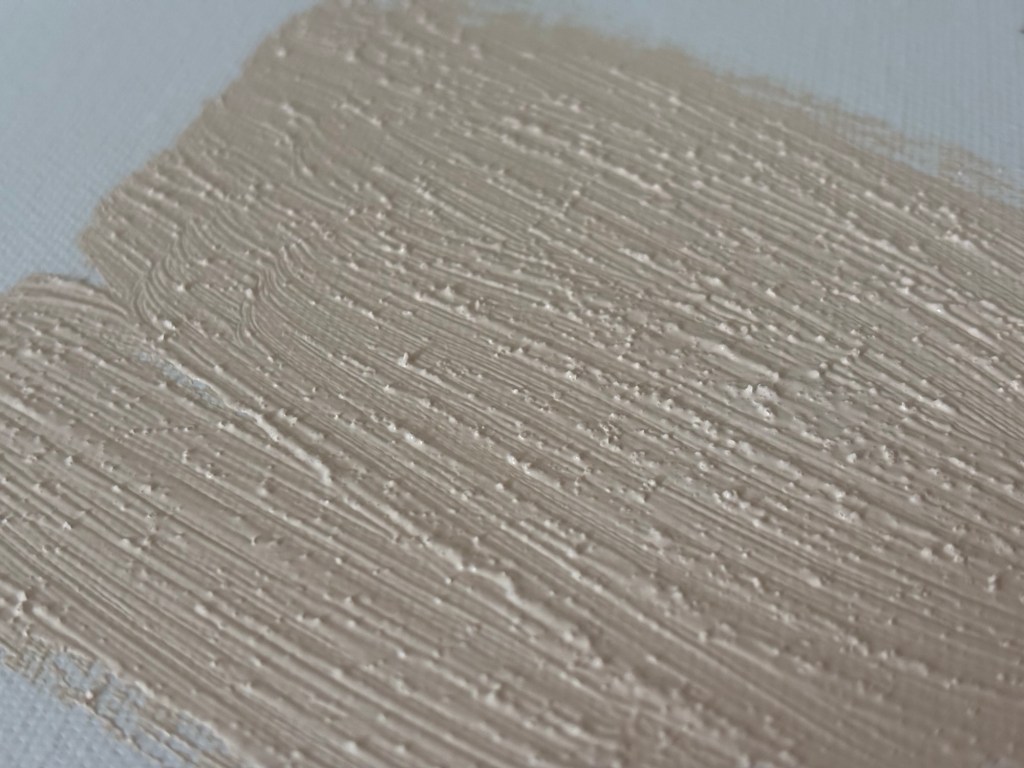
I’m especially pleased that I’m using texture in this piece—texture gives the work depth, dimension, and complexity, just like in life and in Islam. Texture reminds me that things aren’t always smooth or simple; there are layers to our faith and to our experiences that add richness and meaning. Just as a textured canvas invites us to see beyond the surface, Islam invites us to look deeper, to turn back again and again, to reflect and adjust our path.

The journey in Islam is much like creating art. It’s not about perfection, but about returning, making small shifts, stepping back to see the bigger picture, then moving forward with renewed intention. Allah says, “Indeed, with hardship comes ease” (Qur’an 94:6), and Rumi beautifully reminds us, “Don’t grieve. Anything you lose comes round in another form.” The lessons, like the layers of texture, reveal themselves in time, if we trust and surrender.

Standing at my table, I feel that same sacred dance of patience and surrender—the journey of faith and creation unfolding hand in hand, with Allah as the ultimate Artist guiding every stroke.

Space For Grace

From One Sister to Another

When we first find Islam, the joy can be so overwhelming that it feels as if our heart might burst with light. The tears, the peace, the relief—it’s unlike anything else. But then, sometimes quietly and unexpectedly, the feeling shifts. The light feels dimmer, the joy feels heavier, and a voice inside whispers, What have I done?

This is something we don’t talk about enough. Maybe because many Muslims born into the faith can’t fully understand what it’s like to have to change everything—the way we walk, talk, think, dress, and live—almost overnight. For us reverts, the transformation is monumental. And while our Shahada marks the most beautiful moment of our lives, it is not the finish line. It is the starting point.

Yet too often, instead of gentle hands guiding us, we meet pointed fingers correcting us. Mistakes are met with judgment rather than patience. The space for grace feels too small, when in truth, it should be vast and wide enough for every single step of our journey.

I’ve seen sisters lately speak of wanting to take off their hijab, of feeling like they’ve jumped too far, too fast. As if they’ve been dropped into the deep ocean of Islam without a life raft. And I want to say to them: Dear sister, you are not just a drop in the ocean. The entire ocean is within you. (Rumi)

It’s natural to feel this lull. It’s natural to feel overwhelmed, even sad. But remember the words of the Qur’an:

      Allah is enough as a friend, and Allah is enough as a helper. 

                      Quran (4:45)

If you are feeling lost, hold on to that truth—your closest, most loyal companion is Allah Himself. And from me to you: my door is always open. I understand your struggles because I’ve been there—not once, but many times. I’m still learning. I’m still growing. I’m still striving to be a better Muslim.

You don’t have to know everything today. You don’t have to have it all perfect. You took your Shahada—that is your first step. Everything else will come in time, with patience, prayer, and the grace of Allah.

So, my dear sister, breathe.

You are exactly where Allah meant for you to be.

Every stumble is a step,

every tear is a prayer,

every moment you stay is a victory unseen.

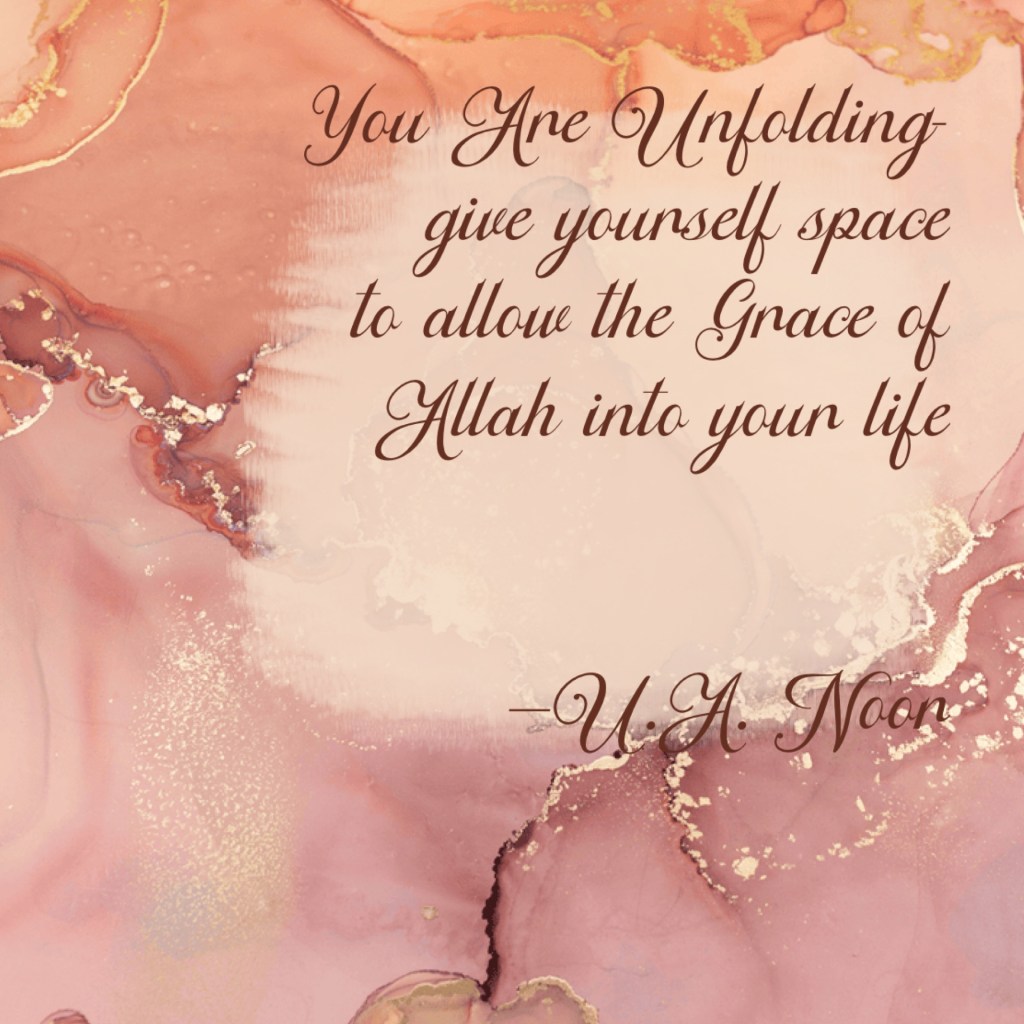
You are not failing—you are unfolding.

And one day, you will look back and see

that Allah was carrying you all along,

gently, patiently, lovingly…

until you could stand,

lift your head,

and smile from the depths of your heart as you say—

Yes. I am Muslim.

Slipping into habits

Oh my dear sisters,

We all have habits—some obvious, some subtle—that pull us away from Allah. Whether it’s listening to music, neglecting commands, or struggling with hijab consistency, our journey is about striving to become better Muslims, beautifully aligned with Islam and solely for the sake of Allah.

One transformative practice I’ve found is to list 5 habits you’re ready to change, then right beside each, write a replacement habit. This shifts the focus from just stopping something to actively nurturing something that draws us closer to Allah.

Examples:

Smoking → Snack on something healthy (I used oranges to quit years ago). Listening to music → Replace with Quran recitation or nasheeds. Doom-scrolling or Netflix binges → Replace with studying the Quran, reading Islamic books, listening to beneficial lectures—and I’ll link some amazing Islamic podcasts and uplifting authors below to guide and inspire you.

Start by breaking big goals into small, daily steps that feel doable and—most importantly—sustainable.

Always remember to seek Allah’s help:

Du’a:

“O Allah, help me leave behind what displeases You, and guide me to what draws me closer to Your mercy. Replace my harmful habits with those that bring barakah into my life. Ameen.”

Podcasts & Sources I Love

Yasmin Mogahed – Deep, heartfelt reflections on faith, emotion, and personal growth. Belal Asad – Thought-provoking discussions and reminders to inspire your daily walk. Muslim Central – A rich resource with lectures, reminders, and spiritual talks from various scholars. Mufti Menk Podcast – Gentle wisdom and practical advice with a warm delivery that soothes the heart. Your Muslim Girl Podcast – Modern, relatable stories and Islamic guidance for women.

Books & Authors to Uplift Your Soul

Secrets of Divine Love: A Spiritual Journey into the Heart of Islam by A. Helwa — A heart-based guide to experiencing the beauty of the Qur’an and cultivating intimacy with Allah through love, poetry, spiritual practices, and reflections  . Sheikh Omar Suleiman — Inspiring author, speaker, and imam whose books and podcasts provide practical, faith-centered wisdom and motivation.

Sunnah of Stillness

Your hands — like your soul — carry more than you realize.

Try this Sunnah-inspired pause:

1. Hold your hands out.

2. Ball them into fists.

3. Hold. Breathe.

4. Now open them slowly — like releasing something to Allah.

5. Shake them loose.

Feel that? That’s your nervous system letting go.

Even your Prophet ﷺ paused. Even your soul needs to.

10-Second Heart Opener

Grab the Qur’an, or any Islamic book nearby.

Open to a random page. Read the first ayah or sentence you see aloud.

Don’t overthink. Don’t try to decode it.

Just receive. Sometimes, Allah speaks to your heart through what you weren’t looking for.