Just a gentle reminder to those who understand that life is about evolving
It’s okay if you are feeling unsure
You are learning and growing
Not a religious blog just a revert and her struggles
Just a gentle reminder to those who understand that life is about evolving
It’s okay if you are feeling unsure
You are learning and growing

Right now, it feels as if the planet itself is stirring. With the pain of Gaza and Palestine etched into our collective consciousness, humanity is shifting — transforming — and that transformation is neither neat nor easy. It rises and falls like breath: expansion follows contraction, ease follows hardship. Allah Himself tells us, “Indeed, with hardship comes ease.” (Qur’an 94:6). This is His rhythm, built into the fabric of creation.
We, as souls in human form, are part of this unfolding. Awakening is not a straight line; it is a cycle of softening, stretching, and surrendering. Something must end for something else to begin — and surrender is the doorway. For some, it is surrender to the unknown. For us, it is surrender to Allah, the One who created our hearts and wrote their stories long before they beat within our chests.
This surrender is a kind of rebirth — not a return from a previous human body, but the awakening of our souls into a deeper life, the life they were always meant to live. It is what Hasrat Inayat Khan described: “There can be no rebirth without a dark night of the soul, a total annihilation of all that you believed in, the thought that you were.”
In Islam, this annihilation is not destruction but tazkiyah — the purifying of the soul so that it can return to its original clarity.
In Islam, we believe our souls knew Allah before we came here. We stood before Him and bore witness: “Am I not your Lord?” They said, “Yes, we have testified.” (Qur’an 7:172). Deep inside, this covenant lives within us still. This is why returning to faith feels less like learning something new and more like coming home. It is a remembrance, not an introduction.
The “awakening” we feel now — in our minds, hearts, and bodies — is the echo of that primordial knowledge stirring awake.
As our hearts open, stretch, and soften, something remarkable happens: we begin to see the hearts of others more clearly. We feel their pain, their beauty, their longing.
This openness is not always gentle — it can be a cleansing, a falling away of what is not rooted in love, mercy, and truth. Yet through that cleansing, we touch the powerful force that underlies everything: Allah’s mercy, His love, His light.
Some of us will taste moments of peace and bliss in this stage of awakening. Others will feel the “dark night” of the soul — the painful unravelling of old illusions. Both are signs of transformation. Both are invitations to draw nearer to Allah.
We are not merely physical bodies, nor only spiritual ones; we are a weaving of both, designed to awaken. And right now, as the world shakes off an unconscious trance and begins to open its eyes, our task is to remember: this is not a new reality, but the deeper reality our souls already knew.
To awaken is to remember. To transform is to surrender. And to surrender is to return — always — to Allah, the Home our souls have known from the very beginning
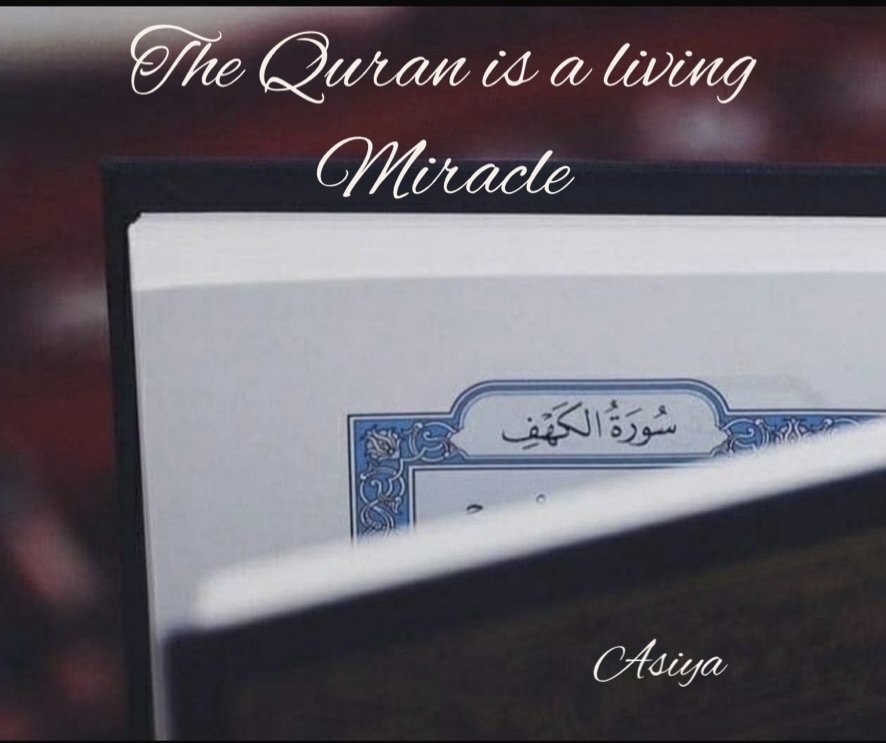
The Living Miracle
“The Qur’an is a living miracle — still challenging hearts and minds today through its timeless ability to awaken faith and conviction.”
Revealed over fourteen centuries ago, the Qur’an remains untouched, unmatched, and undefeated. No word has been altered, no verse replaced, and no human being has ever risen to meet its challenge. Its language is both eternal and near — immutable in perfection, yet accessible to every sincere seeker.
What makes the Qur’an unlike any other text is that it speaks to the soul as much as to the intellect. Its verses move with the rhythm of truth — at once a warning and a healing, a command and a comfort. Its language carries divine precision; every letter placed by the One who knows the depths of the human heart.
And as humanity grows in knowledge, the Qur’an unfolds still deeper layers of meaning. Its verses remain the same, yet their wisdom expands — revealing new signs, softening hearts once hardened by pride, and guiding minds once lost in confusion. It is not bound by time or culture; it meets every generation anew, whispering the same message: Return to your Lord.
The Qur’an transforms those who open themselves to it. Its recitation soothes the restless heart, its reflection humbles the intellect, and its commands illuminate the path of righteousness. It awakens the sleeping soul — reminding us that faith is not inherited but discovered, not memorised but lived.
To hold the Qur’an is to hold a living conversation with Allah — a miracle in sound, meaning, and mercy. It does not age. It does not fade. It continues to breathe life into hearts willing to listen.
For the Qur’an is not merely a book to be read, but a light to be lived by — a divine miracle that still speaks, still challenges, and still transforms.

Taqwa is the essence and purpose of faith — the awareness of Allah in every moment, every thought, and every choice. It is knowing that He sees, hears, and knows everything — even the most hidden corners of our hearts. This awareness is what guides our actions, shapes our character, and anchors our souls.
Taqwa is not merely the avoidance of sin; it is the conscious effort to seek what pleases Allah. It means acting with intention — obeying, worshipping, and striving for His approval — not out of fear of punishment alone, but out of love, reverence, and hope in His mercy.
It is the balance between hope and fear: hope in Allah’s infinite compassion that draws us nearer, and fear of His displeasure that guards us from heedlessness.
Taqwa is the fruit of faith — the proof that belief is real and alive. True faith is not confined to words; it breathes through our actions and transforms our hearts. A person with taqwa aligns their heart, mind, and deeds with divine guidance, walking gently but firmly upon the path of truth.
So how do we develop taqwa?
We begin with knowledge — gaining understanding of Allah, His names, His attributes, and His commands in the Qur’an and Sunnah.
We deepen it through reflection (tafakkur) — observing the signs of Allah in creation and within ourselves, recognising His provision and mercy in every detail of our lives.
We nurture it with worship and patience — through prayer, fasting, charity, and consistent acts of devotion that keep the heart connected to Him. Small and sincere deeds build the strongest foundations.
We sustain it through remembrance (dhikr) — repeating the words SubhanAllah, Alhamdulillah, La ilaha illallah until they soften our hearts and quiet the noise of worldly distractions.
And we purify it through repentance and self-correction — turning away from sin, acknowledging our shortcomings, and returning to Allah with humility and hope.
The signs of taqwa appear in the quiet choices we make: when we choose right over wrong, when we feel peace in obedience, and when we feel unease in the face of sin. It is found in preferring Allah’s pleasure over societal approval, material comfort, or fleeting desires.
Taqwa is God-consciousness in thought, word, and deed.
It is the living pulse of faith — the awareness that keeps the heart awake, humble, and steadfast upon the path to Allah.

Today, while studying the Qur’an, I was reading through Surah Al-Baqarah, 2:25, and I came across something that sparked deeply within me — almost like a divine connection. I realised that Surah Ash-Sharh (94:6) and Surah Al-Baqarah (2:25) are intimately connected.
Surah 94:6 describes the rhythm of Divine Mercy — the ease intertwined with hardship — when Allah says, “Indeed, with hardship comes ease.” And Surah 2:25 shows the fruit of that very rhythm: a heart that becomes like a garden, nourished from within because it trusts in Allah’s promise and continues doing good.
Every time you believe despite fear, every time you act righteously despite pain, you are watering that inner garden Allah has promised you. That is the ease within hardship — the beginning of Paradise already growing in your heart.
This rhythm is how Allah nurtures the heart: hardship humbles, purifies, and turns us toward Him; ease restores, heals, and allows the soul to breathe again. Both movements are part of the same Divine breath — the gentle rhythm through which Allah brings the believer closer to Him

Autumn is a quiet teacher. Each year, when the air turns crisp and the trees begin to shed their leaves, we are reminded that letting go is part of the divine rhythm of life. Allah has written this pattern into creation — nothing stays, nothing clings, nothing resists its appointed time.
The trees do not hold onto their leaves out of fear of loss. They let go, trusting that what is stripped away now will be renewed in spring. How many of us, however, resist this natural order? How many of us hold on — to pain, to people, to ideas of who we used to be — as if clinging could protect us from change?
Allah tells us in the Qur’an:
“Every soul shall taste death, and We test you with evil and with good as a trial; and to Us you will be returned.” (21:35)
In this verse lies the essence of surrender — that life itself is a series of arrivals and departures, gifts and withdrawals, all within the mercy of our Creator. To “let go” in Islam does not mean detachment in the Buddhist sense, nor escape from emotion. It means tawakkul — trusting that Allah knows the wisdom in what leaves our life just as He knows the wisdom in what stays.
Often, grief is the heaviest leaf to release. The Qur’an acknowledges this deeply human emotion: even Ya’qub (as) wept until his eyes turned white from sorrow. Yet he said,
“I only complain of my suffering and my grief to Allah.” (12:86)
In this, we learn the Islamic way of letting go — not by suppressing the pain, but by handing it back to the One who owns all hearts.
There are many kinds of attachments we carry. Some to people we’ve lost, some to versions of ourselves that no longer fit, and others to the illusion of control or status. In every case, the ego clings out of fear — fear of being nothing, of being unseen, of being unloved. But when we remember that our worth lies not in what we possess but in our nearness to Allah, that fear begins to soften.
Autumn calls us to this remembrance. Just as the air grows lighter, the heart too longs to breathe again — freed from the weight of regret and the shadows of the past.
Letting go in Islam is not passive. It is an act of iman. It is saying, “Ya Allah, I release what is not meant for me. Replace it with what brings me nearer to You.”
So this season, take a quiet walk beneath the falling leaves. Reflect on what you are still holding onto and why. Ask yourself: does it bring me closer to Allah or keep me bound to the dunya? And when you’re ready, whisper Bismillah — and let it go.
Just as the tree surrenders its leaves to the wind, trust that Allah will clothe your soul again — with something more radiant, more peaceful, and more alive.
“Perhaps you dislike something while it is good for you; and perhaps you love something while it is bad for you. Allah knows, while you know not.” (2:216)
Autumn, then, is not an ending. It is a sacred pause. A reminder that renewal only begins after release. And if we let Allah guide the letting go, spring will surely come — softer, purer, and filled with His light.
I’ve taken myself offline from social media , just me, the Qur’an, and my thoughts for the next six months . I wanted to see what comes up when I slow down and truly reflect. When the heart truly expands and what I discover.
Today I focused on parts of Surah Al-Baqarah, and here’s what I discovered…
On Hypocrisy and Guidance (2:14–20)
I noticed how the Qur’an talks about hypocrisy — not just lying or pretending, but a divided heart, claiming faith on the outside but feeling something different inside. It’s like lightning in the darkness: sudden, confusing, unstable.
It made me wonder about my own faith. When I question, when I struggle, is that me being hypocritical? Or is it me trying to sincerely understand? I think the Qur’an reassures me that questioning can be part of sincere seeking, as long as my heart wants guidance.
Worship, Creation, and Taqwa (2:21–22)
Allah calls humans to worship Him — not just rituals, but the alignment of heart, mind, and action. He shows us creation as a reminder: the earth, the sky, the rain, the fruits we eat — all signs that He sustains us.
I’m trying to grasp this idea of taqwa, God-consciousness. It’s not just fear or rules — it’s awareness, care, and intention in everything, a quiet presence of Allah in my heart. Even small acts, like saying Bismillah before eating or drinking, can bring my heart back to focus.
Practical Discoveries for My Heart
Saying Bismillah before anything I consume. It feels like pausing to notice and recognize Allah. Short Qur’an readings and reflections — just a few verses, but they open so much space inside. Dhikr in small moments: SubhanAllah, Alhamdulillah, La ilaha illa Allah — a rhythm that softens the mind. Prayer as a place to notice my heart, even just one or two rak‘ahs. Observing nature intentionally, seeing the signs and thinking: “This is all from Allah.” Reflecting on my actions and mistakes — a gentle check-in, asking Allah for guidance and forgiveness. Gratitude lists and intentions for the week — small anchors to remind me what matters.
I realize now that consistency matters more than perfection. I don’t need to do everything “right” all the time — I just need to return, notice, and try again.
Questions I’m Carrying Forward
How can I deepen this awareness of Allah in the ordinary, small moments?
How can I let the Qur’an guide me without feeling pressure to understand everything immediately?
What habits will slowly train my heart toward sincere submission and taqwa?
Closing Reflection
These blog posts over the next six months are going to be purely reflective and a dialogue with myself and Allah, not an explanation to others. I deeply encourage anyone reading to go and study the Qur’an themselves and come to their own path and reflections. If my posts resonate or help in any way, feel free to leave a comment.
However, given the Christian hate I recently received from one particular person who thought he could use my post as a platform for his own agenda — which, upon reflection, is quite sad that we live in a world where others still feel the need to tear down others beliefs in order to justify their own. That isn’t true belief that’s ego — so any negative comments and pingbacks are removed. This space is for reflection, learning, and sincerity, not argument or hostility or ego trips .
I’ve often been asked where my “spiritual formation” began, and it’s hard to point to one moment. My path has not been a straight line, nor a single point on a map. It has been more like a diamond — multifaceted, refracting light in countless directions. At the heart of it, though, there has always been one unshakeable truth: there is One God, Allah subḥānahu wa taʿālā, and the Prophet Muhammad ﷺ is His last Messenger.
Yet I’ve come to see that the way God reveals Himself to humanity is not one-dimensional. Like light through a diamond, revelation reaches different people, in different lands, in forms they can understand. The Qur’an itself hints at this when it tells us that if Allah were to reveal Himself fully, creation could not bear it:
“And when his Lord manifested His glory to the mountain, He made it crumble to dust, and Moses fell unconscious” (Qur’an 7:143).
The infinite condensed for the sake of the finite. This is why the Qur’an also declares: “For every people there is a guide” (13:7) and “We never sent a messenger except in the language of his people, to make things clear for them” (14:4). The light is one, but the languages are many.
In this way, what we call religions may be facets of the same diamond. Where some traditions see many gods, perhaps these are not rivals to the One but glimpses of His attributes, filtered into forms the human mind can grasp. Hindu philosophy, for instance, speaks of Brahman — the ultimate, formless reality — expressed through many deities, each embodying a facet of the divine. In Sufi understanding this is not foreign: the Asma’ul Husna, the 99 Names of Allah, are themselves facets of His unity, attributes refracted into qualities we can approach without being annihilated by His Essence.
The Shīʿa tradition often describes the Imams as “mirrors” or “gates” through which divine light is refracted into the world. Imam Jaʿfar al-Ṣādiq (ʿalayhi as-salām) is reported to have said: “We are the beautiful Names of Allah, and by us He is known.” Each Imam reflects a facet of the same divine truth, without dividing its unity.
And so, when I look across cultures, I see this diamond-light at work. I’ve met Muslims from Malaysia who still hold on to aspects of local festivals, and Muslims in the UK who celebrate Christmas not as a creed but as a cultural event. And each time I wonder: where is the line we keep drawing? If all paths are ultimately walking home to the same Source, why do we insist on the divisions? Did not the Qur’an say: “To each of you We have prescribed a law and a method. Had Allah willed, He would have made you one community, but [He willed otherwise] to test you in what He has given you. So race to all that is good. To Allah is your return, all together, and He will [then] inform you concerning that over which you used to differ” (5:48).
This is not to say that truth itself is relative — I still believe there is only One God, and that Muhammad ﷺ is His final Prophet. But it is to say that the rays of that truth shine everywhere, and what appears different may simply be another angle of the same light. In Ibn ‘Arabī’s words, “That which hides It is Its Oneness.” Perhaps what feels hidden is not hidden at all. Perhaps the Oneness of Allah is so obvious that we cannot see it, like the air we breathe.
When I sense this directly, the struggle to name it fades. The presence I feel at the center of my being is not separate from the presence that fills the world. It is a “wide-open center,” and yet centerless. It is the “luminous heart” — a goodness without opposite, a love beyond duality, a bliss beyond pleasure. As Imam ʿAlī (ʿalayhi as-salām) said in Nahj al-Balāgha: “He is with everything but not in physical nearness, and He is apart from everything but not in physical separation.” This is the same light that shines through every facet of the diamond, already here, already now.
We don’t need to go looking for it. It is already shining forth. All our practices, our prayers, our journeys and our cultures are ways of polishing our particular facet of the diamond so that the One Light can reflect more clearly. As Rūmī expressed: “The lamps are different, but the Light is the same. It comes from beyond.”
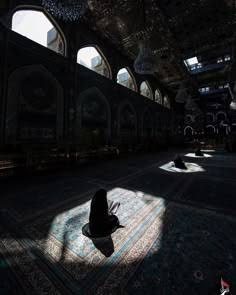
There are times in life when it feels as though you’ve been dropped into a room with no light. Every direction feels the same, every step is unsure. You stumble, knock into things, and hurt yourself in the process. The longer you stay in that darkness, the harder it becomes to believe there’s a way out.
And so, many try to cope. To quiet the thoughts. To silence the ache inside. To numb themselves—whether with habits, distractions, or escapes that promise relief but only leave the heart emptier. In that numbness, something sacred is lost: the ability to truly feel, to connect, to be alive in the way the soul longs to be.
Most of all, what gets buried is the heart’s connection to Allah ﷻ—the very light it was created to seek.
This darkness is not random. It is the whisper of Shaytan, who works tirelessly to veil the soul, to dim the light within, to make the believer forget the brilliance of their own Noor. When your world feels heavy and clouded, when clarity is gone, when you keep tripping over the same mistakes—that is his aim. And when you are in the dark, it is easy to forget that light even exists.
But there is a truth that darkness can never erase: Allah’s light is never gone. No matter how far you wander, no matter how many times you fall, His mercy waits for you. His forgiveness does not run out. The door back to Him never closes.
Every step toward Allah ﷻ—even the smallest, even if shaky, even if made through tears—is a victory. Each whisper of regret is heard. Each turn back, after turning away, is welcomed. Allah’s kindness to His servants is greater than any kindness we can show ourselves.
And if you are struggling—know that you are not alone. Many carry silent battles: with prayer, with hijab, with habits too heavy to break, with lifestyles that don’t yet align with their beliefs. For reverts especially, the joy of entering Islam can later give way to moments of doubt, misalignment, or even temptation to return to an old life. These struggles are not proof of weakness. They are signs that you are human, that faith is alive, that you are being called back again and again to the One who loves you most.
So, to the one reading this: don’t give up. Don’t believe the whisper that says you are too far gone, too stained, too unworthy. That voice is not from Allah. It is only Shaytan, trying to cloak your heart in despair.
You are more than your mistakes. Your Noor still shines, even if you cannot see it right now. And Allah ﷻ—the All-Forgiving, the All-Merciful—wants to bring you back to Him.
Keep turning, keep reaching, keep walking toward the light. However small, however slow, every step matters. And when you cannot see your way forward, trust that Allah already sees you. He has always seen you.
The darkness may feel real, but the light of Allah ﷻ is greater. It always has been. And it always will be.
But wisdom shapes the soul.
A Reflection for My Fellow Revert Sisters
Sometimes, as reverts, we feel small in comparison to those who seem to know everything about Islam — who can recite the Qur’an flawlessly, quote hadith by heart, and remember every lesson. We may worry that our journey is incomplete, that our understanding is lacking.
But the truth is, the beauty of this path is not measured by memory or perfection. It is measured by the depth of our hearts, the sincerity of our reflection, and the way the Qur’an takes root within us.
With this in mind, I want to share a letter to my fellow revert sisters — a reminder that wisdom is found in the heart, and that your connection to Allah is unique, precious, and enough.
⸻
A Letter to My Fellow Revert Sisters
My dear sisters,
There is something I want to share with you, especially for those of us who came to Islam later in life. Many of us carry a quiet worry in our hearts: “I don’t know enough. I can’t remember enough. I’ll never catch up to those who were born into this faith.”
I want you to pause here, take a breath, and let me tell you — you are not less. Not in the sight of Allah. Not in the value of your journey. Not in the weight of your worship.
There is a difference between reading to gain knowledge and reading to gain wisdom. Knowledge is about remembering facts, recalling names, and reciting details. It makes a person seem knowledgeable, and there is goodness in that — but it is not the full picture.
Wisdom is something gentler, deeper. It is not measured by what the mind can store, but by what the heart can hold. It is not about carrying every verse in memory, but about letting even a single verse move you, shape you, and become part of your soul.
As reverts, we do not need to compare ourselves to those who can recite the Qur’an from beginning to end without stumbling or pausing for breath. That is their gift, and it is beautiful. But your gift may be different — and it is no less. You are not any less than somebody who can recite the Qur’an from beginning to end without taking a breath. What matters most is to understand the Qur’an in the same way you feel your heartbeat — constant, alive, and within you.
The Qur’an itself reminds us:
“None will grasp its meaning except those firmly grounded in knowledge.” (3:7)
And Imam Ali (as) taught us:
“Knowledge is of two kinds: what is heard and what is practiced. That which is heard does not profit if it is not practiced, but that which is practiced is knowledge indeed.” (Nahj al-Balaghah, Saying 366)
So let this bring peace to your heart. Do not measure your worth by what you can recall on command, but by how sincerely you live what you have understood. One verse lived is greater than a hundred verses recited without reflection.
For some, knowledge is stored in libraries of memory. For others — especially those who cannot retain details easily — wisdom is carried in a different way. It is carried in the heart, in the quiet understanding that stays with you long after the words have faded.
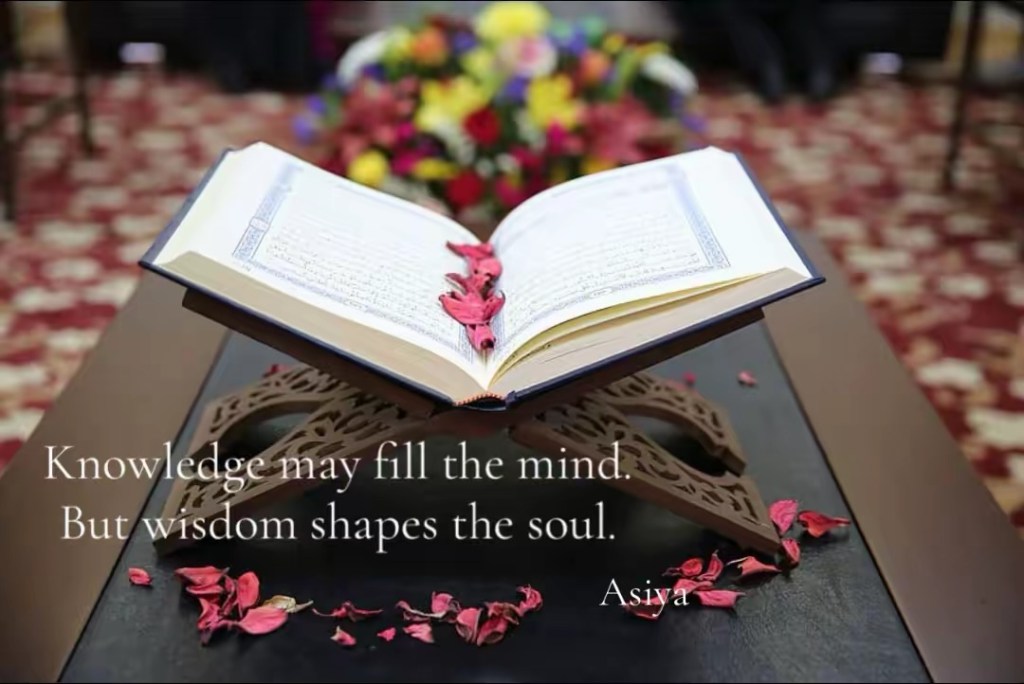
Knowledge may fill the mind.
But wisdom — wisdom shapes the soul.
With love and solidarity,
From one revert sister to another
⸻
Duʿa
O Allah, make us among those who are firmly grounded in knowledge,
those who live the Qur’an with sincerity,
who practice what they understand,
and who carry Your words in their hearts
as steadily as the beating of their own hearts.
Āmeen.
 Seeking Sakina