
I am Muslim ….
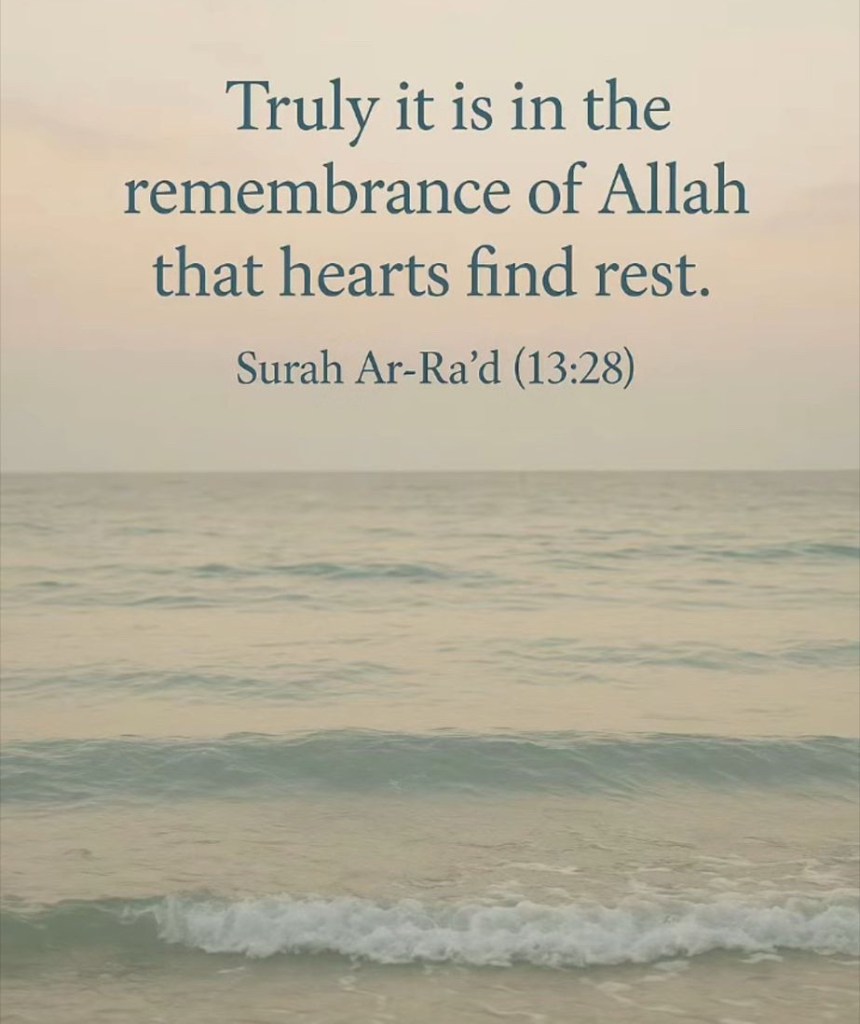
From now on, I will be following the Qur’an as my primary and sufficient source of guidance.
This decision comes from a simple but firm understanding: the Qur’an presents itself as complete guidance, accessible to the reader, and meant to be reflected upon directly. It speaks in principles, moral direction, and clear spiritual boundaries, and it repeatedly calls the reader to engage with it through thought, reflection, and sincerity. That direct relationship between the reader and the text is what I now prioritise.
From a Qur’an-centred point of view, fiqh and hadith are not part of the necessary structure of faith. They exist as human attempts to organise understanding and expand on application, but they are not binding sources of obligation in the same way as the Qur’an itself. They may offer interpretation, detail, and historical context, but they are not required for a person to live by God’s guidance.
What follows naturally from this is a shift in how religion is understood in daily life. The Qur’an gives guidance on prayer, fasting, charity, modesty, and conduct—but it does so through principles and core instructions rather than exhaustive legal systems. That means the responsibility of practice returns to the individual’s direct engagement with the text: to read it, reflect on it, and apply it honestly within their own circumstances.
Within this understanding, differences of culture, environment, or legal systems do not automatically create additional religious obligations beyond what is explicitly grounded in the Qur’an. What people inherit culturally or legally may be useful as structure or tradition, but they do not carry the same weight as divine instruction. It is not that structure has no value—it is that it is not the source of obligation itself.
A Qur’an-centred approach does not mean rejecting the Prophet. On the contrary, it is rooted in the understanding that the Prophet’s role was to deliver and embody the message of the Qur’an itself. The Qur’an consistently presents him as a messenger whose duty was to convey the revelation he received and call people back to God.
From this perspective, following the Prophet is inseparable from following the Qur’an, because the Prophet’s guidance is understood through the message he brought. If I am striving to follow the revelation that was entrusted to him, then I am not turning away from the Prophet—I am taking seriously the very thing he was sent to deliver.
For me, honouring the Prophet does not mean treating every report attributed to him as a binding source of religious law. It means respecting him as God’s messenger, believing in the revelation he conveyed, and doing my best to live according to that revelation and his character and qualities. Following the Qur’an is therefore not a rejection of the Prophet, but an affirmation of his mission.
This also shapes how I view the concept of Sunnah. I do not believe the purpose of the Prophet’s life was to provide an exhaustive rulebook covering every minute detail of human behaviour for all people in all places and times. Rather, his mission was to deliver God’s message and demonstrate faithfulness to it. The central focus of his life was the revelation itself. Therefore, while historical reports about the Prophet may provide insight into his life and character, I do not regard them as a separate source of binding religious obligation alongside the Qur’an.
One of the first questions I am often asked when I say that I follow the Qur’an alone is: “How do you know how to pray?”
For many people, this seems like a decisive argument. The assumption is that without hadith, fiqh, or a detailed legal tradition, prayer becomes impossible. But I have come to see the issue differently.
My aim is not to abandon prayer, charity, or religious practice. Quite the opposite. My aim is to ground those practices in the Qur’an itself and to distinguish between what God has explicitly required and what later generations have developed around those requirements.
The Qur’an clearly instructs believers to establish prayer. It speaks of standing, bowing, prostrating, remembering God, reciting revelation, and observing prayer at appointed times. The core elements of prayer are present within the text itself. What is often debated are the details that later became standardised through legal and theological traditions.
From a Qur’an-centred perspective, there is a difference between what God explicitly commands and the methods that communities develop over time in order to carry out those commands. Many practices that Muslims regard as universal and fixed today were transmitted through tradition and eventually formalised into legal systems. That does not necessarily mean those traditions are wrong, nor does it mean they have no value. It simply means that I do not view them as carrying the same authority as the Qur’an itself.
The question, then, is not whether prayer exists in the Qur’an—it clearly does. The question is whether every detail of prayer must be fixed by later tradition in order for the prayer to be valid. My answer is that the Qur’an gives the essential framework and purpose of prayer, and that sincere believers can engage with those instructions directly.
The same principle applies to other areas of practice. Questions such as “How much charity should I give?” or “What exact format should every act of worship take?” are often answered through fiqh. For many Muslims, that provides clarity and structure. But from my perspective, the existence of a traditional answer does not automatically make it a divinely mandated answer and quite often it sets the bar for the minimum effort or connection.
I believe there is a difference between God’s guidance and humanity’s attempt to organise that guidance into systems. The two are not always identical. Traditions may preserve wisdom, experience, and communal practice, but they remain traditions. The Qur’an remains revelation.
For me, this means approaching worship with sincerity, humility, and direct engagement with the text. It means accepting that not every question will have a detailed procedural answer and that perhaps not every question was intended to have one. The Qur’an repeatedly calls people to think, reflect, reason, and seek God. I do not believe that faith requires every act of devotion to be reduced to a rigid formula before it can be meaningful.
In this sense, Islam becomes something more direct and personal. The Qur’an is not approached through layers of legal interpretation that define its meaning in advance, but through a personal commitment to understanding and living it. The focus shifts from external systems of jurisprudence to internal clarity: what does the Qur’an actually say, and how do I sincerely act upon it?
This approach does not remove discipline or responsibility. If anything, it increases it. It requires careful reading, honesty in interpretation, humility, and a willingness to sit with the text without immediately outsourcing its meaning to inherited frameworks. It is a commitment to letting the Qur’an speak first, and allowing practice to follow from that engagement.
For many people, fiqh, hadith, and established traditions provide a structure that helps them practise their faith. I respect that, and I understand why others choose that path. But for myself, I have come to the conclusion that my religious obligations should come from the Qur’an itself, not from later interpretations of it. Where the Qur’an is clear, I will follow it. Where it leaves room for reflection, I will reflect. Where it speaks in principles, I will strive to apply those principles with sincerity, reason, and God-consciousness.
In this sense, I am not seeking to redefine Islam, but to return to its primary source: the Qur’an itself.
This desire to return to the Qur’an also shapes how I understand worship itself. The Qur’an repeatedly describes prayer as an act of remembrance of God. For example, God says:
“Indeed, I am Allah. There is no god except Me, so worship Me and establish prayer for My remembrance.” (Qur’an 20:14)
And elsewhere:
“Recite what has been revealed to you of the Book and establish prayer. Indeed, prayer restrains immorality and wrongdoing, and the remembrance of Allah is greater.” (Qur’an 29:45)
Because of this, I understand the essence of salah as remembrance, devotion, and connection to God.
One of the reasons I have become increasingly firm in this approach is that many questions directed at Qur’an-centred Muslims assume that religious practice must be defined through later tradition in order to be valid. Questions like “How do you know how to pray?” or “How many rak‘ahs?” assume that anything not standardised in fiqh is automatically uncertain or invalid.
From my perspective, there is a difference between what God has revealed and what communities have later systematised. The Qur’an provides the foundations of worship, and I believe sincere believers can engage directly with those foundations without needing every detail to be legislated externally.
This also applies to practices that are often assumed to be fixed. For example, many elements commonly included in prayer are based on later tradition rather than explicit Qur’anic instruction. My concern is not to criticise those who follow them, but to maintain a clear distinction between revelation and inherited interpretation.
I do not believe every practice associated with Islam must be treated as a divine requirement unless the Qur’an itself clearly establishes it as such. My intention is not to follow less, but to follow more precisely what I understand to be God’s own words.
So from this point onward, my reference point is the Qur’an itself—as guidance, as reminder, and as the foundation for belief and action. Not because I reject the Prophet, but because I believe that following the message he delivered is the most direct way of honouring the mission he was given. My aim is not to follow less, but to follow what I understand to be the clearest and most authoritative source of guidance: the Book that God revealed.
Discover more from Seeking Sakina
Subscribe to get the latest posts sent to your email.
 Seeking Sakina