Divine Disconnection: The Selling of Women’s Mysteries and Islamic Empowerment

There’s a rise of women in these spaces calling themselves fierce, calling themselves warriors—but what I’m seeing isn’t strength.
It’s ego.
It’s being dismissive, controlling, unwilling to hear any view but their own.

That’s not power. That’s not maturity. That’s not sacred.

When you shut down conversation, when you bulldoze anyone who doesn’t mirror your beliefs—you’ve narrowed your mind. That’s the very definition of being closed off. And that kind of self-righteousness? It kills growth.

When you’re unwilling to be questioned, you can’t evolve.
When you attack others publicly because they dared to disagree, you’re not holding space—you’re holding a megaphone.
It’s not compassion. It’s not truth.
It’s a performance.

I’ve watched this for years. I didn’t just dip my toes in—I was in it.
I held red tents when they were first beginning. I trained women to hold space before it became trendy.
I used to run full festivals where genuine embodiment was the heartbeat of the work. We had deep trainings that prepared us for this path—how to recognise ego dynamics in circles, how to stay anchored, how to listen.

And now? I’m watching women pass through, cherry-pick bits of what they’ve seen at those festivals or trainings, glue them together into a “program,” run it for a while—and it fizzles. Because it’s not rooted. It’s not real.

It wasn’t born from the heart. It was born from the desire to make money.
And when something comes from ego—it will collapse. Every time.

I stepped away from all of this over a decade ago.
I saw it imploding even back then.
I saw the packaging, the rebranding, the endless cycle of women copying each other’s work, selling it on again with a new name. It lost its heart. And I couldn’t be part of that.

But now I’m watching it burn down—and I need to speak.

This isn’t a callout post. This is a warning to younger sisters:
Be discerning. Don’t confuse volume with truth. Don’t confuse polished branding with integrity.
There’s a poison leaking into what were once sacred spaces.
And if we stay silent, that poison spreads.

These spaces were always meant to be safe.
They were meant to be nurturing.
They were meant to promote growth, to support free thinking.
Because while there may be a common goal in the collective, each individual’s journey is sacred and unique.
There’s no one-size-fits-all model to empowerment.
This push of “either you agree with me or you’re wrong” has to end.
Two truths can coexist.
Multiple truths can coexist.
And that’s what so many women locked in this warrior-blindsided mindset need to remember.

But amidst all of this—there are women I deeply respect.
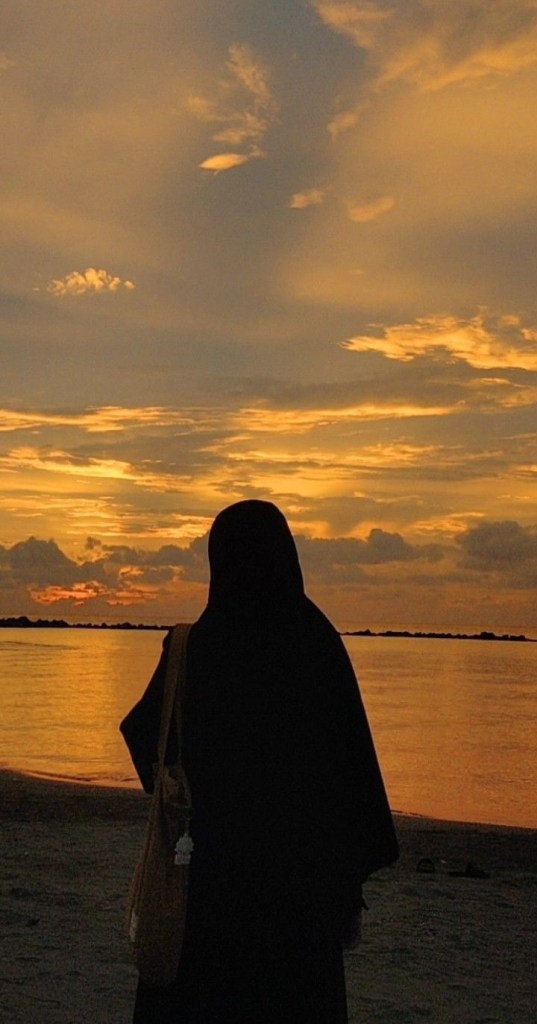
And I can count them on one hand. I’m actually wearing a scared shawl by one of these very women in my picture, one of many I own as I respect the heart in her work.

So who are these women? They’re not the loudest.
They’re gentle. They’re rooted. They’ve done the work.
They’ve moved through the fire and come out the other side softened, not hardened.

They don’t even realise what they carry is wisdom—because to them, it’s just life. Just love. Just truth.
They glow differently. Their words feel safe. Their work moves differently.

They took time. They let the teachings settle in their bones before they passed anything on.
They bloomed in private before ever teaching in public.
And to those women—I tip my hat.
You’re the ones carrying the medicine.

So no—I’m not angry. I’m not bitter. I’m just deeply sad.
Sad that what was once sacred is now a stage.
Sad that rage is mistaken for empowerment.
Sad that performance has replaced presence.

And no, we don’t need to go back to dancing around the fire.
We need to move with the times, but stay anchored in our bodies.
Rooted in humility.
Grounded in love.

That’s what this work was always meant to be.

And this isn’t just happening in the spaces of feminine mysteries or red tents or embodiment circles.
It’s happening in Islamic spaces too.

There’s a growing wave of Muslim women calling themselves coaches, mentors, guides—selling empowerment from an Islamic lens. And yet so many of these offerings are neither rooted in real feminine work nor grounded in actual Islamic knowledge.

They pull from hadith that may not even be sahih.
They draw loosely from teachings that have been molded to support a personal narrative, not a divine one.
And while they call it Islamic life coaching or Islamic mentoring, what you’re often getting is a confused blend of empowerment language and selective religious references.

It’s not empowerment.
It’s not scholarship.
And it’s certainly not sacred.

And I say this with love—but also with clarity—because I’ve walked both paths.
I’ve trained in the feminine mysteries. I’ve held sacred space long before it became fashionable.
And now I walk the path of Islam, too.

So I see it. The gap.

You can’t sell female empowerment in the ummah if you’ve never truly walked that path.
Because that path isn’t born in textbooks or on Canva slides. It’s born in the body. In blood. In grief. In rites of passage that tore you open and rebuilt you from the inside out.

And in the world of Islamic female empowerment—most of that is missing.

You’re trying to empower women through a patriarchal framework—and yes, Islam grants women rights Western feminism still doesn’t—but the spiritual empowerment people are trying to create here doesn’t quite have a place in the tradition as it stands. Not in the way it’s being packaged.

Because the divine feminine? The goddess current? The womb as a spiritual portal?
That’s not part of Islamic theology.
And if you haven’t lived and understood that current deeply, you can’t pretend to translate it into a sharia-compliant package.

It doesn’t work.
It confuses.
And it quietly disempowers while selling the illusion of growth.

So this is me speaking—not from bitterness, but from deep, heartbroken experience.
From the trenches of real sacred work.
From the path of witnessing what happens when ego tries to masquerade as spirit.

It’s time we remembered the difference.
And honoured it.

Allah Heard, and the Sky Wept

It began raining this afternoon—soft at first, then steadier, almost as if the sky had been holding something in and finally let go. I stood by the window and just watched. I’d been making du’a all day—some of it quietly on my tongue, and some of it just sitting there in my chest, like a knot that needed untangling. I didn’t even realise how constantly I’d been calling out until the rain came and something in me softened.

You know, in Islam, these are not mere coincidences or empty sounds from the sky. Thunder and rain are seen not just as weather, but as signs—ayat—from Allah. Subtle and mighty. They speak in a language deeper than words, and sometimes they say exactly what the heart needs to hear.

The Qur’an says that thunder glorifies Allah. That verse always moves me. The idea that thunder isn’t just noise—it’s dhikr. Worship. It’s glorifying the One who controls everything. That roaring sound that shakes the air? It’s not chaos. It’s praise. Even the angels, we’re told, follow it in awe of Him. That changes everything for me. It makes the storm feel like a prayer in motion.

And rain… rain is mercy. It’s a reminder that something soft and life-giving can fall from the heights of the unseen. Surah An-Nur tells us how Allah gathers the clouds, layers them, and brings forth rain. It’s not a random process—it’s orchestrated. Carefully, lovingly. And it’s said that when it rains, du’as are more likely to be accepted. So when the drops began to fall this afternoon, I couldn’t help but wonder: is this Your way of answering me? Of letting me know You heard me?

I think sometimes Allah responds in ways only our hearts can translate. A feather. A verse. A breeze. A conversation that hits the right chord. Or rain—quietly soaking the earth and something within me at the same time.

Imam Ja’far as-Sadiq (peace be upon him) said that nothing is without meaning. And so I choose to see the signs. Not because I’m desperate for proof, but because I believe in a God who sees me in my stillness. In my longing. In my quiet, constant prayers.

Maybe the rain today was just rain.

But maybe it wasn’t.

And maybe that’s enough.

The Beauty of Patience: A Reflection on Sabr Jamil

Patience is not passive. It is not merely enduring hardship with gritted teeth, waiting for the storm to pass. True patience—Sabr Jamil—is an active trust in Allah, a deeply rooted certainty that every test is woven into the fabric of Qadr, designed not to break us, but to shape us.

Life has felt like an unending series of trials, one after another, testing me beyond what seems humanly possible. Yet, in every moment of hardship, I have chosen patience—not because it was easy, but because hope in Allah has always been my foundation. Patience is not just a feeling; it is an action. It is the deliberate choice to restrain the ego, to quiet the whispers of frustration and despair, and to submit to the wisdom of Al-Alim, the All-Knowing.

Allah reminds us in the Qur’an that He is with the patient (Surah Al-Anfal 8:46). This is where patience begins—with the deep internalization that we are never alone in our struggles. It is from this understanding that we make the conscious choice to be patient, knowing that Allah loves the patient (Surah Aal-e-Imran 3:146). And when we commit to patience as a way of life, trusting in Allah’s timing and wisdom, we reach the realization that “if you remain patient, indeed, that is better for those who are patient” (Surah An-Nahl 16:126).

Patience is not about suppressing emotions or pretending that pain does not exist. It is about holding onto the rope of Allah while the storm rages, knowing that He is the one who will bring the dawn. And with every hardship, with every test, it is as if another knot is tied into that rope, giving me a firmer grip, a stronger hold, a way to climb higher and draw closer to Him. These trials are not roadblocks; they are steps, each one elevating my soul toward the One who is always near.

It is a journey of self-discipline—of resisting the ego’s demand for instant relief, of choosing faith over fear, of allowing hardship to refine the soul rather than harden the heart.

And in the moments where patience feels impossible, when the nafs screams for an end to the struggle, I remind myself that patience is a seed planted with trust. Allah will water it. He will let it grow. And soon, these difficulties will be nothing more than stories of how Allah carried me through.

This journey toward Taqwa, toward complete reliance on Allah, is intense. It demands everything from the soul. But it is also breathtakingly beautiful. Because in patience, we witness miracles—in ourselves, in our hearts, and in the way Allah unfolds our story in ways we never could have imagined.

And so, I choose patience. I choose Sabr Jamil. Again and again. Because I know that with every hardship, Allah is near.

Rooted in Faith, Resting in Stillness

Look at a tree, a flower, a plant. Let your awareness rest upon it. See how still it is, how deeply rooted in being. It does not rush, nor does it question its existence. It simply is, fulfilling its purpose as Allah has ordained. Allow nature to teach you stillness.

In a world that constantly pulls us in different directions, where our minds race with worries of the past and anxieties of the future, we often forget the power of simply being—of grounding ourselves in the present, in the remembrance of Allah. Yet, when we turn to nature, we see a reflection of what it means to trust in His divine wisdom. The trees do not fret over their sustenance, nor do the flowers anxiously wait for the rain. They remain firm, deeply rooted, surrendering to the will of their Creator.

“And the good word is like a good tree, whose root is firmly fixed, and its branches reach to the sky.” (Qur’an 14:24)

Our faith, too, must be like this—deeply rooted, unwavering, constantly reaching towards the heavens. Just as a tree finds nourishment in the earth, we must find our sustenance in our connection with Allah. Salah, dhikr, patience, and gratitude—these are the roots that keep us firm amidst the storms of life. Without them, we are like scattered leaves, easily carried away by the winds of hardship and uncertainty.

Stillness is not just about quieting the noise around us—it is about quieting the noise within. It is about trusting that no matter what life brings, we are held by the One who created us, just as He holds the trees, the flowers, and the plants in perfect balance.

So, let nature be your teacher. Let it remind you that just as every tree stands firm in the earth, you too must stand firm in your faith. Just as every flower blooms at its appointed time, your journey is unfolding exactly as Allah wills. And just as every leaf eventually falls, returning to the earth in peace, we too must learn to surrender—to trust, to let go, and to find stillness in the presence of our Creator.

Tahajjud…A whisper into the night

Ya Allah, in the stillness of this night, I come to You—tired, restless, yearning for peace. The world is quiet, but my mind is loud. My thoughts circle endlessly, carrying worries I cannot control, fears I cannot silence, and regrets I cannot change. Ya Rabb, I lay them before You now.

I am weary of overthinking, of holding onto burdens that only You can carry. I do not want to live imprisoned by my own mind, restless even in moments of stillness. Ya Allah, soothe the storm within me. Quiet the chaos in my heart. Replace my anxiety with trust, my fear with faith, my uncertainty with the peace of knowing that You are in control.

Ya Rahman, You see what weighs on me, even when I do not speak it aloud. You know the pain I hide, the battles I fight, the silent prayers I whisper when no one else is listening. Tonight, I leave it all with You. I surrender, not in defeat, but in trust. I do not need all the answers—I only need to know that You are near.

Ya Rabb, as I bow before You in this sacred hour, I ask You to calm my restless heart. Grant me the kind of peace that only comes from You. When my mind is unsettled, remind me to turn to You. When my heart aches, remind me that You are the Healer. When I feel lost, guide me back to You.

Ya Allah, let me wake with a heart unburdened, with a soul at ease, with a mind that trusts in Your divine plan. And if peace is written for me, let it be a peace that draws me closer to You.

Ameen.

Productive Activities for Revert Sisters unable to fast in Ramadan

Dear sister,

If you’re unable to fast due to whatever reason, as that’s between you and Allah don’t feel discouraged. You are still earning rewards by obeying Allah’s command and quite often your medical team.

Here are some beneficial ways to stay spiritually connected during this time:

1. Say Alhamdulillah – Instead of feeling upset. Understand that everything is by the will of Allah and you are still being rewarded for following Allah’s guidance.

2. Start Everything with Bismillah – Begin all your actions in the name of Allah to bring blessings into your day.

3. Memorize the 99 Names of Allah – Reflect on their meanings to strengthen your connection with Him.

4. Recite Surah Ikhlas – Since it equals one-third of the Qur’an, reading it three times is like completing the entire Qur’an.

5. Engage in Dhikr – Keep your heart connected to Allah by frequently saying SubhanAllah, Alhamdulillah, Allahu Akbar, La ilaha illallah.

6. Seek Forgiveness – Say Astaghfirullah often to purify your heart and soul.

7. Learn and Memorize Short Duas – Focus on their meanings and incorporate them into your daily life.

8. Read Hadiths – Gain wisdom from the sayings of the Prophet (ﷺ) in a language you understand.

9. Listen to Qur’an Tafseer & Islamic Lectures – Deepen your understanding of Islam through beneficial talks.

10. Read the Qur’an’s Translation – Reflect on the words of Allah in your native language.

11. Study the Seerah – Learn about the life of Prophet Muhammad (ﷺ) and draw inspiration from his character.

12. Read About the Women of Islam – Discover the lives of the Mothers of the Believers and female Companions for motivation and strength.

13. Share Islamic Knowledge – If you have online friends or sisters in faith, engage in discussions and share beneficial reminders.

14. Avoid Gossip & Negative Speech – Protect your heart by staying away from backbiting and idle talk.

15. Revive the Sunnah – Implement small Sunnah acts, like making du’a before sleeping and greeting others with Salam.

16. Improve Your Worship – Practice perfecting your wudu, salah, and supplications so you can return to/continue prayer with renewed sincerity.

17. Engage in Acts of Kindness – A kind word, a supportive message, or a sincere du’a for someone else is a form of charity.

18. Plan Your Ramadan Goals – Use this time to set spiritual goals for the remainder of Ramadan and beyond.

19. Make Niyyah (Intention) for Allah – Every good deed done sincerely for His sake will be rewarded.

20. Tag a Sister Who Can Benefit – The Prophet (ﷺ) said: “The one who guides to something good has a reward similar to the one doing it.” (Muslim)

Remember: In Ramadan, good deeds are multiplied 70 times! Even if you can’t fast, there are countless ways to earn immense rewards.

Ramadan, Qadr, and Trusting Al-Wakīl

Ramadan is one of the most blessed months of the year—a time of deep reflection, worship, and renewal. As we fast, pray, and draw closer to Allah, we naturally find ourselves looking back, revisiting the past, and reflecting on the choices we’ve made.

At some point, we all wish we could turn back time, rewrite certain moments, and take different paths. Regret can settle deep within us, making us wonder, What if I had done things differently? But part of this reflection must also be a reminder: everything that has happened was always meant to be.

“No disaster strikes upon the earth or within yourselves except that it is inscribed in a register before We bring it into being—indeed that, for Allah, is easy.” (Quran 57:22)

Before we even came into existence, every joy, every hardship, and every lesson was written for us. The good and the bad, the moments of ease and the moments of struggle—all of it was decreed by Allah. And yet, when hardship touches us, we sometimes lose sight of this truth. We forget that everything—even our greatest tests—come from the One who possesses all that is good.

But when we remember this, when we take our belief in Qadr deep into our hearts, something shifts. There is a peace that comes with truly believing that Al-Wakīl (The Best Disposer of Affairs) is always in control. The knowledge of this strengthens our relationship with Allah, because we no longer carry the weight of the past with regret. Instead, we embrace it with understanding.

Laylatul Qadr, the Night of Decree, is the most blessed night of Ramadan. It is the night when destinies are written, and yet, its exact date remains hidden from us. Why? Because billions of Muslims around the world strive to witness it, pouring their hearts into worship, praying, and seeking Allah’s mercy. This night teaches us something profound: we don’t always need to know everything. We just need to trust.

And that brings us back to Al-Wakīl.

How often do we yearn for something, pray for it, only for Allah in His infinite wisdom to give us what we need instead? He knows what is best, even when we do not.

“… But perhaps you hate a thing and it is good for you, and perhaps you love a thing and it is bad for you. And Allah knows, while you know not.” (Quran 2:216)

Our role is not to control everything. Our role is to strive, trust, and submit—to tie our camel and then leave the rest to Allah. This does not mean we sit back and do nothing. Islam teaches us to be proactive, responsible, and to take the means available to us. But it also teaches us to accept that our plan may not always be the best plan.

So as we reflect on our past this Ramadan, perhaps we can begin to see it differently. Maybe everything we’ve been through has been preparing us for where we stand today. Maybe the struggles that once broke us were actually shaping us into who we were always meant to be.

And maybe—just maybe—when we truly entrust our affairs to Al-Wakīl, we’ll finally find the peace we’ve been searching for all along.

Day 1 Ramadan 2025

Day 1 Ramadan

Allah as Al-Latif: The Most Subtle, The Most Gentle

In both Islamic spirituality and holistic healing, Al-Latif represents the unseen yet deeply transformative ways in which Allah provides healing, comfort, and sustenance. His care is like a soft breeze—gentle yet powerful, working beyond our awareness to nurture our hearts, minds, and souls.

Al-Latif and Emotional Healing

Just as Allah understands the unspoken grief and silent struggles within us, holistic healing emphasizes the importance of subtle energies in emotional well-being. Allah’s lutf (gentleness) mirrors the effects of calming therapies—like energy healing, aromatherapy, and meditation—that soothe the nervous system and promote inner balance.

Al-Latif and Physical Healing

The body often holds onto stress and trauma in ways we may not consciously recognize. In holistic healing, gentle therapies like Reiki, acupuncture, and crystal healing work in subtle yet profound ways—much like how Allah’s mercy heals us in ways we may not see immediately. He provides relief not only through medicine but also through nature, diet, and rest, all of which are part of His divine wisdom.

Al-Latif and Spiritual Healing

Deep spiritual healing happens through unseen means—prayers answered in ways we never expected, guidance that comes at just the right moment, or a sudden sense of peace in hardship. Just as rose quartz is known for its soft, nurturing energy that promotes healing and self-love, Al-Latif brings a divine gentleness to our spiritual journey, helping us heal wounds we may not even realize we carry.

Quranic Reflection

“And be patient, for indeed, Allah is with those who are patient. And do not grieve over them or be in distress over what they conspire.”

— Surah An-Nahl (16:127)

This verse reminds us that Allah’s lutf is always present, guiding us toward healing, whether we feel it immediately or not. Like holistic healing methods that work on deep, unseen levels, Al-Latif heals our souls in ways beyond our comprehension. Trusting in His subtle kindness allows us to embrace patience, knowing that relief, healing, and peace are unfolding in divine timing.

©️seeking sakina 2025