Knowledge may fill the mind.

But wisdom shapes the soul.
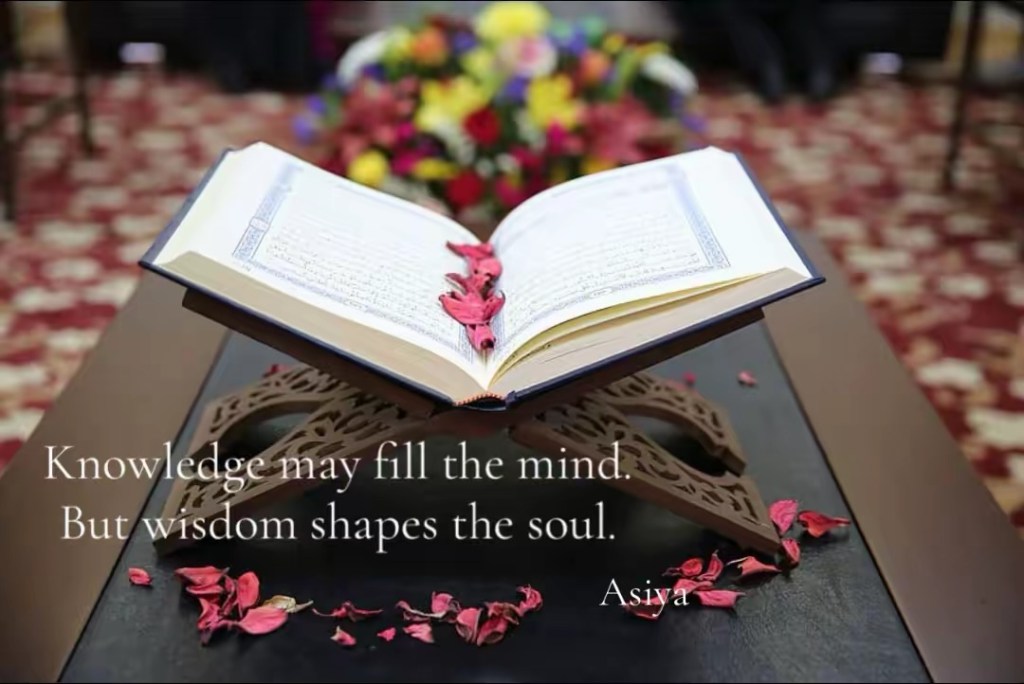
A Reflection for My Fellow Revert Sisters

Sometimes, as reverts, we feel small in comparison to those who seem to know everything about Islam — who can recite the Qur’an flawlessly, quote hadith by heart, and remember every lesson. We may worry that our journey is incomplete, that our understanding is lacking.

But the truth is, the beauty of this path is not measured by memory or perfection. It is measured by the depth of our hearts, the sincerity of our reflection, and the way the Qur’an takes root within us.

With this in mind, I want to share a letter to my fellow revert sisters — a reminder that wisdom is found in the heart, and that your connection to Allah is unique, precious, and enough.

A Letter to My Fellow Revert Sisters

My dear sisters,

There is something I want to share with you, especially for those of us who came to Islam later in life. Many of us carry a quiet worry in our hearts: “I don’t know enough. I can’t remember enough. I’ll never catch up to those who were born into this faith.”

I want you to pause here, take a breath, and let me tell you — you are not less. Not in the sight of Allah. Not in the value of your journey. Not in the weight of your worship.

There is a difference between reading to gain knowledge and reading to gain wisdom. Knowledge is about remembering facts, recalling names, and reciting details. It makes a person seem knowledgeable, and there is goodness in that — but it is not the full picture.

Wisdom is something gentler, deeper. It is not measured by what the mind can store, but by what the heart can hold. It is not about carrying every verse in memory, but about letting even a single verse move you, shape you, and become part of your soul.

As reverts, we do not need to compare ourselves to those who can recite the Qur’an from beginning to end without stumbling or pausing for breath. That is their gift, and it is beautiful. But your gift may be different — and it is no less. You are not any less than somebody who can recite the Qur’an from beginning to end without taking a breath. What matters most is to understand the Qur’an in the same way you feel your heartbeat — constant, alive, and within you.

The Qur’an itself reminds us:

“None will grasp its meaning except those firmly grounded in knowledge.” (3:7)

And Imam Ali (as) taught us:

“Knowledge is of two kinds: what is heard and what is practiced. That which is heard does not profit if it is not practiced, but that which is practiced is knowledge indeed.” (Nahj al-Balaghah, Saying 366)

So let this bring peace to your heart. Do not measure your worth by what you can recall on command, but by how sincerely you live what you have understood. One verse lived is greater than a hundred verses recited without reflection.

For some, knowledge is stored in libraries of memory. For others — especially those who cannot retain details easily — wisdom is carried in a different way. It is carried in the heart, in the quiet understanding that stays with you long after the words have faded.

Knowledge may fill the mind.

But wisdom — wisdom shapes the soul.

With love and solidarity,

From one revert sister to another

Duʿa

O Allah, make us among those who are firmly grounded in knowledge,

those who live the Qur’an with sincerity,

who practice what they understand,

and who carry Your words in their hearts

as steadily as the beating of their own hearts.

Āmeen.

Al-Raqīb and Al-Shahīd: Walking in the Awareness of Allah

So I’ve been struggling with my iman recently, as many of us do time to time and I have decided to work on that connection by reflecting upon the names of Allah to deepen that bond and increase my knowledge.

Some recent events have made me choose the following for a very specific reason. It’s easy to fall into the trap thinking we are not being watched when we don’t wear the hijab or we choose not to pray or when we speak or act in a way that doesn’t align with our usual self or morals but we are seen and our actions are witnessed;

God is always watching over you (4:1)

Among the beautiful Names of Allah are al-Raqīb — the All-Observant, and al-Shahīd — the Witness. These two Names remind us of a profound truth: Allah is always present, always aware, always watching over His creation. The Qur’an tells us, “And be patient, for indeed, you are under Our watchful Eye” (52:48). In another verse, Allah asks us gently but firmly, “Does he not know that Allah sees?” (96:14).

Al-Raqīb is the One who observes every detail, nothing escapes His care or His knowledge. He is not only the Watcher from afar, but the One who holds all things in His gaze with wisdom, precision, and mercy. Al-Shahīd is the One who bears witness — to our actions, our words, and even the quietest whispers of our hearts. He is the ultimate Witness who will testify to all that has passed on the Day of Judgment.

Yet, alongside this watchfulness and testimony, Allah is also al-Laṭīf — the Subtle, the Gentle, the Kind. His watching is not cold or harsh, but full of care. His witnessing is not simply record-keeping, but an expression of His closeness and concern for us. To know Him as al-Raqīb and al-Shahīd is to never feel abandoned or unseen. We are, at every moment, under His compassionate gaze.

When we remember these Names, we are invited into the practice of murāqabah — spiritual mindfulness, the awareness that Allah is near, that He sees and knows what is within us. This awareness is what nurtures ihsān, the state of worshipping Allah as if we see Him, and if we cannot see Him, knowing with certainty that He sees us.

Living with this consciousness softens us. It encourages us to guard our thoughts, our words, and our deeds — not out of fear alone, but out of love, reverence, and gratitude. It reminds us to be responsible and caring, especially toward those whom Allah has entrusted to us — our families, our neighbours, even the blessings and property in our care. Just as Allah is the Watchful and the Witness, we too are called to be mindful and trustworthy in our daily lives.

And so, these Names do not burden us — they free us. They remind us that we are never alone. Every sigh, every effort, every tear, and every silent prayer is seen, heard, and remembered by the One who is the All-Observant, the Witness.

But this awareness also poses gentle questions to us:

How mindful are we of our everyday actions? How careful are we with the words we release into the world? How sincere are the intentions we carry in our hearts? And how present are we with Allah, the One who is always present with us?

In remembering al-Raqīb and al-Shahīd, may we learn to live with greater consciousness, greater sincerity, and greater love — under His ever-watchful, ever-compassionate eye.

Art is a soul’s surrender to Allah—a dance of sabr and tawakkul.

Art is the purest expression of the soul. It doesn’t have to be perfect, and you don’t need to have everything planned when you start—only Allah in your heart. This morning, after a really tough week of struggling, I woke up feeling divinely guided to create. I don’t know where this piece will go or what the end result will be, but every time I stand at my table with the Qur’an softly playing in the background, I know I am being gently led. Whatever this art is meant to teach me will become clear when it’s complete.

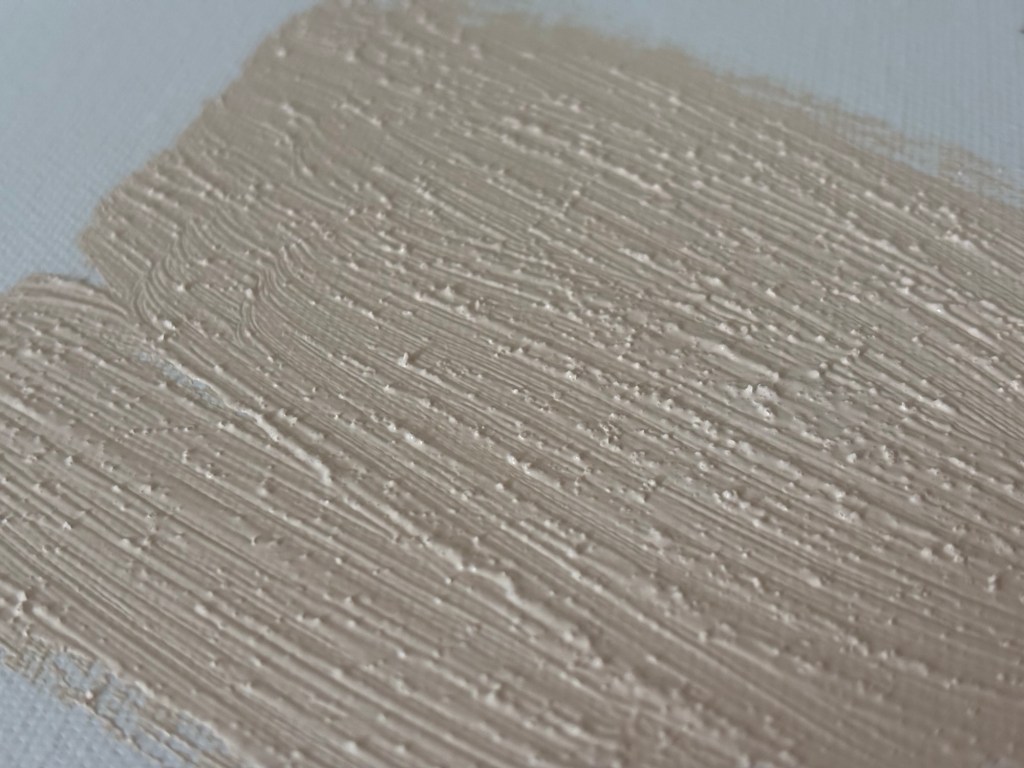
I’m especially pleased that I’m using texture in this piece—texture gives the work depth, dimension, and complexity, just like in life and in Islam. Texture reminds me that things aren’t always smooth or simple; there are layers to our faith and to our experiences that add richness and meaning. Just as a textured canvas invites us to see beyond the surface, Islam invites us to look deeper, to turn back again and again, to reflect and adjust our path.

The journey in Islam is much like creating art. It’s not about perfection, but about returning, making small shifts, stepping back to see the bigger picture, then moving forward with renewed intention. Allah says, “Indeed, with hardship comes ease” (Qur’an 94:6), and Rumi beautifully reminds us, “Don’t grieve. Anything you lose comes round in another form.” The lessons, like the layers of texture, reveal themselves in time, if we trust and surrender.

Standing at my table, I feel that same sacred dance of patience and surrender—the journey of faith and creation unfolding hand in hand, with Allah as the ultimate Artist guiding every stroke.

Space For Grace

From One Sister to Another

When we first find Islam, the joy can be so overwhelming that it feels as if our heart might burst with light. The tears, the peace, the relief—it’s unlike anything else. But then, sometimes quietly and unexpectedly, the feeling shifts. The light feels dimmer, the joy feels heavier, and a voice inside whispers, What have I done?

This is something we don’t talk about enough. Maybe because many Muslims born into the faith can’t fully understand what it’s like to have to change everything—the way we walk, talk, think, dress, and live—almost overnight. For us reverts, the transformation is monumental. And while our Shahada marks the most beautiful moment of our lives, it is not the finish line. It is the starting point.

Yet too often, instead of gentle hands guiding us, we meet pointed fingers correcting us. Mistakes are met with judgment rather than patience. The space for grace feels too small, when in truth, it should be vast and wide enough for every single step of our journey.

I’ve seen sisters lately speak of wanting to take off their hijab, of feeling like they’ve jumped too far, too fast. As if they’ve been dropped into the deep ocean of Islam without a life raft. And I want to say to them: Dear sister, you are not just a drop in the ocean. The entire ocean is within you. (Rumi)

It’s natural to feel this lull. It’s natural to feel overwhelmed, even sad. But remember the words of the Qur’an:

      Allah is enough as a friend, and Allah is enough as a helper. 

                      Quran (4:45)

If you are feeling lost, hold on to that truth—your closest, most loyal companion is Allah Himself. And from me to you: my door is always open. I understand your struggles because I’ve been there—not once, but many times. I’m still learning. I’m still growing. I’m still striving to be a better Muslim.

You don’t have to know everything today. You don’t have to have it all perfect. You took your Shahada—that is your first step. Everything else will come in time, with patience, prayer, and the grace of Allah.

So, my dear sister, breathe.

You are exactly where Allah meant for you to be.

Every stumble is a step,

every tear is a prayer,

every moment you stay is a victory unseen.

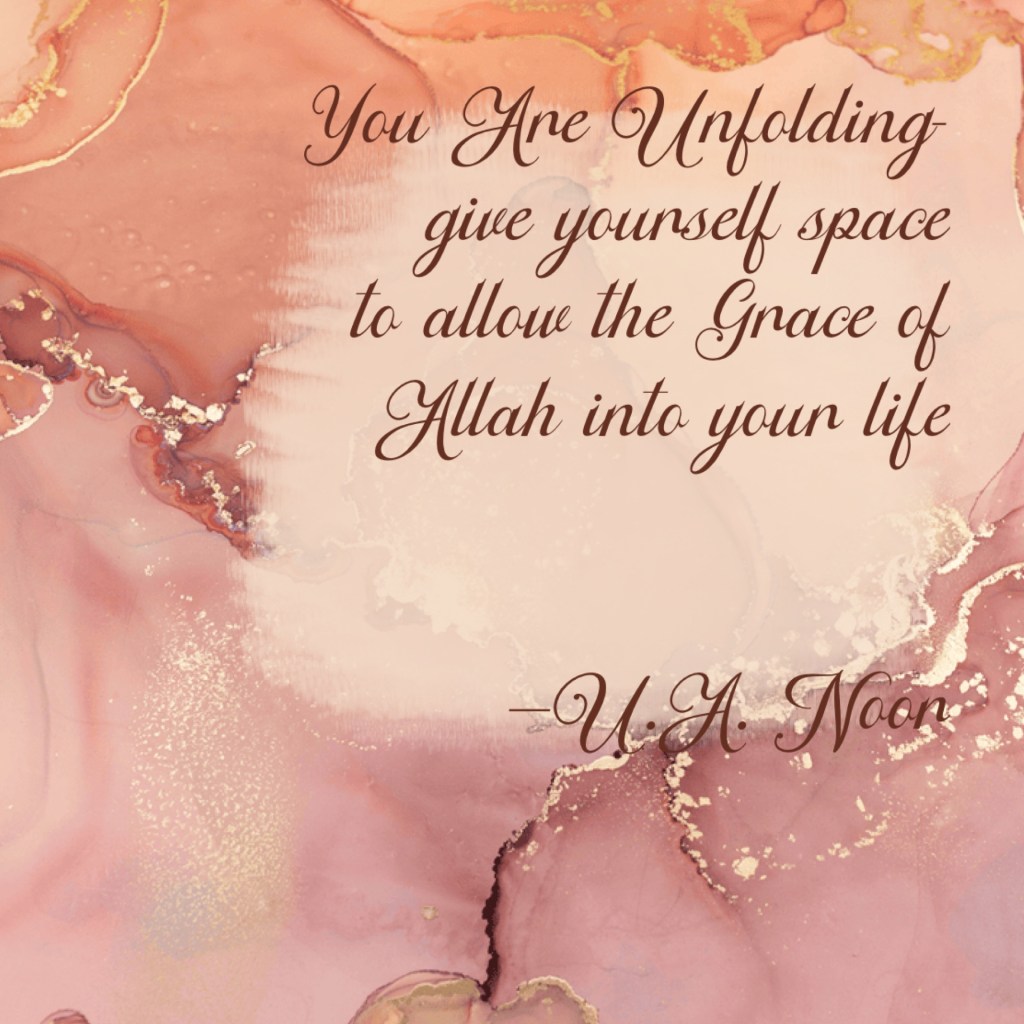
You are not failing—you are unfolding.

And one day, you will look back and see

that Allah was carrying you all along,

gently, patiently, lovingly…

until you could stand,

lift your head,

and smile from the depths of your heart as you say—

Yes. I am Muslim.

Islam doesn’t belong in the west

You can’t avoid it anymore.

Open any comment section — whether it’s a hijabi doing something mundane, a revert sharing their journey, or just a post mentioning the word “Islam” — and it’s there.

The same slogans.

The same hate, dressed up as patriotism:

“Go back to your country.”

“This is a Christian nation.”

“Islam doesn’t belong in the West.”

And if you’re unfortunate enough, you don’t just read it — you hear it in real life too.

Sometimes muttered under breath.

Sometimes shouted with rage.

Sometimes wrapped in “friendly advice” or passive-aggressive conversation.

What shocks me isn’t that the hatred exists — it’s how deep it runs.

It’s not just ignorance.

It’s a mindset that assumes faith should follow bloodline.

That religion is a cultural artefact — not truth, not revelation, not guidance.

They say:

“Why don’t you just believe in the God of your people?”

As if God belongs to certain nations more than others.

As if your soul is supposed to stay in line with your passport.

But let me ask you:

Does guidance come with a national anthem?

Does truth depend on the colour of your flag?

I didn’t choose Islam because it was familiar.

I chose it because it was true.

Because in the quietest, most honest moments of my life —

when I stripped everything back and stood alone before God —

I knew I had to follow what was right.

Not what was easy.

Not what made sense to others.

But what was true.

Faith isn’t something you inherit like an accent.

It’s not a family recipe passed from generation to generation.

Real faith is discovered — through searching, struggling, questioning.

Through being brave enough to ask:

“Is this really the truth, or just what I was told?”

And sometimes, that journey leads you far from everything you knew.

Away from what feels safe.

Toward something that calls to your soul with clarity — even if the world around you doesn’t understand.

That’s what people don’t realise about reverts.

We didn’t stumble into Islam.

We fought for it.

We walked away from the familiar.

We lost relationships, identities, even parts of ourselves —

not out of rebellion, but out of obedience.

Obedience to what’s right.

To what’s eternal.

To Allah.

So when people tell me that Islam doesn’t belong in the West,

I ask — where exactly do you think the truth is supposed to belong?

Because the truth doesn’t recognise borders.

It doesn’t speak only one language.

It isn’t British, or Arab, or Pakistani, or African.

It’s Divine.

And when it reaches your heart — no matter where you are —

you follow.

So no, I won’t shrink my faith to make you more comfortable.

I won’t apologise for leaving behind what I outgrew.

And I won’t pretend that truth can be limited by culture, country, or expectation.

I chose Islam with open eyes and a sincere heart.

And no matter what continent I live on,

no matter what assumptions people make —

I’m home with Allah.

To My Dearest Sisters,

To that sister in the abaya.

To that sister who’s trying.

To the one who left behind everything she knew, and still sometimes wonders where she belongs — I see you.

But more importantly, Allah sees you.

You weren’t always like this. Maybe you were the hoodie and jeans type, the one who never imagined herself wrapped in an abaya. Maybe dressing modestly doesn’t feel natural yet — maybe it even feels like a costume some days. But still, you put it on. Still, you showed up. Not for people. Not for praise. But for Him.

That alone speaks volumes about your heart.

You’re a revert. You left behind a life, a mindset, a world — and now you’re walking a new one, brick by brick, often alone. And some days, it hits you hard: the loneliness, the confusion, the weight of not quite fitting in anywhere. Your īmān dips. You question whether you’re doing enough, whether you even belong here. You wonder: Who am I now?

Let me tell you, from one sister who knows that feeling too well — you are not lost. You are not an imposter. You are in the middle of becoming.

We don’t talk enough about this part of the revert journey. The quiet grief of leaving behind your old life. The silent tug-of-war between who you were and who you’re trying to be. The courage it takes to obey when everything inside you is still catching up.

And yet, even in that chaos, you chose Allah.

“Allah chooses for Himself whom He wills, and guides to Himself whoever turns to Him.”

(Qur’an 42:13)

He saw something in you — even when you didn’t see it in yourself. You didn’t stumble into Islam. You were chosen, handpicked by the Most Merciful. And if He brought you here, He will carry you through.

But here’s the reminder we all need:

This journey isn’t about how others see you — it’s about how deeply you turn to Allah.

It’s not about being perfect. It’s not about looking the part. It’s about seeking Him with a sincere heart.

So when it gets too loud, when the dunya pulls you back, when the whispers say you’re not good enough — quiet them with dhikr. Drown them in sujood. Let your heart fall in love with your Lord again and again.

“So flee to Allah.”

(Qur’an 51:50)

Turn to Him not just when you’re strong, but especially when you’re weak. That’s when He is closest.

You don’t have to be graceful. You don’t have to have it all figured out. You just have to keep going.

You in your abaya, unsure but sincere.

You in your prayer, dry-eyed but trying.

You, choosing obedience over comfort.

You, learning to let go of this dunya, piece by piece.

That is strength. That is beauty. That is īmān.

So focus your gaze, your heart, your everything — on Him. Not on the world. Not on your past. Not even on the version of you that you haven’t met yet.

Because in the end, it was always about Allah.

And He is always enough.

With love, understanding, and du‘ā’ from a sister who truly sees you,

Your sister,

U.A. Noor

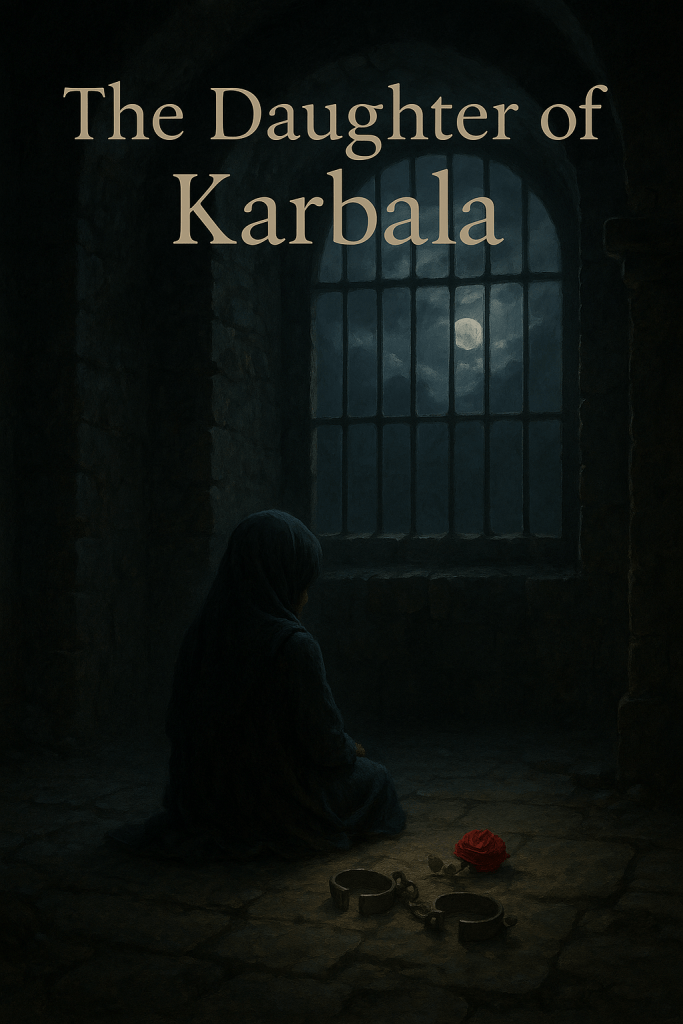
🌸 The Silent Cry of Sayyida Ruqayyah (as) — A Reflection

As the anniversary approaches to honour this little girl I’m struck by the core similarities between her and the children of Gaza like them She was only a child — just four years old, some say even younger — yet her name echoes through the centuries with the weight of grief and sanctity.

Sayyida Ruqayyah bint Husayn (as), daughter of the Master of Martyrs, walked a path that no child should ever walk — the path from Karbala to Kufa, and then to Damascus, shackled not by her own sins, but by the cruelty of those who tried to extinguish the light of the Prophet’s family.

She was born into light, into love — the cherished daughter of Imam Husayn (as) and a grandchild of Fatima al-Zahra (as). Her small world was filled with the fragrance of worship, truth, and purity. But the love of Ahl al-Bayt came with a price in a world intoxicated by power and tyranny.

On the 10th of Muharram, she witnessed what no soul should bear: her father standing alone in the desert, bleeding yet radiant, calling for help that never came. The cries of “al-‘atash!” — “I am thirsty!” — from children like herself, still echo. And when her beloved father fell, she no longer had anyone to shield her from the storm.

Dragged in chains through the streets of Kufa and Shaam, Sayyida Ruqayyah was not only a prisoner of Yazid — she became a witness. Her small voice, her cries for her father in the dark prison cell, pierced the hearts of even the cruel. And when they brought her the severed head of Imam Husayn (as) in a cold box, her tiny heart could bear no more. That night, she left this world, reuniting with her father in the Hereafter, where there are no chains, no pain, no parting.

💔 Her Story, Our Mirror

Ruqayyah’s story teaches us that innocence is not always protected in this world, but it is always honored by God. She reminds us that even the smallest among us can bear witness to great truths, and that grief itself can be a form of resistance.

In her cries, we hear the voice of every oppressed child. In her shackles, we see the cost of speaking the truth in a world ruled by falsehood. And in her martyrdom, we are reminded that Allah sees the brokenhearted, and that the oppressed will rise again — with dignity, with divine reward, and with their names forever engraved in the hearts of the faithful.

🌹 What Can We Learn?

Love for the Ahl al-Bayt must be active — it must move us to speak out against injustice, to comfort the vulnerable, and to uphold truth no matter the cost. Spiritual strength does not depend on age. Even a child, nurtured in faith, can bear immense trials with patience and purity. Grief is not weakness — Ruqayyah’s tears became a testimony that outlived empires. Our pain, too, can be a form of worship when it is rooted in love for Allah and His chosen ones. Martyrdom is not always on the battlefield. Sometimes it is in the prison cell, in the silent suffering, in the dignity of a soul that refuses to bow to tyranny.

May we never forget her.

May we raise our daughters with her name on our tongues and her light in their hearts.

And may we meet her, one day, in a place where no children are ever hurt again — in the gardens of Jannah, under the mercy of Allah, near the ones who were never afraid to stand alone for truth.

Peace be upon you, O Ruqayyah bint Husayn.

You did not die in vain.

💔 A Reminder for the Heart That Still Feels

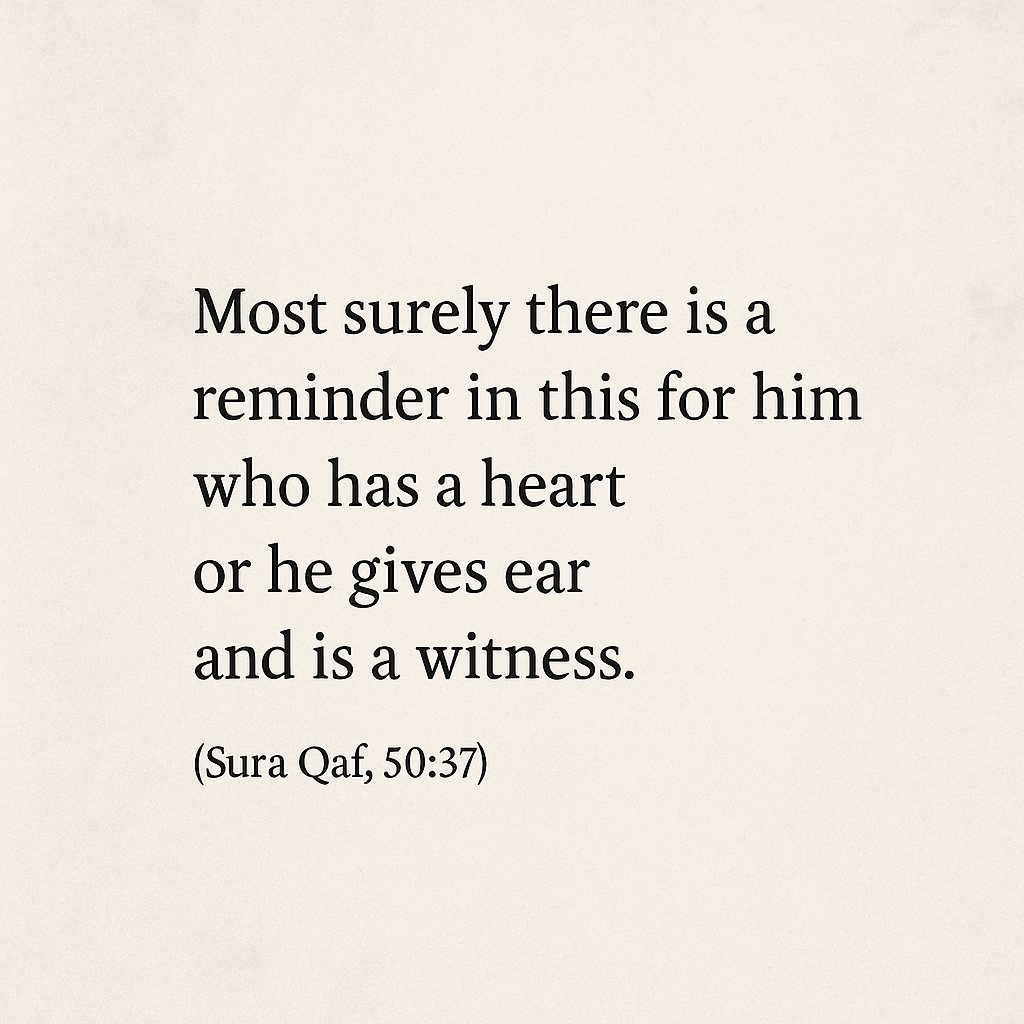
“Surely, in this is a reminder for whoever has a heart, or who listens while he is present [in mind].”

— Qur’an, Surah Qaf (50:37)

There are verses in the Qur’an that don’t just speak—they pierce. This is one of them.

It doesn’t ask if we’ve memorised the words.

It doesn’t ask if we’ve debated the meanings.

It simply asks: do you have a heart that still feels?

Because sometimes, we move through life numb—alive in the body, but asleep in the soul. The Qur’an calls out, not just to be read, but to be witnessed. It speaks of nations destroyed, of death and return, of the unseen and the inevitable. But none of it will matter unless something inside us stirs.

This verse draws a line between those who remember and those who are too distracted to see what’s right in front of them. Between those whose hearts are soft enough to tremble, and those whose ears are deafened by noise. Between those who are truly present, and those who are just… passing time.

“He who has a heart”—not just one that beats, but one that breaks, hopes, longs.

“Or gives ear”—not just listens, but yearns to understand.

“And is a witness”—not just looks, but sees with insight.

Some of us don’t need more signs. We need to slow down long enough to feel the ones already around us.

The sunrise you rushed past.

The ache in your chest when the Qur’an mentions death.

The moment you knew Allah was calling—but didn’t answer.

That was a reminder.

Maybe this verse is a mercy. A final knock on the heart’s door before it hardens completely.

If you’re still moved by these words, still stirred by a verse, still able to cry in secret when no one sees… then your heart is still alive. And that, my friend, is a gift.

Don’t waste it.

Trying to Hold It All Together in a World That Was Never Meant to Hold Us

There are days — many days — when it feels like I’m juggling fifteen things at once. Appointments. Forms. Operations. Children. Responsibilities. Bills. Tasks that never seem to end. And all the while, trying to hold on. Trying to hold it all together.

But the truth is… it’s already out of my hands.

We often move through life with this illusion of control. We plan, we push, we organise, we chase. But the outcomes? They were never ours to begin with. Yes, we do our part. Islam teaches us to act — to take the means — but the results belong only to Allah. QaddarAllahu wa maa shaa’a fa’al — Allah has already measured it, and whatever He wills, happens.

And yet, despite knowing that, we struggle. We feel overwhelmed. Disconnected. Like we’re running a race in a world that was never designed to be the destination.

Sometimes I wake up and feel like I’m carrying more than one person should. I’ve even been told by my own medical professionals that I’m doing the equivalent of two of their professional roles, stress-wise. And still, somehow, I carry on. But it’s not without cost. I’ve worked in high-pressure jobs — I was once a PA to four directors, I even ran a nightclub abroad — but somehow, this life, this stage I’m in now, feels even heavier. And I wonder why.

Maybe it’s because the burdens of dunya aren’t just physical. They’re spiritual. They weigh on our hearts. They pull at our souls. They distract us from the One we’re meant to be turning to — and preparing to return to.

And that’s the test, isn’t it? That’s the real fitnah of this life. Not just the big tragedies, but the daily demands. The mundanity. The relentlessness. The endless cycle of doing, and fixing, and managing, and coping. The tension between what must be done to survive here — and what we yearn to do to thrive in the next life.

I often find myself longing for a different rhythm. One where I could just be — immersed in dhikr, in salah, in stillness. Where my days revolve around prayer, reflection, maybe even sacred places. Medina, Makkah, Al-Aqsa… not school runs, hospital corridors, and urgent deadlines.

But for most of us, that isn’t our reality. Our test is here. Our worship is in the struggle.

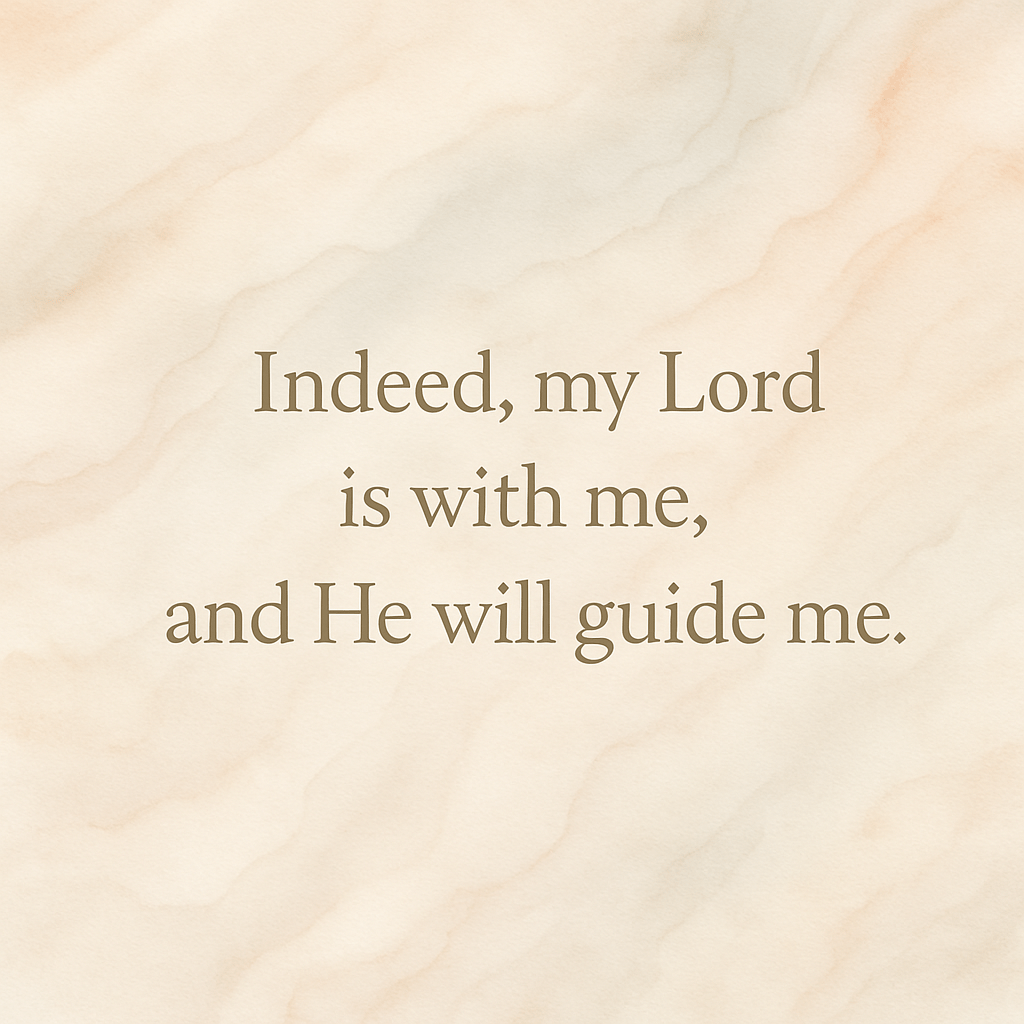
When I reach that state of overwhelm — when everything feels too heavy and nothing makes sense — I often whisper to myself: Inna ma’iya Rabbi sayahdeen — Indeed, my Lord is with me, and He will guide me. It’s not just a verse. It’s an anchor. A reminder that I’m not alone in this.

And that, right there, is tawakkul.

It’s trust. Not a passive giving up, but an active surrender. Trusting that Allah sees, knows, and cares. Trusting that even when everything feels like chaos, He is still in control. Tawakkul means doing what I can, with the strength He’s given me, and then handing the rest back to Him — completely.

Because if I try to carry it all alone, I fall. But when I remember that He’s already holding it for me — that’s when the burden starts to lighten.

This dunya can feel like a trap. Constraining. Demanding. Loud. We live lives where we are constantly switched on, constantly responsible — for ourselves, for others, for tasks we didn’t choose. But maybe this is why we feel so disconnected. Because we were never meant to live for this world. We were meant to live through it — for Allah.

That’s the real challenge, I think. That’s what I woke up with on my heart this morning. Balancing the life we’ve been given to live, with the life we are preparing for after this one ends. Walking that line between surviving here and striving for what comes next.

I don’t have the answers. I’m just a soul trying to breathe beneath the weight of too many things. But maybe that’s the whole point: not to carry everything alone, but to keep returning it to the One who never asked us to do this life without Him.

So if you’re in that place too — tired, overwhelmed, aching — remember this:

Your Lord is with you. And He will guide you.

Inna ma’iya Rabbi sayahdeen.

Reflections on Peace, Presence, and the Weight of Masculinity

There’s something I’ve been sitting with lately — a quiet shift in how I understand the role of men, especially within the home. It came from a tafsir I listened to recently. Not a dramatic revelation, just one of those verses you’ve heard a dozen times before… until it suddenly lands differently.

The verse was about Adam عليه السلام in Jannah.

But what struck me wasn’t the story — it was the structure.

Allah addresses Adam directly. He tells him to reside in Paradise, with his wife.

Not the two of them together.

Not a joint command.

The instruction is to him alone.

And the word used — uskun — isn’t just about living.

It’s rooted in stillness. In serenity. In sukoon.

It made me pause.

Because even in a place like Paradise — where peace is already a given — Allah still places the emotional tone of the home on the man.

It’s subtle, but it’s massive.

Before leadership, before provision, before family or tests or legacy — the first responsibility given to the man was to bring calm. Not to rule. Not to fix. Not to control. Just to be a presence of peace.

I keep coming back to that.

Because in this world we live in — full of noise, demands, overstimulation, emotional exhaustion — that responsibility becomes even more sacred.

But somewhere along the way, the definition of manhood shifted.

Now it’s often about dominance, performance, withholding.

Presence is rare. Peace, even more so.

And what I’m realising is: emotional maturity in a man isn’t something you “build together.”

It’s something you either witness in him — or you don’t.

He either brings sukoon into the space… or he brings disturbance.

There is no in-between.

And when he brings chaos? When you find yourself constantly managing, soothing, shrinking just to keep things together — that’s not your role. It was never meant to be.

We, as women, weren’t created to carry the emotional climate of the home alone.

We shift, we soften, we unravel and rebuild. That’s how Allah made us — in cycles.

But peace in the home? That isn’t our burden to bear.

Not entirely. Not always.

I’ve seen too many women asked to become the stillness and the structure — while the men around them remain emotionally unavailable, unaware, or even volatile.

And that tafsir reminded me:

That’s not how it’s supposed to be.

Peace is a man’s responsibility too — from the very beginning.

And if he hasn’t cultivated it within himself first, he has no business expecting partnership.

Because the kind of peace I want in my life isn’t performative. It isn’t external.

It’s something a man carries.

Something that shows in how he speaks. How he listens. How he responds in silence.

Something that cannot be faked.

And if he doesn’t bring sukoon, he doesn’t belong in that role.

It’s really as Simple as that.