🌸 The Silent Cry of Sayyida Ruqayyah (as) — A Reflection

As the anniversary approaches to honour this little girl I’m struck by the core similarities between her and the children of Gaza like them She was only a child — just four years old, some say even younger — yet her name echoes through the centuries with the weight of grief and sanctity.

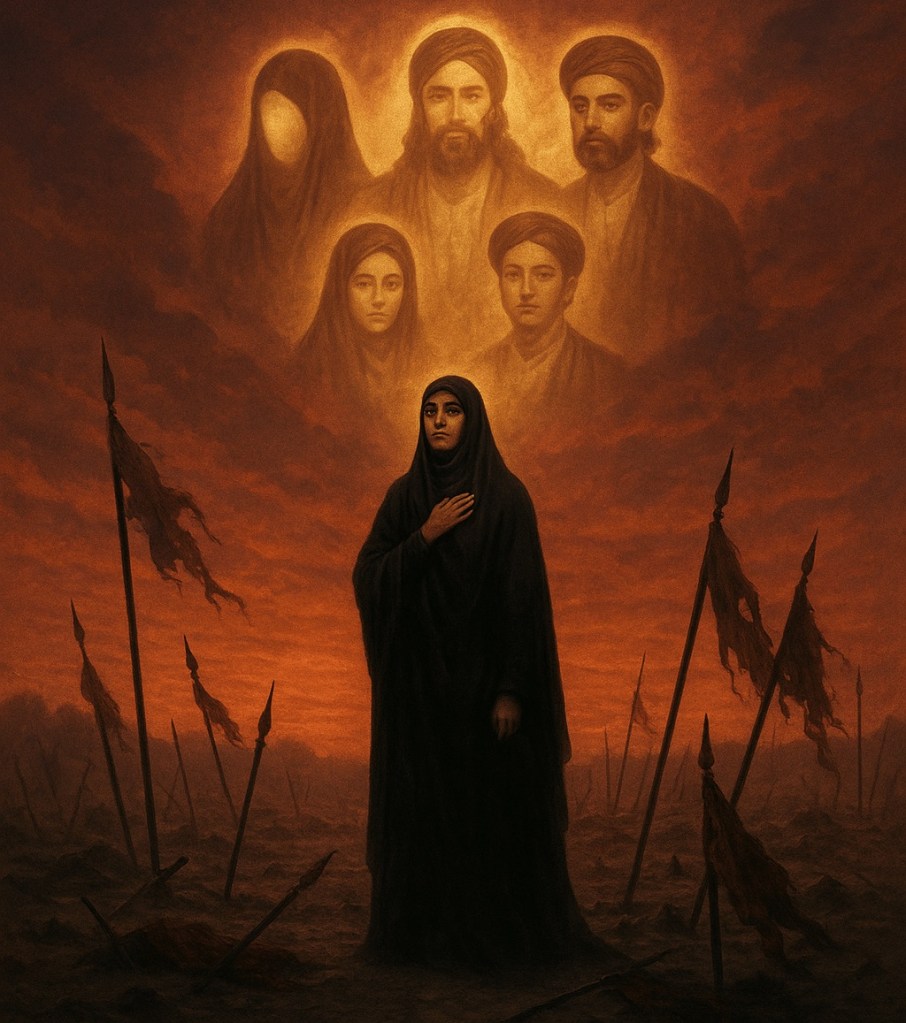
Sayyida Ruqayyah bint Husayn (as), daughter of the Master of Martyrs, walked a path that no child should ever walk — the path from Karbala to Kufa, and then to Damascus, shackled not by her own sins, but by the cruelty of those who tried to extinguish the light of the Prophet’s family.

She was born into light, into love — the cherished daughter of Imam Husayn (as) and a grandchild of Fatima al-Zahra (as). Her small world was filled with the fragrance of worship, truth, and purity. But the love of Ahl al-Bayt came with a price in a world intoxicated by power and tyranny.

On the 10th of Muharram, she witnessed what no soul should bear: her father standing alone in the desert, bleeding yet radiant, calling for help that never came. The cries of “al-‘atash!” — “I am thirsty!” — from children like herself, still echo. And when her beloved father fell, she no longer had anyone to shield her from the storm.

Dragged in chains through the streets of Kufa and Shaam, Sayyida Ruqayyah was not only a prisoner of Yazid — she became a witness. Her small voice, her cries for her father in the dark prison cell, pierced the hearts of even the cruel. And when they brought her the severed head of Imam Husayn (as) in a cold box, her tiny heart could bear no more. That night, she left this world, reuniting with her father in the Hereafter, where there are no chains, no pain, no parting.

💔 Her Story, Our Mirror

Ruqayyah’s story teaches us that innocence is not always protected in this world, but it is always honored by God. She reminds us that even the smallest among us can bear witness to great truths, and that grief itself can be a form of resistance.

In her cries, we hear the voice of every oppressed child. In her shackles, we see the cost of speaking the truth in a world ruled by falsehood. And in her martyrdom, we are reminded that Allah sees the brokenhearted, and that the oppressed will rise again — with dignity, with divine reward, and with their names forever engraved in the hearts of the faithful.

🌹 What Can We Learn?

Love for the Ahl al-Bayt must be active — it must move us to speak out against injustice, to comfort the vulnerable, and to uphold truth no matter the cost. Spiritual strength does not depend on age. Even a child, nurtured in faith, can bear immense trials with patience and purity. Grief is not weakness — Ruqayyah’s tears became a testimony that outlived empires. Our pain, too, can be a form of worship when it is rooted in love for Allah and His chosen ones. Martyrdom is not always on the battlefield. Sometimes it is in the prison cell, in the silent suffering, in the dignity of a soul that refuses to bow to tyranny.

May we never forget her.

May we raise our daughters with her name on our tongues and her light in their hearts.

And may we meet her, one day, in a place where no children are ever hurt again — in the gardens of Jannah, under the mercy of Allah, near the ones who were never afraid to stand alone for truth.

Peace be upon you, O Ruqayyah bint Husayn.

You did not die in vain.
This Muharram, I Choose Truth — Even Here

It’s the first few days of Muharram,

and already I find myself at war —

not with anyone else,

but with the voice inside me that says, “You’re fine. Just hold it together.”

Yesterday, I was sitting in the dental waiting room, waiting.

The smell hung in the air — sharp, sterile, suffocating.

My chest tightened. I felt sick.

My instinct was to run, or pretend I was okay.

They told me fourteen teeth must be removed.

That the infections in my jaw —

years in the making from Crohn’s and chronic illness —

are serious enough to need partial dentures.

That some of the work might have to be done in hospital.

That because of my past sepsis,

and how likely it is to return,

the risk of dental sepsis is high —

and if it happens, survival is only fifty-fifty.

My world cracked open.

And still, I was expected to nod. To cope.

To thank the dentist and walk out strong.

But inside, I was breaking —

quietly, invisibly, again.

The sharp clinical tang still lingers in my memory, fueling panic. I’m unraveling inside, still on the outside.

Like a girl with her sock slipping halfway off in her shoe —unseen, uncomfortable, fidgeting for peace.

And yet, I remind myself:

I’ve walked through fire with steady steps.

So why does this feel like too much?

People see me as strong —the one who holds it together, no matter what.

Do I tell them I’m spiraling?

Or do I keep the mask in place, again?

This “strong one” persona —

it’s a trauma response, I know.I learned early that needing no one was the safest way to exist.

But this Muharram, I promised myself something different: to live with more honesty. To let go of performance. To stop hiding behind strength that costs my peace.

This is one of my first tests.

To sit in my discomfort. To name it. To not shrink away from it —not even here, in this small, anxious moment with slipping socks, shaky breath, and quiet vulnerability.

Because this, too, is a battlefield.

And this, too, is where authenticity begins.

Karbala is not only a place.

It’s every moment I choose truth over silence,

faith over fear,

softness over survival mode.

This, too, is a battlefield.

And this Muharram, Karbala lives in me.

Reflections on Peace, Presence, and the Weight of Masculinity

There’s something I’ve been sitting with lately — a quiet shift in how I understand the role of men, especially within the home. It came from a tafsir I listened to recently. Not a dramatic revelation, just one of those verses you’ve heard a dozen times before… until it suddenly lands differently.

The verse was about Adam عليه السلام in Jannah.

But what struck me wasn’t the story — it was the structure.

Allah addresses Adam directly. He tells him to reside in Paradise, with his wife.

Not the two of them together.

Not a joint command.

The instruction is to him alone.

And the word used — uskun — isn’t just about living.

It’s rooted in stillness. In serenity. In sukoon.

It made me pause.

Because even in a place like Paradise — where peace is already a given — Allah still places the emotional tone of the home on the man.

It’s subtle, but it’s massive.

Before leadership, before provision, before family or tests or legacy — the first responsibility given to the man was to bring calm. Not to rule. Not to fix. Not to control. Just to be a presence of peace.

I keep coming back to that.

Because in this world we live in — full of noise, demands, overstimulation, emotional exhaustion — that responsibility becomes even more sacred.

But somewhere along the way, the definition of manhood shifted.

Now it’s often about dominance, performance, withholding.

Presence is rare. Peace, even more so.

And what I’m realising is: emotional maturity in a man isn’t something you “build together.”

It’s something you either witness in him — or you don’t.

He either brings sukoon into the space… or he brings disturbance.

There is no in-between.

And when he brings chaos? When you find yourself constantly managing, soothing, shrinking just to keep things together — that’s not your role. It was never meant to be.

We, as women, weren’t created to carry the emotional climate of the home alone.

We shift, we soften, we unravel and rebuild. That’s how Allah made us — in cycles.

But peace in the home? That isn’t our burden to bear.

Not entirely. Not always.

I’ve seen too many women asked to become the stillness and the structure — while the men around them remain emotionally unavailable, unaware, or even volatile.

And that tafsir reminded me:

That’s not how it’s supposed to be.

Peace is a man’s responsibility too — from the very beginning.

And if he hasn’t cultivated it within himself first, he has no business expecting partnership.

Because the kind of peace I want in my life isn’t performative. It isn’t external.

It’s something a man carries.

Something that shows in how he speaks. How he listens. How he responds in silence.

Something that cannot be faked.

And if he doesn’t bring sukoon, he doesn’t belong in that role.

It’s really as Simple as that.

This Muharram, I Choose to Live Authentically on the Haqq

This Muharram, I am not just making a promise — I am taking a stand.

A stand to live more authentically.

To walk with integrity.

To align my life with the Haqq — the Truth of Allah.

Authenticity, in its truest form, is not self-indulgence or rebellion. It’s submission. It’s aligning your soul with Divine truth, even when it hurts. Even when it costs you people, comfort, or belonging.

I’ve never really “fit in.” I’ve always stood out — but more importantly, I’ve always stood up.

I don’t turn a blind eye, not even to those closest to me.

Right is right. Wrong is wrong.

That’s something my parents instilled in me — a clear moral compass, no sugar-coating, no excuses, no loyalty to wrongdoing.

Just truth. Just justice.

And yes, it’s cost me friendships. People don’t always want truth — they want allegiance.

But you can’t be loyal to people and to truth when those two paths divide.

You have to choose.

This Muharram, I am choosing.

I am choosing to live like the Prophet’s family — the Ahl al-Bayt — who stood for truth even when they stood alone.

Who were not afraid to confront injustice, even when it came from within the ummah.

Who bore the weight of truth with grace and unshakeable resolve.

There’s a quote I carry in my heart:

“Stand for what is right, even if you’re standing alone.”

It has defined me for as long as I can remember.

And this year, it defines my path forward.

I no longer want to be around gossip, or people who thrive on low-vibrational energy.

If someone is comfortable gossiping to you, don’t think for a second they won’t gossip about you.

Authenticity requires discernment. And discipline.

So this Muharram, I walk forward.

Toward Allah.

Toward truth.

Toward a version of myself that fears no one but Him, and seeks no validation but His.

This Muharram, I am choosing to live upon the Haqq.

And I pray, by the end of this sacred month, I come out of it closer to Allah,

closer to Ahl al-Bayt,

and closer to who I was always meant to be:

authentic.

Unapologetically, faithfully, sincerely — for Him alone.

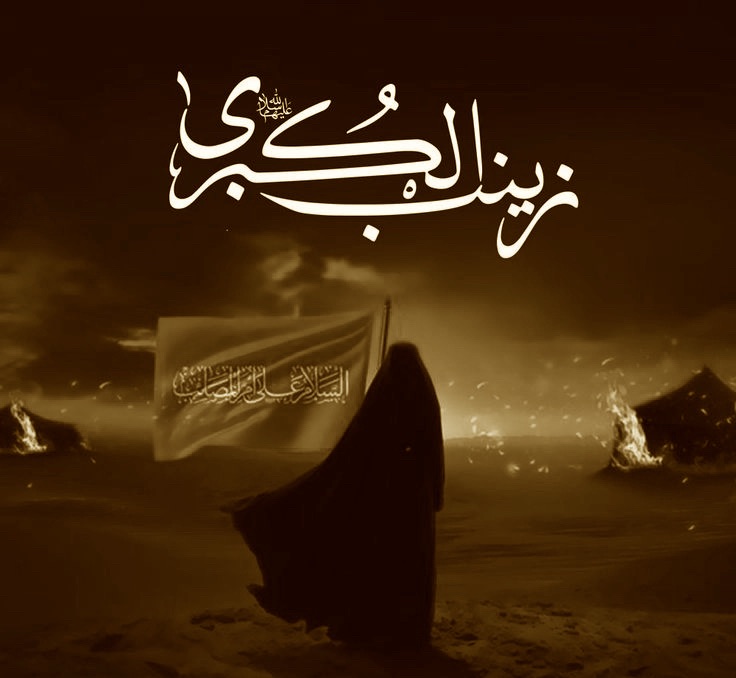
This Muharram, I remember her…

This Muharram, I remember her…

Zaynab, the daughter of Ali,

the echo of Fatimah,

the flame that did not flicker

even when the tents were burning.

She did not weep in defeat.

She wept as a witness.

She stood in the court of tyrants

not with fear,

but with fire.

And when asked what she saw that day,

what remained after Karbala,

she said:

“I saw nothing but beauty.”

So this month,

when my grief rises,

when the world feels heavy with injustice,

when loneliness settles on my skin—

I will think of her.

I will speak like her.

And I will remember:

Truth walks even when trembling.

Dignity survives even in chains.

And loyalty to Allah

is never lost.

When Grief Is Truth: From Karbala to Gaza, and the Betrayal We Refuse to See

Muharram has arrived again.

A sacred month. A time when the air itself feels heavy with remembrance. For me, it’s never just about history. It’s personal. It’s raw. It’s a mirror held to the soul, a moment to ask: who do I stand with? And who do I stand as?

This year, I’ve stepped away from the noise—from social media, from performance, from the shallow conversations that scrape at the surface but never dare to go deeper. I’ve chosen silence. Reflection. I’ve chosen to retreat into my Deen—not for show, not even for healing, but for truth. Because truth is what Hussain stood for. And if we can’t find that in ourselves during this month… what are we really mourning?

Hussain (peace be upon him) was not a political figure. He was the beating heart of the Prophet’s legacy.

He was the grandson who the Prophet ﷺ used to cradle in his arms during prayer. The one he called Sayyid shabab ahl al-jannah—the leader of the youth of Paradise. He was known for his love, his generosity, his uprightness, and above all, his unwavering refusal to surrender to tyranny.

At Karbala, he stood with barely 70 followers against an army of thousands. No water. No mercy. No compromise. Because to him, truth was not negotiable. And to surrender to falsehood—even if it bought safety—was not an option.

He and his companions were butchered under the sun. Children murdered. Women taken prisoner. And all of this was done by people who claimed Islam. Who wore the cloak of religion. Who prayed, fasted, and recited Qur’an, all while slaughtering the bloodline of the Messenger of God ﷺ.

That truth alone should have shaken the ummah. But instead?

We forgot.

We forgot who the oppressors were. We erased the pain of the Ahl al-Bayt. We buried the truth beneath centuries of silence and scholarly revision. And we turned the very villains of our history into saints.

We praise those who betrayed the Prophet’s family. We quote those who stood at the Prophet’s door and crushed his daughter behind it.

Abu Bakr stole Fadak from Fatimah. Umar broke down her door and caused her to miscarry. Aisha raised an army against Ali, the rightful successor to the Prophet, in the Battle of Jamal. These are not fringe accounts—they are history. But we’ve been taught not to question them. We’ve been taught that “unity” means silence. That truth is divisive. That grief is sectarian.

But I ask you: If the price of unity is betrayal, then what are we uniting upon?

Today, I see Muslims around the world grieving the genocide in Gaza—and rightfully so. The suffering of the Palestinian people is unbearable. The bombs. The blood. The body bags. The lies.

And yet, some of these same Muslims glorify the very figures who laid the foundation for Karbala—the spiritual Gaza of our history.

They speak out against Israeli apartheid while quoting hadiths narrated by those who tore the house of Zahra apart.

They share du’as for the oppressed while venerating those who oppressed the Prophet’s own family.

They cry for martyrs today while silencing the ones whose blood built this ummah.

There is a deep, unspoken hypocrisy in our outrage.

We are willing to cry—but not willing to confront.

We are willing to mourn—but not to question.

We are willing to say “Free Palestine”—but not “Follow Hussain.”

So this Muharram, I ask myself again: what am I really grieving?

Because if I mourn Karbala, I must also mourn Saqifah.

If I cry for Gaza, I must ask who I glorify in my religion.

If I claim to love the Prophet ﷺ, then I must love his family not just in name—but in allegiance.

This grief I carry—this truth I refuse to abandon—it isolates me. It costs me. It makes me an outsider to many. But I think of Zaynab. I think of the women who walked in chains from Karbala to Kufa to Sham. I think of the courage it takes to speak truth not when it’s popular—but when it’s condemned.

Like Zaynab, I will not cry for sympathy. I will cry as a witness.

Like Hussain, I will not die for victory. I will live for loyalty.

And like Fatimah, I will guard my silence until it becomes louder than every lie.

This Muharram, I withdraw not out of weakness—but out of love. Love for the Ahl al-Bayt. Love for truth. Love for a God who sees every buried injustice and promises its resurrection.

From Karbala to Gaza, truth still bleeds. And I refuse to look away.

When I Hit Rock Bottom, I Called His Name

Tonight, after a day where everything seemed to fall apart — when every door closed, and every thread of patience unravelled — I lay in bed, empty and aching. Just hours before, I had written about Karbala, about Gaza, about grief — and yet, what washed over me next wasn’t the grief of history, or of others. It was my own.

A heavy, unbearable sadness began to rise in me. Not for Hussain, not for the martyrs, but for me. For how far I felt from Allah. From my Deen. From the steadiness I once had. I felt it in every part of me — the distance, the disconnection, the doubt.

And in that moment of complete vulnerability, I broke.

The tears came hard and fast, and all I could do was say it — “Ya Allah, Ya Allah.”

Over and over again. Not with eloquence. Not with hope. Just desperation.

“Ya Allah.”

I didn’t know if He would respond.

I wasn’t expecting a response.

I just needed to cry out — to say His name.

And then… something came.

Not a sign. Not a voice.

Just a whisper from within:

La ilaha illallah.

There is no god but Allah.

Again, and again, my lips moved with it.

La ilaha illallah.

And the crying softened.

And then, almost like a breath rising from the depths of me:

Inna ma‘iya Rabbi sayahdeen.

“Indeed, my Lord is with me, and He will guide me.”

I don’t know what happens next.

I don’t know what tomorrow will bring, or what path lies ahead.

But I know this: He never left me.

Even when I felt furthest from Him, He was there.

Even in the dark, even in the silence — He was always there.

And sometimes, you only remember that at rock bottom.

Because it’s from rock bottom that you finally stop looking in every direction except up.

And when you finally do — you realise you’re not lost.

You were being drawn back.

Back to Him.

Back to truth.

Back to the only One who has never let you go.

All I have to do now…

is keep calling His name

As Muharram Approaches: A Reflection from the Heart

As the sacred month of Muharram approaches, I feel a weight in my chest — a lump in my throat I can’t quite swallow. This is the month of mourning. The month in which Imam Hussain, the beloved grandson of our Prophet Muhammad (peace be upon him and his family), was brutally martyred on the plains of Karbala.

This year, I feel it differently. I feel it deeply.

Last year, I had just embraced the path of the Ahl al-Bayt. I was still learning, still finding my footing as a Shia. But this year… this year, the grief feels alive. My soul recognises what is coming, even before the crescent appears.

Islam is a journey — and my journey into Shia Islam has transformed me on every level. Spiritually, emotionally, intellectually. And in this transformation, I’ve found myself drawn to the Ahl al-Bayt: to Fatima al-Zahra, to Ali, and above all, to Hussain — all through the luminous heart of our Prophet.

Knowing their stories, feeling their pain, honouring their sacrifices — it overwhelms me. My chest tightens with emotion. My eyes well with tears. And in this month of Muharram, everything is intensified. The pain is sharper, the sorrow heavier, the love stronger.

At Karbala, alongside Hussain, stood the most loyal and courageous souls: Abbas, his lion-hearted brother; Ali al-Akbar, his radiant son; Qasim, the brave young nephew; and so many others who gave their lives not for power, but for truth (Haqq).

And then there was Lady Zaynab.

Zaynab, the mountain of patience.

Zaynab, who stood amidst devastation — her family slaughtered, her brother’s head raised on a spear — and still said, “I saw nothing but beauty.”

How can one soul endure such loss, such horror, and still speak with that kind of strength, that unwavering dignity?

Her courage leaves me breathless.

This year, more than ever, I feel her words echo within me. I feel the pain of Karbala mirrored in the suffering of Gaza, where once again the innocent are slaughtered, where children die in the arms of their mothers, and the world looks away. The parallels are haunting. The injustice is unbearable.

And I wonder — how many in our Ummah have lost their hearts? How many have become so indoctrinated, so desensitised, that they cannot see the truth? How many dismiss what happened to the family of the Prophet as mere politics, when it was oppression, pure and simple? When it was the silencing of Haqq.

The pain of seeing people glorify those who stood against Ahl al-Bayt, or justify their crimes, is almost as heavy as the grief itself. It feels like betrayal. A betrayal of love. A betrayal of truth.

So this Muharram, I will withdraw into myself. I will sit with the sorrow. I will connect more deeply with Karbala. With the stories. With the legacy. With the heartbreak.

And like Lady Zaynab, I will strive to see beauty in it all.

Not because the pain is beautiful. But because the resistance, the courage, the unwavering stand for truth — that is beauty. That is love. That is Islam.

Ya Hussain.

Ya Zaynab.

Peace and blessings be upon all those who gave everything for truth

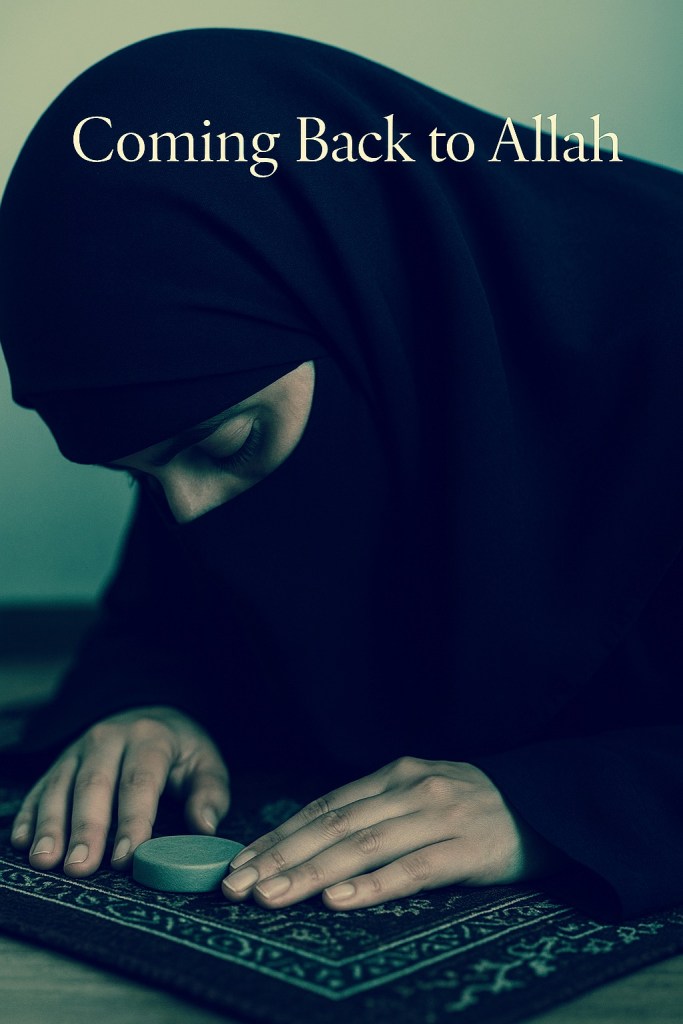
Coming back to Allah

There are moments in life when we feel so far from Allah, we wonder if we even know how to come back. We hear the Adhan we hit it like a snooze button and turn over in bed.

We carry the heaviness of this dunya, the exhaustion, the grief, the guilt—and prayer becomes distant. Like something for someone stronger. Someone better.

But the truth is, Salah isn’t for the perfect. It’s for the broken. It’s for the weary. It’s for the hearts that ache with longing, even when they’ve been silent for too long.

Today, on the Day of Arafah, I returned.

In pain, physically and spiritually, I laid my prayer mat on the ground I placed my turbah on top and I stood before Allah—no grand gestures, no eloquence. Just a heart cracked open. Before I could even finish reciting Al-Fatiha, the tears began to fall. Not just one or two—waves of them.

And in each tear was a door.

A door to forgiveness.

A door to mercy.

A door to coming home.

It was as if the heavens opened in that moment—not because I was worthy—but because I was willing. Willing to turn back. Willing to say, “I need You, Ya Allah.”

There’s a sacred truth that lives in our faith:

“Whoever comes to Me walking, I will come to him running.”

— (Hadith Qudsi, Sahih Muslim)

And today, I saw that truth unfold with my own soul. I had taken only a step—but Allah met me with overwhelming mercy.

When we abandon Salah, we do not punish Allah—we punish ourselves. We carry the weight of disconnection and call it depression. We feel the ache of loneliness and call it failure. But the ache is simply the soul longing for its Creator.

Allah never moves away from us. We move away from Him. And yet, the instant we turn—even half a turn—He is already near. Closer than the pain, closer than the tears.

So if you are struggling… if your prayer mat has been untouched for days or weeks or even years—know this: it only takes one moment. One whisper. One tear.

Let your tears fall. Let them carry your pleas for forgiveness. Let each one become a door to something sacred. Allah is not waiting to punish you. He is waiting to embrace you.

Come back.

Come back to the One who has never turned away from you.

My GrandFather’s Ummah: A Lament from Zaynab

They said they loved my grandfather.

They wept when he wept, they shouted Allahu Akbar when he stood among them. And yet, before his blessed body was buried in the ground, they gathered without his family, without his cousin, his son-in-law, his appointed one, my father Ali — and they chose a successor.

Without consultation of those closest to him. Without the ones purified by Allah Himself.

“Indeed, Allah only intends to remove from you impurity, O people of the household, and to purify you with [extensive] purification.”

— Qur’an, Surah Al-Ahzab (33:33)

We, the purified ones — Ahl al-Bayt — were left behind. Forgotten in the shadow of politics dressed as unity.

What unity is this that was built on exclusion? What brotherhood chooses expedience over revelation?

My grand father had spoken at Ghadir Khumm, under the blazing sun, before thousands:

“Of whomsoever I am the Mawla, Ali is his Mawla.”

They heard it. Omar heard it. He was among the first to congratulate Ali. Yet days later, it was he who stood to give allegiance to Abu Bakr — swiftly, without Ali or Abbas, without my family present. It was he who declared, “The Prophet has died, and this affair must not be left leaderless.” And so a decision was made — one not guided by divine revelation, but by haste, by fear, by politics.

Do not tell me this was Shura. Do not tell me this was divine. If Allah had revealed that leaders should be elected, show me where. Show me where in the Qur’an the successor of a Prophet is chosen by men rather than appointed by God. Every Prophet left behind a successor — so why would the Seal of Prophets, my father, do otherwise?

They crowned Abu Bakr, but at what cost?

My mother, Fatima, the radiant one, came to claim what was hers — the land of Fadak, gifted to her by the Prophet in his lifetime. She brought testimony, evidence, her word — the word of the most truthful woman, of the leader of all women of Paradise.

And they denied her.

She who the Prophet stood for when she entered the room. She who he called part of himself:

“Fatima is a part of me. Whoever hurts her, hurts me.”

— [Sahih al-Bukhari]

But they hurt her. They rejected her. They broke her door.

They say this was unity. But it was unity built on silencing.

And then there was Aisha.

Yes, I will speak her name. I will not call her what they call her, for those titles demand respect earned through loyalty — and she, she rose an army against Ali.

She, the wife of my grand father, took up arms against his cousin, his chosen, his successor. Against my family. Against her own stepdaughter’s husband. My father. Against the very man who slept in the Prophet’s bed when he faced death. Against the one the Prophet declared the gate to knowledge.

What loyalty is this?

What love for the Prophet is this, when one disrespects his blood?

She rode into battle at Jamal, raising a standard not of faith, but of rebellion — and history remembers that day with sorrow. Blood was shed between Muslims, and the sword first rose against the rightful Imam.

She claimed it was ijtihad, a matter of conscience. But conscience does not rise against the one who was entrusted with the banner at Khaybar. Conscience does not ignore the command of the Prophet at Ghadir.

I say this now because I have seen the aftermath.

I watched my brother Hussain fall at Karbala. I saw the heads of my kin raised on spears. I carried the burden of silence and the pain of memory. And I will not let history forget what they did.

This was not just a political disagreement. This was betrayal. This was the hijacking of my father’s legacy.

They crowned Abu Bakr. They praised Omar. They empowered Uthman. But it was Ali who was left behind, Ali whose door they ignored, Ali who waited in patience while truth was turned into fable.

But history has witnesses. And I am one of them.

Do not ask me to forget. Do not ask me to soften truth for the sake of comfort.

I am Zaynab bint Ali. My blood is Hussain’s blood. My voice is the echo of Zahra’s cry.

And I will speak.

For truth.

For justice.

For my grandfather’s Ummah that was lost.