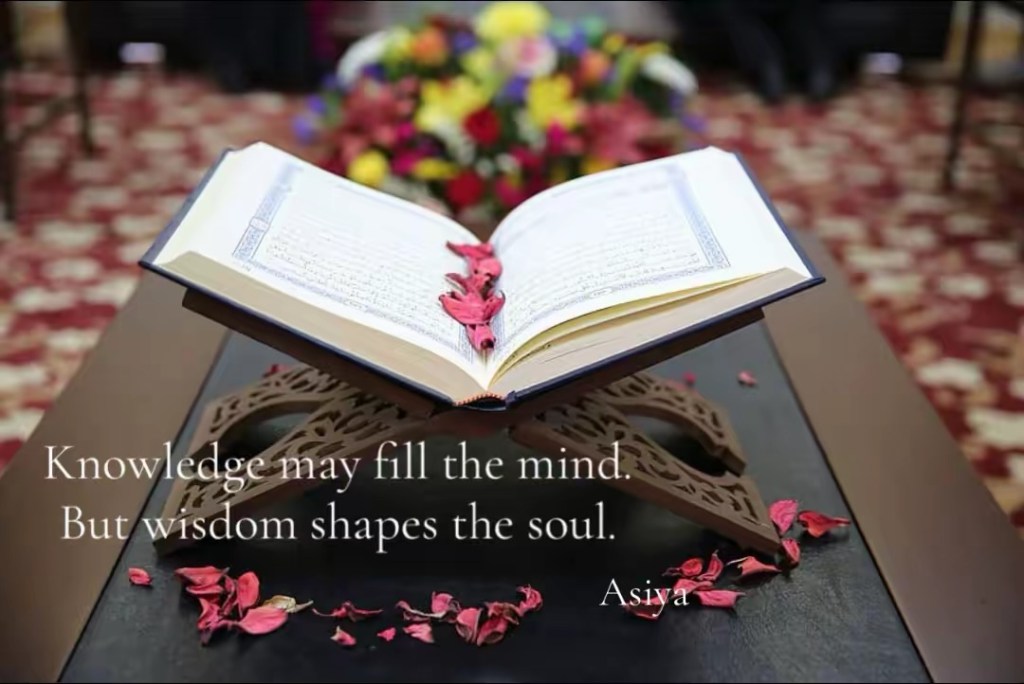
Knowledge may fill the mind.

But wisdom shapes the soul.
A Reflection for My Fellow Revert Sisters

Sometimes, as reverts, we feel small in comparison to those who seem to know everything about Islam — who can recite the Qur’an flawlessly, quote hadith by heart, and remember every lesson. We may worry that our journey is incomplete, that our understanding is lacking.

But the truth is, the beauty of this path is not measured by memory or perfection. It is measured by the depth of our hearts, the sincerity of our reflection, and the way the Qur’an takes root within us.

With this in mind, I want to share a letter to my fellow revert sisters — a reminder that wisdom is found in the heart, and that your connection to Allah is unique, precious, and enough.

A Letter to My Fellow Revert Sisters

My dear sisters,

There is something I want to share with you, especially for those of us who came to Islam later in life. Many of us carry a quiet worry in our hearts: “I don’t know enough. I can’t remember enough. I’ll never catch up to those who were born into this faith.”

I want you to pause here, take a breath, and let me tell you — you are not less. Not in the sight of Allah. Not in the value of your journey. Not in the weight of your worship.

There is a difference between reading to gain knowledge and reading to gain wisdom. Knowledge is about remembering facts, recalling names, and reciting details. It makes a person seem knowledgeable, and there is goodness in that — but it is not the full picture.

Wisdom is something gentler, deeper. It is not measured by what the mind can store, but by what the heart can hold. It is not about carrying every verse in memory, but about letting even a single verse move you, shape you, and become part of your soul.

As reverts, we do not need to compare ourselves to those who can recite the Qur’an from beginning to end without stumbling or pausing for breath. That is their gift, and it is beautiful. But your gift may be different — and it is no less. You are not any less than somebody who can recite the Qur’an from beginning to end without taking a breath. What matters most is to understand the Qur’an in the same way you feel your heartbeat — constant, alive, and within you.

The Qur’an itself reminds us:

“None will grasp its meaning except those firmly grounded in knowledge.” (3:7)

And Imam Ali (as) taught us:

“Knowledge is of two kinds: what is heard and what is practiced. That which is heard does not profit if it is not practiced, but that which is practiced is knowledge indeed.” (Nahj al-Balaghah, Saying 366)

So let this bring peace to your heart. Do not measure your worth by what you can recall on command, but by how sincerely you live what you have understood. One verse lived is greater than a hundred verses recited without reflection.

For some, knowledge is stored in libraries of memory. For others — especially those who cannot retain details easily — wisdom is carried in a different way. It is carried in the heart, in the quiet understanding that stays with you long after the words have faded.

Knowledge may fill the mind.

But wisdom — wisdom shapes the soul.

With love and solidarity,

From one revert sister to another

Duʿa

O Allah, make us among those who are firmly grounded in knowledge,

those who live the Qur’an with sincerity,

who practice what they understand,

and who carry Your words in their hearts

as steadily as the beating of their own hearts.

Āmeen.
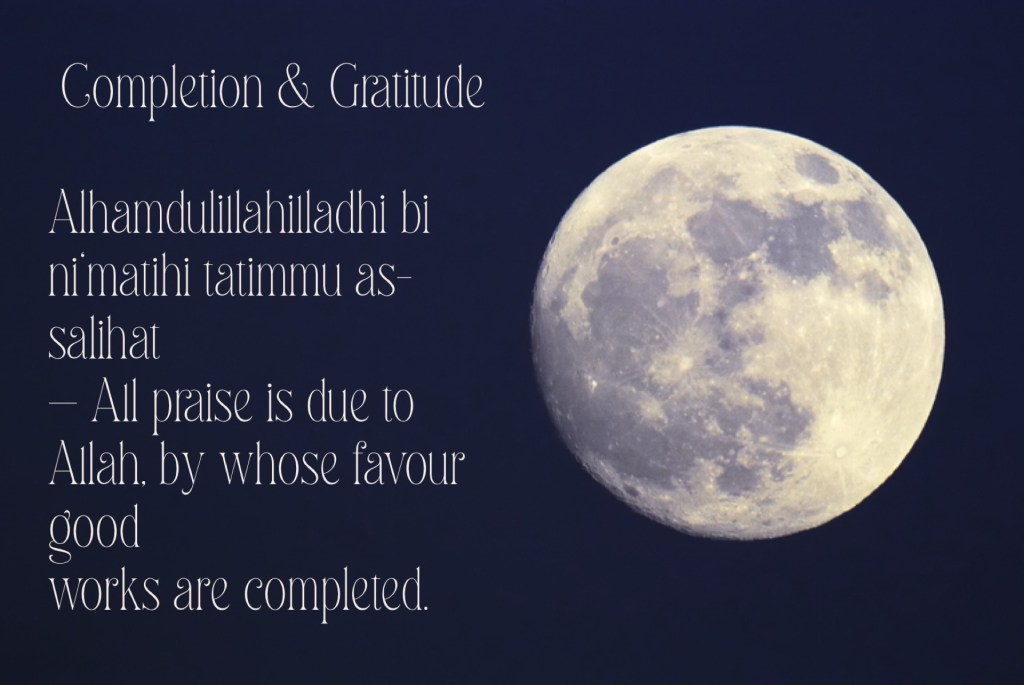
A Full Moon, A New Chapter, A Dua

This morning, under the light of a full moon, I felt the closing of a chapter in my life. The full moon is a powerful symbol — not a time to manifest, but a time of completion, gratitude, and release. It marks the moment to let go of what no longer serves, and to prepare the heart for what lies ahead.

As a revert, I have come to understand that it is not necessary to discard everything from my past life. There are threads of meaning that can be woven into the fabric of my faith — as long as Allah remains at the centre. The moon is one of those threads. What once held deep significance for me now takes on a new meaning — not as a source of power itself, but as a creation of Allah, a sign pointing back to Him.

Islam, too, holds the moon in its rhythm. The lunar calendar guides our days of Ramadan, marks our Eids, and determines the sacred days of Hajj. The moon is not to be worshipped, but honoured as part of Allah’s perfect creation — a reminder of the cycles of time and the constancy of His presence.

Tonight, as the full moon shines brightly overhead, I reflect on the words:

“Allah is the Light of the heavens and the earth…” (Qur’an 24:35)

In this light, I find peace in the path ahead — not through wishing or manifesting, but through sincere du’a, trust, and gratitude.

This full moon reminds me to honour Allah’s creation, to be thankful, to let go, and to open my heart to a new chapter illuminated by His light.

Islam doesn’t belong in the west

You can’t avoid it anymore.

Open any comment section — whether it’s a hijabi doing something mundane, a revert sharing their journey, or just a post mentioning the word “Islam” — and it’s there.

The same slogans.

The same hate, dressed up as patriotism:

“Go back to your country.”

“This is a Christian nation.”

“Islam doesn’t belong in the West.”

And if you’re unfortunate enough, you don’t just read it — you hear it in real life too.

Sometimes muttered under breath.

Sometimes shouted with rage.

Sometimes wrapped in “friendly advice” or passive-aggressive conversation.

What shocks me isn’t that the hatred exists — it’s how deep it runs.

It’s not just ignorance.

It’s a mindset that assumes faith should follow bloodline.

That religion is a cultural artefact — not truth, not revelation, not guidance.

They say:

“Why don’t you just believe in the God of your people?”

As if God belongs to certain nations more than others.

As if your soul is supposed to stay in line with your passport.

But let me ask you:

Does guidance come with a national anthem?

Does truth depend on the colour of your flag?

I didn’t choose Islam because it was familiar.

I chose it because it was true.

Because in the quietest, most honest moments of my life —

when I stripped everything back and stood alone before God —

I knew I had to follow what was right.

Not what was easy.

Not what made sense to others.

But what was true.

Faith isn’t something you inherit like an accent.

It’s not a family recipe passed from generation to generation.

Real faith is discovered — through searching, struggling, questioning.

Through being brave enough to ask:

“Is this really the truth, or just what I was told?”

And sometimes, that journey leads you far from everything you knew.

Away from what feels safe.

Toward something that calls to your soul with clarity — even if the world around you doesn’t understand.

That’s what people don’t realise about reverts.

We didn’t stumble into Islam.

We fought for it.

We walked away from the familiar.

We lost relationships, identities, even parts of ourselves —

not out of rebellion, but out of obedience.

Obedience to what’s right.

To what’s eternal.

To Allah.

So when people tell me that Islam doesn’t belong in the West,

I ask — where exactly do you think the truth is supposed to belong?

Because the truth doesn’t recognise borders.

It doesn’t speak only one language.

It isn’t British, or Arab, or Pakistani, or African.

It’s Divine.

And when it reaches your heart — no matter where you are —

you follow.

So no, I won’t shrink my faith to make you more comfortable.

I won’t apologise for leaving behind what I outgrew.

And I won’t pretend that truth can be limited by culture, country, or expectation.

I chose Islam with open eyes and a sincere heart.

And no matter what continent I live on,

no matter what assumptions people make —

I’m home with Allah.

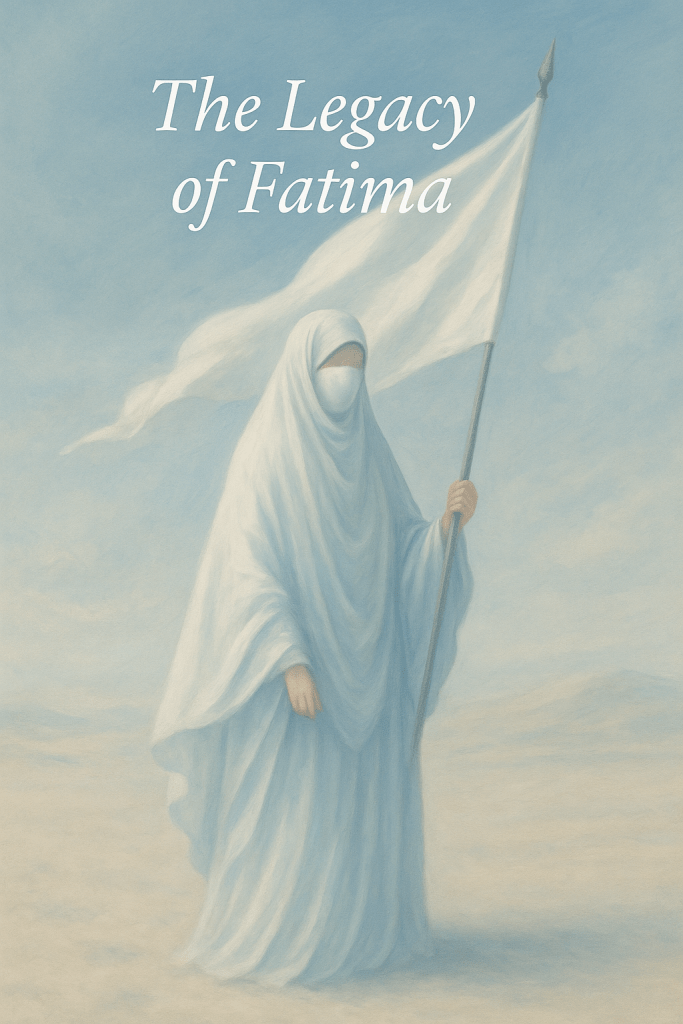
Title: In Her Shadow: Reflecting on Hijab and the Legacy of Fatima (as)

There are days when the scarf feels heavier than cloth. When it clings to the back of my neck under the weight of a summer sun, or when the air feels thick with judgment—from within and without. I’ve had my struggles with hijab. I won’t pretend otherwise. I’ve wrestled with questions, with shame, with the feeling of being visibly other. But through it all, there’s one figure who keeps returning to me, like a soft light breaking through my own confusion: Fatima al-Zahra (as).

Fatima. The daughter of the Prophet ﷺ. The woman whose dignity is remembered not just through her words, but through her silence. Through her modesty. Through the way she carried herself even when the world turned its back on her. I think about her a lot—especially on the hard days.

When I wear the hijab, I often feel like I’m stepping into her legacy, one fold at a time. Not perfectly. Not always confidently. But with a kind of quiet love. It’s strange, because the hijab can sometimes feel like a battleground—especially as a revert, especially in the West. But then I remind myself: it was never about performance. It was about presence. Being before Allah in a state of humility, and letting that humility bloom into strength.

What’s more, lately I’ve been walking down the street and seeing sisters in niqab—full black, flowing, unapologetically radiant under the same boiling sun I’m hiding from—and I’m just… in awe.

These women are fierce. Fearless in the most graceful way. Choosing modesty in a culture that constantly ridicules it? That’s strength. That’s freedom. That’s power. And I see you. Every single one of you out there doing it in this heat, choosing haya over ease—you are my inspiration.

Sometimes I feel like I’m dragging myself through this journey—one pin, one fold, one step at a time. But then I remember Fatima. How she walked to the masjid to speak truth to power, covered head to toe, her modesty not muting her, but amplifying her voice. How even in her death she requested privacy. A woman who never needed a stage to shine—her light came from her nearness to Allah. That’s the legacy I want to be part of.

Hijab doesn’t erase us. It refines us. And I’ve come to realise that every time I struggle and still choose to wear it, I’m part of something sacred. Something ancient. Something revolutionary.

This isn’t just fabric. It’s a flag. It’s a love letter to Fatima.

And on the hardest days, that’s enough to keep me going.

💔 A Reminder for the Heart That Still Feels

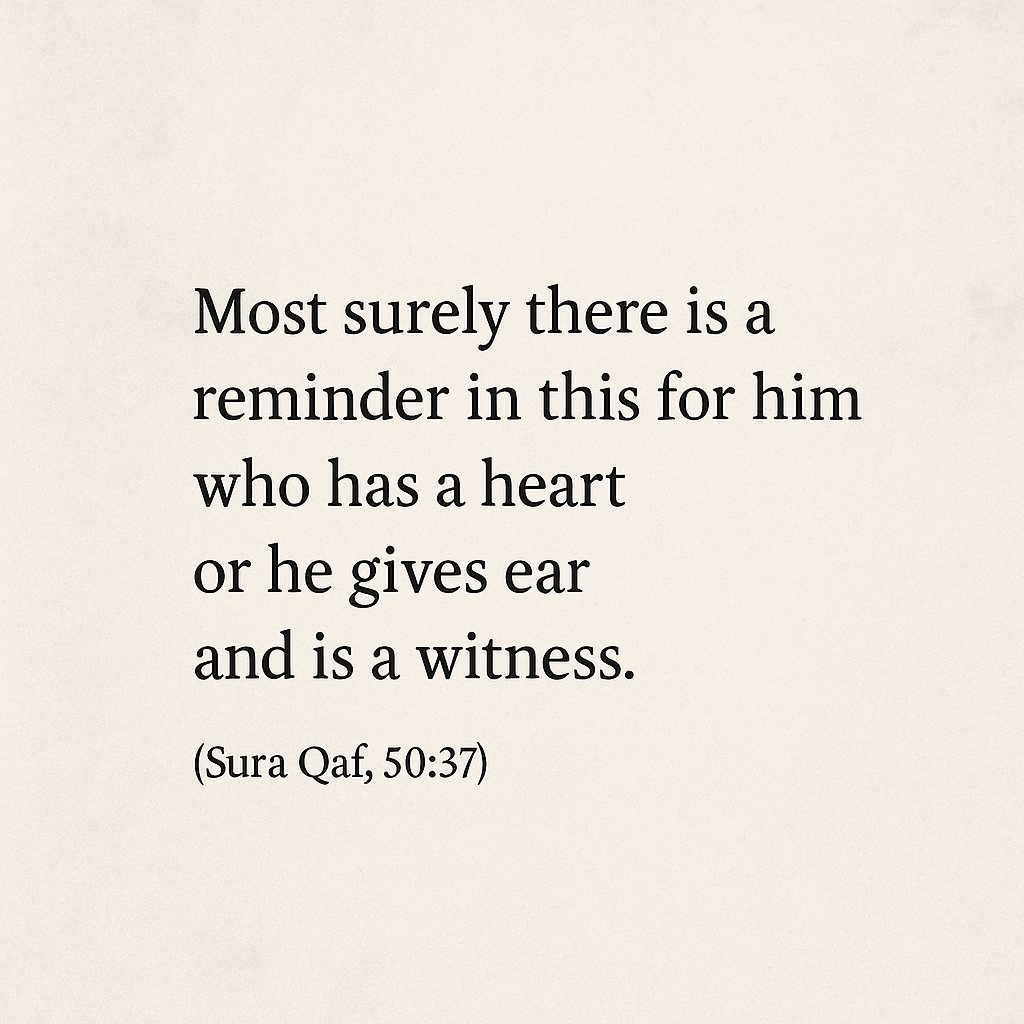
“Surely, in this is a reminder for whoever has a heart, or who listens while he is present [in mind].”

— Qur’an, Surah Qaf (50:37)

There are verses in the Qur’an that don’t just speak—they pierce. This is one of them.

It doesn’t ask if we’ve memorised the words.

It doesn’t ask if we’ve debated the meanings.

It simply asks: do you have a heart that still feels?

Because sometimes, we move through life numb—alive in the body, but asleep in the soul. The Qur’an calls out, not just to be read, but to be witnessed. It speaks of nations destroyed, of death and return, of the unseen and the inevitable. But none of it will matter unless something inside us stirs.

This verse draws a line between those who remember and those who are too distracted to see what’s right in front of them. Between those whose hearts are soft enough to tremble, and those whose ears are deafened by noise. Between those who are truly present, and those who are just… passing time.

“He who has a heart”—not just one that beats, but one that breaks, hopes, longs.

“Or gives ear”—not just listens, but yearns to understand.

“And is a witness”—not just looks, but sees with insight.

Some of us don’t need more signs. We need to slow down long enough to feel the ones already around us.

The sunrise you rushed past.

The ache in your chest when the Qur’an mentions death.

The moment you knew Allah was calling—but didn’t answer.

That was a reminder.

Maybe this verse is a mercy. A final knock on the heart’s door before it hardens completely.

If you’re still moved by these words, still stirred by a verse, still able to cry in secret when no one sees… then your heart is still alive. And that, my friend, is a gift.

Don’t waste it.

Reflections on Peace, Presence, and the Weight of Masculinity

There’s something I’ve been sitting with lately — a quiet shift in how I understand the role of men, especially within the home. It came from a tafsir I listened to recently. Not a dramatic revelation, just one of those verses you’ve heard a dozen times before… until it suddenly lands differently.

The verse was about Adam عليه السلام in Jannah.

But what struck me wasn’t the story — it was the structure.

Allah addresses Adam directly. He tells him to reside in Paradise, with his wife.

Not the two of them together.

Not a joint command.

The instruction is to him alone.

And the word used — uskun — isn’t just about living.

It’s rooted in stillness. In serenity. In sukoon.

It made me pause.

Because even in a place like Paradise — where peace is already a given — Allah still places the emotional tone of the home on the man.

It’s subtle, but it’s massive.

Before leadership, before provision, before family or tests or legacy — the first responsibility given to the man was to bring calm. Not to rule. Not to fix. Not to control. Just to be a presence of peace.

I keep coming back to that.

Because in this world we live in — full of noise, demands, overstimulation, emotional exhaustion — that responsibility becomes even more sacred.

But somewhere along the way, the definition of manhood shifted.

Now it’s often about dominance, performance, withholding.

Presence is rare. Peace, even more so.

And what I’m realising is: emotional maturity in a man isn’t something you “build together.”

It’s something you either witness in him — or you don’t.

He either brings sukoon into the space… or he brings disturbance.

There is no in-between.

And when he brings chaos? When you find yourself constantly managing, soothing, shrinking just to keep things together — that’s not your role. It was never meant to be.

We, as women, weren’t created to carry the emotional climate of the home alone.

We shift, we soften, we unravel and rebuild. That’s how Allah made us — in cycles.

But peace in the home? That isn’t our burden to bear.

Not entirely. Not always.

I’ve seen too many women asked to become the stillness and the structure — while the men around them remain emotionally unavailable, unaware, or even volatile.

And that tafsir reminded me:

That’s not how it’s supposed to be.

Peace is a man’s responsibility too — from the very beginning.

And if he hasn’t cultivated it within himself first, he has no business expecting partnership.

Because the kind of peace I want in my life isn’t performative. It isn’t external.

It’s something a man carries.

Something that shows in how he speaks. How he listens. How he responds in silence.

Something that cannot be faked.

And if he doesn’t bring sukoon, he doesn’t belong in that role.

It’s really as Simple as that.

This Muharram, I Choose to Live Authentically on the Haqq

This Muharram, I am not just making a promise — I am taking a stand.

A stand to live more authentically.

To walk with integrity.

To align my life with the Haqq — the Truth of Allah.

Authenticity, in its truest form, is not self-indulgence or rebellion. It’s submission. It’s aligning your soul with Divine truth, even when it hurts. Even when it costs you people, comfort, or belonging.

I’ve never really “fit in.” I’ve always stood out — but more importantly, I’ve always stood up.

I don’t turn a blind eye, not even to those closest to me.

Right is right. Wrong is wrong.

That’s something my parents instilled in me — a clear moral compass, no sugar-coating, no excuses, no loyalty to wrongdoing.

Just truth. Just justice.

And yes, it’s cost me friendships. People don’t always want truth — they want allegiance.

But you can’t be loyal to people and to truth when those two paths divide.

You have to choose.

This Muharram, I am choosing.

I am choosing to live like the Prophet’s family — the Ahl al-Bayt — who stood for truth even when they stood alone.

Who were not afraid to confront injustice, even when it came from within the ummah.

Who bore the weight of truth with grace and unshakeable resolve.

There’s a quote I carry in my heart:

“Stand for what is right, even if you’re standing alone.”

It has defined me for as long as I can remember.

And this year, it defines my path forward.

I no longer want to be around gossip, or people who thrive on low-vibrational energy.

If someone is comfortable gossiping to you, don’t think for a second they won’t gossip about you.

Authenticity requires discernment. And discipline.

So this Muharram, I walk forward.

Toward Allah.

Toward truth.

Toward a version of myself that fears no one but Him, and seeks no validation but His.

This Muharram, I am choosing to live upon the Haqq.

And I pray, by the end of this sacred month, I come out of it closer to Allah,

closer to Ahl al-Bayt,

and closer to who I was always meant to be:

authentic.

Unapologetically, faithfully, sincerely — for Him alone.

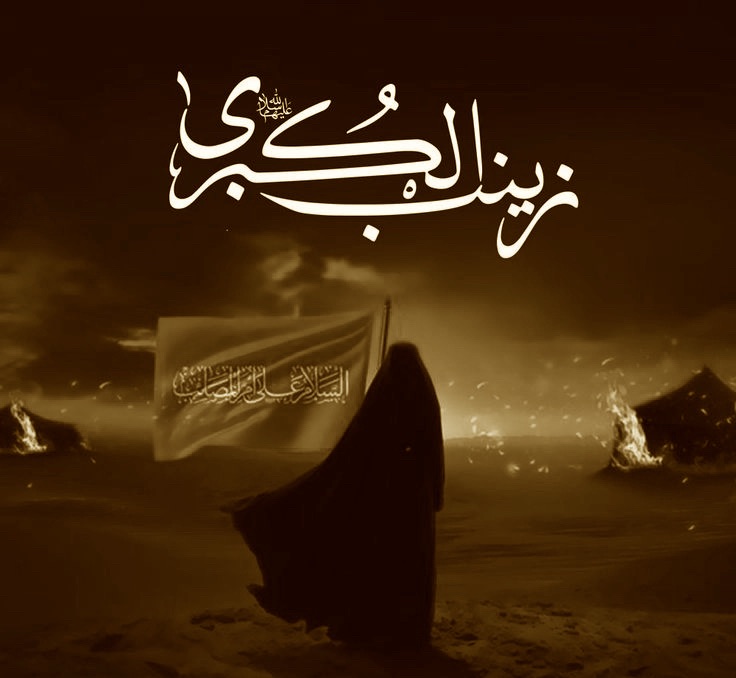
This Muharram, I remember her…

This Muharram, I remember her…

Zaynab, the daughter of Ali,

the echo of Fatimah,

the flame that did not flicker

even when the tents were burning.

She did not weep in defeat.

She wept as a witness.

She stood in the court of tyrants

not with fear,

but with fire.

And when asked what she saw that day,

what remained after Karbala,

she said:

“I saw nothing but beauty.”

So this month,

when my grief rises,

when the world feels heavy with injustice,

when loneliness settles on my skin—

I will think of her.

I will speak like her.

And I will remember:

Truth walks even when trembling.

Dignity survives even in chains.

And loyalty to Allah

is never lost.

When Grief Is Truth: From Karbala to Gaza, and the Betrayal We Refuse to See

Muharram has arrived again.

A sacred month. A time when the air itself feels heavy with remembrance. For me, it’s never just about history. It’s personal. It’s raw. It’s a mirror held to the soul, a moment to ask: who do I stand with? And who do I stand as?

This year, I’ve stepped away from the noise—from social media, from performance, from the shallow conversations that scrape at the surface but never dare to go deeper. I’ve chosen silence. Reflection. I’ve chosen to retreat into my Deen—not for show, not even for healing, but for truth. Because truth is what Hussain stood for. And if we can’t find that in ourselves during this month… what are we really mourning?

Hussain (peace be upon him) was not a political figure. He was the beating heart of the Prophet’s legacy.

He was the grandson who the Prophet ﷺ used to cradle in his arms during prayer. The one he called Sayyid shabab ahl al-jannah—the leader of the youth of Paradise. He was known for his love, his generosity, his uprightness, and above all, his unwavering refusal to surrender to tyranny.

At Karbala, he stood with barely 70 followers against an army of thousands. No water. No mercy. No compromise. Because to him, truth was not negotiable. And to surrender to falsehood—even if it bought safety—was not an option.

He and his companions were butchered under the sun. Children murdered. Women taken prisoner. And all of this was done by people who claimed Islam. Who wore the cloak of religion. Who prayed, fasted, and recited Qur’an, all while slaughtering the bloodline of the Messenger of God ﷺ.

That truth alone should have shaken the ummah. But instead?

We forgot.

We forgot who the oppressors were. We erased the pain of the Ahl al-Bayt. We buried the truth beneath centuries of silence and scholarly revision. And we turned the very villains of our history into saints.

We praise those who betrayed the Prophet’s family. We quote those who stood at the Prophet’s door and crushed his daughter behind it.

Abu Bakr stole Fadak from Fatimah. Umar broke down her door and caused her to miscarry. Aisha raised an army against Ali, the rightful successor to the Prophet, in the Battle of Jamal. These are not fringe accounts—they are history. But we’ve been taught not to question them. We’ve been taught that “unity” means silence. That truth is divisive. That grief is sectarian.

But I ask you: If the price of unity is betrayal, then what are we uniting upon?

Today, I see Muslims around the world grieving the genocide in Gaza—and rightfully so. The suffering of the Palestinian people is unbearable. The bombs. The blood. The body bags. The lies.

And yet, some of these same Muslims glorify the very figures who laid the foundation for Karbala—the spiritual Gaza of our history.

They speak out against Israeli apartheid while quoting hadiths narrated by those who tore the house of Zahra apart.

They share du’as for the oppressed while venerating those who oppressed the Prophet’s own family.

They cry for martyrs today while silencing the ones whose blood built this ummah.

There is a deep, unspoken hypocrisy in our outrage.

We are willing to cry—but not willing to confront.

We are willing to mourn—but not to question.

We are willing to say “Free Palestine”—but not “Follow Hussain.”

So this Muharram, I ask myself again: what am I really grieving?

Because if I mourn Karbala, I must also mourn Saqifah.

If I cry for Gaza, I must ask who I glorify in my religion.

If I claim to love the Prophet ﷺ, then I must love his family not just in name—but in allegiance.

This grief I carry—this truth I refuse to abandon—it isolates me. It costs me. It makes me an outsider to many. But I think of Zaynab. I think of the women who walked in chains from Karbala to Kufa to Sham. I think of the courage it takes to speak truth not when it’s popular—but when it’s condemned.

Like Zaynab, I will not cry for sympathy. I will cry as a witness.

Like Hussain, I will not die for victory. I will live for loyalty.

And like Fatimah, I will guard my silence until it becomes louder than every lie.

This Muharram, I withdraw not out of weakness—but out of love. Love for the Ahl al-Bayt. Love for truth. Love for a God who sees every buried injustice and promises its resurrection.

From Karbala to Gaza, truth still bleeds. And I refuse to look away.

When I Hit Rock Bottom, I Called His Name

Tonight, after a day where everything seemed to fall apart — when every door closed, and every thread of patience unravelled — I lay in bed, empty and aching. Just hours before, I had written about Karbala, about Gaza, about grief — and yet, what washed over me next wasn’t the grief of history, or of others. It was my own.

A heavy, unbearable sadness began to rise in me. Not for Hussain, not for the martyrs, but for me. For how far I felt from Allah. From my Deen. From the steadiness I once had. I felt it in every part of me — the distance, the disconnection, the doubt.

And in that moment of complete vulnerability, I broke.

The tears came hard and fast, and all I could do was say it — “Ya Allah, Ya Allah.”

Over and over again. Not with eloquence. Not with hope. Just desperation.

“Ya Allah.”

I didn’t know if He would respond.

I wasn’t expecting a response.

I just needed to cry out — to say His name.

And then… something came.

Not a sign. Not a voice.

Just a whisper from within:

La ilaha illallah.

There is no god but Allah.

Again, and again, my lips moved with it.

La ilaha illallah.

And the crying softened.

And then, almost like a breath rising from the depths of me:

Inna ma‘iya Rabbi sayahdeen.

“Indeed, my Lord is with me, and He will guide me.”

I don’t know what happens next.

I don’t know what tomorrow will bring, or what path lies ahead.

But I know this: He never left me.

Even when I felt furthest from Him, He was there.

Even in the dark, even in the silence — He was always there.

And sometimes, you only remember that at rock bottom.

Because it’s from rock bottom that you finally stop looking in every direction except up.

And when you finally do — you realise you’re not lost.

You were being drawn back.

Back to Him.

Back to truth.

Back to the only One who has never let you go.

All I have to do now…

is keep calling His name