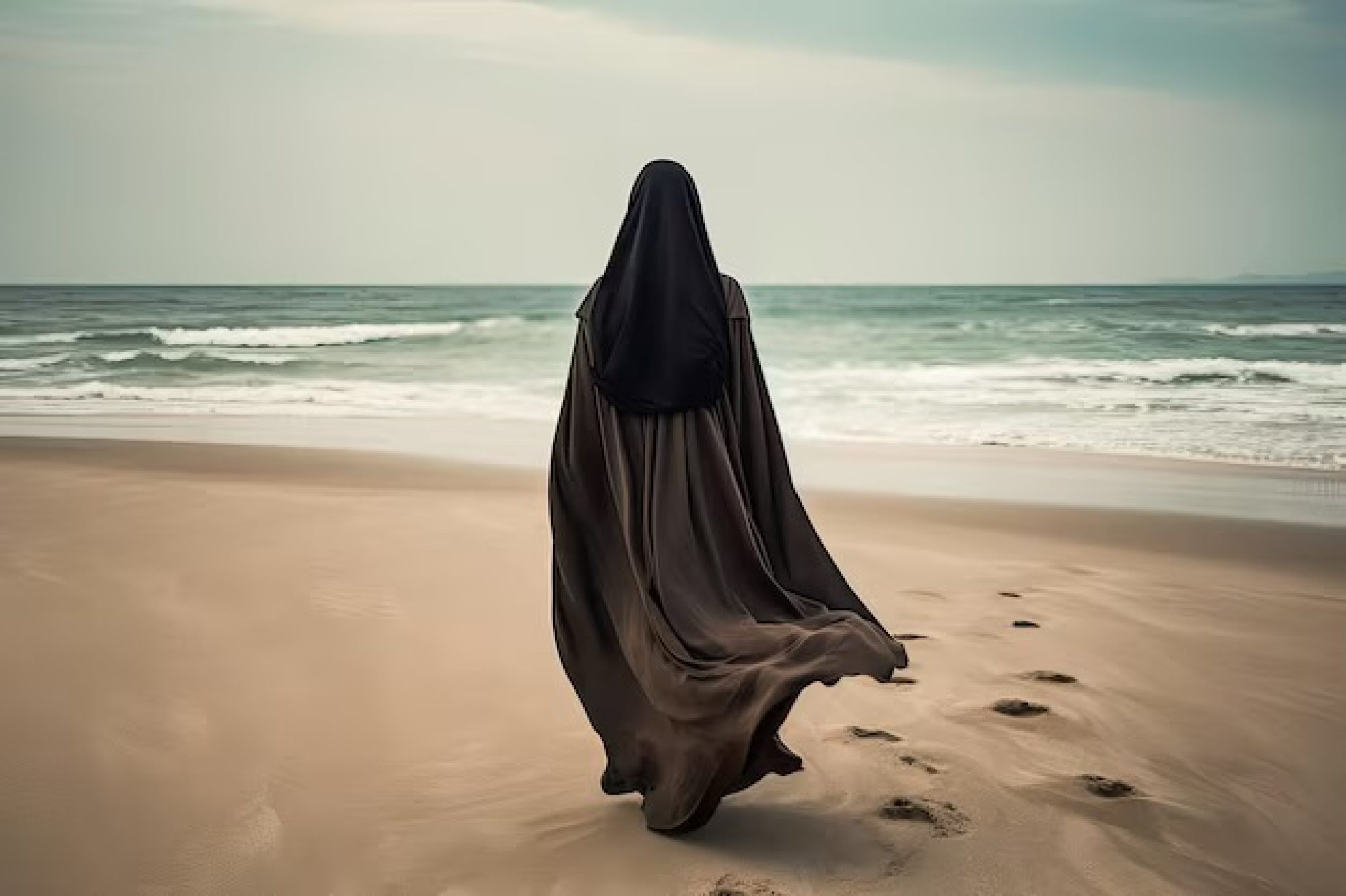
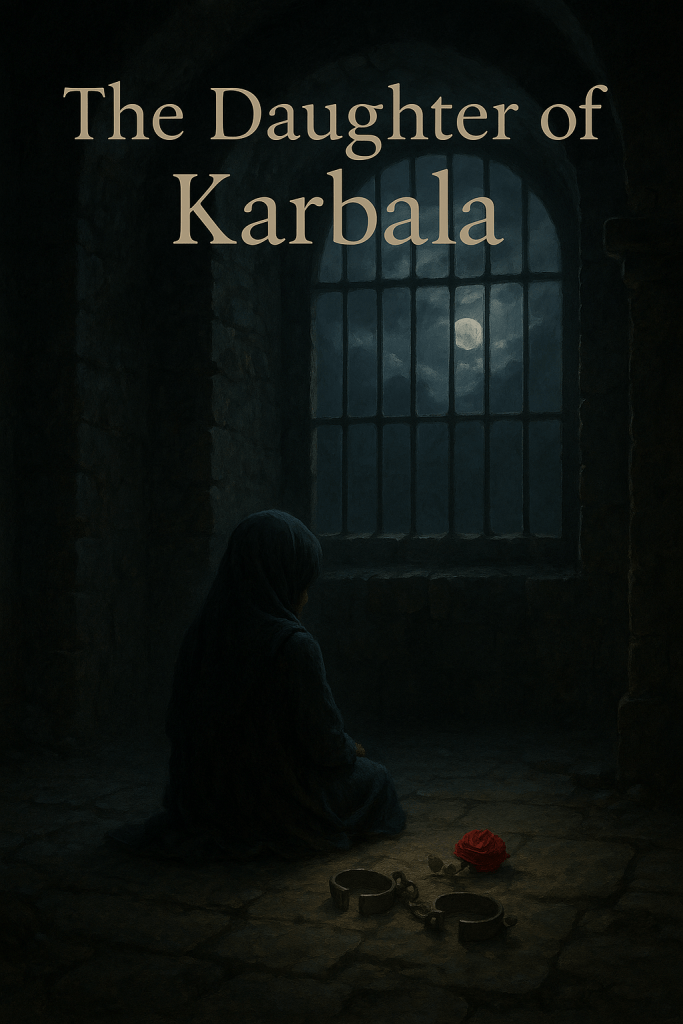
🌸 The Silent Cry of Sayyida Ruqayyah (as) — A Reflection

As the anniversary approaches to honour this little girl I’m struck by the core similarities between her and the children of Gaza like them She was only a child — just four years old, some say even younger — yet her name echoes through the centuries with the weight of grief and sanctity.

Sayyida Ruqayyah bint Husayn (as), daughter of the Master of Martyrs, walked a path that no child should ever walk — the path from Karbala to Kufa, and then to Damascus, shackled not by her own sins, but by the cruelty of those who tried to extinguish the light of the Prophet’s family.

She was born into light, into love — the cherished daughter of Imam Husayn (as) and a grandchild of Fatima al-Zahra (as). Her small world was filled with the fragrance of worship, truth, and purity. But the love of Ahl al-Bayt came with a price in a world intoxicated by power and tyranny.

On the 10th of Muharram, she witnessed what no soul should bear: her father standing alone in the desert, bleeding yet radiant, calling for help that never came. The cries of “al-‘atash!” — “I am thirsty!” — from children like herself, still echo. And when her beloved father fell, she no longer had anyone to shield her from the storm.

Dragged in chains through the streets of Kufa and Shaam, Sayyida Ruqayyah was not only a prisoner of Yazid — she became a witness. Her small voice, her cries for her father in the dark prison cell, pierced the hearts of even the cruel. And when they brought her the severed head of Imam Husayn (as) in a cold box, her tiny heart could bear no more. That night, she left this world, reuniting with her father in the Hereafter, where there are no chains, no pain, no parting.

💔 Her Story, Our Mirror

Ruqayyah’s story teaches us that innocence is not always protected in this world, but it is always honored by God. She reminds us that even the smallest among us can bear witness to great truths, and that grief itself can be a form of resistance.

In her cries, we hear the voice of every oppressed child. In her shackles, we see the cost of speaking the truth in a world ruled by falsehood. And in her martyrdom, we are reminded that Allah sees the brokenhearted, and that the oppressed will rise again — with dignity, with divine reward, and with their names forever engraved in the hearts of the faithful.

🌹 What Can We Learn?

Love for the Ahl al-Bayt must be active — it must move us to speak out against injustice, to comfort the vulnerable, and to uphold truth no matter the cost. Spiritual strength does not depend on age. Even a child, nurtured in faith, can bear immense trials with patience and purity. Grief is not weakness — Ruqayyah’s tears became a testimony that outlived empires. Our pain, too, can be a form of worship when it is rooted in love for Allah and His chosen ones. Martyrdom is not always on the battlefield. Sometimes it is in the prison cell, in the silent suffering, in the dignity of a soul that refuses to bow to tyranny.

May we never forget her.

May we raise our daughters with her name on our tongues and her light in their hearts.

And may we meet her, one day, in a place where no children are ever hurt again — in the gardens of Jannah, under the mercy of Allah, near the ones who were never afraid to stand alone for truth.

Peace be upon you, O Ruqayyah bint Husayn.

You did not die in vain.
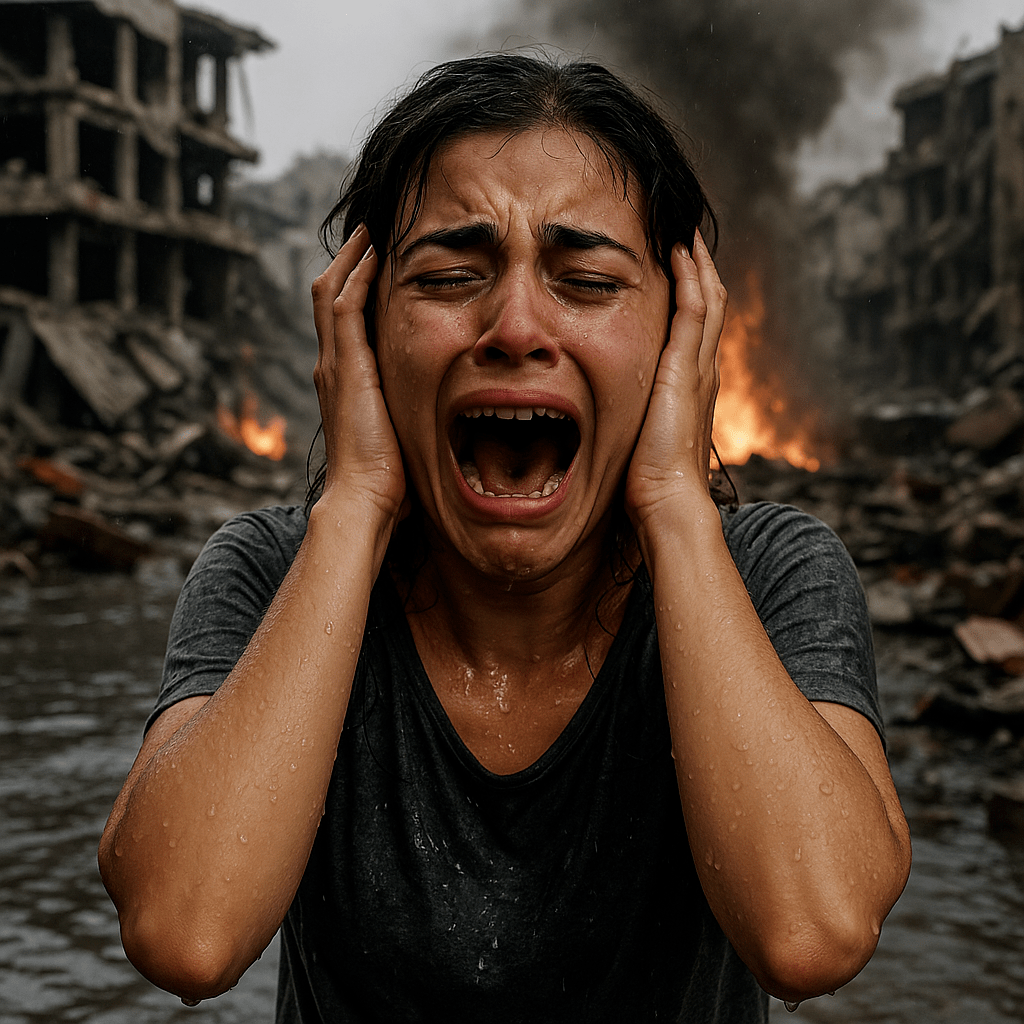
❓How do we get people to see the other side without triggering defensiveness?

I’ve been thinking about this so much. It’s now been more than 640 days since the genocide began on October 7, 2023—over a year and eight months of devastation now playing out openly. In that time, countless voices—from UNRWA, global healthcare leaders, human rights advocates, legal experts—have stood up and declared: this is genocide. Yet our governments persist in refusing to acknowledge it.

I have to believe that those who deny it are in the minority—because if they were the majority, then humanity is lost, quite frankly. It also means we’re closer than we should be to complete moral collapse.

And yet, what do we see instead? People making effigies, burning boats, sanctioning violence against helpless children at airports—slamming them to the ground into comas—just because of where they’re from. Who is fuelling this hate? Why is it not being challenged openly by our governments? And most shockingly—why is Israel being allowed to commit genocide live on our screens, with no accountability, no consequences, and total impunity?

What is it our governments refuse to see? Do they think these videos and images are fabricated? Or do they simply believe this is “war”—the way war has always been, and they’ve become numb to horror? Do they not realise this is new: the first time we are watching genocide as it happens, in real time.

How many more tragedies must we witness this way before it becomes too late to stop it? This alone is why I don’t soften the language—I refuse to treat genocide like it’s just another conflict. Because to live another day using the word war—when humanity itself is at stake—is beyond forgiveness.

So what’s the Real Reason People Don’t Change – And Why It’s So Dangerous Now

I’ve been thinking a lot about something I just witnessed — and really, something I keep seeing over and over in society. It’s this deep resistance people have to being challenged. Especially when it comes to their beliefs, their politics, their culture — their sense of what’s “right.” The minute you try to correct them or offer another way of seeing things, something switches inside them. It’s like you’re not just disagreeing — you’re insulting them. And suddenly, they become rude, defensive, aggressive.

But I don’t think it’s about rudeness on the surface. I think it comes from a much deeper place — a kind of insecurity. Maybe from childhood, from being told they weren’t smart enough. Maybe from fear. Maybe from a lifetime of tying their worth to being right. And when that’s the case, any challenge to what they believe feels like you’re telling them they’re stupid. That they’ve failed. And that’s when the ego steps in.

Some people live their whole lives not knowing this is what they’re doing. Others do know, but they cover it up with a loud persona — ego, arrogance, even superiority. You see this a lot among the wealthy, among people with power. But honestly? It’s not just them. You see it across all classes. Especially in people who lack self-awareness, who can’t sit with being wrong.

And I genuinely believe — hand on heart — that half of society’s problems today come from this.

This inability to say, “You might be right. Let me think about that.”

This unwillingness to be uncomfortable.

This fear of having your worldview shaken — even when your worldview is harming people.

We see it most painfully right now with this genocide happening in Gaza. People who are wide open, deeply informed, and morally awake are screaming: This is ethnic cleansing. This is mass murder. This is apartheid. And yet we are met — again and again — with blank stares, with arguments, with people saying “No, it’s complicated. We support Israel.”

It’s like watching two different realities play out.

And the question I keep asking is:

How do we get these people to open their eyes — without triggering their defensiveness?

How do we speak truth without it sounding like an attack?

It’s hard. It’s exhausting. And sometimes it feels impossible.

But I’ve learned a few things.

You don’t change minds by force. You plant seeds. You speak clearly, but not with cruelty. You ask questions instead of throwing accusations — not because they don’t deserve confrontation, but because if the goal is change, shame doesn’t always get you there. And most of all, you speak not just for them — but for the ones who are listening quietly. The ones who are still open.

Because maybe they’re the ones who will carry the truth forward when others refuse to hear it.

This Muharram, I Choose to Live Authentically on the Haqq

This Muharram, I am not just making a promise — I am taking a stand.

A stand to live more authentically.

To walk with integrity.

To align my life with the Haqq — the Truth of Allah.

Authenticity, in its truest form, is not self-indulgence or rebellion. It’s submission. It’s aligning your soul with Divine truth, even when it hurts. Even when it costs you people, comfort, or belonging.

I’ve never really “fit in.” I’ve always stood out — but more importantly, I’ve always stood up.

I don’t turn a blind eye, not even to those closest to me.

Right is right. Wrong is wrong.

That’s something my parents instilled in me — a clear moral compass, no sugar-coating, no excuses, no loyalty to wrongdoing.

Just truth. Just justice.

And yes, it’s cost me friendships. People don’t always want truth — they want allegiance.

But you can’t be loyal to people and to truth when those two paths divide.

You have to choose.

This Muharram, I am choosing.

I am choosing to live like the Prophet’s family — the Ahl al-Bayt — who stood for truth even when they stood alone.

Who were not afraid to confront injustice, even when it came from within the ummah.

Who bore the weight of truth with grace and unshakeable resolve.

There’s a quote I carry in my heart:

“Stand for what is right, even if you’re standing alone.”

It has defined me for as long as I can remember.

And this year, it defines my path forward.

I no longer want to be around gossip, or people who thrive on low-vibrational energy.

If someone is comfortable gossiping to you, don’t think for a second they won’t gossip about you.

Authenticity requires discernment. And discipline.

So this Muharram, I walk forward.

Toward Allah.

Toward truth.

Toward a version of myself that fears no one but Him, and seeks no validation but His.

This Muharram, I am choosing to live upon the Haqq.

And I pray, by the end of this sacred month, I come out of it closer to Allah,

closer to Ahl al-Bayt,

and closer to who I was always meant to be:

authentic.

Unapologetically, faithfully, sincerely — for Him alone.

When Grief Is Truth: From Karbala to Gaza, and the Betrayal We Refuse to See

Muharram has arrived again.

A sacred month. A time when the air itself feels heavy with remembrance. For me, it’s never just about history. It’s personal. It’s raw. It’s a mirror held to the soul, a moment to ask: who do I stand with? And who do I stand as?

This year, I’ve stepped away from the noise—from social media, from performance, from the shallow conversations that scrape at the surface but never dare to go deeper. I’ve chosen silence. Reflection. I’ve chosen to retreat into my Deen—not for show, not even for healing, but for truth. Because truth is what Hussain stood for. And if we can’t find that in ourselves during this month… what are we really mourning?

Hussain (peace be upon him) was not a political figure. He was the beating heart of the Prophet’s legacy.

He was the grandson who the Prophet ﷺ used to cradle in his arms during prayer. The one he called Sayyid shabab ahl al-jannah—the leader of the youth of Paradise. He was known for his love, his generosity, his uprightness, and above all, his unwavering refusal to surrender to tyranny.

At Karbala, he stood with barely 70 followers against an army of thousands. No water. No mercy. No compromise. Because to him, truth was not negotiable. And to surrender to falsehood—even if it bought safety—was not an option.

He and his companions were butchered under the sun. Children murdered. Women taken prisoner. And all of this was done by people who claimed Islam. Who wore the cloak of religion. Who prayed, fasted, and recited Qur’an, all while slaughtering the bloodline of the Messenger of God ﷺ.

That truth alone should have shaken the ummah. But instead?

We forgot.

We forgot who the oppressors were. We erased the pain of the Ahl al-Bayt. We buried the truth beneath centuries of silence and scholarly revision. And we turned the very villains of our history into saints.

We praise those who betrayed the Prophet’s family. We quote those who stood at the Prophet’s door and crushed his daughter behind it.

Abu Bakr stole Fadak from Fatimah. Umar broke down her door and caused her to miscarry. Aisha raised an army against Ali, the rightful successor to the Prophet, in the Battle of Jamal. These are not fringe accounts—they are history. But we’ve been taught not to question them. We’ve been taught that “unity” means silence. That truth is divisive. That grief is sectarian.

But I ask you: If the price of unity is betrayal, then what are we uniting upon?

Today, I see Muslims around the world grieving the genocide in Gaza—and rightfully so. The suffering of the Palestinian people is unbearable. The bombs. The blood. The body bags. The lies.

And yet, some of these same Muslims glorify the very figures who laid the foundation for Karbala—the spiritual Gaza of our history.

They speak out against Israeli apartheid while quoting hadiths narrated by those who tore the house of Zahra apart.

They share du’as for the oppressed while venerating those who oppressed the Prophet’s own family.

They cry for martyrs today while silencing the ones whose blood built this ummah.

There is a deep, unspoken hypocrisy in our outrage.

We are willing to cry—but not willing to confront.

We are willing to mourn—but not to question.

We are willing to say “Free Palestine”—but not “Follow Hussain.”

So this Muharram, I ask myself again: what am I really grieving?

Because if I mourn Karbala, I must also mourn Saqifah.

If I cry for Gaza, I must ask who I glorify in my religion.

If I claim to love the Prophet ﷺ, then I must love his family not just in name—but in allegiance.

This grief I carry—this truth I refuse to abandon—it isolates me. It costs me. It makes me an outsider to many. But I think of Zaynab. I think of the women who walked in chains from Karbala to Kufa to Sham. I think of the courage it takes to speak truth not when it’s popular—but when it’s condemned.

Like Zaynab, I will not cry for sympathy. I will cry as a witness.

Like Hussain, I will not die for victory. I will live for loyalty.

And like Fatimah, I will guard my silence until it becomes louder than every lie.

This Muharram, I withdraw not out of weakness—but out of love. Love for the Ahl al-Bayt. Love for truth. Love for a God who sees every buried injustice and promises its resurrection.

From Karbala to Gaza, truth still bleeds. And I refuse to look away.

When I Hit Rock Bottom, I Called His Name

Tonight, after a day where everything seemed to fall apart — when every door closed, and every thread of patience unravelled — I lay in bed, empty and aching. Just hours before, I had written about Karbala, about Gaza, about grief — and yet, what washed over me next wasn’t the grief of history, or of others. It was my own.

A heavy, unbearable sadness began to rise in me. Not for Hussain, not for the martyrs, but for me. For how far I felt from Allah. From my Deen. From the steadiness I once had. I felt it in every part of me — the distance, the disconnection, the doubt.

And in that moment of complete vulnerability, I broke.

The tears came hard and fast, and all I could do was say it — “Ya Allah, Ya Allah.”

Over and over again. Not with eloquence. Not with hope. Just desperation.

“Ya Allah.”

I didn’t know if He would respond.

I wasn’t expecting a response.

I just needed to cry out — to say His name.

And then… something came.

Not a sign. Not a voice.

Just a whisper from within:

La ilaha illallah.

There is no god but Allah.

Again, and again, my lips moved with it.

La ilaha illallah.

And the crying softened.

And then, almost like a breath rising from the depths of me:

Inna ma‘iya Rabbi sayahdeen.

“Indeed, my Lord is with me, and He will guide me.”

I don’t know what happens next.

I don’t know what tomorrow will bring, or what path lies ahead.

But I know this: He never left me.

Even when I felt furthest from Him, He was there.

Even in the dark, even in the silence — He was always there.

And sometimes, you only remember that at rock bottom.

Because it’s from rock bottom that you finally stop looking in every direction except up.

And when you finally do — you realise you’re not lost.

You were being drawn back.

Back to Him.

Back to truth.

Back to the only One who has never let you go.

All I have to do now…

is keep calling His name

As Muharram Approaches: A Reflection from the Heart

As the sacred month of Muharram approaches, I feel a weight in my chest — a lump in my throat I can’t quite swallow. This is the month of mourning. The month in which Imam Hussain, the beloved grandson of our Prophet Muhammad (peace be upon him and his family), was brutally martyred on the plains of Karbala.

This year, I feel it differently. I feel it deeply.

Last year, I had just embraced the path of the Ahl al-Bayt. I was still learning, still finding my footing as a Shia. But this year… this year, the grief feels alive. My soul recognises what is coming, even before the crescent appears.

Islam is a journey — and my journey into Shia Islam has transformed me on every level. Spiritually, emotionally, intellectually. And in this transformation, I’ve found myself drawn to the Ahl al-Bayt: to Fatima al-Zahra, to Ali, and above all, to Hussain — all through the luminous heart of our Prophet.

Knowing their stories, feeling their pain, honouring their sacrifices — it overwhelms me. My chest tightens with emotion. My eyes well with tears. And in this month of Muharram, everything is intensified. The pain is sharper, the sorrow heavier, the love stronger.

At Karbala, alongside Hussain, stood the most loyal and courageous souls: Abbas, his lion-hearted brother; Ali al-Akbar, his radiant son; Qasim, the brave young nephew; and so many others who gave their lives not for power, but for truth (Haqq).

And then there was Lady Zaynab.

Zaynab, the mountain of patience.

Zaynab, who stood amidst devastation — her family slaughtered, her brother’s head raised on a spear — and still said, “I saw nothing but beauty.”

How can one soul endure such loss, such horror, and still speak with that kind of strength, that unwavering dignity?

Her courage leaves me breathless.

This year, more than ever, I feel her words echo within me. I feel the pain of Karbala mirrored in the suffering of Gaza, where once again the innocent are slaughtered, where children die in the arms of their mothers, and the world looks away. The parallels are haunting. The injustice is unbearable.

And I wonder — how many in our Ummah have lost their hearts? How many have become so indoctrinated, so desensitised, that they cannot see the truth? How many dismiss what happened to the family of the Prophet as mere politics, when it was oppression, pure and simple? When it was the silencing of Haqq.

The pain of seeing people glorify those who stood against Ahl al-Bayt, or justify their crimes, is almost as heavy as the grief itself. It feels like betrayal. A betrayal of love. A betrayal of truth.

So this Muharram, I will withdraw into myself. I will sit with the sorrow. I will connect more deeply with Karbala. With the stories. With the legacy. With the heartbreak.

And like Lady Zaynab, I will strive to see beauty in it all.

Not because the pain is beautiful. But because the resistance, the courage, the unwavering stand for truth — that is beauty. That is love. That is Islam.

Ya Hussain.

Ya Zaynab.

Peace and blessings be upon all those who gave everything for truth

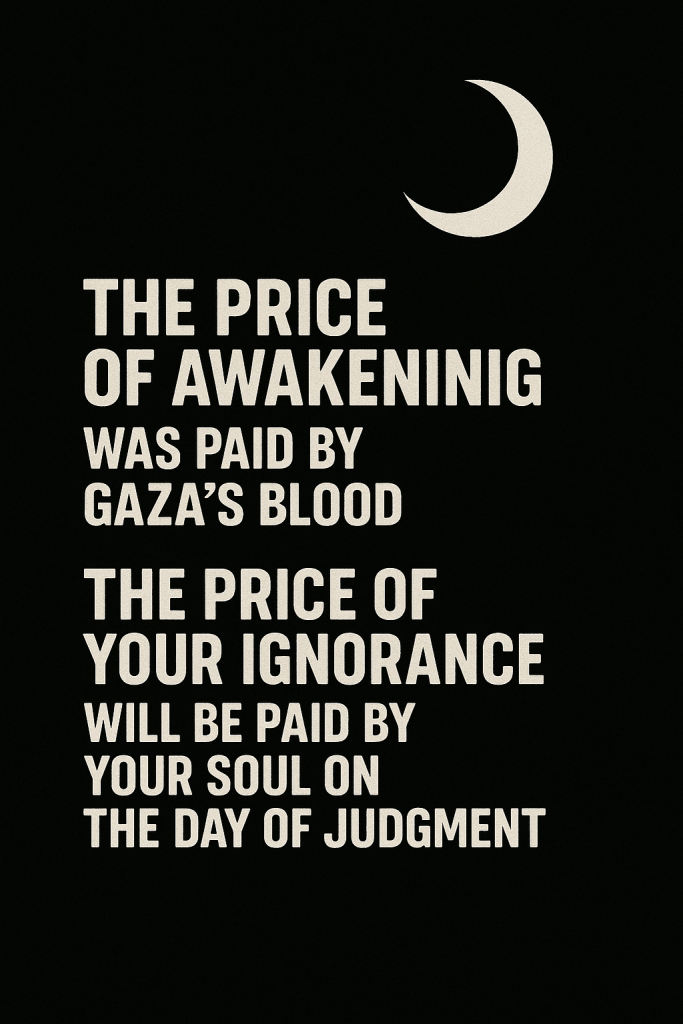
The Price of Awakening

The price of your awakening was paid in Gaza’s blood. Don’t you dare forget that.

These words has sliced through me today as once again I opened my laptop to be faced with overwhelming ignorance from people claiming to be woke. I honestly didnt know that after all the exposure, after 589 days of Genocide that people could still be blind to what is unfolding live right in front of their eyes.

Yet as the rest of the world blinked open its eyes to the machinery of empire, to the savage clarity of colonialism laid bare, it was Gaza who paid the toll. Gaza — not just a place, but a people, a breath, a prayer buried beneath rubble — handed you the gift of sight. You didn’t wake up on your own. You were dragged, screaming or silent, into awareness by the sound of children being obliterated on livestream.

And yet.

There are still people pretending to be awake.Still trying to intellectualise their cowardice, still preaching nuance while bodies are turned to dust.

Still speaking of Hamas as though resistance is terrorism, as though occupied people owe their colonisers compliance. Still choosing the side of genocide while wearing the mask of enlightenment.

This did not begin on October 7th. That date is not the start of anything but your discomfort. Gaza’s struggle, Palestine’s pain, predates your timeline. It is layered with decades of theft, murder, humiliation, and siege — of a people imprisoned in their own land, punished for refusing to die quietly.

You talk about humanity, but only when it serves your politics.

You cry for peace, but only when the oppressed raise their fists.

You condemn “both sides,” but only when the side resisting dares to survive.

This isn’t awakening. This is performance.

Real awakening means rupture. Grief. Accountability.

It means recognising that what you now know came at the cost of a child’s life, a mother’s scream, a city flattened.

And that you owe them — not your pity, but your voice. Your alignment. Your truth.

Because yes, the price of your awakening was paid by Gaza in blood.

But the price of your silence — your ignorance, your willful blindness — will be paid by your soul on the Day of Judgment.

May you not be among the liars who claim they didn’t know.

May you not be among the cowards who claimed neutrality while genocide marched on.

And may you remember — every time you speak, every time you post, every time you choose sides — that someone else died to show you the truth.

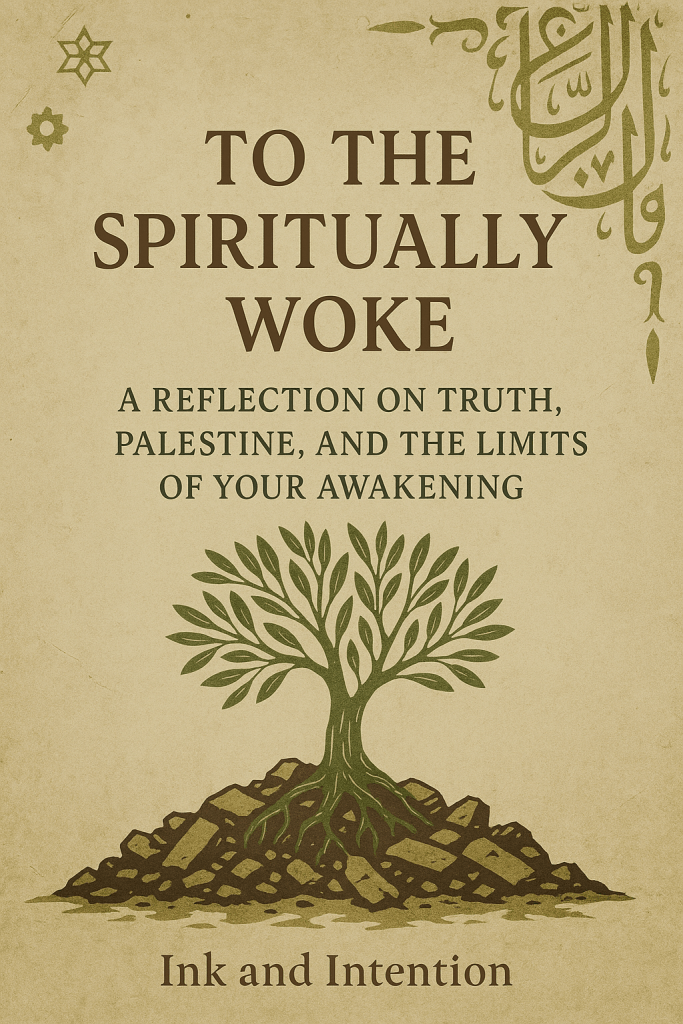
“To the Spiritually Woke: You Are Not Who You Think You Are”

“To the Spiritually Woke: You Are Not Who You Think You Are”

by Ink and Intention

In an age where everyone claims to be awakened — bathed in incense smoke, steeped in divine feminine wisdom, draped in crystals and cosmic truth — it is bewildering to find that so many remain deeply asleep.

They chant about liberation, about rising consciousness, about the sacredness of all things. They speak of universal love, of goddess energy, of breaking ancestral chains. And yet, when faced with a people being bombed, starved, and erased in real time, they somehow manage to take the side of the oppressor — or worse, they suggest solutions that are nothing more than polite ethnic cleansing.

This morning, I encountered a few such voices. Sisters, supposedly. Spiritually awakened, allegedly. But what I heard from them wasn’t truth. It was empty, packaged rhetoric. They suggested that Palestinians should simply leave. That perhaps Libya could offer refuge. That somehow, the people of Gaza must want to leave this devastation behind.

Let me be clear: this is not awakening.
This is not alignment.
This is complicity.

To suggest that the people of Gaza — who have endured unimaginable violence, who have chosen to remain rooted on their land even as it is turned to rubble — would want to leave, is to expose just how far removed you are from truth. It is to misunderstand not only the political reality, but the spiritual force that binds them to their home.

They are not enduring this genocide because they lack options. They are enduring it because they refuse to give up what is sacred.

They stay because their land is not a piece of negotiable real estate. It is not something they can sell or exchange for safety. It is home. It is legacy. It is prayer and history and covenant.

Their grandfathers planted olive trees that still bear fruit. Their ancestors are buried in the soil they walk on. Every stone is part of their story. Every inch of land has witnessed their love, their prayers, their blood. This isn’t nationalism — it is a spiritual, historical, and divine relationship with the land.

And more than that — they stay because of tawakkul. Because of their trust in Allah, subḥānahu wa taʿālā. Because they know that every hardship, every death, every loss, is written. That there is no true safety except with Him. That even in the face of bombs and starvation, what matters most is not survival at any cost, but submission to the Divine Will.

They sit on the ruins of their homes not because they have nowhere to go — but because to leave would be to betray everything they believe in. Everything they’ve lived for. Everything they were entrusted to protect.

And you — you in the West, with your temples and your tarot decks, your moon water and your sacred baths — you dare to speak on this? You, who live in lands built on the blood of displaced peoples, dare to advise the oppressed to become refugees again?

You are not awakened.
You are not enlightened.
You are parroting settler-colonial logic with prettier words and softer lighting.

You speak of divine feminine energy, but you cannot recognize the raw sacred feminine power of a mother in Gaza holding her baby in the rubble and refusing to leave.

You speak of vibration and frequency, but you do not feel the frequency of truth in the voice of a father who has lost everything and still says, “Alḥamdulillāh.”

You speak of ancestors, but you deny the dignity of a people walking the same streets their great-grandparents walked, even if those streets are now bombed-out shadows.

You say Palestinians should leave. But where, exactly, should they go? Libya, which has been torn apart by Western war? Jordan, already overflowing? Egypt, whose gates remain closed? The very idea is absurd. And yet, more disturbingly, it is exactly what Israel wants: an emptied land. A silent Nakba. A second expulsion, disguised as a humanitarian gesture.

And you — in your spiritual self-righteousness — are carrying that message forward.

You want to talk about hostages. Fine. Talk about them. But talk honestly. Hamas has repeatedly said: “We will release every hostage, all at once — if the bombing stops.” But the bombing hasn’t stopped, because Israel doesn’t want peace. It wants submission. It wants annihilation. It wants silence.

And every time you repeat, “Why won’t they just leave?” — you’re doing its work for it.

You are not neutral. You are not compassionate. You are not spiritual. You are colonized. Mentally and morally colonized, dressed in the language of awakening but devoid of substance.

Being truly awake means understanding the weight of oppression. It means standing with the oppressed even when it makes you uncomfortable. It means dismantling your illusions, not reinforcing them with incense and ego.

Real consciousness demands that you understand this: the people of Gaza are not martyrs because they want to die. They are martyrs because they refuse to abandon life — real life — a life of honour, of faith, of rootedness, of resistance. Their lives are drenched in meaning. In sacred defiance. In belief.

You, on the other hand, are asleep. And worse — you think you’re awake.

If your version of spirituality does not include the oppressed, does not understand the holiness of land, does not weep for the children buried beneath rubble, then your spirituality is a lie.

So sit with your discomfort. Sit with your hypocrisy. Sit with the realization that you are not who you thought you were.

And maybe — if you’re brave enough — start again.

Commentary on Surah Al-Mulk, Verse 1

“Blessed is the One in whose hands rests all authority, and He is Most Capable of everything.”

The very first word of this verse, Tabāraka (تَبَارَكَ), comes from the root baraka, meaning to grow, to increase, or to overflow with goodness. Today, it is often translated as “blessing,” but in the context of Allah, its meaning is far richer. It refers to a unique kind of divine abundance — a pure and supreme goodness that originates from Allah and is spread throughout His creation. He is not only the source of blessings, but also the One who distributes them with wisdom and mercy.

This divine barakah is often visible in the world around us — in nature, in our sustenance, in moments of ease — signs designed to awaken our awareness and appreciation of Allah’s presence. The word Tabāraka, used right at the beginning of Surah Al-Mulk, sets a profound tone for the rest of the chapter. It reminds us that Allah’s blessings are not separate from His authority; they are part of the very fabric of His kingship.

The term Al-Mulk refers to absolute dominion — complete control over the heavens, the earth, and all that lies between and beyond. The use of the definite article “Al” (meaning the) emphasises that this is not just any kingdom — it is the kingdom. Everything that exists falls under His rule, and every individual is both created and sustained by Him.

The verse concludes by describing Allah as Qadīr, which comes from the root Qadara, meaning to decree, to measure out, or to determine. It highlights that Allah’s power is not just limitless but also precise and purposeful. He doesn’t just have power — He uses it with wisdom, and nothing is outside His ability.

This concept of divine barakah — of Allah’s overflowing goodness — is found throughout the Qur’an. One of the most beautiful examples is in Surah Al-Isra (17:1), where Allah refers to Masjid Al-Aqsa in Palestine:

”… to al-Masjid al-Aqsa, whose surroundings We have blessed (ٱلَّذِى بَـٰرَكْنَا حَوْلَهُۥ)…”

Here, the phrase “baraknā ḥawlahu” — “We have blessed its surroundings” — refers to the sacred land of Palestine, showing us that the barakah of Allah is also tied to places, not just people or moments. This land has witnessed the footsteps of prophets and carries a spiritual weight recognised and preserved in the divine text.

So from the grandeur of divine rule in Surah Al-Mulk to the blessed lands mentioned in Surah Al-Isra, the concept of barakah weaves through the Qur’an like golden thread — pointing us always back to Allah, the Most Generous, the Most Capable, and the source of all true increase.

“Genocide Live: The World Watches, the West Betrays, and Humanity Dies”

Today, I Sat to Write—But I Couldn’t

I opened my laptop, ready to write after a month of Ramadan, a month of seeking closeness to Allah. But I couldn’t. The words wouldn’t come. Not because I had nothing to say, but because there is too much—too much horror, too much betrayal, too much rage.

Instead, I find myself sharing images, videos, anything to get the truth out. The speed of this genocide has shifted into high gear, and the world is still watching, still doing nothing. I see things most will never see, images that burn into my mind, that keep me awake at night. And I have never been so angry. Never felt so helpless.

How did we get here? How did we let it come to this?

And worse—how do we stop it?

This is a time of reckoning, a time of unbearable weight on the conscience of the world. What is unfolding in Gaza is not just another conflict—it is a genocide in real-time, with the slaughter of innocent men, women, and children playing out before our eyes. It is a slow, deliberate extermination of a people, while those in power lie, cover up, and betray not just the Palestinians, but their own citizens, their own so-called democratic values.

The West, with its grand proclamations of human rights and freedom, has been unmasked. The governments that claim to champion justice and democracy are either complicit or cowardly, and the people are left screaming into a void. Protests, once a force of millions, dwindle in numbers. The outrage is still there, but the exhaustion is setting in. And so we ask, again and again—what is the answer?

Were we ever really in control? Did we ever have a say, or were we simply pacified, led to believe that our voices carried weight when in truth, the scales have always been tipped in favor of those who wield power through oppression? Perhaps the real illusion was that we were ever part of the equation at all.

Some say history repeats itself, but maybe it never ended. Maybe World War II wasn’t the end of an era of genocide but the blueprint for what we see now. The very horrors that justified the creation of Israel are now being used to justify its crimes. And yet, the world remains silent or, worse, cheers on the slaughter. The propaganda machine has done its job well—dividing, conquering, twisting reality until truth itself is seen as an act of rebellion.

In the UK, we see this sickness manifest in other ways. Hate-fueled mobs target immigrants, burn buildings, barricade people inside—because anger, when misdirected, becomes a weapon for the powerful. Instead of rising against the true oppressors, people are manipulated into fighting each other. This is by design. It has always been by design.

And so, we return to the question—how do we stop this? Can we? Or has the balance of power tipped so far that resistance is nothing more than an echo in the wind? As an Ummah, as a global community, where do we turn when our voices are drowned out, our efforts dismissed, our people slaughtered without consequence?

If there was ever a test of humanity, of faith, of perseverance—it is now. And yet, the fear remains: What if we fail? What if we already have?