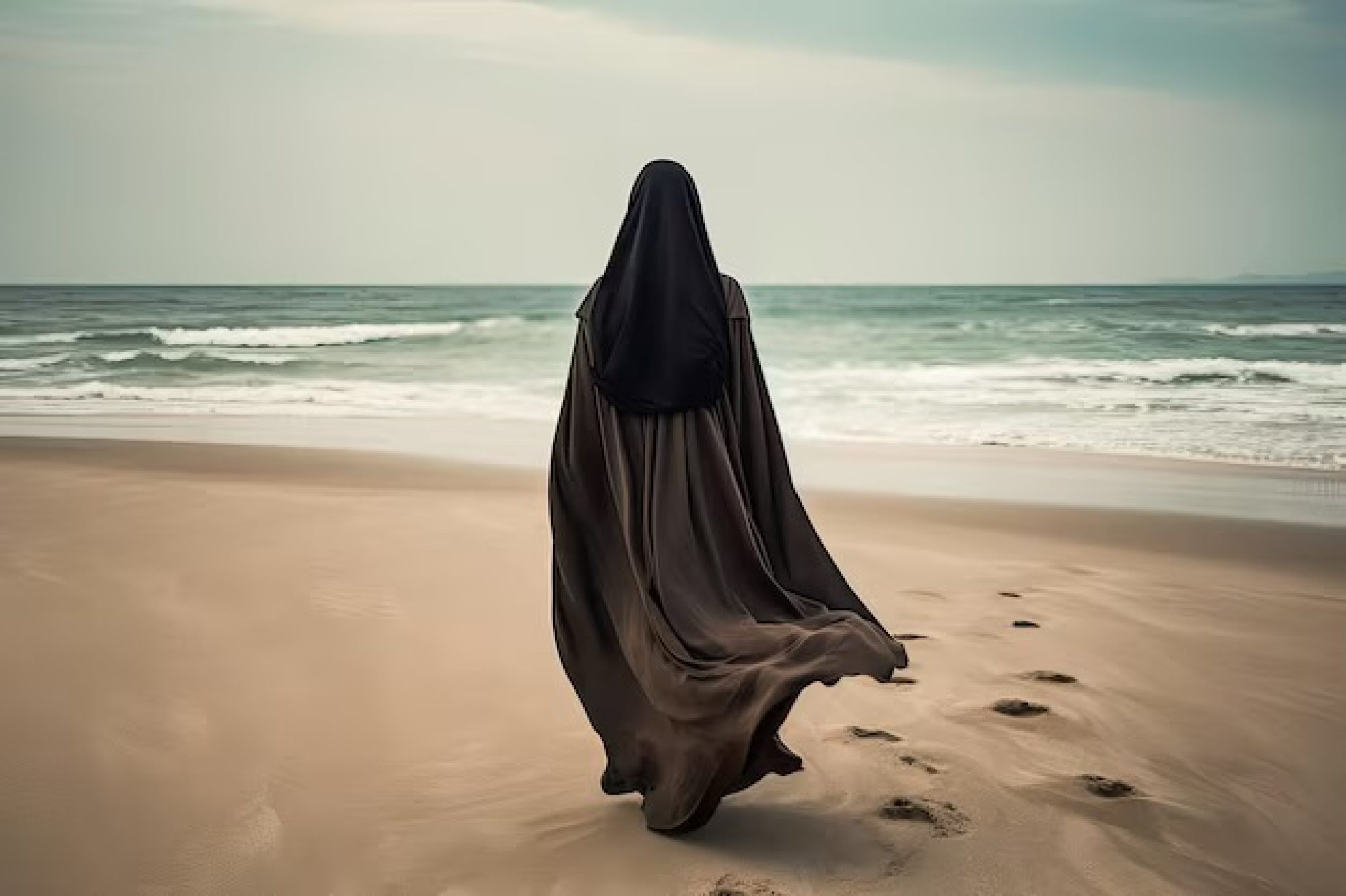
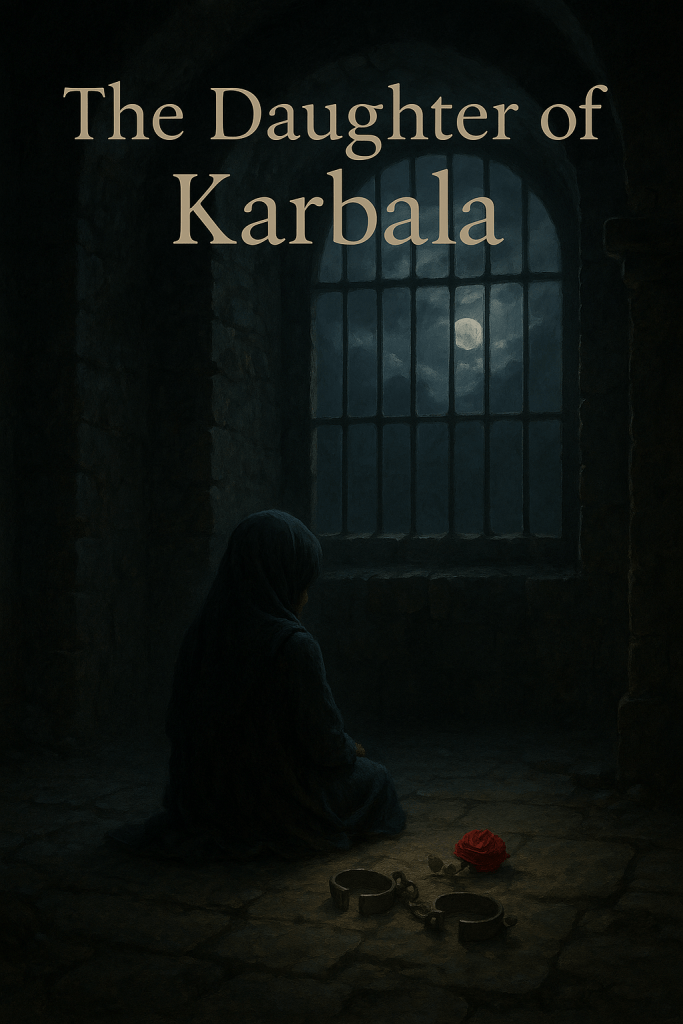
As the anniversary approaches to honour this little girl I’m struck by the core similarities between her and the children of Gaza like them She was only a child — just four years old, some say even younger — yet her name echoes through the centuries with the weight of grief and sanctity.
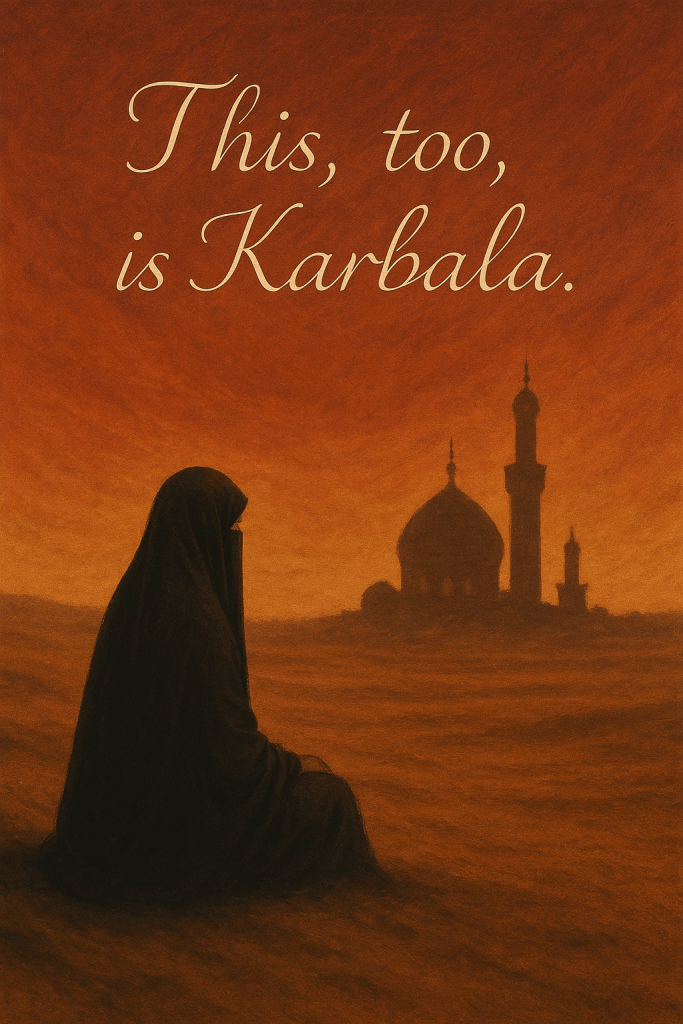
Sayyida Ruqayyah bint Husayn (as), daughter of the Master of Martyrs, walked a path that no child should ever walk — the path from Karbala to Kufa, and then to Damascus, shackled not by her own sins, but by the cruelty of those who tried to extinguish the light of the Prophet’s family.
She was born into light, into love — the cherished daughter of Imam Husayn (as) and a grandchild of Fatima al-Zahra (as). Her small world was filled with the fragrance of worship, truth, and purity. But the love of Ahl al-Bayt came with a price in a world intoxicated by power and tyranny.
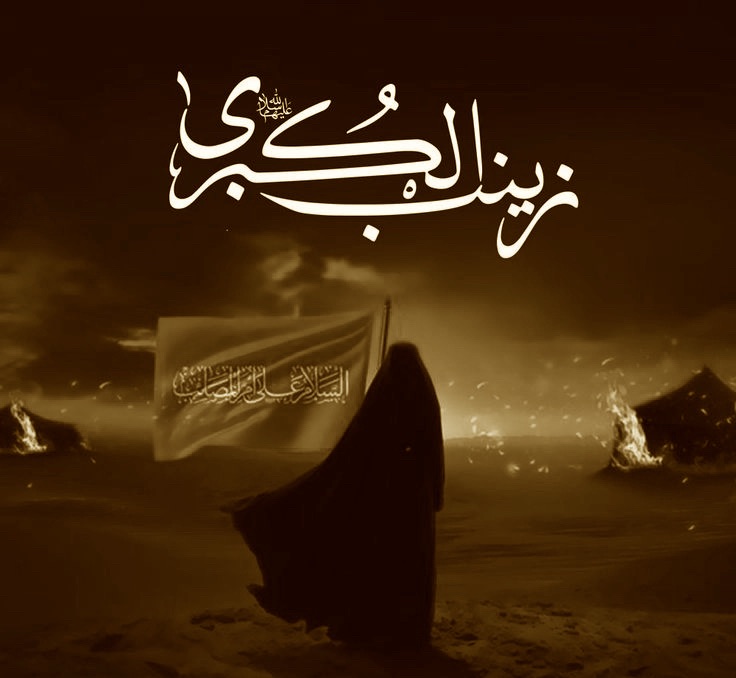
On the 10th of Muharram, she witnessed what no soul should bear: her father standing alone in the desert, bleeding yet radiant, calling for help that never came. The cries of “al-‘atash!” — “I am thirsty!” — from children like herself, still echo. And when her beloved father fell, she no longer had anyone to shield her from the storm.
Dragged in chains through the streets of Kufa and Shaam, Sayyida Ruqayyah was not only a prisoner of Yazid — she became a witness. Her small voice, her cries for her father in the dark prison cell, pierced the hearts of even the cruel. And when they brought her the severed head of Imam Husayn (as) in a cold box, her tiny heart could bear no more. That night, she left this world, reuniting with her father in the Hereafter, where there are no chains, no pain, no parting.
💔 Her Story, Our Mirror
Ruqayyah’s story teaches us that innocence is not always protected in this world, but it is always honored by God. She reminds us that even the smallest among us can bear witness to great truths, and that grief itself can be a form of resistance.
In her cries, we hear the voice of every oppressed child. In her shackles, we see the cost of speaking the truth in a world ruled by falsehood. And in her martyrdom, we are reminded that Allah sees the brokenhearted, and that the oppressed will rise again — with dignity, with divine reward, and with their names forever engraved in the hearts of the faithful.
🌹 What Can We Learn?
Love for the Ahl al-Bayt must be active — it must move us to speak out against injustice, to comfort the vulnerable, and to uphold truth no matter the cost. Spiritual strength does not depend on age. Even a child, nurtured in faith, can bear immense trials with patience and purity. Grief is not weakness — Ruqayyah’s tears became a testimony that outlived empires. Our pain, too, can be a form of worship when it is rooted in love for Allah and His chosen ones. Martyrdom is not always on the battlefield. Sometimes it is in the prison cell, in the silent suffering, in the dignity of a soul that refuses to bow to tyranny.
May we never forget her.
May we raise our daughters with her name on our tongues and her light in their hearts.
And may we meet her, one day, in a place where no children are ever hurt again — in the gardens of Jannah, under the mercy of Allah, near the ones who were never afraid to stand alone for truth.
Peace be upon you, O Ruqayyah bint Husayn.
You did not die in vain.



 Seeking Sakina