Knowledge may fill the mind.

But wisdom shapes the soul.
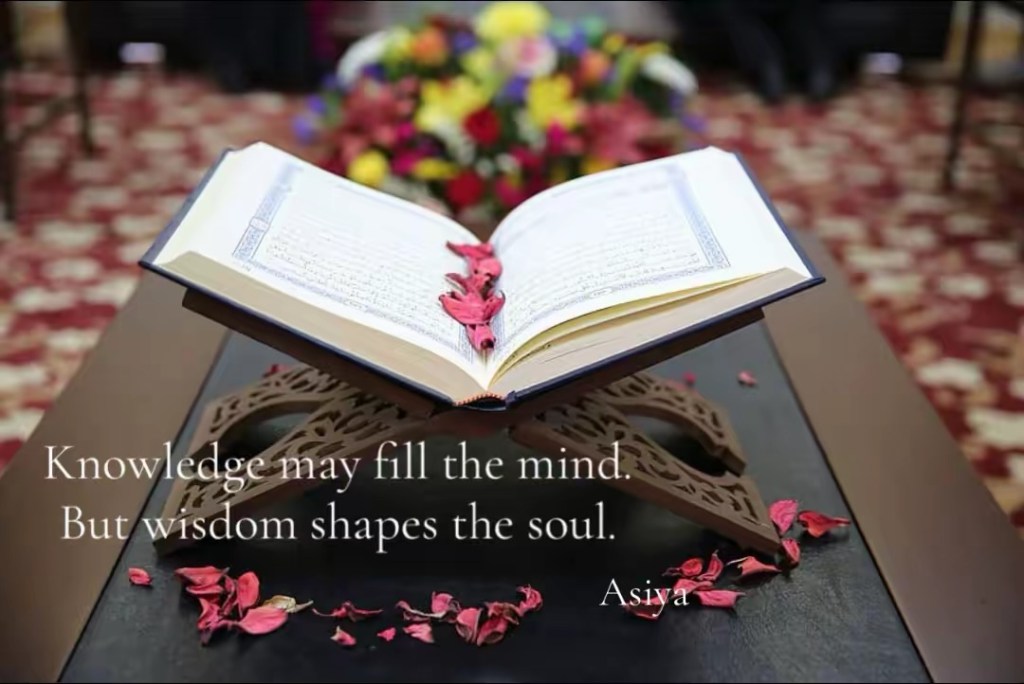
A Reflection for My Fellow Revert Sisters

Sometimes, as reverts, we feel small in comparison to those who seem to know everything about Islam — who can recite the Qur’an flawlessly, quote hadith by heart, and remember every lesson. We may worry that our journey is incomplete, that our understanding is lacking.

But the truth is, the beauty of this path is not measured by memory or perfection. It is measured by the depth of our hearts, the sincerity of our reflection, and the way the Qur’an takes root within us.

With this in mind, I want to share a letter to my fellow revert sisters — a reminder that wisdom is found in the heart, and that your connection to Allah is unique, precious, and enough.

A Letter to My Fellow Revert Sisters

My dear sisters,

There is something I want to share with you, especially for those of us who came to Islam later in life. Many of us carry a quiet worry in our hearts: “I don’t know enough. I can’t remember enough. I’ll never catch up to those who were born into this faith.”

I want you to pause here, take a breath, and let me tell you — you are not less. Not in the sight of Allah. Not in the value of your journey. Not in the weight of your worship.

There is a difference between reading to gain knowledge and reading to gain wisdom. Knowledge is about remembering facts, recalling names, and reciting details. It makes a person seem knowledgeable, and there is goodness in that — but it is not the full picture.

Wisdom is something gentler, deeper. It is not measured by what the mind can store, but by what the heart can hold. It is not about carrying every verse in memory, but about letting even a single verse move you, shape you, and become part of your soul.

As reverts, we do not need to compare ourselves to those who can recite the Qur’an from beginning to end without stumbling or pausing for breath. That is their gift, and it is beautiful. But your gift may be different — and it is no less. You are not any less than somebody who can recite the Qur’an from beginning to end without taking a breath. What matters most is to understand the Qur’an in the same way you feel your heartbeat — constant, alive, and within you.

The Qur’an itself reminds us:

“None will grasp its meaning except those firmly grounded in knowledge.” (3:7)

And Imam Ali (as) taught us:

“Knowledge is of two kinds: what is heard and what is practiced. That which is heard does not profit if it is not practiced, but that which is practiced is knowledge indeed.” (Nahj al-Balaghah, Saying 366)

So let this bring peace to your heart. Do not measure your worth by what you can recall on command, but by how sincerely you live what you have understood. One verse lived is greater than a hundred verses recited without reflection.

For some, knowledge is stored in libraries of memory. For others — especially those who cannot retain details easily — wisdom is carried in a different way. It is carried in the heart, in the quiet understanding that stays with you long after the words have faded.

Knowledge may fill the mind.

But wisdom — wisdom shapes the soul.

With love and solidarity,

From one revert sister to another

Duʿa

O Allah, make us among those who are firmly grounded in knowledge,

those who live the Qur’an with sincerity,

who practice what they understand,

and who carry Your words in their hearts

as steadily as the beating of their own hearts.

Āmeen.

When Grief Is Truth: From Karbala to Gaza, and the Betrayal We Refuse to See

Muharram has arrived again.

A sacred month. A time when the air itself feels heavy with remembrance. For me, it’s never just about history. It’s personal. It’s raw. It’s a mirror held to the soul, a moment to ask: who do I stand with? And who do I stand as?

This year, I’ve stepped away from the noise—from social media, from performance, from the shallow conversations that scrape at the surface but never dare to go deeper. I’ve chosen silence. Reflection. I’ve chosen to retreat into my Deen—not for show, not even for healing, but for truth. Because truth is what Hussain stood for. And if we can’t find that in ourselves during this month… what are we really mourning?

Hussain (peace be upon him) was not a political figure. He was the beating heart of the Prophet’s legacy.

He was the grandson who the Prophet ﷺ used to cradle in his arms during prayer. The one he called Sayyid shabab ahl al-jannah—the leader of the youth of Paradise. He was known for his love, his generosity, his uprightness, and above all, his unwavering refusal to surrender to tyranny.

At Karbala, he stood with barely 70 followers against an army of thousands. No water. No mercy. No compromise. Because to him, truth was not negotiable. And to surrender to falsehood—even if it bought safety—was not an option.

He and his companions were butchered under the sun. Children murdered. Women taken prisoner. And all of this was done by people who claimed Islam. Who wore the cloak of religion. Who prayed, fasted, and recited Qur’an, all while slaughtering the bloodline of the Messenger of God ﷺ.

That truth alone should have shaken the ummah. But instead?

We forgot.

We forgot who the oppressors were. We erased the pain of the Ahl al-Bayt. We buried the truth beneath centuries of silence and scholarly revision. And we turned the very villains of our history into saints.

We praise those who betrayed the Prophet’s family. We quote those who stood at the Prophet’s door and crushed his daughter behind it.

Abu Bakr stole Fadak from Fatimah. Umar broke down her door and caused her to miscarry. Aisha raised an army against Ali, the rightful successor to the Prophet, in the Battle of Jamal. These are not fringe accounts—they are history. But we’ve been taught not to question them. We’ve been taught that “unity” means silence. That truth is divisive. That grief is sectarian.

But I ask you: If the price of unity is betrayal, then what are we uniting upon?

Today, I see Muslims around the world grieving the genocide in Gaza—and rightfully so. The suffering of the Palestinian people is unbearable. The bombs. The blood. The body bags. The lies.

And yet, some of these same Muslims glorify the very figures who laid the foundation for Karbala—the spiritual Gaza of our history.

They speak out against Israeli apartheid while quoting hadiths narrated by those who tore the house of Zahra apart.

They share du’as for the oppressed while venerating those who oppressed the Prophet’s own family.

They cry for martyrs today while silencing the ones whose blood built this ummah.

There is a deep, unspoken hypocrisy in our outrage.

We are willing to cry—but not willing to confront.

We are willing to mourn—but not to question.

We are willing to say “Free Palestine”—but not “Follow Hussain.”

So this Muharram, I ask myself again: what am I really grieving?

Because if I mourn Karbala, I must also mourn Saqifah.

If I cry for Gaza, I must ask who I glorify in my religion.

If I claim to love the Prophet ﷺ, then I must love his family not just in name—but in allegiance.

This grief I carry—this truth I refuse to abandon—it isolates me. It costs me. It makes me an outsider to many. But I think of Zaynab. I think of the women who walked in chains from Karbala to Kufa to Sham. I think of the courage it takes to speak truth not when it’s popular—but when it’s condemned.

Like Zaynab, I will not cry for sympathy. I will cry as a witness.

Like Hussain, I will not die for victory. I will live for loyalty.

And like Fatimah, I will guard my silence until it becomes louder than every lie.

This Muharram, I withdraw not out of weakness—but out of love. Love for the Ahl al-Bayt. Love for truth. Love for a God who sees every buried injustice and promises its resurrection.

From Karbala to Gaza, truth still bleeds. And I refuse to look away.

As Muharram Approaches: A Reflection from the Heart

As the sacred month of Muharram approaches, I feel a weight in my chest — a lump in my throat I can’t quite swallow. This is the month of mourning. The month in which Imam Hussain, the beloved grandson of our Prophet Muhammad (peace be upon him and his family), was brutally martyred on the plains of Karbala.

This year, I feel it differently. I feel it deeply.

Last year, I had just embraced the path of the Ahl al-Bayt. I was still learning, still finding my footing as a Shia. But this year… this year, the grief feels alive. My soul recognises what is coming, even before the crescent appears.

Islam is a journey — and my journey into Shia Islam has transformed me on every level. Spiritually, emotionally, intellectually. And in this transformation, I’ve found myself drawn to the Ahl al-Bayt: to Fatima al-Zahra, to Ali, and above all, to Hussain — all through the luminous heart of our Prophet.

Knowing their stories, feeling their pain, honouring their sacrifices — it overwhelms me. My chest tightens with emotion. My eyes well with tears. And in this month of Muharram, everything is intensified. The pain is sharper, the sorrow heavier, the love stronger.

At Karbala, alongside Hussain, stood the most loyal and courageous souls: Abbas, his lion-hearted brother; Ali al-Akbar, his radiant son; Qasim, the brave young nephew; and so many others who gave their lives not for power, but for truth (Haqq).

And then there was Lady Zaynab.

Zaynab, the mountain of patience.

Zaynab, who stood amidst devastation — her family slaughtered, her brother’s head raised on a spear — and still said, “I saw nothing but beauty.”

How can one soul endure such loss, such horror, and still speak with that kind of strength, that unwavering dignity?

Her courage leaves me breathless.

This year, more than ever, I feel her words echo within me. I feel the pain of Karbala mirrored in the suffering of Gaza, where once again the innocent are slaughtered, where children die in the arms of their mothers, and the world looks away. The parallels are haunting. The injustice is unbearable.

And I wonder — how many in our Ummah have lost their hearts? How many have become so indoctrinated, so desensitised, that they cannot see the truth? How many dismiss what happened to the family of the Prophet as mere politics, when it was oppression, pure and simple? When it was the silencing of Haqq.

The pain of seeing people glorify those who stood against Ahl al-Bayt, or justify their crimes, is almost as heavy as the grief itself. It feels like betrayal. A betrayal of love. A betrayal of truth.

So this Muharram, I will withdraw into myself. I will sit with the sorrow. I will connect more deeply with Karbala. With the stories. With the legacy. With the heartbreak.

And like Lady Zaynab, I will strive to see beauty in it all.

Not because the pain is beautiful. But because the resistance, the courage, the unwavering stand for truth — that is beauty. That is love. That is Islam.

Ya Hussain.

Ya Zaynab.

Peace and blessings be upon all those who gave everything for truth

The Price of Awakening

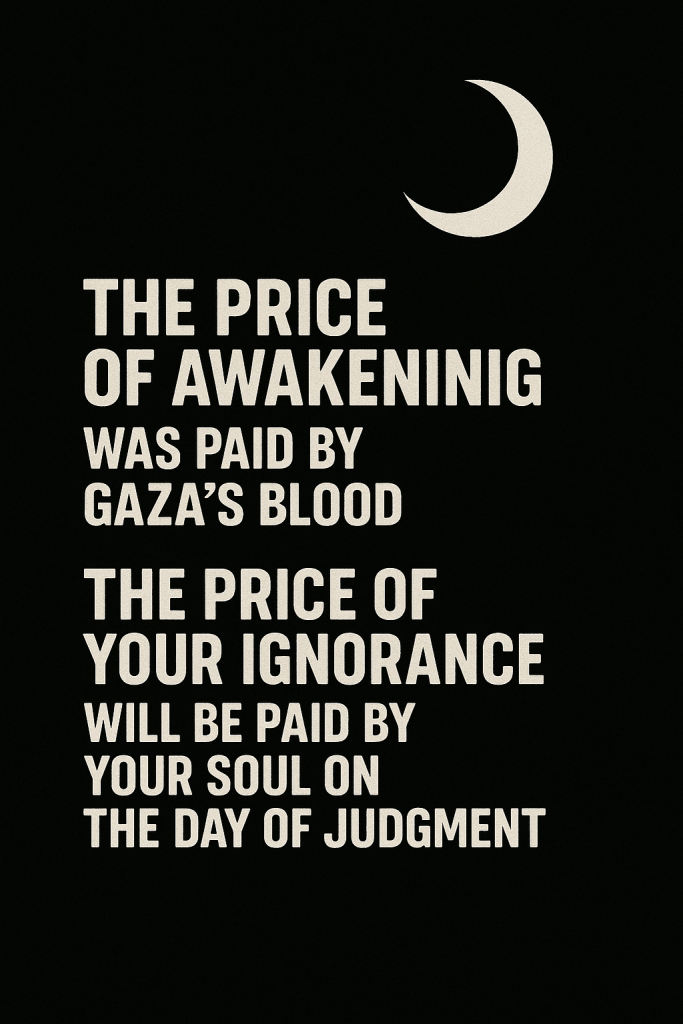
The price of your awakening was paid in Gaza’s blood. Don’t you dare forget that.

These words has sliced through me today as once again I opened my laptop to be faced with overwhelming ignorance from people claiming to be woke. I honestly didnt know that after all the exposure, after 589 days of Genocide that people could still be blind to what is unfolding live right in front of their eyes.

Yet as the rest of the world blinked open its eyes to the machinery of empire, to the savage clarity of colonialism laid bare, it was Gaza who paid the toll. Gaza — not just a place, but a people, a breath, a prayer buried beneath rubble — handed you the gift of sight. You didn’t wake up on your own. You were dragged, screaming or silent, into awareness by the sound of children being obliterated on livestream.

And yet.

There are still people pretending to be awake.Still trying to intellectualise their cowardice, still preaching nuance while bodies are turned to dust.

Still speaking of Hamas as though resistance is terrorism, as though occupied people owe their colonisers compliance. Still choosing the side of genocide while wearing the mask of enlightenment.

This did not begin on October 7th. That date is not the start of anything but your discomfort. Gaza’s struggle, Palestine’s pain, predates your timeline. It is layered with decades of theft, murder, humiliation, and siege — of a people imprisoned in their own land, punished for refusing to die quietly.

You talk about humanity, but only when it serves your politics.

You cry for peace, but only when the oppressed raise their fists.

You condemn “both sides,” but only when the side resisting dares to survive.

This isn’t awakening. This is performance.

Real awakening means rupture. Grief. Accountability.

It means recognising that what you now know came at the cost of a child’s life, a mother’s scream, a city flattened.

And that you owe them — not your pity, but your voice. Your alignment. Your truth.

Because yes, the price of your awakening was paid by Gaza in blood.

But the price of your silence — your ignorance, your willful blindness — will be paid by your soul on the Day of Judgment.

May you not be among the liars who claim they didn’t know.

May you not be among the cowards who claimed neutrality while genocide marched on.

And may you remember — every time you speak, every time you post, every time you choose sides — that someone else died to show you the truth.

Commentary on Surah Al-Mulk, Verse 1

“Blessed is the One in whose hands rests all authority, and He is Most Capable of everything.”

The very first word of this verse, Tabāraka (تَبَارَكَ), comes from the root baraka, meaning to grow, to increase, or to overflow with goodness. Today, it is often translated as “blessing,” but in the context of Allah, its meaning is far richer. It refers to a unique kind of divine abundance — a pure and supreme goodness that originates from Allah and is spread throughout His creation. He is not only the source of blessings, but also the One who distributes them with wisdom and mercy.

This divine barakah is often visible in the world around us — in nature, in our sustenance, in moments of ease — signs designed to awaken our awareness and appreciation of Allah’s presence. The word Tabāraka, used right at the beginning of Surah Al-Mulk, sets a profound tone for the rest of the chapter. It reminds us that Allah’s blessings are not separate from His authority; they are part of the very fabric of His kingship.

The term Al-Mulk refers to absolute dominion — complete control over the heavens, the earth, and all that lies between and beyond. The use of the definite article “Al” (meaning the) emphasises that this is not just any kingdom — it is the kingdom. Everything that exists falls under His rule, and every individual is both created and sustained by Him.

The verse concludes by describing Allah as Qadīr, which comes from the root Qadara, meaning to decree, to measure out, or to determine. It highlights that Allah’s power is not just limitless but also precise and purposeful. He doesn’t just have power — He uses it with wisdom, and nothing is outside His ability.

This concept of divine barakah — of Allah’s overflowing goodness — is found throughout the Qur’an. One of the most beautiful examples is in Surah Al-Isra (17:1), where Allah refers to Masjid Al-Aqsa in Palestine:

”… to al-Masjid al-Aqsa, whose surroundings We have blessed (ٱلَّذِى بَـٰرَكْنَا حَوْلَهُۥ)…”

Here, the phrase “baraknā ḥawlahu” — “We have blessed its surroundings” — refers to the sacred land of Palestine, showing us that the barakah of Allah is also tied to places, not just people or moments. This land has witnessed the footsteps of prophets and carries a spiritual weight recognised and preserved in the divine text.

So from the grandeur of divine rule in Surah Al-Mulk to the blessed lands mentioned in Surah Al-Isra, the concept of barakah weaves through the Qur’an like golden thread — pointing us always back to Allah, the Most Generous, the Most Capable, and the source of all true increase.

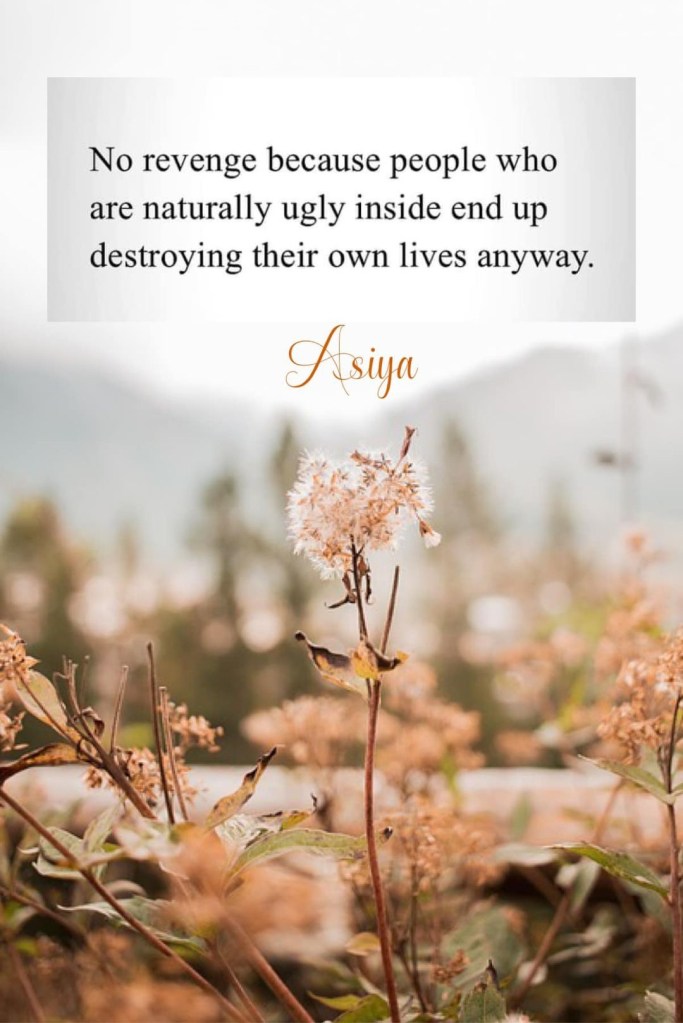
Revenge is for the Ugly

Allah is always watching us. He knows what we do, whether it is good or bad.

Then He will tell us of that and will reward or punish us accordingly on the Day of Resurrection, as He says:

“Have you not seen that Allah knows whatsoever is in the heavens and whatsoever is on the earth? There is no Najwa (secret counsel) of three but He is their fourth (with His Knowledge, while He Himself is over the Throne, over the seventh heaven), — nor of five but He is their sixth (with His Knowledge), — nor of less than that or more but He is with them (with His Knowledge) wheresoever they may be. And afterwards on the Day of Resurrection He will inform them of what they did. Verily, Allah is the All-Knower of everything” [al-Mujaadilah 58:7]

Allah Alone knows the unseen and the seen, what is secret and what is open, as He says of Himself