By a Muslim Revert, Five Years In
Today is Eid al-Adha. And today marks the fifth year I’ve spent Eid alone. No family to gather with. No invitations to accept. No dresses picked out for the day, no colourful gatherings, no plates shared, no henna drying overnight. And for many of us who came to Islam later in life, this story is far too familiar.
We are the Muslims practicing in private.
The Muslims who are the only ones in our households.
The Muslims who whisper “Allahu Akbar” alone at fajr, and break our fasts alone during Ramadan.
The Muslims who remember Eid… but don’t celebrate it.
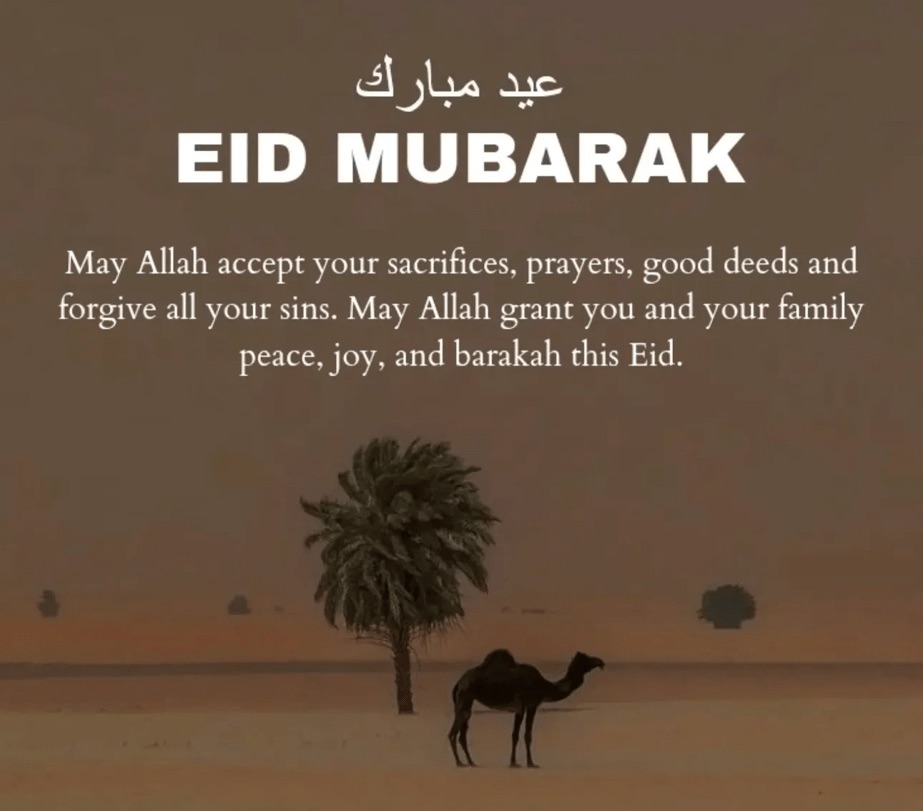
And while the Ummah sends messages of “Eid Mubarak,” and asks kindly, “So what are you wearing today?” or “How are you celebrating?”—we often smile, we reply politely. But deep down, we feel the ache of absence. Because Islam may be for everyone, but the Ummah… it doesn’t always feel like it is.
I’ve lost count of how many Eids I’ve seen reverts post online about being alone. No plans. No invitations. Just a quiet day, and sometimes, quiet tears. And I’ve also lost count of how often I’ve seen the same well-meaning phrases shared:
“Come and spend it with my family!”
“You’re welcome anytime!”
“You don’t have to be alone!”
But these words often stay just that—words. Lip service for likes and spiritual currency online. Because the truth is, very few people actually follow through. And even fewer reverts feel comfortable enough, or safe enough, or mentally well enough, to say yes.
So no, telling someone to “just go to the masjid” isn’t always helpful. Some of us can’t. Some of us are still hiding our Islam. Some of us are caring for children, or elderly parents, or have chronic anxiety, depression, financial barriers, or broken ties. Some of us carry layers of life that make stepping into public Muslim spaces incredibly hard.
And no, I don’t need to get married just so I can have someone to celebrate Eid with. I need community. Real, welcoming, grounded community. One that sees me beyond my marital status or my “convert story.” One that sits beside me, not just preaches to me.
So maybe today, instead of celebrating, I reflect.
Because this is Eid al-Adha. The Eid of sacrifice.
The remembrance of Prophet Ibrahim (AS) and the son he was willing to give up in obedience to Allah. And of how, at the final moment, Allah spared him. Replaced sorrow with mercy. Delivered provision in place of pain.
As reverts, we know something about sacrifice.
We’ve lost family ties. Friendships. Acceptance.
We’ve given up traditions. Changed our wardrobes. Adjusted how we speak, eat, pray, think, live.
We’ve let go of who we were to become who Allah called us to be.
But just as Allah intervened for Ibrahim, we believe—He sees us too. He hears us. He knows our loneliness. And He is enough. Always enough.
So today, this message is for the reverts.
For those spending Eid in silence.
For those holding their faith close like a secret.
For those scrolling through photos of Eid gatherings, wondering when it will be their turn.
You are not forgotten. You are not less than.
You are not outside of the Ummah, even if it feels like the Ummah has forgotten you.
Your Eid may be quiet, but it is not empty. It is filled with every silent du’a you make. Every tear you cry in prostration. Every sacrifice you’ve made for the sake of Allah.
And maybe it’s time we build something real.
Not just passing words on a timeline, but actual gatherings, actual spaces, where reverts can meet, eat, talk, reflect—even if it’s just a small room in a library, or a pot of tea in someone’s flat. Because the Ummah isn’t always forthcoming. But maybe we can be, for each other.
If this is your Eid alone, know that I see you.
And if you have space in your life for a revert this Eid—or next Eid—don’t just say it. Mean it. Follow through. Open your door. Make room at your table.
Because hospitality is a Sunnah. And so is sincerity.
Eid doesn’t have to be about celebration. Sometimes, it’s about reflection.
And maybe, just maybe, that’s the most meaningful Eid of all.
Eid Mubarak. From one revert to another. May Allah never leave us lonely.



 Seeking Sakina