🌸 The Silent Cry of Sayyida Ruqayyah (as) — A Reflection
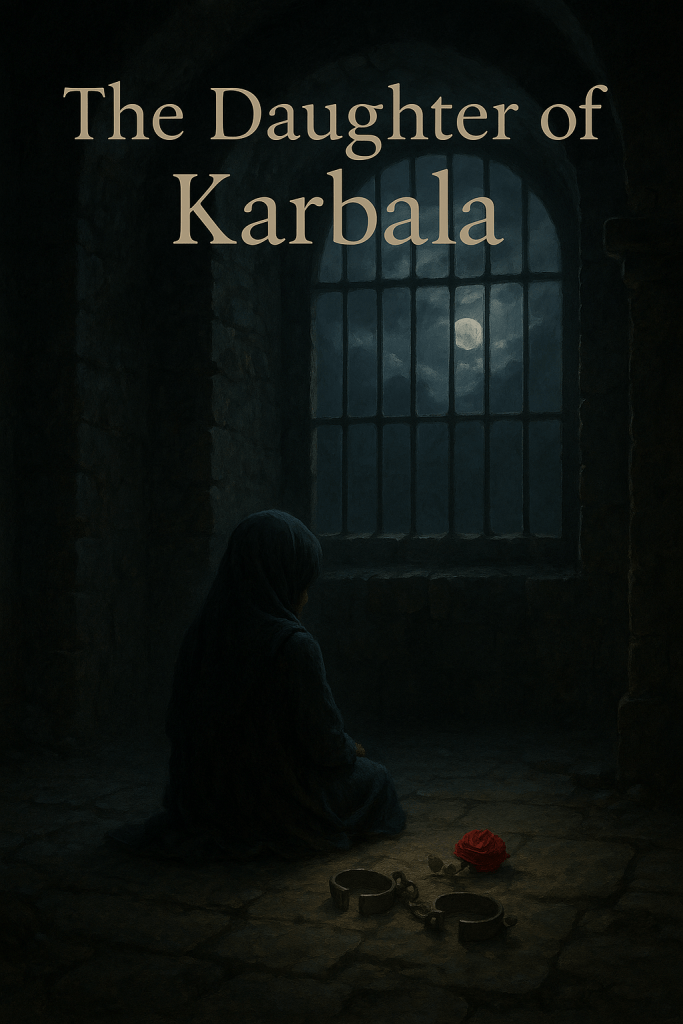
As the anniversary approaches to honour this little girl I’m struck by the core similarities between her and the children of Gaza like them She was only a child — just four years old, some say even younger — yet her name echoes through the centuries with the weight of grief and sanctity.
Sayyida Ruqayyah bint Husayn (as), daughter of the Master of Martyrs, walked a path that no child should ever walk — the path from Karbala to Kufa, and then to Damascus, shackled not by her own sins, but by the cruelty of those who tried to extinguish the light of the Prophet’s family.
She was born into light, into love — the cherished daughter of Imam Husayn (as) and a grandchild of Fatima al-Zahra (as). Her small world was filled with the fragrance of worship, truth, and purity. But the love of Ahl al-Bayt came with a price in a world intoxicated by power and tyranny.
On the 10th of Muharram, she witnessed what no soul should bear: her father standing alone in the desert, bleeding yet radiant, calling for help that never came. The cries of “al-‘atash!” — “I am thirsty!” — from children like herself, still echo. And when her beloved father fell, she no longer had anyone to shield her from the storm.
Dragged in chains through the streets of Kufa and Shaam, Sayyida Ruqayyah was not only a prisoner of Yazid — she became a witness. Her small voice, her cries for her father in the dark prison cell, pierced the hearts of even the cruel. And when they brought her the severed head of Imam Husayn (as) in a cold box, her tiny heart could bear no more. That night, she left this world, reuniting with her father in the Hereafter, where there are no chains, no pain, no parting.
💔 Her Story, Our Mirror
Ruqayyah’s story teaches us that innocence is not always protected in this world, but it is always honored by God. She reminds us that even the smallest among us can bear witness to great truths, and that grief itself can be a form of resistance.
In her cries, we hear the voice of every oppressed child. In her shackles, we see the cost of speaking the truth in a world ruled by falsehood. And in her martyrdom, we are reminded that Allah sees the brokenhearted, and that the oppressed will rise again — with dignity, with divine reward, and with their names forever engraved in the hearts of the faithful.
🌹 What Can We Learn?
Love for the Ahl al-Bayt must be active — it must move us to speak out against injustice, to comfort the vulnerable, and to uphold truth no matter the cost. Spiritual strength does not depend on age. Even a child, nurtured in faith, can bear immense trials with patience and purity. Grief is not weakness — Ruqayyah’s tears became a testimony that outlived empires. Our pain, too, can be a form of worship when it is rooted in love for Allah and His chosen ones. Martyrdom is not always on the battlefield. Sometimes it is in the prison cell, in the silent suffering, in the dignity of a soul that refuses to bow to tyranny.
May we never forget her.
May we raise our daughters with her name on our tongues and her light in their hearts.
And may we meet her, one day, in a place where no children are ever hurt again — in the gardens of Jannah, under the mercy of Allah, near the ones who were never afraid to stand alone for truth.
Peace be upon you, O Ruqayyah bint Husayn.
You did not die in vain.
From pain to peace
For new revert sisters struggling to find their way — here’s a gentle guide I wrote: 💞 Revert Sisters Framework: From Pain to Peace Download here:
“When Men Get Defensive: The Quiet War Against Women Who Set Boundaries”
In all my years of working with women — through the rawest parts of their lives, in women’s circles, in rape and domestic violence recovery, in community empowerment — one thing never fails to amaze me:
The moment a woman sets a boundary with a man —
The moment she says, “No, I’m not accepting this,” or challenges a harmful narrative —
His entire mask falls.
Suddenly, she’s not a woman with insight.
She’s “emotional.”
She’s “damaged.”
She’s “projecting.”
She’s “a man-hater.”
She has “issues she hasn’t resolved.”
It’s predictable. It’s exhausting. And it’s deeply revealing.
Because here’s the truth: this type of man is everywhere.
He appears well-spoken, often says he “cares about the ummah,” and claims to want healthy relationships and strong families.
He frames his opinions as “truth” and his criticism of women as “concern.”
But when you look closer, you realise:
He lacks emotional depth. He blames women for divorce and failed relationships, never once reflecting on men’s roles. He talks endlessly about how women “choose scum,” yet never questions why men behave like scum in the first place. He claims objectivity, but his tone is steeped in resentment — often the residue of his own past betrayals, heartbreak, or rejection.
And perhaps most ironically —
he’ll often be the one preaching “love.”
That everything should be about love, that the world needs more love, that Islam is love, relationships should be love…
But for him, love is just a word — not an energy he knows how to carry.
Not a frequency he’s learned how to embody.
Because real love requires accountability, softness, vulnerability, and emotional safety.
And these are not qualities he’s mastered.
He hasn’t done the inner work.
He’s still carrying wounds, but rather than healing them, he’s dressing them up as “insight.”
His masculinity is brittle. Easily threatened.
And when a woman — especially a strong one — challenges his view or sets a boundary, he lashes out.
That’s exactly what happened to me recently.
This man began sending me content shaming women for their relationship choices. Repeatedly.
I asked him kindly but clearly to stop — and explained why.
And in return?
He told me I was projecting.
That I had unresolved trauma.
That I “exposed myself” as a man-hater.
That I was defensive.
That I had issues.
That I “contradicted myself.”
That I had “unresolved wounds.”
But here’s the thing:
My wounds are not speaking.
I’ve been through my trauma. Serious trauma.
And I did the work — over 25 years ago.
Nothing in this exchange triggered me because nothing in the last four years of my life has been traumatic — including my divorce in 2023, where I had enough emotional intelligence to commit to two years of work with both a life coach and a therapist.
I made sure I left that relationship — and that chapter — without any unresolved trauma to carry forward.
By the time my healing work concluded, I was clear, whole, and grounded.
I responded not from pain, but from clarity.
Not from emotion, but from grounding.
Not from reaction, but from values.
Because that’s what healing does. It gives you your peace back — and your voice.
And let’s talk about the contradiction too —
This same man who criticised women for being “reckless” in relationships was also flirting with me.
Trying to arrange a meet-up.
Trying to cross boundaries.
So which is it?
Am I broken, or desirable?
Am I too damaged, or too independent to control?
Because here’s another truth:
Men like this are often drawn to women like me.
Women who surf.
Women who raise children on their own.
Women who think, live, and thrive in their own lane.
They are attracted to the image of strength —
But threatened by the reality of it.
They want the aesthetic of independence —
But not the substance.
Because the substance won’t shrink.
It won’t flatter ego.
And it won’t stay silent to keep the peace.
And yet, they still say we make poor choices.
But let’s be real:
If we chose you —
You were the poor choice.
Women do sometimes make bad decisions in love.
But the moment you make that your entire narrative —
The moment you erase your own accountability as a man —
You become exactly what you claim to critique.
It takes two for a marriage to break down.
Two for a betrayal to happen.
Two for healing to take place — or not.
We, as women, are no longer sitting in silence.
We are no longer absorbing blame.
We’re no longer tolerating men who weaponise their pain and shame us for theirs by calling us men haters simply because they cannot own it.
We will continue to rise, to heal, to hold our ground, and protect our peace.
We’re not here to argue.
We’re here to evolve.
If our strength threatens your ego, then maybe it’s not strength that’s the problem —
Maybe it’s your ego.
And no — we’re not going to shrink to accommodate it anymore.
“When the Heavens Open”
I’m sat here today after a few weeks of immense heat and surgery a few days ago resting and so grateful alhamdulillah for the rain outside.
As a child in the UK, when the rain poured suddenly and without pause, someone would always say, “The heavens just opened up.” And we’d laugh, or run for cover, or press our faces to the window.
I never knew then how true those words really were.
Because in the Qur’an, Allah tells us that He sends rain after despair, that He revives dead earth with a single drop. That the sky does not just fall — it gives.
“And He is the One who sends down rain after they have despaired, and spreads His mercy…”
— Qur’an 42:28
The Prophet ﷺ once walked into the rain and let it touch his skin. He said: “It has just come from its Lord.” (Sahih Muslim)
And in that moment, I realise — rain is not weather. It’s a moment of divine nearness. The heavens really do open. And when they do, it’s not chaos — it’s compassion.
Rain is a du‘a answered. A dry earth forgiven. A soul reminded that even when things die, Allah can bring life again.
So now when I hear it — “The heavens have opened” — I smile, because I know something deeper:
That the sky weeps not in grief, but in mercy. That the One above is still near. Still responding. Still reviving.
She Brought Me Back to Curiosity
This morning, I tried to carry on as if I hadn’t just had surgery. I wanted to feel normal, productive, in control. But by the afternoon, my body had made the decision for me — I was unwell, and I had no choice but to rest.
And in that stillness, something beautiful happened.
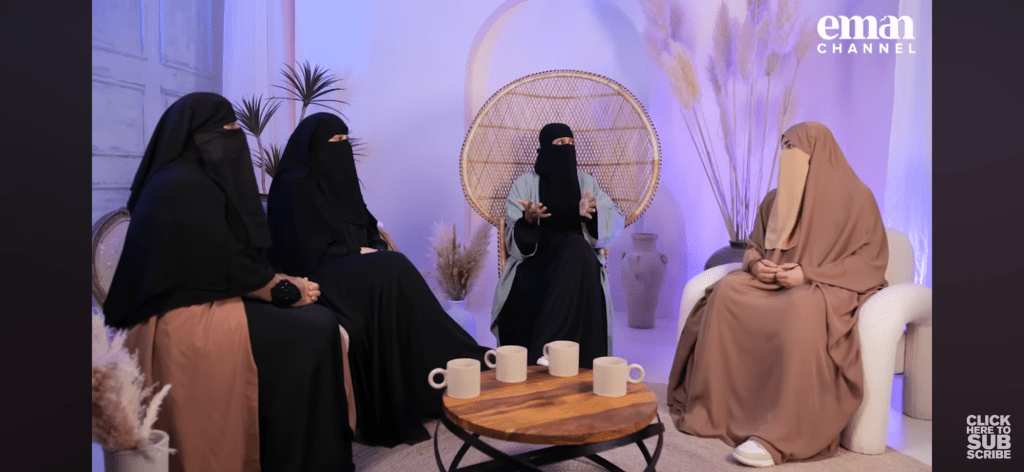
Instead of numbing myself with scrolling or mindless background noise, I chose to rest intentionally. A dear sister on another social media platform recently had shared a link to a YouTube series that’s a panel hosted by Niamh B. Roberts, featuring four niqabi women — and I found myself drawn in. Each woman brought her own story, her own struggle, her own triumph.
But it was Hanaan Menk, daughter of Mufti Menk, who truly spoke to my heart.
I’d never heard her speak before. I didn’t expect much. But what I found was a woman of insight, compassion, and striking balance. She understood both the world of born Muslims and the wounds and wonder that reverts carry. Her words weren’t just informed — they were lived. And they reached somewhere deep inside me.
She made me want to know my deen again.
Not just to practice it. Not to perform it. But to be curious again — to search, to ask, to understand with sincerity.
They spoke about hijab — the layers, the resistance, the pressure, the journey. Some spoke of wearing it off and on like a switch, others of years of slow transformation. All of them are niqabis now. But none pretended the road was easy or without detours.
Hanaan, who has worn hijab from a young age, didn’t preach. She empathised. She understood why others struggle. She honoured that struggle. And somehow, that made her words all the more powerful.
As I lay there, healing from surgery, I realised I’m also healing from distance — distance from my own faith. I’ve been pulled in too many directions: social media noise, distractions, the silent pressure to be something. But today, in quiet rest, Allah (SWT) reminded me that the only relationship I truly need right now… is the one with Him.
This session pulled me back. Back to the why. Back to the heart. Back to the longing.
And maybe that’s what sincerity looks like. Not perfection. But returning, again and again, to Allah — with honesty, with humility, with curiosity.
So I think it’s time for me to leave the noise behind for a while. To write. To reflect. To sit with my faith — not as someone who’s lost it, but as someone who’s ready to rediscover it.
And to Hanaan Menk — thank you. You reminded me what it feels like to want to know Allah again.
Sincerity Over Perfection
I’m not saying your prayers don’t matter. I’m not saying your rituals don’t matter. What I am saying is: what’s the point of doing all of it — the salah, the fasting, the modest dress — if Allah isn’t truly in your heart?
Because the most important thing in our relationship with Him… is sincerity.
So what’s ikhlas?
Ikhlāṣ (إخلاص) in Arabic means sincerity or purity — especially in the context of one’s intention and worship.
In Islam, Ikhlāṣ is about doing something solely for the sake of Allah, without seeking praise, recognition, or reward from anyone else. It’s the foundation of true faith — where your heart, words, and actions are aligned in devotion to Him alone.
The Prophet Muhammad ﷺ said:
“Actions are judged by intentions.”
— Bukhari & Muslim
So even a small act — a kind word, a simple dua, a silent tear — if done with sincere intention for Allah, carries immense weight.
Ikhlāṣ is the hidden engine behind everything that truly lasts in the sight of Allah. Without it, even outwardly good deeds lose their essence.
Today many reverts often come into Islam with a deep desire to get everything right. To be seen as “good Muslims.” But underneath that is something quieter — the feeling of being less than. Like an imposter. Like you don’t quite belong unless you tick every box.
And sadly, that feeling is often fed — not just from within, but from outside too. The haram police. The endless critiques. The cold, public corrections. The social media posts that echo a kind of rigid perfectionism that leaves no room for real human struggle.
But Islam was never meant to be about performance. You can have the hijab, the abaya, the perfectly posed prayer mat, the gold calligraphy on your walls — but what do those mean if the Qur’an hasn’t reached your heart? If you’re not embodying the words you’re displaying?
The Qur’an isn’t a motivational quote you can just clip and move on from. It’s not something you can condense into bite-sized takeaways. It’s an ocean — deep, vast, and layered. And you’ll only begin to swim in it when you approach it with sincerity.
Sincerity is the foundation. Without it, nothing we build will last. With it, everything we build — even imperfectly — becomes something beautiful.
So if you’re struggling, start there. Not with perfection. Not with pleasing others. But with a heart that longs to know Allah, to love Him, to be real with Him.
That’s the most powerful place to begin.
The Day a Muslim Man Made Me Question My Faith
Oh, did I just have my faith shaked.
Not in a cute, spiritual-growth, sit-cross-legged-and-breathe-through-it kind of way.
No, I mean shattered. Like a bottle hitting concrete. Like a soul being violated.
This past week? I got stalked. Harassed. Lied about. Twisted.
By a man from Pakistan who appointed himself the gatekeeper of all things true and Islamic.
Not because I was immodest. Not because I showed skin. Not because I defied some “proper Muslim woman” aesthetic.
It was because I didn’t agree with him.
Because I questioned the narrative he was trying to shove down everyone’s throat.
And for that—he came for me.
He accused me of things I never even said.
He twisted my words. Projected his own agenda. Made wild assumptions, drew his own conclusions, and then went on a full-blown obsession-fueled smear campaign. Stalking. Spying. Reposting. Mocking. Threatening. Flooding. Obsessing.
And the part that shook me?
It wasn’t just his madness—it was that he claimed Islam while doing it.
Because I know this religion. I chose this religion.
I submitted to this path believing it was the way of peace.
And this man? He violated every principle it’s built on.
“O you who have believed, avoid much [negative] assumption. Indeed, some assumption is sin. And do not spy or backbite each other.”
— Surah Al-Hujurat (49:12)
He did all of it.
He assumed.
He slandered.
He spied.
He stalked.
He backbit.
And all while claiming the deen.
This wasn’t just an interpersonal issue—it was spiritual betrayal.
Because Islam doesn’t just put rules on women.
Men are equally bound.
Bound not to accuse.
Bound not to follow someone around like a shadow with a knife.
Bound to lower their gaze, control their tongues, check their egos, and act with decency.
“And speak to people good [words]…”
— Surah Al-Baqarah (2:83)
He didn’t.
Not once.
And if that wasn’t enough—he claimed righteousness while violating every line of it.
That’s why my faith got shaken.
Because I expected it from the Islamophobes.
I expected it from the trolls.
I expected it from people who don’t know better.
But from someone who says “La ilaha illAllah”?
From someone who quotes Quran in between abuse?
That’s spiritual violence. And it makes you question everything.
It made me ask:
Who really gets to call themselves Muslim?
Is it the person dressed right, speaking right, quoting hadith like bullets—while their heart is full of filth?
Or is it the one who struggles privately, but never harms a soul?
Because honestly—I don’t care how someone dresses, or how many raka’ah they pray. If their tongue is a sword and their ego is a throne, then that ain’t Islam. That’s performance.
“Verily, the most beloved of you to Allah are those with the best character.”
— Prophet Muhammad ﷺ, reported in Bukhari and Muslim
Character. Akhlaq.
Not costume. Not clout. Not control.
So yeah—my faith got hit.
Not because of doubt in God, but because of disgust in what some people do in His name.
And it made me come back to this:
“Verily, Allah does not look at your appearance or your wealth, but He looks at your hearts and your deeds.”
— Sahih Muslim, 2564
So no—I don’t need to dress a certain way to be Muslim.
I don’t need to look the part for you.
I don’t need to shrink my spirit to fit your comfort.
My faith isn’t on trial because you couldn’t control your ego.
I’m Muslim.
Not because you allow it.
But because I believe—in God. In truth. In intention. In heart.
And if intention is what matters most, then Allah sees me.
Not the clothes.
Not the profile pic.
Not the narrative you built to destroy me.
But me.
And that? That’s enough.
And if you’re reading this—know this:
I don’t forgive you.
Not for twisting my words.
Not for stalking me.
Not for slandering my name and dragging my faith through the dirt.
Not for making me question the very thing I turned to for peace.
You want to talk about Islam?
Then you should know:
“Whoever causes his brother to despair of the mercy of Allah has committed a grave sin.”
— (paraphrased from multiple hadith and tafsir sources on despair and spiritual harm)
You made me question Islam through your actions.
You pushed me into a dark place while claiming the light.
And for that? You’ll answer to the One you used as a weapon.
Because if I ever stand on the Day of Judgment and say,
“Ya Allah, he made me doubt You,”
then it won’t be me you need to worry about—it’ll be Him.
So unless you go seeking His forgiveness?
Unless you make tawbah for what you did with your tongue, your lies, your ego?
The hellfire you tried to throw me into might just be waiting for you instead.
“It’s Not Harshness We Need—It’s Rain.”
This morning started with something disturbing.
A brother online—someone I don’t know, someone who doesn’t know me—made false accusations about me. Then, instead of moving on with his life, he stalked me. He created multiple fake accounts. He tried to slander me, obsessively. All under the illusion that this is somehow defending some invisible honour to a community he isn’t actively part of.
And I don’t even want to get into the details, because it’s not about him. It’s about what this kind of behaviour reflects.
Because this is not just an isolated incident. It’s part of a much wider pattern that many of us—especially reverts—see far too often in this Ummah.
There’s a sickness spreading in some corners of our community. A kind of spiritual elitism that turns Muslims into accusers, stalkers, self-appointed judges of someone else’s sincerity and struggle.
What happened today is just a reflection of how twisted some of this has become. It’s not nasiha. It’s not care. It’s not Islam.
It’s ego.
And it’s hurting people.
Especially reverts.
We come into Islam with sincerity, with hope, with trembling hearts and lives turned upside down. We didn’t inherit this. We chose it. And in choosing Islam, we gave up everything.
Everything.
The way we speak.
The way we dress.
Our friends.
Our family.
Our holidays.
Our habits.
Sometimes even our jobs, our culture, our identity.
We gave it all up to walk towards Allah.
And in return, we thought we were entering a family. A community. A sisterhood. A brotherhood. An Ummah.
But what many of us found was a wall. Cold stares. Unsolicited lectures. Constant judgement. And silence where there should have been softness.
We gave up so much—but somehow, it’s never enough for some people.
If you falter, even on one thing, it becomes a target.
If you wear a filter on Instagram—judged.
If you wear makeup—judged.
If you laugh too loud, speak too gently, show too much mercy—judged.
I know sisters who wear a full face of makeup online—not because they’re showing off, but because that’s how they survive. Some of them are makeup artists—it’s their livelihood. Some are just trying to feel human again. Some are still healing from a life before Islam, trying to find beauty in themselves after years of being torn down.
Who are we to decide where someone’s spiritual journey should be?
And I hate that word sometimes—journey. But that’s what it is, especially for reverts. We’re not handed Islam. We have to unlearn everything and rebuild from the ground up. Slowly. Painfully. Brick by brick.
Yasmin Mogahed once said something that stuck with me deeply. She said when we come at children shouting “haram, haram, haram,” they don’t grow into stronger believers—they grow into scared, resentful ones. The same applies to adults. The same applies to reverts. You shout haram enough times and you don’t get taqwa—you get trauma.
Because here’s the truth no one wants to admit:
The way you correct someone matters just as much as the correction itself.
Guidance isn’t meant to crush.
It’s meant to invite.
There’s a saying my grandmother used to share with me:
“You grow more flowers with rain than with thunder.”
And she was right.
Islam is like a garden. But some of us are flooding the soil with our anger, our pride, our assumptions—and wondering why nothing is growing.
We need to tread carefully with each other.
Because you don’t know what someone has already lost to be here.
You don’t know the scars they’re carrying just to show up as a Muslim each day.
And when you choose judgement over compassion, you’re not reflecting Islam.
You’re reflecting your own spiritual illness.
We need less thunder.
Less spiritual superiority.
Less obsession with haram-policing.
Less moral gatekeeping.
And we need more rain.
Rain that nourishes.
Rain that softens.
Rain that helps people grow.
Rain that makes space for imperfection.
Rain that smells like mercy.
Rain that looks like the Prophet ﷺ.
Because if your version of Islam doesn’t look like him,
then who are you really following?
⸻
“Where the Lagoon Meets the Sea”
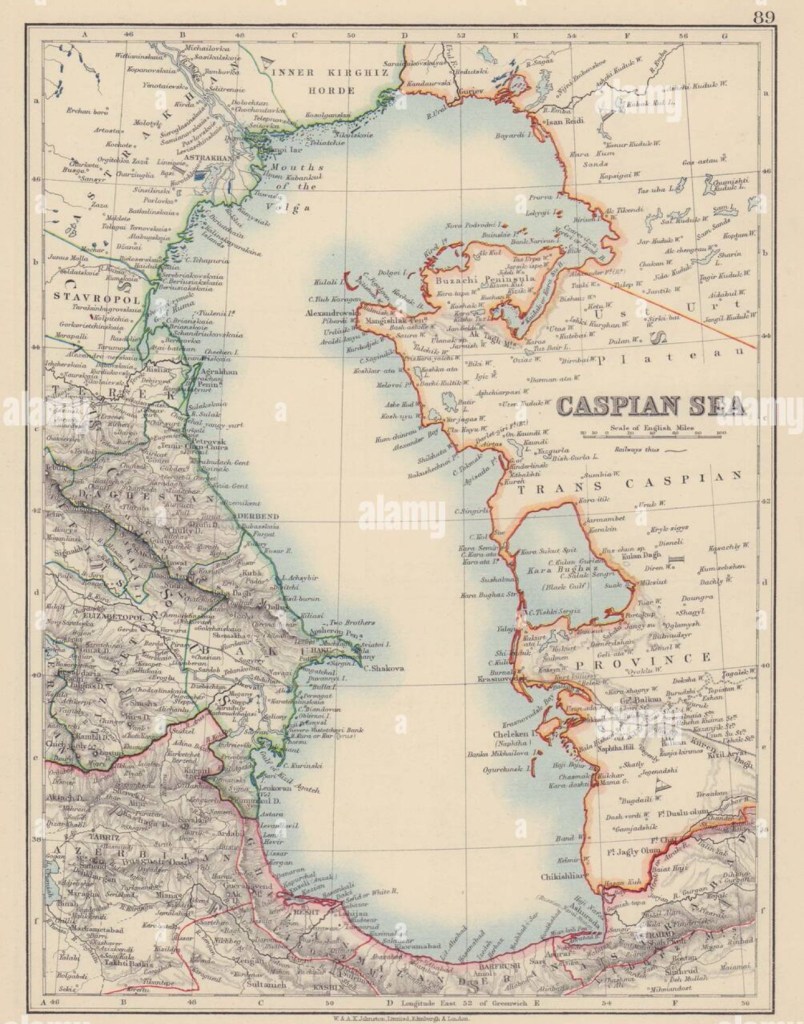
A fictional retelling of how they might have met according to snippets and stories spoken over generations.
Maryam was a young woman when the British supply trucks first rolled past the dusty roads near Rasht. She lived with her family not far from the coast, in a modest brick house that filled with the smell of rice and bay leaves every evening. Her father ran a teahouse that served traders, dockworkers, and the occasional soldier posted near Bandar-e Anzali. Maryam helped —carrying tea trays, wiping tables, keeping her eyes low when unfamiliar men came through the doors.
Robert was from South Wales, a corporal with the British forces stationed in Iran as part of the Allied supply effort during WWII. His unit had been assigned to Bandar-e Anzali, a port city on the Caspian Sea that connected the southern railway lines to Soviet shipping routes. Like many soldiers, he was far from home and looking for a sense of normality among the chaos.
One afternoon, on a rest day, he took a trip inland to Rasht with a fellow soldier. They found Maryam’s family teahouse by chance. The room was filled with warm light and quiet conversation. He was struck by her calm, the way she worked silently, efficiently, with a grace that wasn’t performative.
Over the next few weeks, Robert returned to Rasht more and more often. He started to pick up words in Persian, just enough to order tea and thank her father. Maryam, too, had begun to understand some English—basic words, the names of places she’d never seen. They spoke carefully, slowly, piecing together a language between them.
Eventually, he asked to speak with her father. He expressed a wish to marry her. The answer was a firm no. She was too young. Too local. And he was a foreign soldier in a temporary war.
Robert respected the decision, but he kept visiting the city, and Maryam kept serving tea. They never spoke openly of what came next, but something unspoken passed between them—an understanding, a hope.
When the war ended and Robert prepared to return to Britain, Maryam made her decision. She couldn’t go with his permission, so she went without it.
She followed him. Quietly, determinedly. And when she reached the UK, the two were married. She took her place beside him not only as his wife now named Mary but as a bridge between two very different worlds.
For My ancestral Grandmother
I never saw her city,
never breathed its salt-thick air
or saw the lilies float across the Anzali Lagoon.
But I know her —
in the way I stand when no one speaks for me,
in the tea I brew when I need to remember,
in the silence I wear like armor.
They say I look like him —
my freckles, my flame-red hair,
but I am hers.
Her grit.
Her leaving.
Her sea.
All of it lives quietly
in me.
 Seeking Sakina