Art is a soul’s surrender to Allah—a dance of sabr and tawakkul.

Art is the purest expression of the soul. It doesn’t have to be perfect, and you don’t need to have everything planned when you start—only Allah in your heart. This morning, after a really tough week of struggling, I woke up feeling divinely guided to create. I don’t know where this piece will go or what the end result will be, but every time I stand at my table with the Qur’an softly playing in the background, I know I am being gently led. Whatever this art is meant to teach me will become clear when it’s complete.

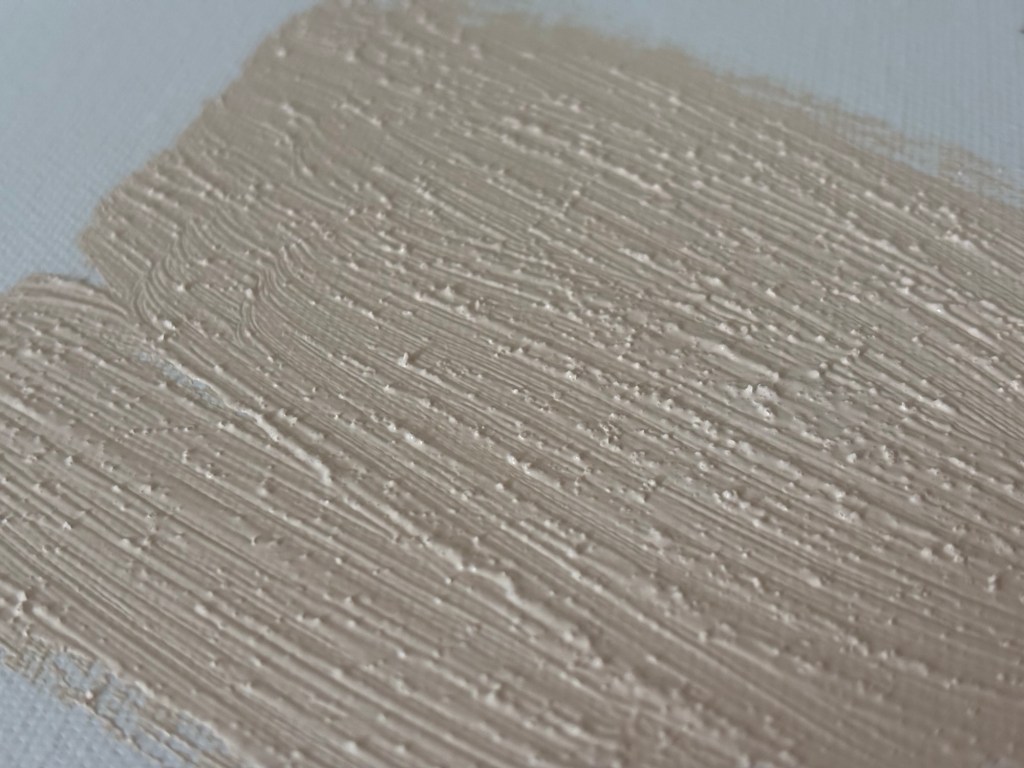
I’m especially pleased that I’m using texture in this piece—texture gives the work depth, dimension, and complexity, just like in life and in Islam. Texture reminds me that things aren’t always smooth or simple; there are layers to our faith and to our experiences that add richness and meaning. Just as a textured canvas invites us to see beyond the surface, Islam invites us to look deeper, to turn back again and again, to reflect and adjust our path.

The journey in Islam is much like creating art. It’s not about perfection, but about returning, making small shifts, stepping back to see the bigger picture, then moving forward with renewed intention. Allah says, “Indeed, with hardship comes ease” (Qur’an 94:6), and Rumi beautifully reminds us, “Don’t grieve. Anything you lose comes round in another form.” The lessons, like the layers of texture, reveal themselves in time, if we trust and surrender.

Standing at my table, I feel that same sacred dance of patience and surrender—the journey of faith and creation unfolding hand in hand, with Allah as the ultimate Artist guiding every stroke.
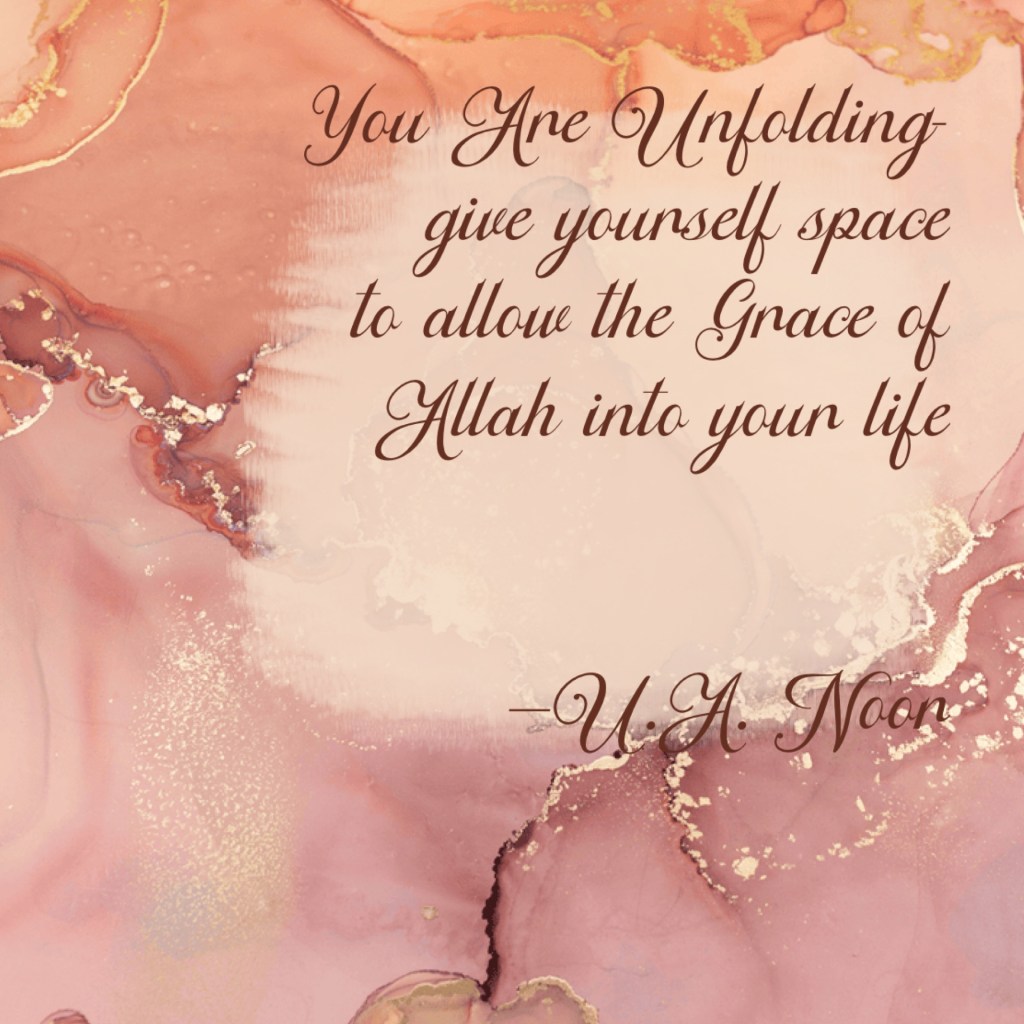
Space For Grace

From One Sister to Another

When we first find Islam, the joy can be so overwhelming that it feels as if our heart might burst with light. The tears, the peace, the relief—it’s unlike anything else. But then, sometimes quietly and unexpectedly, the feeling shifts. The light feels dimmer, the joy feels heavier, and a voice inside whispers, What have I done?

This is something we don’t talk about enough. Maybe because many Muslims born into the faith can’t fully understand what it’s like to have to change everything—the way we walk, talk, think, dress, and live—almost overnight. For us reverts, the transformation is monumental. And while our Shahada marks the most beautiful moment of our lives, it is not the finish line. It is the starting point.

Yet too often, instead of gentle hands guiding us, we meet pointed fingers correcting us. Mistakes are met with judgment rather than patience. The space for grace feels too small, when in truth, it should be vast and wide enough for every single step of our journey.

I’ve seen sisters lately speak of wanting to take off their hijab, of feeling like they’ve jumped too far, too fast. As if they’ve been dropped into the deep ocean of Islam without a life raft. And I want to say to them: Dear sister, you are not just a drop in the ocean. The entire ocean is within you. (Rumi)

It’s natural to feel this lull. It’s natural to feel overwhelmed, even sad. But remember the words of the Qur’an:

      Allah is enough as a friend, and Allah is enough as a helper. 

                      Quran (4:45)

If you are feeling lost, hold on to that truth—your closest, most loyal companion is Allah Himself. And from me to you: my door is always open. I understand your struggles because I’ve been there—not once, but many times. I’m still learning. I’m still growing. I’m still striving to be a better Muslim.

You don’t have to know everything today. You don’t have to have it all perfect. You took your Shahada—that is your first step. Everything else will come in time, with patience, prayer, and the grace of Allah.

So, my dear sister, breathe.

You are exactly where Allah meant for you to be.

Every stumble is a step,

every tear is a prayer,

every moment you stay is a victory unseen.

You are not failing—you are unfolding.

And one day, you will look back and see

that Allah was carrying you all along,

gently, patiently, lovingly…

until you could stand,

lift your head,

and smile from the depths of your heart as you say—

Yes. I am Muslim.

Slipping into habits

Oh my dear sisters,

We all have habits—some obvious, some subtle—that pull us away from Allah. Whether it’s listening to music, neglecting commands, or struggling with hijab consistency, our journey is about striving to become better Muslims, beautifully aligned with Islam and solely for the sake of Allah.

One transformative practice I’ve found is to list 5 habits you’re ready to change, then right beside each, write a replacement habit. This shifts the focus from just stopping something to actively nurturing something that draws us closer to Allah.

Examples:

Smoking → Snack on something healthy (I used oranges to quit years ago). Listening to music → Replace with Quran recitation or nasheeds. Doom-scrolling or Netflix binges → Replace with studying the Quran, reading Islamic books, listening to beneficial lectures—and I’ll link some amazing Islamic podcasts and uplifting authors below to guide and inspire you.

Start by breaking big goals into small, daily steps that feel doable and—most importantly—sustainable.

Always remember to seek Allah’s help:

Du’a:

“O Allah, help me leave behind what displeases You, and guide me to what draws me closer to Your mercy. Replace my harmful habits with those that bring barakah into my life. Ameen.”

Podcasts & Sources I Love

Yasmin Mogahed – Deep, heartfelt reflections on faith, emotion, and personal growth. Belal Asad – Thought-provoking discussions and reminders to inspire your daily walk. Muslim Central – A rich resource with lectures, reminders, and spiritual talks from various scholars. Mufti Menk Podcast – Gentle wisdom and practical advice with a warm delivery that soothes the heart. Your Muslim Girl Podcast – Modern, relatable stories and Islamic guidance for women.

Books & Authors to Uplift Your Soul

Secrets of Divine Love: A Spiritual Journey into the Heart of Islam by A. Helwa — A heart-based guide to experiencing the beauty of the Qur’an and cultivating intimacy with Allah through love, poetry, spiritual practices, and reflections  . Sheikh Omar Suleiman — Inspiring author, speaker, and imam whose books and podcasts provide practical, faith-centered wisdom and motivation.

Sunnah of Stillness

Your hands — like your soul — carry more than you realize.

Try this Sunnah-inspired pause:

1. Hold your hands out.

2. Ball them into fists.

3. Hold. Breathe.

4. Now open them slowly — like releasing something to Allah.

5. Shake them loose.

Feel that? That’s your nervous system letting go.

Even your Prophet ﷺ paused. Even your soul needs to.

10-Second Heart Opener

Grab the Qur’an, or any Islamic book nearby.

Open to a random page. Read the first ayah or sentence you see aloud.

Don’t overthink. Don’t try to decode it.

Just receive. Sometimes, Allah speaks to your heart through what you weren’t looking for.

Peace

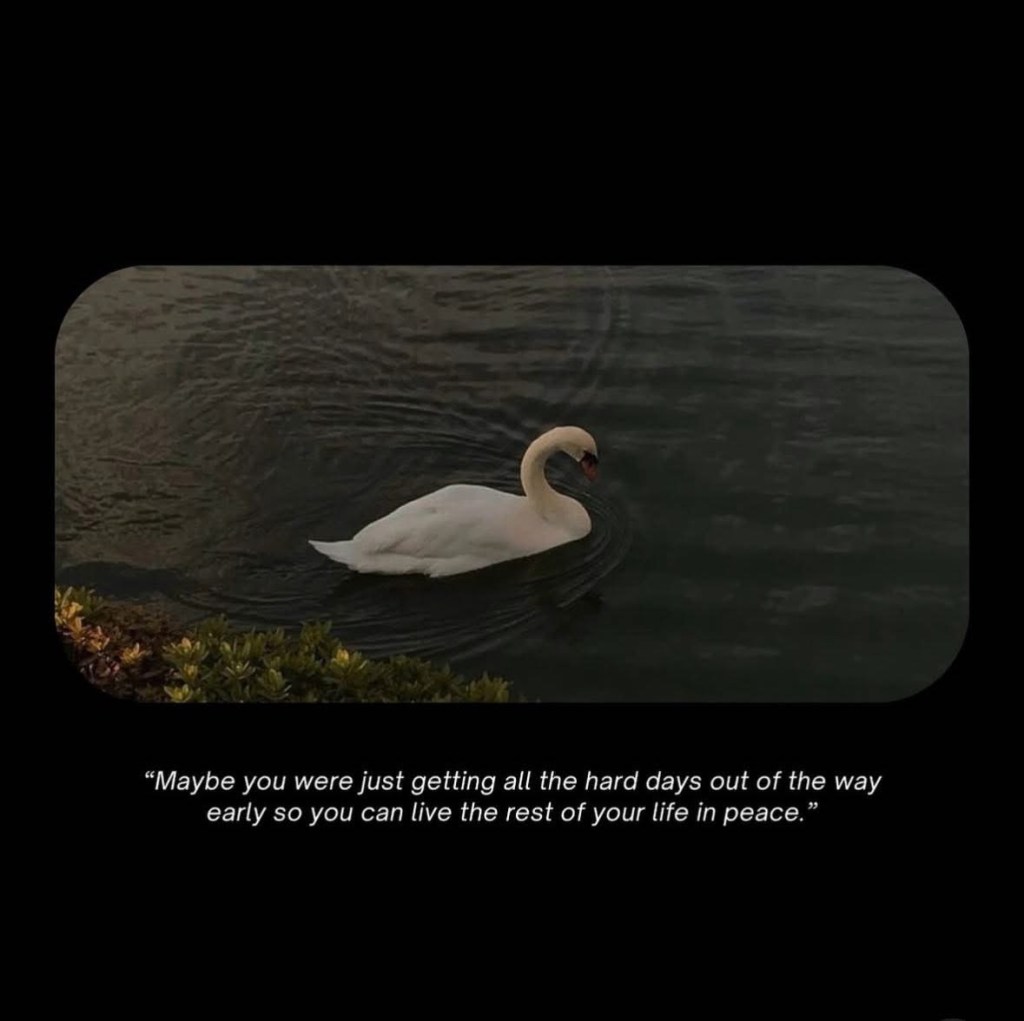
Maybe I was meant to get all the hardest days out of the way early.

I feel like that lone swan, gliding alone over dark, restless waters—carrying every struggle, every wave of pain. From the very beginning, life hasn’t been kind. It’s tested me — my strength, my patience, my heart. Fighting every day just to keep my children safe, protected and supported. Battles no one sees, but that have shaped me deep inside.

Sometimes I wonder if all this suffering is a kind of mercy — maybe I’m being prepared, hardened, so that I can finally find peace someday.

Yet even through all these struggles I know this is my moment to truly trust.

Inna maya rabbi sayyadeen. My Lord is with me. He is guiding me.

I repeat it over and over, because sometimes it’s all I have. I don’t know the way forward clearly, but I’m trying to trust His plan — even when the darkness feels so heavy.

I want freedom. I want a life where I can breathe, where my children can smile without fear. I want to work, to travel, to give them everything I never had. I hold onto this hope fiercely, even when it feels fragile.

Allah says, “And whoever fears Allah — He will make for him a way out. And will provide for him from where he does not expect.” (Surah At-Talaq 65:2-3)

I cling to that promise like a lifeline. I believe He tests those He loves not to break us, but to raise us up — to make us stronger than we ever thought possible.

Maybe this new chapter is already beginning, even if I can’t see it yet.

Maybe this feeling inside me — the quiet, fragile hope — is the first soft light of dawn after a long, dark night. It starts with trust. It starts with whispered prayers that only my heart knows. It starts with faith that Allah will open doors no one else can see.

It begins with one small step — uncertain, trembling — but mine.

I remind myself: every hardship holds a hidden wisdom. Every tear carries meaning. Every moment of struggle is seen by the Most Merciful.

So I keep walking forward. I keep praying. I keep believing.

I am not alone. Allah is with me in every breath, every step. As I search for freedom, for peace, for a new life — I hold tight to this truth:

“Indeed, with hardship comes ease.” (Surah Ash-Sharh 94:6)

I hold onto that promise with everything I have. It is my light in the darkest moments. The peace I long for is coming — just like the swan glides peacefully over the dark water, graceful and strong, even when the depths below are shadowed.

A Full Moon, A New Chapter, A Dua

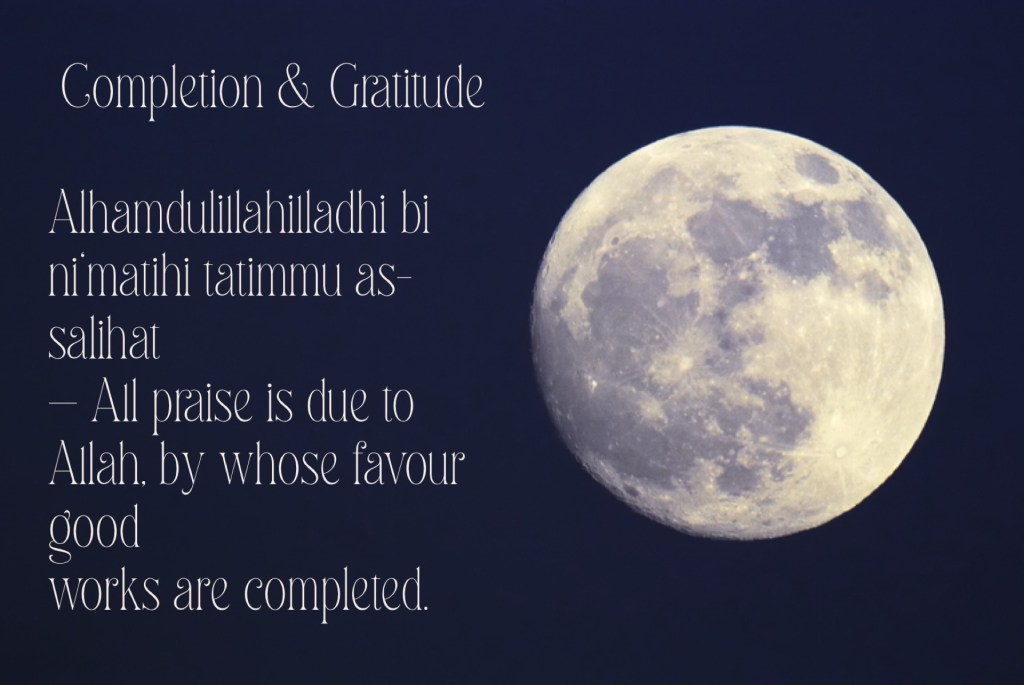
This morning, under the light of a full moon, I felt the closing of a chapter in my life. The full moon is a powerful symbol — not a time to manifest, but a time of completion, gratitude, and release. It marks the moment to let go of what no longer serves, and to prepare the heart for what lies ahead.

As a revert, I have come to understand that it is not necessary to discard everything from my past life. There are threads of meaning that can be woven into the fabric of my faith — as long as Allah remains at the centre. The moon is one of those threads. What once held deep significance for me now takes on a new meaning — not as a source of power itself, but as a creation of Allah, a sign pointing back to Him.

Islam, too, holds the moon in its rhythm. The lunar calendar guides our days of Ramadan, marks our Eids, and determines the sacred days of Hajj. The moon is not to be worshipped, but honoured as part of Allah’s perfect creation — a reminder of the cycles of time and the constancy of His presence.

Tonight, as the full moon shines brightly overhead, I reflect on the words:

“Allah is the Light of the heavens and the earth…” (Qur’an 24:35)

In this light, I find peace in the path ahead — not through wishing or manifesting, but through sincere du’a, trust, and gratitude.

This full moon reminds me to honour Allah’s creation, to be thankful, to let go, and to open my heart to a new chapter illuminated by His light.

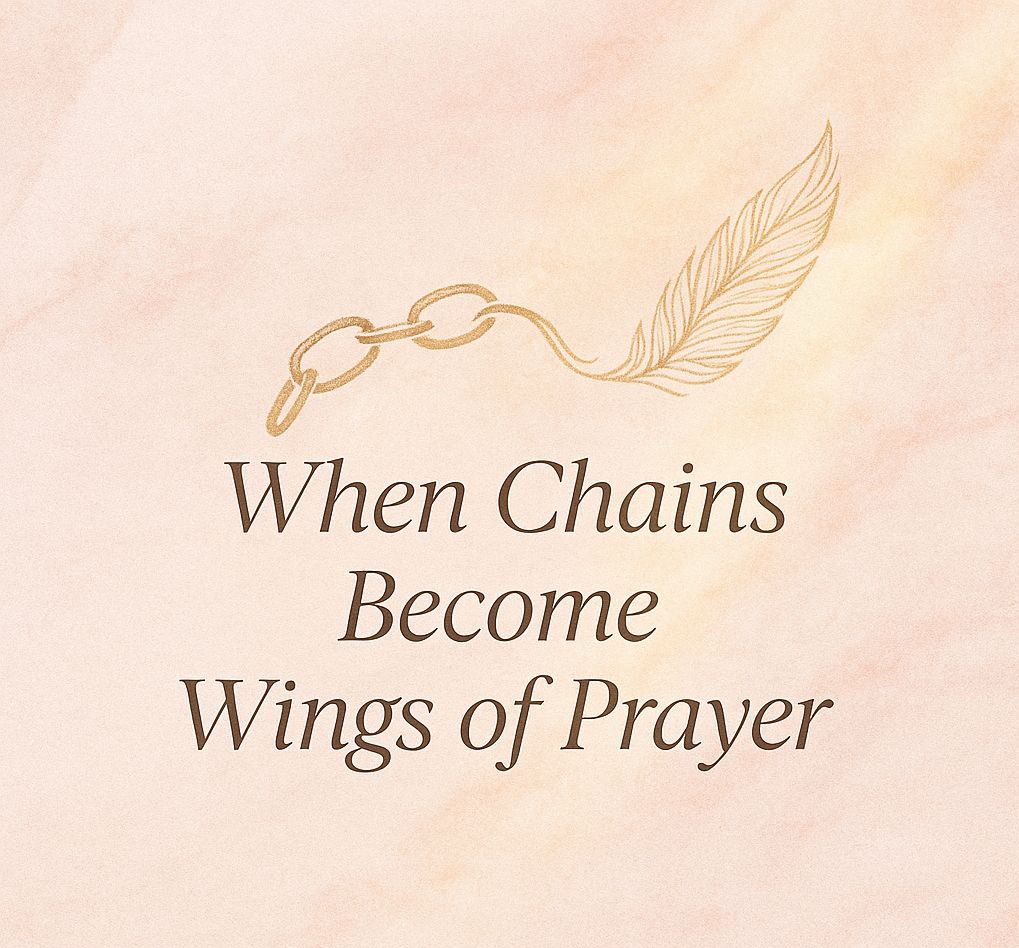
When Chains Become Wings of Prayer

For many women who enter Islam later in life, the journey begins not just with faith—but with fire.

Fire in the form of resistance, judgment, loss, and loneliness.

Because while reversion is often spoken about as a beautiful awakening,

it is also the unraveling of everything that came before it.

Reverts frequently face disapproval from their families—

a quiet grief that lingers in the spaces once filled with warmth.

Islam, for them, is not just a new chapter,

it’s a decision that sometimes severs ties to their past.

And that disconnection?

It feels like a chain.

A chain of unspoken disappointment.

A chain of being misunderstood.

A chain of navigating the weight of loyalty and truth.

Beyond the family, there are the societal chains.

The pressure to marry quickly,

the expectation to learn everything overnight,

the assumption that being a revert means being someone’s project.

The unsettling reality that reverts are often fetishized,

treated not as whole human beings,

but as idealised symbols of piety or submission.

All of these expectations form chains.

Chains made of external voices telling her who she should be,

how quickly she should grow,

and where her worth lies.

But Islam—when experienced sincerely—

is not a cage.

It is a release.

Because those very chains,

when brought into the presence of Allah,

begin to transform.

The judgment becomes clarity.

The grief becomes closeness to Allah.

The loneliness becomes prayer.

And slowly, the chains are no longer holding her down—

they are lifting her up.

Because the tests faced after reversion are not punishments.

They are tools of refinement.

They are the means by which Allah detaches the heart from the dunya

and attaches it solely to Him.

When a woman turns to Allah in pain,

she doesn’t come away empty.

She comes away with wings.

Wings that allow her to rise above the noise.

Above the pressure.

Above the assumptions.

Above the past.

Islam does not erase the chains.

It transforms them.

And in doing so,

it teaches her to fly.

Islam doesn’t belong in the west

You can’t avoid it anymore.

Open any comment section — whether it’s a hijabi doing something mundane, a revert sharing their journey, or just a post mentioning the word “Islam” — and it’s there.

The same slogans.

The same hate, dressed up as patriotism:

“Go back to your country.”

“This is a Christian nation.”

“Islam doesn’t belong in the West.”

And if you’re unfortunate enough, you don’t just read it — you hear it in real life too.

Sometimes muttered under breath.

Sometimes shouted with rage.

Sometimes wrapped in “friendly advice” or passive-aggressive conversation.

What shocks me isn’t that the hatred exists — it’s how deep it runs.

It’s not just ignorance.

It’s a mindset that assumes faith should follow bloodline.

That religion is a cultural artefact — not truth, not revelation, not guidance.

They say:

“Why don’t you just believe in the God of your people?”

As if God belongs to certain nations more than others.

As if your soul is supposed to stay in line with your passport.

But let me ask you:

Does guidance come with a national anthem?

Does truth depend on the colour of your flag?

I didn’t choose Islam because it was familiar.

I chose it because it was true.

Because in the quietest, most honest moments of my life —

when I stripped everything back and stood alone before God —

I knew I had to follow what was right.

Not what was easy.

Not what made sense to others.

But what was true.

Faith isn’t something you inherit like an accent.

It’s not a family recipe passed from generation to generation.

Real faith is discovered — through searching, struggling, questioning.

Through being brave enough to ask:

“Is this really the truth, or just what I was told?”

And sometimes, that journey leads you far from everything you knew.

Away from what feels safe.

Toward something that calls to your soul with clarity — even if the world around you doesn’t understand.

That’s what people don’t realise about reverts.

We didn’t stumble into Islam.

We fought for it.

We walked away from the familiar.

We lost relationships, identities, even parts of ourselves —

not out of rebellion, but out of obedience.

Obedience to what’s right.

To what’s eternal.

To Allah.

So when people tell me that Islam doesn’t belong in the West,

I ask — where exactly do you think the truth is supposed to belong?

Because the truth doesn’t recognise borders.

It doesn’t speak only one language.

It isn’t British, or Arab, or Pakistani, or African.

It’s Divine.

And when it reaches your heart — no matter where you are —

you follow.

So no, I won’t shrink my faith to make you more comfortable.

I won’t apologise for leaving behind what I outgrew.

And I won’t pretend that truth can be limited by culture, country, or expectation.

I chose Islam with open eyes and a sincere heart.

And no matter what continent I live on,

no matter what assumptions people make —

I’m home with Allah.

To My Dearest Sisters,

To that sister in the abaya.

To that sister who’s trying.

To the one who left behind everything she knew, and still sometimes wonders where she belongs — I see you.

But more importantly, Allah sees you.

You weren’t always like this. Maybe you were the hoodie and jeans type, the one who never imagined herself wrapped in an abaya. Maybe dressing modestly doesn’t feel natural yet — maybe it even feels like a costume some days. But still, you put it on. Still, you showed up. Not for people. Not for praise. But for Him.

That alone speaks volumes about your heart.

You’re a revert. You left behind a life, a mindset, a world — and now you’re walking a new one, brick by brick, often alone. And some days, it hits you hard: the loneliness, the confusion, the weight of not quite fitting in anywhere. Your īmān dips. You question whether you’re doing enough, whether you even belong here. You wonder: Who am I now?

Let me tell you, from one sister who knows that feeling too well — you are not lost. You are not an imposter. You are in the middle of becoming.

We don’t talk enough about this part of the revert journey. The quiet grief of leaving behind your old life. The silent tug-of-war between who you were and who you’re trying to be. The courage it takes to obey when everything inside you is still catching up.

And yet, even in that chaos, you chose Allah.

“Allah chooses for Himself whom He wills, and guides to Himself whoever turns to Him.”

(Qur’an 42:13)

He saw something in you — even when you didn’t see it in yourself. You didn’t stumble into Islam. You were chosen, handpicked by the Most Merciful. And if He brought you here, He will carry you through.

But here’s the reminder we all need:

This journey isn’t about how others see you — it’s about how deeply you turn to Allah.

It’s not about being perfect. It’s not about looking the part. It’s about seeking Him with a sincere heart.

So when it gets too loud, when the dunya pulls you back, when the whispers say you’re not good enough — quiet them with dhikr. Drown them in sujood. Let your heart fall in love with your Lord again and again.

“So flee to Allah.”

(Qur’an 51:50)

Turn to Him not just when you’re strong, but especially when you’re weak. That’s when He is closest.

You don’t have to be graceful. You don’t have to have it all figured out. You just have to keep going.

You in your abaya, unsure but sincere.

You in your prayer, dry-eyed but trying.

You, choosing obedience over comfort.

You, learning to let go of this dunya, piece by piece.

That is strength. That is beauty. That is īmān.

So focus your gaze, your heart, your everything — on Him. Not on the world. Not on your past. Not even on the version of you that you haven’t met yet.

Because in the end, it was always about Allah.

And He is always enough.

With love, understanding, and du‘ā’ from a sister who truly sees you,

Your sister,

U.A. Noor