Ramadan, Qadr, and Trusting Al-Wakīl

Ramadan is one of the most blessed months of the year—a time of deep reflection, worship, and renewal. As we fast, pray, and draw closer to Allah, we naturally find ourselves looking back, revisiting the past, and reflecting on the choices we’ve made.

At some point, we all wish we could turn back time, rewrite certain moments, and take different paths. Regret can settle deep within us, making us wonder, What if I had done things differently? But part of this reflection must also be a reminder: everything that has happened was always meant to be.

“No disaster strikes upon the earth or within yourselves except that it is inscribed in a register before We bring it into being—indeed that, for Allah, is easy.” (Quran 57:22)

Before we even came into existence, every joy, every hardship, and every lesson was written for us. The good and the bad, the moments of ease and the moments of struggle—all of it was decreed by Allah. And yet, when hardship touches us, we sometimes lose sight of this truth. We forget that everything—even our greatest tests—come from the One who possesses all that is good.

But when we remember this, when we take our belief in Qadr deep into our hearts, something shifts. There is a peace that comes with truly believing that Al-Wakīl (The Best Disposer of Affairs) is always in control. The knowledge of this strengthens our relationship with Allah, because we no longer carry the weight of the past with regret. Instead, we embrace it with understanding.

Laylatul Qadr, the Night of Decree, is the most blessed night of Ramadan. It is the night when destinies are written, and yet, its exact date remains hidden from us. Why? Because billions of Muslims around the world strive to witness it, pouring their hearts into worship, praying, and seeking Allah’s mercy. This night teaches us something profound: we don’t always need to know everything. We just need to trust.

And that brings us back to Al-Wakīl.

How often do we yearn for something, pray for it, only for Allah in His infinite wisdom to give us what we need instead? He knows what is best, even when we do not.

“… But perhaps you hate a thing and it is good for you, and perhaps you love a thing and it is bad for you. And Allah knows, while you know not.” (Quran 2:216)

Our role is not to control everything. Our role is to strive, trust, and submit—to tie our camel and then leave the rest to Allah. This does not mean we sit back and do nothing. Islam teaches us to be proactive, responsible, and to take the means available to us. But it also teaches us to accept that our plan may not always be the best plan.

So as we reflect on our past this Ramadan, perhaps we can begin to see it differently. Maybe everything we’ve been through has been preparing us for where we stand today. Maybe the struggles that once broke us were actually shaping us into who we were always meant to be.

And maybe—just maybe—when we truly entrust our affairs to Al-Wakīl, we’ll finally find the peace we’ve been searching for all along.
Reflections on trust

Trust your instincts, for they are a gift from Allah. When something feels off, or when you sense negativity in others, know that your intuition is guiding you with wisdom. Allah has granted us all the ability to perceive what lies beneath the surface, and if you feel the tension, the envy, or the passive aggression, it is not your mind playing tricks on you—it’s a sign.

Remember, Allah is Al-Khabir (The All-Aware), and He sees everything, even that which is hidden from others. “Indeed, Allah is ever, over all things, Aware” (Quran 33:52). When people act in ways that make you question yourself or try to undermine your peace, trust that Allah knows their hearts and their intentions. Their actions reflect their struggles, not your worth. You are not the problem—they are simply projecting their inner turmoil onto you.

Your ability to sense these energies is a blessing, not a curse. It is a reflection of the light that you carry, and while others may not always act right around you, it is only because your presence brings their darkness to the surface.

Don’t take this personally. Protecting your energy is not just for your own good—it is for the greater good, as it allows you to remain grounded and connected to what truly matters.

Embrace your gift, and trust that Allah will always guide you toward the people who are meant to bring peace, joy, and growth into your life.

Use your intuition to protect your heart and spirit, for Allah’s wisdom is always with you.

Your sister

Asiya 🌙

Romanticising and reality

In many Muslim communities, there is often an over-romanticized view of marriage. This can be largely due to the fact that many people, especially men, enter into marriage with little to no prior experience in relationships, as premarital relationships are not allowed in Islam. Consequently, they often step into marriage with unrealistic expectations, viewing it as a fairy tale rather than a partnership built on effort, responsibility, and mutual respect.

Marriage in Islam, while beautiful, is not without its challenges. It’s not enough to simply rely on romantic gestures or dua. In reality, marriage involves hard work—managing finances, handling responsibilities, supporting each other’s growth, and addressing the pressures of daily life. You cannot live solely on ideals; practical efforts like earning a living, maintaining respect, and nurturing dignity are what truly sustain a relationship.

Let’s face it, it’s beautiful to receive long romantic messages but in reality if you cannot walk your talk it’s just words you’ve cut copied and pasted to win someone’s heart with no ability to fulfill them.

When these idealized expectations collide with the realities of life—the need to work, provide, and manage household pressures—it can lead to disappointment and frustration. Many relationships struggle because partners fail to maintain a balanced understanding of what marriage truly requires. A successful marriage requires patience, mutual effort, and a clear understanding that love and commitment are built on more than just romantic notions—it’s about facing life together with resilience, respect, and shared responsibility.

In the end, true fulfillment in marriage comes when both partners acknowledge the realities of life and continue to work together, beyond the fleeting romantic moments, to build a stable and respectful relationship grounded in faith and responsibility.

May Allah bless us with balanced, compassionate, and understanding spouses, and grant us the strength to navigate the challenges of life with patience, love, and mutual respect.

When Ramadan Doesn’t Go as Planned: A Test of Trust and Surrender

In the lead-up to Ramadan, I was filled with so much anticipation. This year, I was finally going to fast. I couldn’t wait to experience the long, quiet hours of devotion, the stillness before dawn, and the sweet relief of Iftar at sunset. I stood outside my back door, searching the night sky, waiting for the crescent moon. And when I saw it, a soft silver arc against the darkness, tears welled in my eyes. It was a moment of relief, of hope—Ramadan had arrived.

The first few days were beautiful. I set up a small space in my kitchen, just for Suhoor and Iftar. I woke early, journaled in the morning, reflected, and immersed myself in the peace of it all. There was ease, joy, and an overwhelming sense of closeness to Allah.

And then, in the middle of it, Allah sent me a test.

A hospital visit. My consultants telling me I couldn’t fast. That it was harming my body. And just like that, the thing I had been longing for was taken away. It felt like such a loss, like something had been stolen from me.

At first, I struggled to make sense of it. Was I failing my Ramadan? Was I missing out on its blessings? Did Allah really want me to pass this test?

For many, fasting is difficult. The long hours, the hunger, the fatigue—it pushes you, but it also pulls you closer to Allah. But for those of us who cannot fast, for whatever reason—illness, pregnancy, breastfeeding, mental health—this is the real test. Not fasting can feel like you’re standing outside the gates of Ramadan, looking in, watching everyone else experience it while you’re left behind.

But this test, like all tests, is not a punishment—it’s an opportunity. When you can’t fast, you have to search harder for ways to draw close to Allah. You have to be intentional in your worship, in your dhikr, in your charity, in your prayer. You have to deepen your relationship with Him in other ways.

Not fasting isn’t a relief—it’s not an easier Ramadan. It’s a test that requires patience, faith, and trust. It’s easy to struggle through fasting, but it’s even easier to feel overwhelmed when you cannot. To feel weak. To question whether you’re doing enough. To wonder if you are still making the most of Ramadan.

And it’s okay to feel that way. It’s okay to feel overwhelmed, to feel physically and mentally weaker than usual, to have moments of doubt. It’s okay to sit with those emotions and be human with them. Because that’s exactly what Allah wants from us—to be human with Him.

He is Al-Qarīb, The One Who Is Near. He is with us through every trial, every frustration, every tear. He does not test us to break us, but to bring us closer.

“And when My servants ask you concerning Me, indeed I am near. I respond to the call of the supplicant when he calls upon Me…” (Quran 2:186)

Allah wants us to pass this test. He does not leave us alone with it. And when we begin to accept that—not just with our minds, but with our hearts—that’s when the peace comes.

It comes from knowing that Allah is with us, not just in our worship, but in our weakness. It comes from knowing that this, too, is part of our journey, part of our Qadr, part of the path He has chosen for us.

Maybe this test was never about fasting. Maybe it was about surrender. About trusting that Al-Wakīl, The Best Disposer of Affairs, sees what I cannot, knows what I do not, and that His plan is always greater than mine. Maybe it was about teaching me that Ramadan is not just about fasting—it’s about coming closer to Him, however that may look.

So if you are someone who cannot fast this Ramadan, know that you are not alone. Your test is real, and your struggle is seen. But also know this: you are still in Ramadan, and Allah is still near.

Letting Go: The Weight of Unforgiveness in Ramadan

There is a kind of pain that lingers far longer than the moment of its cause—a pain we feed, nurture, and keep alive by refusing to let go. It’s the pain of resentment, the ache of anger, the torment of waiting for an apology that may never come. And in holding on to it, we punish ourselves more than the one who wronged us.

We tell ourselves we cannot forgive because they haven’t changed, because they haven’t said sorry, because they haven’t felt the pain they inflicted upon us. But in doing so, we become prisoners of their actions, allowing their mistake to shape our lives long after the moment has passed. We let the bitterness settle in our hearts, clouding our vision, dimming our light, and slowly making us unrecognizable—even to ourselves.

Ramadan is the month of mercy, a time when we stand before Allah, Al-Ghaffur (The Most Forgiving), Al-Adl (The Most Just), hoping, pleading, and begging for His forgiveness. Yet how can we ask for what we are not willing to give? Allah reminds us:

“Let them pardon and overlook. Would you not love for Allah to forgive you? And Allah is Forgiving and Merciful.” (Quran 24:22)

If we want to be forgiven, we must learn to forgive. Not for the sake of the other person, but for the sake of our own hearts, for the sake of our own akhirah. Because the weight of unforgiveness is not one we were created to carry. Allah, Al-Adl, is the Most Just, and He sees every wrong done to us, every pain we endure. Justice belongs to Him, not to us. He does not burden a soul beyond what it can bear (Quran 2:286), so why do we burden ourselves with something we were never meant to hold?

We were created to create—not to create suffering for ourselves, but to create light, goodness, and deeds that will follow us into the grave. When the last footstep walks away, when we are left alone with only our deeds, what will matter? The anger we held onto, or the mercy we gave? The years wasted waiting for justice, or the peace we found in trusting Al-Adl to take care of it?

Ramadan is our chance to let go. Not because they deserve it, but because we deserve it. Because we were never meant to carry this pain. And because the only thing worth holding onto in this life is the rope of Allah, the Most Forgiving, the Most Just.

“And whoever forgives and makes reconciliation—his reward is with Allah.” (Quran 42:40)

So let it go. Make space in your heart for mercy. And trust that Al-Adl will take care of the rest.

Gifting ourselves Grace

As we come to the end of the first week and the first Friday of Ramadan, it’s a really good time to remind ourselves that the Prophet Muhammad (peace be upon him) said,

“The deeds most loved by Allah are those that are consistent, even if they are small.”

This beautiful reminder invites us to focus not on the grandness of our actions, but on their consistency. During Ramadan, we often strive to be the best version of ourselves, praying more, fasting with devotion, and giving more in charity. But sometimes, despite our best intentions, we may feel that our efforts fall short or aren’t as grand as we hoped.

It’s important to remember that Allah doesn’t measure our efforts by their size, but by their sincerity and consistency. Even the smallest of good deeds, done regularly, hold immense value in His eyes. Whether it’s a few moments of quiet reflection, a short prayer, or a small act of kindness, these simple, consistent efforts are beloved to Allah.

And when we stumble, as we all inevitably do, we are reminded that it is not about perfection. It is about returning to Him, again and again, with sincerity and humility. Allah loves those who turn to Him in repentance, seeking His forgiveness.

He is ever merciful, always ready to embrace us when we pick ourselves up. So, during this blessed month, let us give ourselves grace.

Let us focus not on being perfect, but on being consistent in our efforts, no matter how small. Each time we fall, we rise again, trusting in Allah’s boundless mercy and His love for those who strive to return to Him.

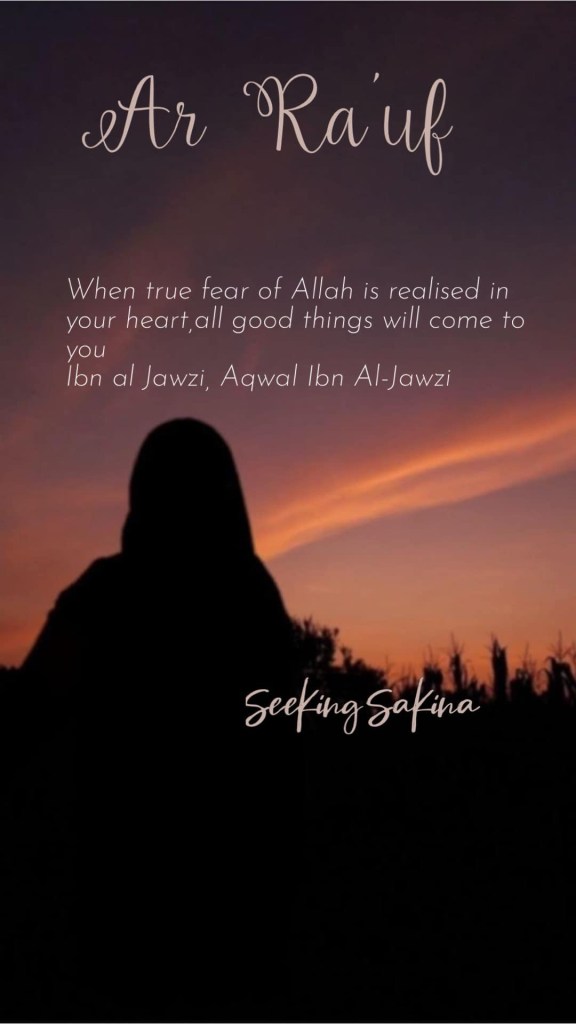
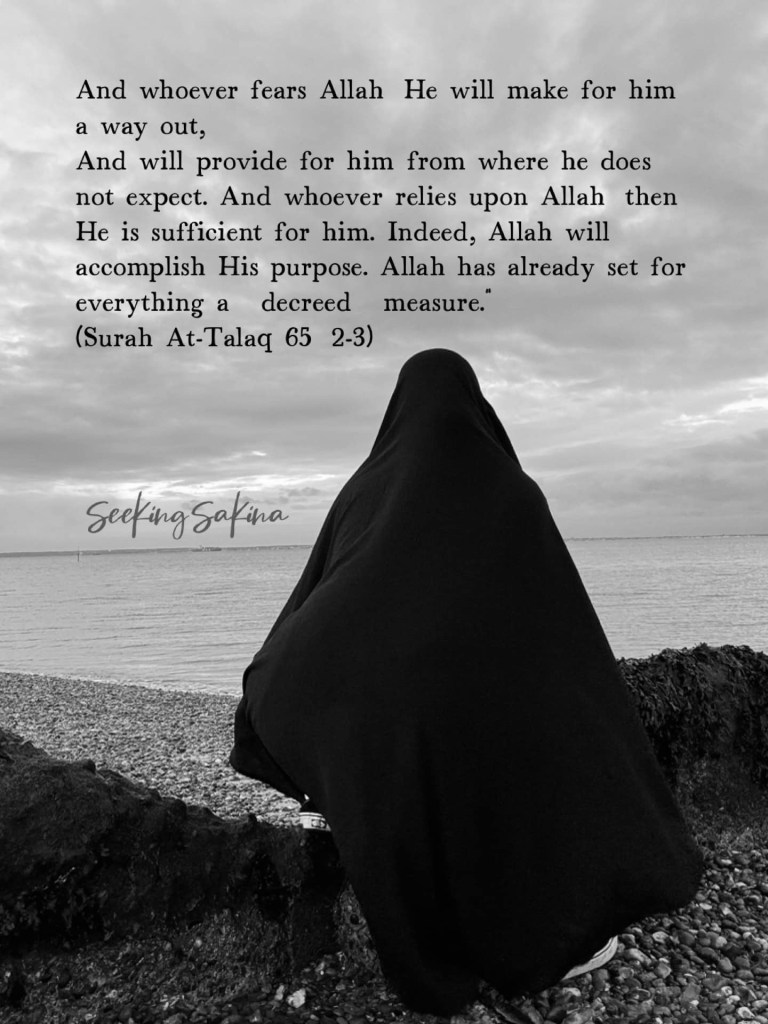
Fear Of Allah

The Fear That Brings Us Closer to Allah

As we sit in the quiet of Suhoor, the world still wrapped in slumber, there’s a certain serenity in this moment—a time of reflection, renewal, and drawing closer to Allah. In these early hours, as we prepare for the day’s fast, our hearts naturally turn toward Him, seeking His mercy, His guidance, and His love.

But for many of us—especially reverts, and even those born into Islam—the concept of fearing Allah has been presented in a way that feels overwhelming. From the stern warnings in sermons to the community’s intense focus on punishment, the message can sometimes feel more like an unrelenting weight than a path to peace. Instead of leading us to Allah, this fear can make us feel as though we are constantly falling short, never good enough, never worthy.

Yet, this is not the fear that Allah wants for us.

True fear of Allah is not about being terrified of Him. It is not about feeling doomed with every misstep or drowning in guilt. It is a fear born out of love—a fear of losing His closeness, of allowing our hearts to grow distant from Him. It is the kind of fear that makes us mindful, that humbles us, that reminds us to return to Him even after we falter. And the most beautiful part? It is this very fear—the fear of losing His love—that causes Him to love us even more.

Allah describes these special people in the Qur’an:

“Indeed, they who are apprehensive from fear of their Lord,

And they who believe in the signs of their Lord,

And they who do not associate anything with their Lord,

And they who give what they give while their hearts are fearful because they will be returning to their Lord—

It is those who hasten to good deeds, and they outstrip [others] therein.” (Surah Al-Mu’minun 23:57-61)

This is the kind of fear that does not paralyze us—it moves us. It makes us race toward goodness, toward prayer, toward forgiveness. It does not make us feel hopeless; it fills us with purpose. And it exists alongside hope, in perfect balance, like the two wings of a bird—one wing of hope, one wing of fear—both necessary to reach Allah.

For Allah is Ar-Ra’uf, the Most Kind, the One whose mercy is gentle and encompassing. His kindness is not harsh; it does not push us away but draws us in. He corrects us with love, guides us with wisdom, and forgives us with an endless generosity that no sin can outweigh. When we fear losing His closeness, it is His kindness that reassures us, that tells us He is always near, always ready to welcome us back.

As we journey through this blessed month of Ramadan, let our hearts be filled with this balance. Let our fear be the kind that draws us closer, that makes us strive harder, that softens rather than hardens. And above all, let it remind us that no matter how many times we turn away, His love remains, always waiting for us to return.

May we spend today mindful and with a heart full of love, hope, and the kind of fear that brings us only closer to Him.

Live for your Akhirah

What if If You Lived Only to Please Allah ??

What if, for just one day, you lived as though nothing else mattered but pleasing Allah? Not the opinions of society, not the judgments of family or friends, not the expectations of the culture you were born into—just Him.

How would you truly live?

Would your prayers be different, whispered with more sincerity, stretched longer in devotion, unburdened by haste? Would your dress reflect not trends or pressure but a deep reverence, an expression of love rather than obligation? Would your speech soften, carrying only truth, kindness, and remembrance of Him?

Would you walk through this world lighter, unattached to its fleeting concerns, unshaken by its praise or criticism? Would your heart find peace in knowing that nothing—no approval, no validation, no worldly success—compares to His pleasure?

I understand that in the society we live in today, it’s not easy. We are constantly told how we should look, how we should behave, what we should believe. To stand out, to go against the tide, often invites ridicule, isolation, or judgment. The pressure to conform is immense, and the fear of being different can weigh heavily on us.

But at the end of the day, none of that truly matters. The only thing of real importance is our relationship with Allah—our Akhirah, our ultimate purpose of serving Him. The opinions of people fade, the world changes, but Allah remains. And when we meet Him, it won’t be society’s approval that saves us, but the sincerity of our hearts and the way we lived for Him despite the difficulties.

So, what’s stopping us from living that way today?

Gratitude

Gratitude, Taqwa, and the Love of Allah

Taqwa is not just about avoiding sin—it is about living with a heart fully aware of Allah’s generosity, kindness, and support in every moment of our lives. It is about recognizing that He is Al-Razzaq, the One who provides; Al-Hamid, the One most deserving of all praise; and Ash-Shakoor, the One who appreciates and multiplies even our smallest acts of gratitude.

Allah’s love surrounds us in ways we often overlook. He blesses us, sustains us, and grants us both seen and unseen gifts. When we become conscious of these blessings, our hearts overflow with an overwhelming sense of appreciation. Allah Himself links worship to gratitude:

“So worship Allah and be grateful to Him.” (Qur’an 39:66)

Our purpose in life is to worship Him, and true worship is incomplete without gratitude. Ramadan is a time of deepening that connection—a month where we purify our hearts and cultivate taqwa. But for those who are unable to fast, it’s important to remember that you do not need to wait for absence in order to appreciate. Gratitude is not just about recognizing what we lack—it is about seeing the blessings present in our lives at every moment.

The most grateful person is not the one who only appreciates in hardship but the one who is grateful in both the presence and absence of things, in times of both ease and difficulty. Because true gratitude is a choice—one that transforms the soul. Allah tells us in the Qur’an:

“If you are grateful, I will surely increase you [in favor].” (Qur’an 14:7)

The more you thank Allah, the more your eyes will see the hidden, forgotten blessings in your life. Gratitude is not just about thanking Allah for what He has given, but also for who He is. It means thanking Him for the health of our children, our homes, our sustenance—for the big blessings and the small ones. But also for the things He withheld, or the mistakes He covered, for the paths He gently redirected us from, even when we desperately wanted them.

“If you were to count Allah’s blessings, you would not be able to enumerate them.” (Qur’an 16:18)

And what is the greatest blessing of all? Faith. The ability to know Him, to turn to Him, to be loved by Him. Without taqwa, there is no true relationship with Allah. And if there is no relationship with Allah, there is a void that we will try to fill with everything from this dunya that is not good for us—things that will only take us further from Him.

So this Ramadan, let gratitude be your act of worship. Whether you are fasting or not, allow your heart to be filled with appreciation for the kindness that has encompassed you since you were small—for the moments of joy, for the tests that strengthened you, and for the gift of knowing Allah. Because in that gratitude, you will find your way back to Him.

LOVE….LOVE…LOVE

Today is about love—the love of Al-Wadud, the Most Loving. It’s about reaching deep into our journey this Ramadan and recognizing the love Allah has placed around us. When you pause and truly look, what do you see? Maybe it’s the golden hues of the sunset, the laughter of a child, the gentle presence of your pet, or the vast stillness of the night sky. Every bit of beauty in this world is a reflection of His love. And that includes you.

Allah created you with love and care. You were shaped by the same Lord who perfected the heavens and the earth. He says in the Qur’an:

“It is He who forms you in the wombs however He wills. There is no deity except Him, the Exalted in Might, the Wise.” (Qur’an 3:6)

You are here because He willed it. Because you matter. Even if the love of this world has let you down, even if you have felt unseen or uncherished, know this: You are loved by the One who never fails in His love. The One who has always been with you. The One you will return to.

And with that certainty—that Allah loves you—we must take responsibility for all the ways we may have failed to love Him, ourselves, and those around us. Ask yourself: Have I neglected my heart? Have I held onto things that keep me distant from Him? Have I failed to show love to those He has placed in my life?

Reflecting on this might be painful, and that’s okay. The past is not there to shame you; it is there to teach you. There is no failure, only beautiful lessons waiting to be embraced. Because Allah is not looking for perfection—He is looking for sincerity. He is looking for the heart that turns back to Him, no matter how many times it has strayed.

So take these lessons and move forward on this journey of Taqwa—of drawing closer to Allah in love and consciousness of Him. Focus on that certainty that Allah loves you. Let it settle deep within you and let it transform you. With His love, you can change the way you love yourself, the way you love others, and the way you love Him.

And know this: The highest form of love is Taqwa—to worship Allah with a heart fully aware of Him. When you live in that awareness, every other kind of love in your life will be transformed. Your heart will soften, your relationships will deepen, and your soul will find peace.

So today, let love in. Let yourself be loved by Al-Wadud. Let that love heal you, uplift you, and remind you of your worth. Because you are seen, valued, and deeply, unconditionally loved by the One who created love itself. And His love for you never wavers.