Ramadan arrived suddenly this year, almost without warning, same thing happened today … no warning
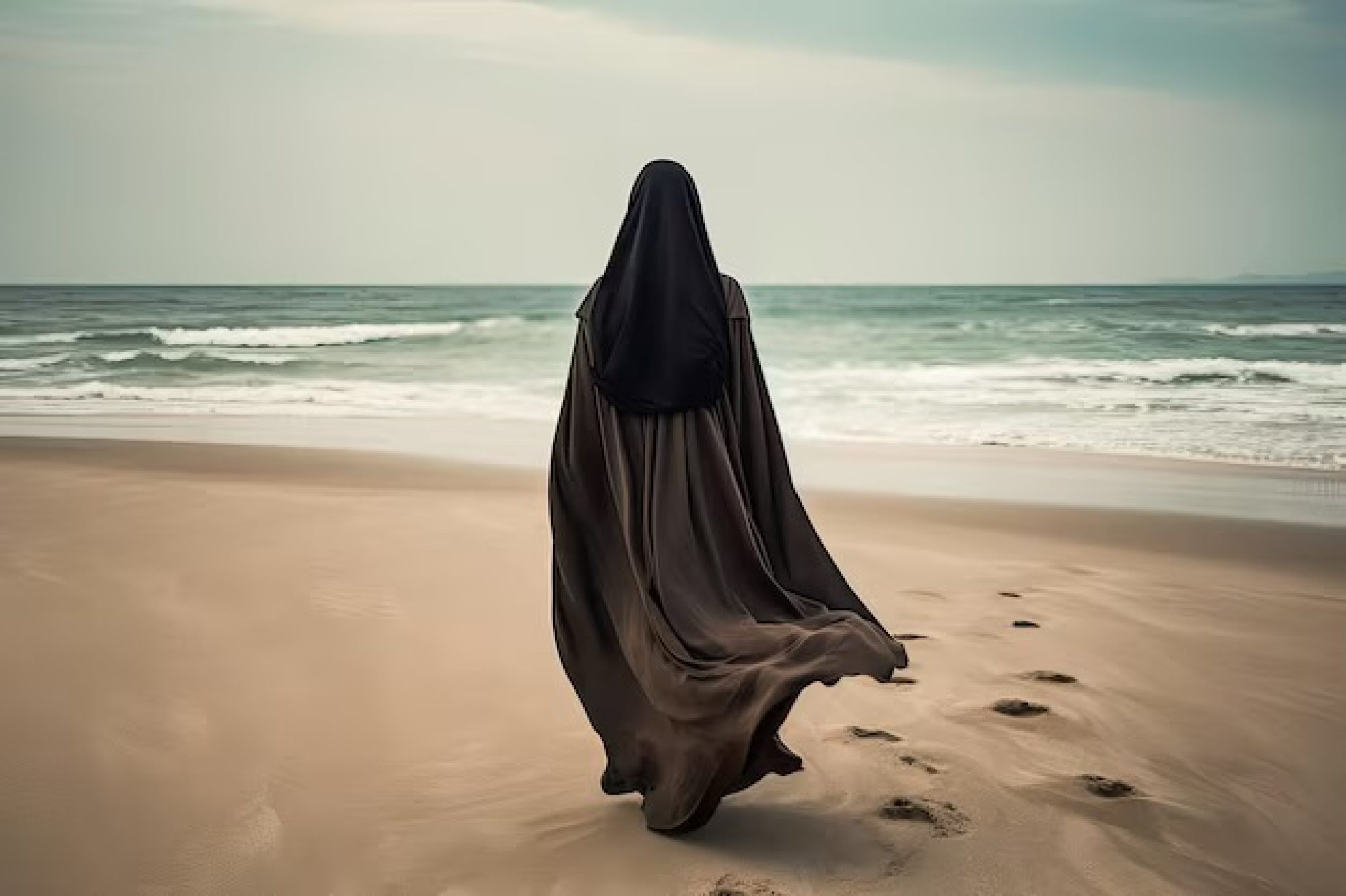
After two years of uninterrupted routine, I was caught off guard by a shift I never expected. It was already difficult to accept that I couldn’t fast due to my health, but now, something even more precious had been momentarily taken from me. The one act of worship that grounded me, the one place where I found solace, was no longer within my reach.
As women, we experience moments when our usual acts of devotion must pause—when we are unable to pray in the way we are accustomed to, when our connection to Allah takes a different form.
At first, it felt like a loss—like a door had been closed just as I was striving to go deeper in my devotion. But as the day passed and the weight of this reality settled, I began to see it differently. Perhaps this was Allah’s way of pushing me further, of urging me to seek Him in ways I had not yet explored. Perhaps He was teaching me that my connection to Him was not confined to one form of worship, that my soul could still reach Him through my words, my thoughts, my remembrance.
And so, through my reflections, my journaling, my blogging, my dhikr, and my dua, I will continue to search for Him with a new kind of yearning.
These final ten nights, though bittersweet, hold a depth I hadn’t known before. My dua feels heavier, more raw, carrying an urgency that is born from longing. If I cannot bow in prayer, I will bow with my heart. If I cannot stand in salah, I will stand in devotion in other ways.
Allah has not distanced me from Him—He has invited me to seek Him differently. And in that, I find a comfort that eases the ache. These nights are precious, and I will use them to call upon Him with all that I have, with all that I am. Because even when certain doors close, He always leaves another open.
How often have you felt overwhelmed when difficulties arise? especially when they seem to come like a set of waves one straight after the other, each one hitting harder than the last. The mind races, the heart pounds, and for a moment, it feels like there’s no way out … then suddenly you’re drowning
Panic can make problems seem bigger than they are, and fear can cloud the path ahead. But I’ve come to realize that in those moments, when I feel lost, there is always one place that brings me back to the peace I need to feel to be able to move forwards .
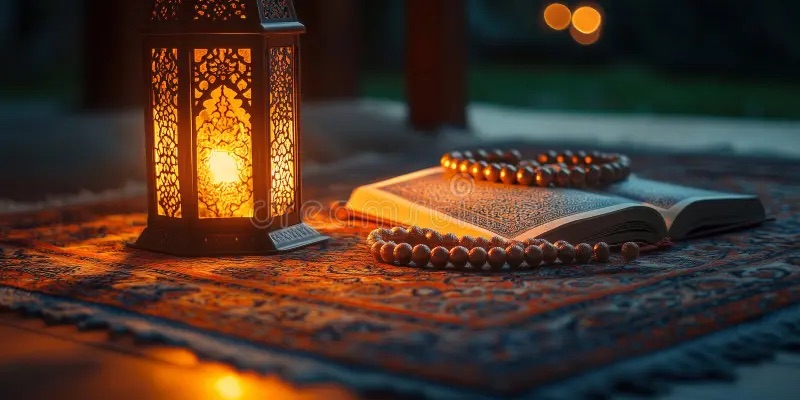
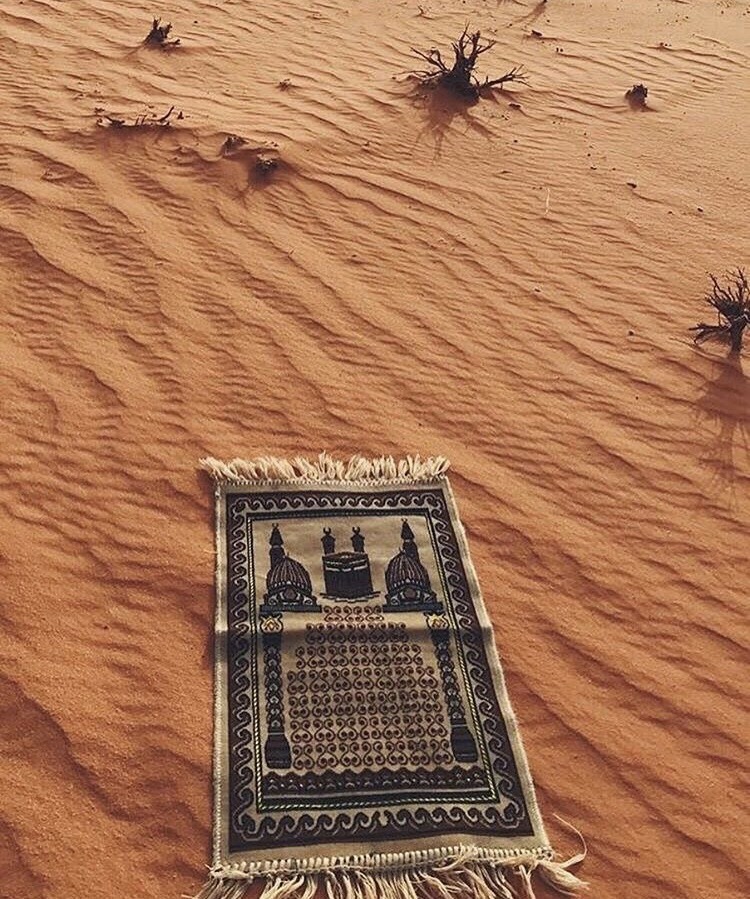
My prayer mat….
In the quiet corner of my room,it glows like the light from a door slightly ajar—a reminder that no matter how uncertain things seem, Allah is always near.
No matter how many times I’ve struggled, no matter how many times I’ve questioned, one thing has never changed: the comfort I find when I turn to Him. His presence is a constant, His mercy is limitless, and His guidance is always there for those who seek it.
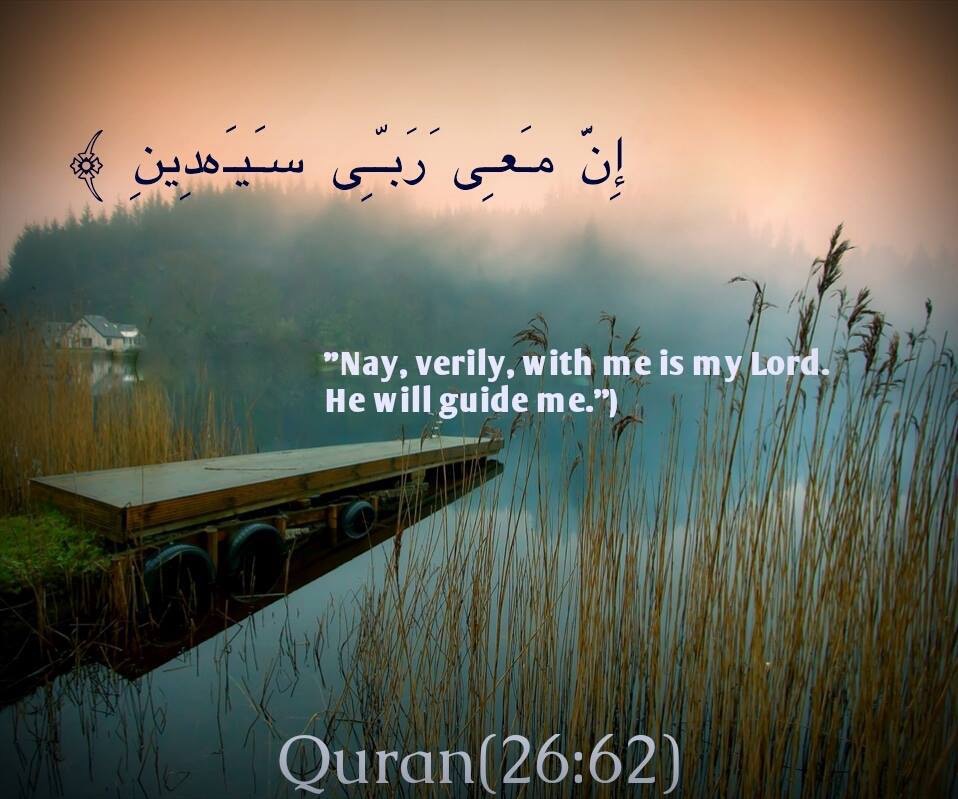
“And indeed, my Lord is with me, and He will guide me.” (Qur’an 26:62)
This verse is my anchor. It reminds me that I am never alone, that no challenge is too great, and that Allah is always making a way—even if I can’t see it yet. Because everything, both the good and the bad, every difficulty and every ease, is all part of Allah’s plan. Sometimes, we only understand the wisdom behind our struggles much later, but in the moment, we are asked to trust.
And through these difficulties, there is always ease. Allah promises us this:
“For indeed, with hardship comes ease. Indeed, with hardship comes ease.” (Qur’an 94:5-6)
This isn’t just a hopeful thought—it’s a divine truth. Every test carries within it a door to something better, a lesson, a strength we didn’t know we had, a closeness to Allah we might not have reached otherwise.
So in every hardship, I turn to Him. Not with fear, but with trust. Not with despair, but with hope. Because He listens in a way no one else does. He understands in a way no one else can. And He cares more deeply than anyone ever could. With every prayer, with every whispered du’a, I find reassurance that whatever comes next, I won’t face it alone.
And that thought alone is enough to bring peace to my heart.
As Ramadan enters its final stretch, there is a deep and familiar ache that settles in my heart—a sadness that so much of this blessed month has already passed. It always feels like it moves too quickly, like sand slipping through my fingers, and I wonder if I have done enough, if I have taken full advantage of its mercy. Yet, at the same time, exhaustion lingers. The early mornings of suhoor, the long days of fasting, the nights of prayer—they all take their toll. Life doesn’t pause for Ramadan; work continues, responsibilities remain, and many of us are carrying both spiritual longing and physical fatigue in these last ten nights.
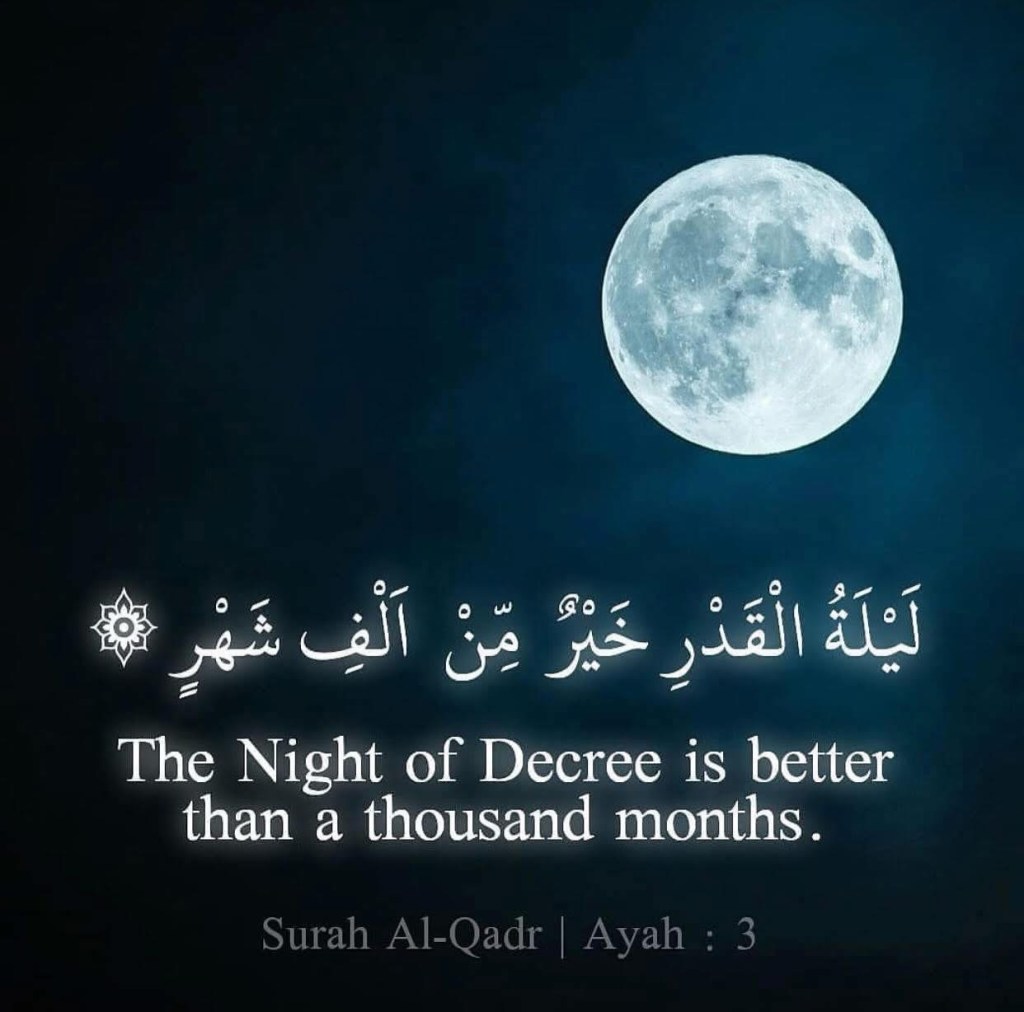
And yet, this part of Ramadan is the one I love the most. Some see these nights as a time of intense worship, of standing for hours in prayer, of seeking out Laylatul Qadr on the odd nights, because as the Prophet ﷺ said:
“Seek it in the last ten nights, in the odd-numbered nights.” (Bukhari)
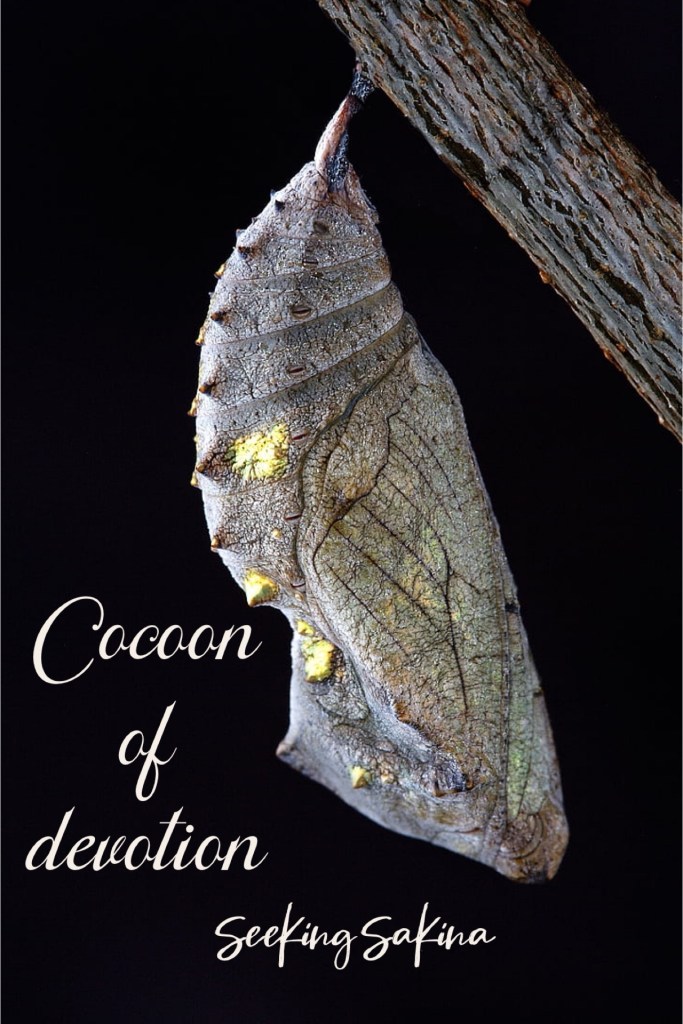
But for me, these nights are not about just the intensity of worship—they are about the intimacy of it. This is the time when I feel like I am wrapping myself in a cocoon, just me and Allah, my heart laid bare in quiet conversation with Him. There is no rush, no need for grand gestures—just the sincerity of direct devotion, an outpouring of love, regret, hope, and longing. It is a time to seek Him in stillness as much as in prostration, to let my whispered prayers be carried by the night, knowing that He is near.
And for those who feel like they have not done enough, who carry regret for missed opportunities or faltering resolve—know that even your regret is rewarded. Even your sorrow for what you feel you lacked is a sign of your connection to Him. This is a time for mercy, for renewal, for returning to Him in whatever way you can. Allah does not measure us by our exhaustion, but by the sincerity of our turning back to Him.
So may these last ten nights be a source of closeness, a shelter of love between us and our Creator. May He accept what we have done, forgive what we have fallen short in, and carry our du’as into the year ahead, answering them in the most beautiful of ways.
As a parent to children facing challenges and often without support, I can feel the weight of the world on my shoulders. The struggles of daily life, the challenges of advocating for my children, and the emotional toll can sometimes feel overwhelming. In those moments, I turn to the example of Zainab bint Ali, the daughter of Fatima and Ali, and the sister of Hasan and Hussain. Zainab’s strength, resilience, and unwavering faith in Allah serve as a profound source of inspiration for me.
I have a deep reverence and love for Zainab—not as an idol, but as a living example of courage and patience. Like Zainab, I too face trials that seem to weigh heavily on me, but her story reminds me that true strength comes from our connection to Allah. Despite her immense suffering, she held fast to her faith and to who she was, never losing herself in the hardships of this world. Zainab’s life is a reminder that even in the most difficult circumstances, we can still find beauty in the world. Her ability to see beauty, even amidst hardship, is something that I try to emulate. In this life, when we are overwhelmed and burdened, it’s crucial to hold on to that beauty — to not let the darkness overshadow the light. Seeing beauty, in both the small and large moments, brings peace to the heart and keeps us grounded in gratitude.
It’s so easy, when we’re burdened with the struggles of this dunya, to lose ourselves, to feel as if we can’t go on. But Zainab teaches me to hold fast to who I am, to not let the weight of the world define me. As Allah reminds us in the Quran:
“And hold firmly to the rope of Allah all together and do not become divided.” (Quran 3:103)
This verse serves as a beautiful reminder to stay grounded in our faith, to hold on tightly to Allah, especially during the toughest of times. Zainab’s life exemplifies this—her strength came from holding on to Allah’s guidance and mercy, no matter what she faced.
When the weight of life feels unbearable as I bow my head in sujud, as the tears fall and the world feels heavy, it’s in remembering Zainab’s example that the burden lightens. Her strength and resilience remind me that I too can rise again, just as she did, with faith and trust in Allah’s mercy.
Zainab’s story also inspires me to stand firm for what is right, just as she did. She spoke out for justice, even when facing immense opposition, and she taught me that true strength lies in advocating for those we love, no matter the challenges we face.
In the most difficult moments, I draw strength from her. Her unwavering faith and courage remind me that I am never alone, and that by holding fast to Allah, I can rise above the struggles I face. Like Zainab, I hope to meet every trial with grace, perseverance, and an unshakeable trust in Allah’s mercy and guidance. Through her example, I remember to look for beauty in the world, no matter the burden, and to hold on to the light that Allah provides in all circumstances.
Reflecting on the story of Prophet Yusuf (Joseph), may peace be upon him, I am always deeply moved by his unwavering faith, patience, and compassion. When I think about the immense trials Yusuf faced—being betrayed by his own brothers, thrown into a well, and enduring years of hardship—it reminds me of the strength that comes from having complete trust in Allah’s plan. Despite the intense pain and injustice he suffered, Yusuf remained patient, and his faith never wavered. His story teaches us that in the face of adversity, we should trust in Allah’s wisdom, knowing that He is guiding us through our trials, even when we can’t see the bigger picture.
I can personally relate to Yusuf’s story, especially when I’ve been hurt by people I loved and trusted. It’s easy to feel lost, angry, and disillusioned when the people closest to you mistreat you. But whenever I feel that way, I remember Yusuf’s strength and the way he responded with patience. His ability to forgive his brothers, despite their cruelty, is a reminder that true strength lies in forgiveness, not revenge. Yusuf’s words, “There is no reproach upon you today. Allah will forgive you; He is the most merciful of the merciful” (Quran 12:92), always touch my heart and inspire me to approach situations with mercy, even when it seems impossible.
In my own life, I have faced moments where I was deeply hurt by those I loved, and it felt overwhelming. But every time I reflect on the patience of Yusuf and his father, Prophet Ya’qub (Jacob), may peace be upon him, I am reminded that we are called to embody patience and forgiveness. Ya’qub’s words, “And patience is most fitting for me. And Allah is the one sought for help against that which you describe” (Quran 12:18), remind me that even in our most painful moments, patience is the key. We don’t have control over how others treat us, but we do have control over our response.
Yusuf’s story teaches me that sometimes life doesn’t go as we expect, and we face unfair treatment, betrayal, or hardship from those we least expect. But through it all, I’m reminded that Allah’s plan is always greater than our own. We may not understand why things happen the way they do, but we can take comfort in knowing that Allah is the most kind, the most forgiving, and His wisdom far surpasses anything we could imagine. When we hold on to faith, patience, and forgiveness, we align ourselves with the path that brings us closer to Allah’s mercy.
Reflecting on the story of Prophet Yusuf (Joseph), may peace be upon him, I am always deeply moved by his unwavering faith, patience, and compassion.
When I think about the immense trials Yusuf faced—being betrayed by his own brothers, thrown into a well, and enduring years of hardship—it reminds me of the strength that comes from having complete trust in Allah’s plan. Despite the intense pain and injustice he suffered, Yusuf remained patient, and his faith never wavered.
His story teaches us that in the face of adversity, we should trust in Allah’s wisdom, knowing that He is guiding us through our trials, even when we can’t see the bigger picture.
I can personally relate to Yusuf’s story. It’s easy to feel lost, angry, and disillusioned when the people closest to you mistreat you. But whenever I feel that way, I remember Yusuf’s strength and the way he responded with patience. His ability to forgive his brothers, despite their cruelty, is a reminder that true strength lies in forgiveness, not revenge. Yusuf’s words,
“There is no reproach upon you today. Allah will forgive you; He is the most merciful of the merciful” (Quran 12:92),
These words always touch my heart and inspire me to approach situations with mercy, even when it seems impossible.
In my own life, I have faced moments where I was deeply hurt by those I loved, and it felt overwhelming. But every time I reflect on the patience of Yusuf and his father, Prophet Ya’qub (Jacob), may peace be upon him, I am reminded that we are called to embody patience and forgiveness.
“And patience is most fitting for me. And Allah is the one sought for help against that which you describe” (Quran 12:18)
These words remind me that even in our most painful moments, patience is the key. We don’t have control over how others treat us, but we do have control over our response.
Yusuf’s story teaches me that sometimes life doesn’t go as we expect, and we face unfair treatment, betrayal, or hardship from those we least expect. But through it all, I’m reminded that Allah’s plan is always greater than our own.
We may not understand why things happen the way they do, but we can take comfort in knowing that Allah is the most kind, the most forgiving, and His wisdom far surpasses anything we could imagine.
When we hold on to faith, patience, and forgiveness, we align ourselves with the path that brings us closer to Allah’s mercy.
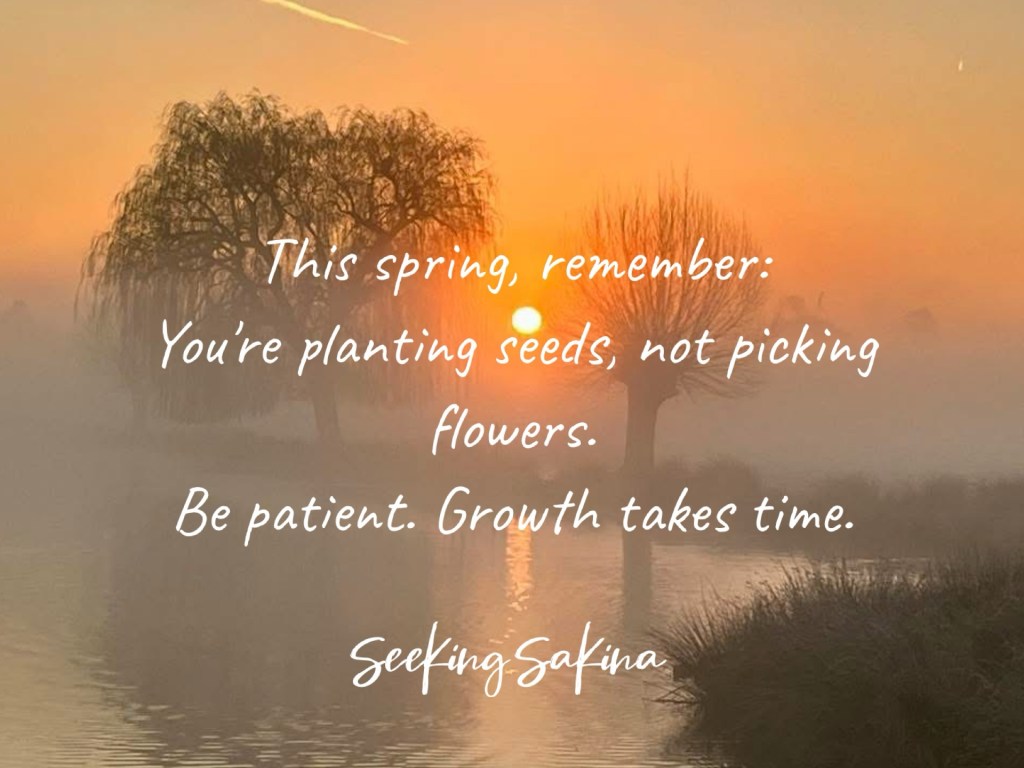
“You’re planting seeds, not picking flowers. Be patient. Growth takes time.”
Reflecting that it’s spring tomorrow as I Look back on my path, I can see how deeply connected it has always been to the rhythms of nature. Before I even understood it in an Islamic sense, I felt the pull of the land, the changing of the seasons, the rise and fall of the tides. There was always something grounding in the way the earth moved, how it seemed to whisper lessons about patience, renewal, and unseen growth.
Now, as a Muslim, I still rejoice in these things—the shifting colors of the sky at sunrise and sunset, the quiet hum of the earth waking in spring, the steady pulse of the ocean beneath my board. But now, I see not just beauty in creation, but the Creator through creation. What once felt like mere wonder now feels like remembrance—like dhikr written into the waves, the wind, the soil.
Allah tells us:
“And on the earth are signs for the certain [in faith], and in yourselves. Then will you not see?”
(Quran 51:20-21)
Everything around us is a sign, if we are willing to pay attention. The ocean does not fight against its tides; it moves with them. The trees do not resist the seasons; they surrender to them. The land trusts in the rain to come, in the sun to return, in the cycle set by its Creator. And so should we.
Growth—whether in faith, in healing, or in understanding—is not immediate. It is slow, quiet, often unseen. But just as the seed beneath the soil is not forgotten, neither are we. Allah sees every effort, every moment of patience, every quiet surrender. And just as spring always follows winter, He will bring our growth in its due time.
So I remind myself to trust. To plant the seeds, even when I cannot yet see the flowers. To move with the tide, rather than against it. And to look for Him always—in the changing winds, in the rolling waves, in the stillness and the motion of everything He has created.
As we approach the last ten nights of Ramadan, many of us may feel a sense of regret. Twenty nights have passed, and perhaps we feel we haven’t done enough—we haven’t prayed enough, made enough dhikr, or sought enough forgiveness. Maybe distractions took over, or our hearts didn’t feel as present as we had hoped. It’s easy to feel like we have fallen short, like we should have done better.
But Allah does not measure us by perfection. He measures us by our return to Him. True worship is not about having done everything right from the beginning but about continuing to turn back, no matter how many times we feel we’ve strayed. The door to Allah’s mercy is still open. The best nights of Ramadan are still ahead of us. And Allah, in His infinite love, accepts us as we are—flawed, imperfect, but sincere in our longing for Him.
Allah tells us in the Quran:
“Say, ’O My servants who have transgressed against themselves [by sinning], do not despair of the mercy of Allah. Indeed, Allah forgives all sins. Indeed, it is He who is the Forgiving, the Merciful.’”
(Quran 39:53)
This is the acceptance we must learn—to see ourselves as we are and to believe that Allah, in His mercy, accepts us where we are. Worship is not about arriving at a state of perfection but about continually returning, continually seeking, and continually surrendering.
So in these final nights, let us not be held back by feelings of unworthiness. Let us not dwell on what we didn’t do but instead embrace what we can do now. Let us show up for Allah, just as we are, with whatever we have to give. Because He is always ready to receive us.
I noticed my brow was furrowing. The adhan had sounded, yet I remained stuck in the dunya, tied down by a responsibility I couldn’t escape. I know that we are given a time frame in which to pray, but for me, the call to prayer has always felt like exactly that—a call. Not just a reminder or an announcement, but an invitation, a pull towards something greater than myself. And when I don’t answer it immediately, I feel as if I am being torn in two.
Today was no different, except this time, I found myself observing my own struggle, almost as if I were watching from the outside in. Why was I hesitating? Why was I dragging my heels? Salah, in these moments, can start to feel like just another thing added to an already heavy plate, overflowing with duties and responsibilities. And when time itself seems to shrink under the weight of everything I must do, I realize that it is at these very moments that I need to empty my plate and consume nothing but salah.
When I finally stood for prayer, I found that the pressure I had been feeling all day wasn’t really about my responsibilities at all. It was an overwhelming need to release everything I had been carrying. Every unspoken thought, every frustration, every silent pain—I had been holding it all in, waiting for relief. And indeed, relief was found.
“And seek help through patience and prayer, and indeed, it is difficult except for the humbly submissive.” (Qur’an 2:45)
The moment my forehead touched the ground, it was as if the burdens that had weighed me down dissolved into the mercy of Allah.
I am not perfect, and I don’t try to be. What I do try to be is someone who does their best. Some days, that best isn’t enough. Some days, I fall short. But I find comfort in knowing that Allah does not judge me based on yesterday—He looks at what I do today. He does not hold me to my past mistakes but invites me to return to Him over and over again.
The Prophet (peace and blessings be upon him) said that Allah (SWT) says:
“When My servant draws near to Me by a handspan, I draw near to him by an arm’s length. And when he draws near to Me by an arm’s length, I draw near to him by a fathom. And when he comes to Me walking, I go to him at speed.” (Sahih al-Bukhari 7536, Sahih Muslim 2675)
No matter how much I struggle, no matter how much I falter, He is always there, waiting, ready to receive me with open arms.
So, I return. Again and again. And every time I do, I remember—salah is not just an obligation. It is a lifeline, a refuge, a place where all burdens can be set down, and all hearts can find peace.
“And seek help through patience and prayer, and indeed, it is difficult except for the humbly submissive.” (Qur’an 2:45)
Ramadan is a month of profound connection with Allah, where our du’a, istighfar, and tawbah create an open dialogue between us and our Creator.
This sacred time reminds us of the importance of how we speak to ourselves. Just as du’a reflects our love for Allah, our self-talk is a reflection of how we love and treat ourselves.
Negative self-talk, like saying “I can’t,” holds us back and distances us from both our true potential and from Allah. By doubting ourselves, we may unknowingly doubt Allah’s ability to help us, weakening our trust in Him.
Instead of feeling overwhelmed or defeated, we can choose to speak more kindly to ourselves: “I can do this with Allah’s help,” or “I trust Allah will guide me through.” This shift in mindset moves us from limitation to possibility, and keeps us grounded in the present, trusting in Allah’s strength and mercy.
Allah reminds us in the Qur’an,
“And indeed, my Lord is with me, and He will guide me” (Qur’an 26:62)—a beautiful reminder that when we place our trust in Him, He will always show us the way.
There will be times when we don’t know which way to turn or what to do. In those moments, it’s essential to turn to Allah. Seeking His guidance through du’a and trusting that He knows what is best for us allows us to find peace, even in uncertainty.
No matter how lost we may feel, Allah’s guidance is always there for those who seek it.
The Qur’an also tells us, “Indeed, with hardship comes ease” (Quran 94:6).
Replacing negative thoughts with faith in Allah’s mercy helps bring ease into our lives. True taqwa—God-consciousness—also involves being mindful of how we talk to ourselves. When we treat ourselves with kindness, we reflect the mercy and compassion of Allah.
This Ramadan, let’s replace “I can’t” with “I can,” trusting in Allah’s power to make the impossible possible. By doing so, we strengthen our relationship with ourselves, others, and, most importantly, with Allah.
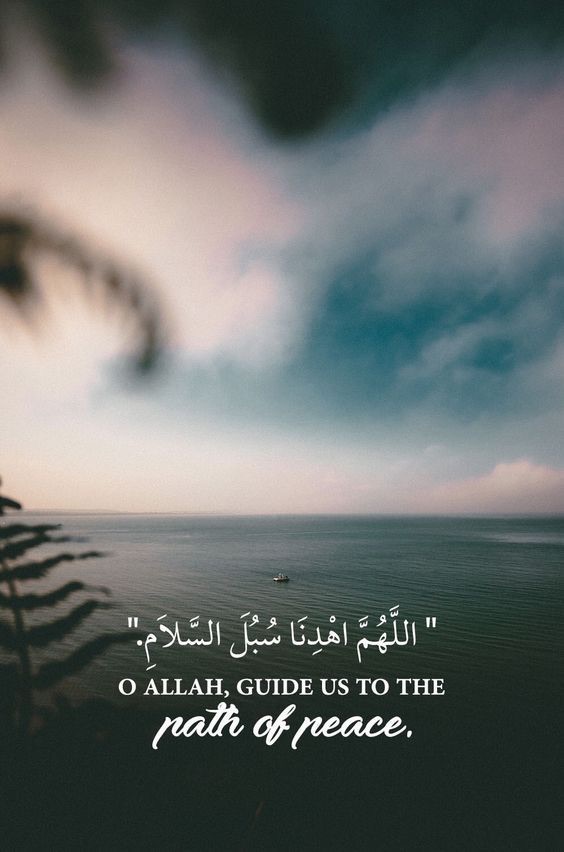
It is something we all seek, yet so few truly find. We chase it in the noise of the world—in success, in people, in fleeting moments of happiness—only to be met with restlessness, as if something is always missing. And perhaps that is the truth of it: peace is not something we can grasp in the external world. It is something that must take root within us, something that must be nurtured in the depths of our souls.
Our well-being, our faith, our very existence depend on it. Without peace, our hearts are unsettled, our thoughts clouded, our iman weakened. How can we worship with sincerity when our minds are burdened with endless worries?
How can we truly trust in Allah’s plan when we are drowning in anxiety over what is or what could be? The state of our faith is deeply tied to the state of our hearts, and a heart that lacks peace is a heart that struggles to find closeness to its Creator.
Until we realize that it is only Allah who is the source of peace, we will never be able to attain true peace of mind. No amount of control, no worldly comfort, no human love can provide the serenity that comes from placing our trust in Him. As-Salam, the Giver of Peace—He alone can calm the storms within us, soften the tightness in our chests, and replace fear with tranquility.
That is why we find so much peace in Salah, five times a day. It is in those moments, standing before Allah, that the burdens of the world fall away. And at the times when we feel most troubled, when our hearts feel heavy with worry or sadness, that is when we should go to our prayer mat and surrender everything to Him.
That is why peace floods our hearts when our foreheads touch the ground in sujood—because there, in the lowest position, we are in the highest state of connection with our Creator. In that moment of absolute submission, we are reminded: we are not alone, we never were, and we never will be.
True peace is found in surrender. In knowing that whatever is written for us is better than what we could write for ourselves. In trusting that every hardship, every unanswered prayer, every moment of uncertainty is a step toward something greater. When we anchor our hearts in Him, we are no longer shaken by the waves of this world. We are held by something far stronger—something eternal.
So, we seek peace not outside of ourselves, but within—where He has always been. And in that, we find everything we have ever been searching for.



 Seeking Sakina