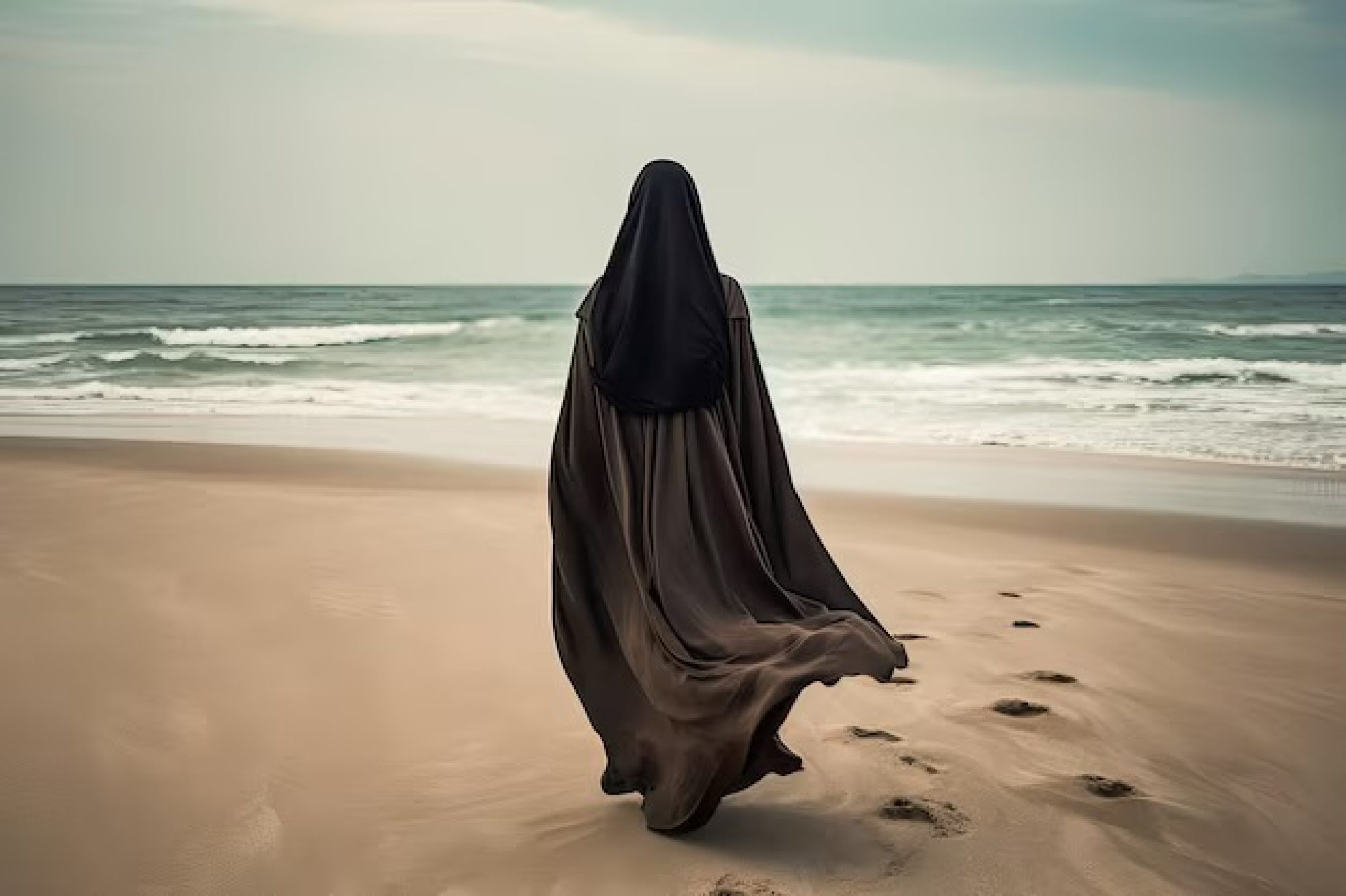
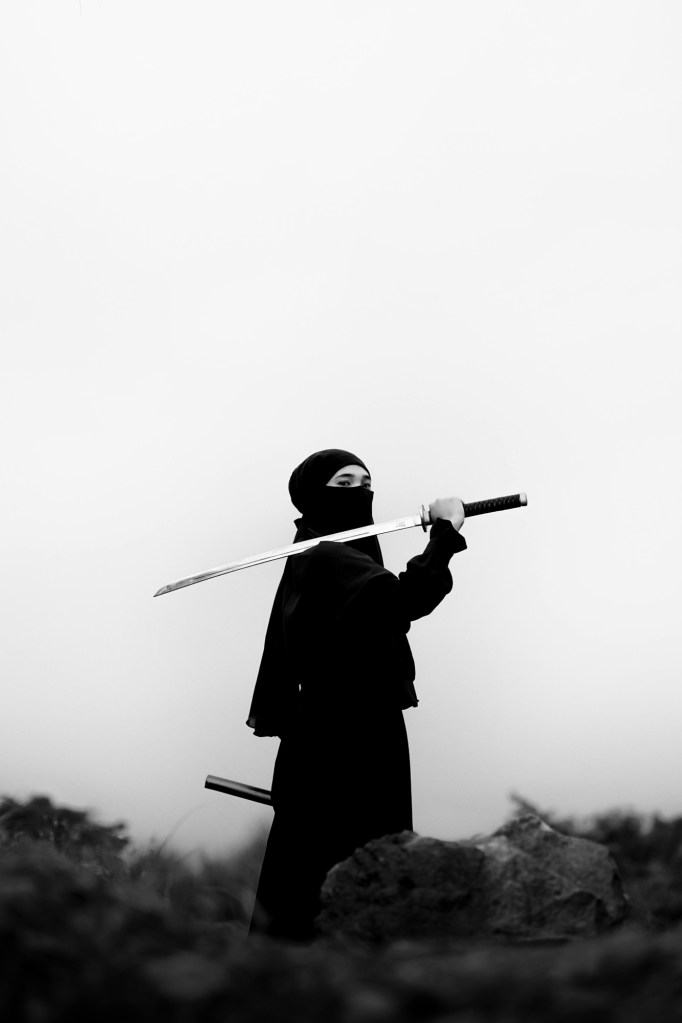
The Sword and the Veil: A Reflection on Hijab

The hijab is a journey — not a punishment, not a prison, and certainly not a measuring stick for piety. It is not something to be weaponised or used as a yardstick to shame others into submission.

It’s a veil of devotion. A symbol of presence. A sacred marker that each woman must come to in her own time, in her own way, and with her own heart.

And the truth is — the head covering isn’t unique to Islam.

In Judaism, Orthodox women cover their hair with scarves or wigs after marriage. In Christianity, early traditions expected women to cover their heads during prayer and worship. Paul even wrote in 1 Corinthians 11:5–6:

“But every woman who prays or prophesies with her head uncovered dishonors her head—it is the same as having her head shaved. If a woman does not cover her head, she might as well have her hair cut off.”

Modesty has always existed in sacred traditions — but it was never about control. It was about reverence. Humility. Sacred space.

In the Qur’an, the word khimār is used — a cloth that was already being worn by women at the time. The instruction in Surah An-Nur (24:31) is to draw it over the bosom. Why? Because people used to walk around half-naked in that society. The verse was about refining modesty, not inventing it. It was about dignity, not dominance. It was about helping Muslim women be recognised, respected, and protected — not scrutinised and shamed.

But today, that’s what it’s become for many of us — especially online.

Too many brothers — and yes, I say brothers first because it’s mainly them — are calling out sisters for what they call “incomplete hijab.”

They’re focused on makeup.

On lashes.

On colourful scarves.

On strands of hair.

And most of these voices are coming from hardline mindsets — Salafi, Wahhabi-flavoured thinking — using harshness and fear instead of compassion and understanding. They quote Hadith, but they forget adab. They preach Qur’an, but ignore its mercy.

Meanwhile, they are silent on genocide. Silent on Palestine. Silent on corruption, war, and poverty.

Where is your outrage when children are being bombed?

Where is your energy when the Ummah is bleeding?

Why is a sister’s eyeliner more offensive than an orphan’s cry?

On the Day of Judgment, each soul will be accountable for its own actions.

“No bearer of burdens shall bear the burden of another.” (Qur’an 6:164)

You won’t be judged for my scarf.

And I won’t be judged for your beard.

So many people misuse the deen to control others. They wield rules without wisdom. They use Islam as a stick, not a path. And sisters like me — who are trying, stumbling, returning, recommitting — are left feeling judged, excluded, not good enough.

But I believe this, with my whole heart:

We all have our own path to Allah.

We will not be asked if our scarf was pinned tight enough — but we will be asked if our heart was sincere. If we tried. If we showed mercy. If we remembered Him.

I don’t believe that Allah — the Most Merciful — is going to condemn me for a few eyelashes or a slip of hair. I believe He sees the effort, the pain, the intention — the quiet ways I seek Him through the chaos of life.

Hijab is not just a piece of cloth.

It’s a mirror.

A sword.

A shield.

And it must be worn with awareness, yes — but also with love.

Not shame.

Not fear.

Not for others.

But for Him.

So to the sisters still figuring it out: you’re not alone.

To the ones who wear hijab and still feel the pressure: I see you.

To those who are returning after years away: may your journey be soft.

And to those who judge: may Allah soften your hearts and open your eyes.

Let us stop turning the veil into a weapon.

Let us carry the sword with mercy — not to wound, but to protect.

Let the hijab be light.

Let it be love.

Let it be yours.

The Weight of Forgiveness

“Do you need to forgive someone?”

It’s a simple question, yet it carries the weight of our deepest wounds. Forgiveness is often mistaken for excusing what has been done to us, for letting someone escape accountability. But in truth, forgiveness is not about the other person—it is about us. It is about releasing the burden we carry, the pain that still lingers in our hearts, shaping our thoughts, our actions, our ability to move forward.

Allah reminds us in the Qur’an:

“And let them pardon and overlook. Would you not like that Allah should forgive you? And Allah is Forgiving and Merciful.” (Surah An-Nur 24:22)

Forgiveness is not a sign of weakness. It is an act of strength. It is the decision to say, “What you did was wrong, but I will not let it define my life.” By holding on to resentment, we chain ourselves to the past, reliving the hurt over and over. Letting go is not about erasing the past—it is about freeing ourselves from its hold.

But perhaps the hardest person to forgive is ourselves. We carry guilt for staying too long, for giving too many chances, for believing in change that never came. We punish ourselves for the choices we made, even when we did the best we could with what we knew at the time. Yet Allah, in His infinite mercy, does not hold us to an impossible standard. He tells us:

“Say, O My servants who have transgressed against themselves [by sinning], do not despair of the mercy of Allah. Indeed, Allah forgives all sins. Indeed, it is He who is the Forgiving, the Merciful.” (Surah Az-Zumar 39:53)

If Allah, whose justice is perfect, is willing to forgive us, why do we struggle to forgive ourselves?

Forgiveness is not forgetting. It is not pretending that the hurt never happened. It is acknowledging the pain, but choosing not to let it define us. It is saying, “I will no longer be bound by this.” And in that, we find freedom.

So, do you need to forgive someone? Maybe that someone is you.

All I see is beauty…

O Lady Zainab,

In the darkest moments, when cruelty and suffering surrounded you,you saw only beauty.

Amidst the horrors of Karbala,with your brother’s head upon a spear,your family torn apart by the forces of oppression,you stood, shackled and humiliated,yet your heart remained untouched,pure and steadfast.

When the world sought to break you,to extinguish the light of truth,you looked beyond the pain,beyond the bloodshed and loss,and in that moment,you declared,

“All I see is beauty.”

O Lady Zainab,

Your words were not mere words;they were a testament to your divine vision,a vision that saw not the cruelty of the oppressors,but the eternal beauty of your family’s sacrifice.

You saw the beauty in their unwavering faith,in their unyielding commitment to justice,in their sacrifice for the sake of Allah,a beauty that no darkness could eclipse.

You stood not as a victim,but as a beacon of resilience,a reflection of the strength that flows through the veins of the Ahl al-Bayt.

In your eyes, we see the truth of Karbala,a truth that transcends time,a truth that shines brighter than all the suffering,a truth that will never fade.

O Lady Zainab,

You are the embodiment of grace and strength,the woman who, in the face of torment,saw beauty where others saw only destruction.

You remind us that in the darkest of times,there is always light—light in sacrifice, in faith, in truth.Your courage is our inspiration,your words our guide.May we always strive to see the beauty in the struggles we face,to hold onto the divine purpose behind our hardships,and to stand firm in our faith as you did,unshaken by the storms of this world.

O Lady Zainab,

Your legacy is a garden of beauty,nurtured by the tears of sacrifice,and watered by the love of Allah.

May we honor you with every breath and with every step we take toward justice and truth.

Forever and always,

we remember you,

and we are guided by your light.

“Genocide Live: The World Watches, the West Betrays, and Humanity Dies”

Today, I Sat to Write—But I Couldn’t

I opened my laptop, ready to write after a month of Ramadan, a month of seeking closeness to Allah. But I couldn’t. The words wouldn’t come. Not because I had nothing to say, but because there is too much—too much horror, too much betrayal, too much rage.

Instead, I find myself sharing images, videos, anything to get the truth out. The speed of this genocide has shifted into high gear, and the world is still watching, still doing nothing. I see things most will never see, images that burn into my mind, that keep me awake at night. And I have never been so angry. Never felt so helpless.

How did we get here? How did we let it come to this?

And worse—how do we stop it?

This is a time of reckoning, a time of unbearable weight on the conscience of the world. What is unfolding in Gaza is not just another conflict—it is a genocide in real-time, with the slaughter of innocent men, women, and children playing out before our eyes. It is a slow, deliberate extermination of a people, while those in power lie, cover up, and betray not just the Palestinians, but their own citizens, their own so-called democratic values.

The West, with its grand proclamations of human rights and freedom, has been unmasked. The governments that claim to champion justice and democracy are either complicit or cowardly, and the people are left screaming into a void. Protests, once a force of millions, dwindle in numbers. The outrage is still there, but the exhaustion is setting in. And so we ask, again and again—what is the answer?

Were we ever really in control? Did we ever have a say, or were we simply pacified, led to believe that our voices carried weight when in truth, the scales have always been tipped in favor of those who wield power through oppression? Perhaps the real illusion was that we were ever part of the equation at all.

Some say history repeats itself, but maybe it never ended. Maybe World War II wasn’t the end of an era of genocide but the blueprint for what we see now. The very horrors that justified the creation of Israel are now being used to justify its crimes. And yet, the world remains silent or, worse, cheers on the slaughter. The propaganda machine has done its job well—dividing, conquering, twisting reality until truth itself is seen as an act of rebellion.

In the UK, we see this sickness manifest in other ways. Hate-fueled mobs target immigrants, burn buildings, barricade people inside—because anger, when misdirected, becomes a weapon for the powerful. Instead of rising against the true oppressors, people are manipulated into fighting each other. This is by design. It has always been by design.

And so, we return to the question—how do we stop this? Can we? Or has the balance of power tipped so far that resistance is nothing more than an echo in the wind? As an Ummah, as a global community, where do we turn when our voices are drowned out, our efforts dismissed, our people slaughtered without consequence?

If there was ever a test of humanity, of faith, of perseverance—it is now. And yet, the fear remains: What if we fail? What if we already have?

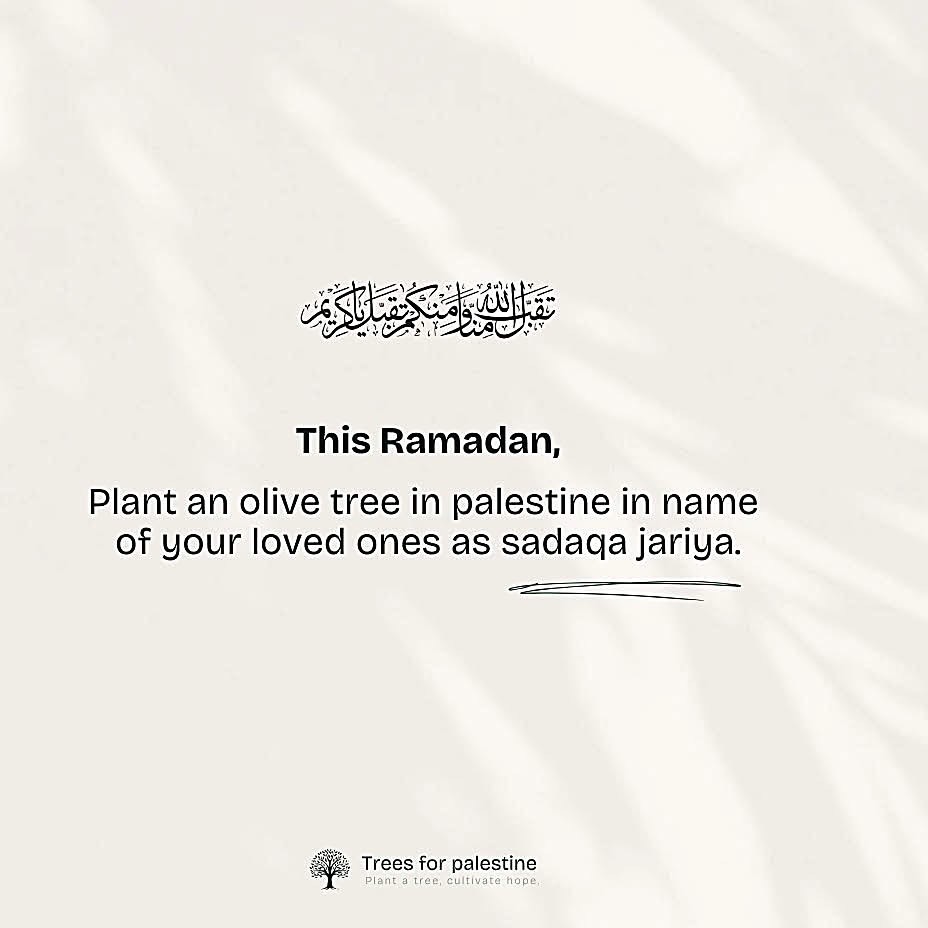
Today, I Planted an Olive Tree

Today, I planted an olive tree.

Its roots curled into the earth, searching,

and as I patted the soil down, it whispered to me.

It told me of the land—

of the golden sun that kissed its ancestors,

of the winds that carried the laughter of children,

of the call to prayer that wove through the hills

like a thread binding hearts to Allah.

It told me of the people—

the hands that had tended its forebears,

calloused but kind, strong but gentle,

their fingers stained with the ink of history

and the scent of jasmine and warm bread.

It told me of the other trees—

the ones who had stood for centuries,

silent witnesses to faith and struggle,

until the axes came,

until the fire rained down,

until the ground drank something deeper than water.

It spoke with tears,

for the earth is drenched in blood now.

And the trees that remain murmur in mourning,

their branches heavy with loss,

their roots tangled with the names of those

who stood and gave their lives to defend them.

And I wonder—

will this little sapling see peace?

Or will it, too, one day whisper of sorrow?

For the Prophet ﷺ said,

“The trees will speak at the end of days.”

And I fear what they might say.

But today, I planted an olive tree.

And one day, it will grow tall.

And one day, it will tell its own tales.

Let us pray they are of love and laughter,

of golden suns and gentle winds,

of a land where no more blood is spilled,

only water, only rain,

only mercy.

The Beauty of Istikhara: Surrendering to Divine Guidance

Life is filled with decisions—some small, some life-changing. Often, we stand at a crossroads, unsure which path to take. In these moments, we turn to Istikhara, a prayer not for signs, but for facilitation. It is a means of surrendering our limited knowledge to the One who already knows what is best for us.

But Istikhara is often misunderstood. Many people believe they must sit and wait for a sign—a dream, a repeated number, a sudden message from the person they’re seeking guidance about. They analyze every small detail, searching for meaning, when in reality, the answer is already unfolding before them. The true response to Istikhara is not in symbols or coincidences, but in what Allah facilitates—or prevents.

The beauty of Istikhara is that your decision is not just guided—it is made easy for you. If something is right for you, Allah smooths the way, brings it closer, and blesses it with barakah. It will feel like a door naturally opening, like the pieces of a puzzle effortlessly falling into place. But if it is not meant for you, obstacles will arise. No matter how much you push, it will not come together. You may be blocked, redirected, or even distanced from what you thought you wanted. This is your answer. Yet, because of ego, attachment, or fear, we often refuse to see it. We mistake resistance for a test, when in fact, it is divine protection.

Many of us become so fixated on waiting that we forget to live. We pray Istikhara and then sit still, expecting the answer to drop from the sky. But Istikhara is not passive—it requires movement. If you have prayed, made your decision, and entrusted it to Allah, the next step is action. You must move toward what you seek. Only through action will you see if Allah is facilitating your path or closing it off.

Istikhara is not just about seeking an answer—it is about trusting the answer when it comes. It is a tool of calm, a practice of surrender. In praying it, we translate faith into action. We place our heads on the ground in sujood, admitting our weakness, our lack of knowledge, our inability to see the full picture. And in that moment of submission, we testify to His supreme knowledge of what the future holds.

With Istikhara, we are not left to navigate uncertainty alone. We are given the comfort of knowing that whatever happens next—whether the path is made easy or closed off—is exactly what was meant for us. And there is no greater peace than that

Eid as a Revert: The Loneliness No One Talks About

Eid is meant to be a celebration—joyful, communal, filled with warmth and belonging. But for many reverts, Eid is a stark reminder of what they don’t have: a community, an invitation, a place to belong.

The struggle of a revert is often invisible, overlooked by those who have never had to navigate Islam alone. When we first take our shahada, the ummah rejoices. There are smiles, congratulations, and an outpouring of love. But once the excitement fades, many reverts find themselves completely alone. The warm welcome turns cold, and the reality sets in—we are Muslim, but we are still on the outside looking in.

This loneliness is never more apparent than on Eid. While born Muslims and reverts who have found their communities celebrate with family and friends, others sit alone, scrolling through social media posts of gatherings they were never invited to. And when they express their loneliness, they are met with the same, tired responses:

“Just go to the mosque.”
“You need to build a community.”
“If you lived closer, I would have invited you.”

False hospitality. Empty words. Excuses disguised as concern.

If we truly cared about the reverts in our ummah, we wouldn’t be waiting for them to ask for inclusion—we would already be making space for them. We know they exist. We know they struggle. So why are we not creating spaces specifically for them on Eid? Why do we celebrate their shahada with such enthusiasm, only to abandon them when it truly matters?

It’s even more disheartening to see that some of the worst dismissals come from fellow reverts—those who have found their place and forgotten the struggle they once faced. Some even go so far as to shame those who are still searching, offering the same unhelpful advice: just do more, just try harder, just find a way. As if the problem is a lack of effort rather than a lack of support.

And then there are the practical barriers. Some reverts can’t simply “go to the mosque.” They have children—children who may not be Muslim, children with disabilities, children who don’t fit the narrow criteria of who is allowed in certain spaces. Others live in areas where the Muslim community is small or unwelcoming. And let’s not ignore the fact that many mosques are not actually the safe havens they are assumed to be, especially for female reverts who are often met with cultural judgment, not Islamic brotherhood.

The truth is, this issue isn’t going to be solved by waiting for the born Muslim community to change. And it certainly won’t be solved by looking to reverts who have assimilated so deeply that they’ve forgotten the struggles of those still on the outside. Maybe it’s time for us—the ones who are still struggling—to create our own spaces. Maybe the reverts who do understand need to take the lead in building something meaningful, something welcoming, something real.

Because right now, Eid continues to highlight the gaping hole in our ummah. The lack of compassion. The absence of true brotherhood. The failure to practice the very hospitality that Islam teaches.

This isn’t about pity. It’s about action. It’s about acknowledging that there is a problem and refusing to let another Eid pass by with the same cycle of exclusion and disappointment.

Reverts deserve better. The ummah must do better. And if no one else will take the first step—maybe we need to

So if you’ve got any ideas message me as personally I don’t want to see another video of a lovely revert eating alone or crying online at a time that should be full of joy and community celebration

The Beauty of Patience: A Reflection on Sabr Jamil

Patience is not passive. It is not merely enduring hardship with gritted teeth, waiting for the storm to pass. True patience—Sabr Jamil—is an active trust in Allah, a deeply rooted certainty that every test is woven into the fabric of Qadr, designed not to break us, but to shape us.

Life has felt like an unending series of trials, one after another, testing me beyond what seems humanly possible. Yet, in every moment of hardship, I have chosen patience—not because it was easy, but because hope in Allah has always been my foundation. Patience is not just a feeling; it is an action. It is the deliberate choice to restrain the ego, to quiet the whispers of frustration and despair, and to submit to the wisdom of Al-Alim, the All-Knowing.

Allah reminds us in the Qur’an that He is with the patient (Surah Al-Anfal 8:46). This is where patience begins—with the deep internalization that we are never alone in our struggles. It is from this understanding that we make the conscious choice to be patient, knowing that Allah loves the patient (Surah Aal-e-Imran 3:146). And when we commit to patience as a way of life, trusting in Allah’s timing and wisdom, we reach the realization that “if you remain patient, indeed, that is better for those who are patient” (Surah An-Nahl 16:126).

Patience is not about suppressing emotions or pretending that pain does not exist. It is about holding onto the rope of Allah while the storm rages, knowing that He is the one who will bring the dawn. And with every hardship, with every test, it is as if another knot is tied into that rope, giving me a firmer grip, a stronger hold, a way to climb higher and draw closer to Him. These trials are not roadblocks; they are steps, each one elevating my soul toward the One who is always near.

It is a journey of self-discipline—of resisting the ego’s demand for instant relief, of choosing faith over fear, of allowing hardship to refine the soul rather than harden the heart.

And in the moments where patience feels impossible, when the nafs screams for an end to the struggle, I remind myself that patience is a seed planted with trust. Allah will water it. He will let it grow. And soon, these difficulties will be nothing more than stories of how Allah carried me through.

This journey toward Taqwa, toward complete reliance on Allah, is intense. It demands everything from the soul. But it is also breathtakingly beautiful. Because in patience, we witness miracles—in ourselves, in our hearts, and in the way Allah unfolds our story in ways we never could have imagined.

And so, I choose patience. I choose Sabr Jamil. Again and again. Because I know that with every hardship, Allah is near.

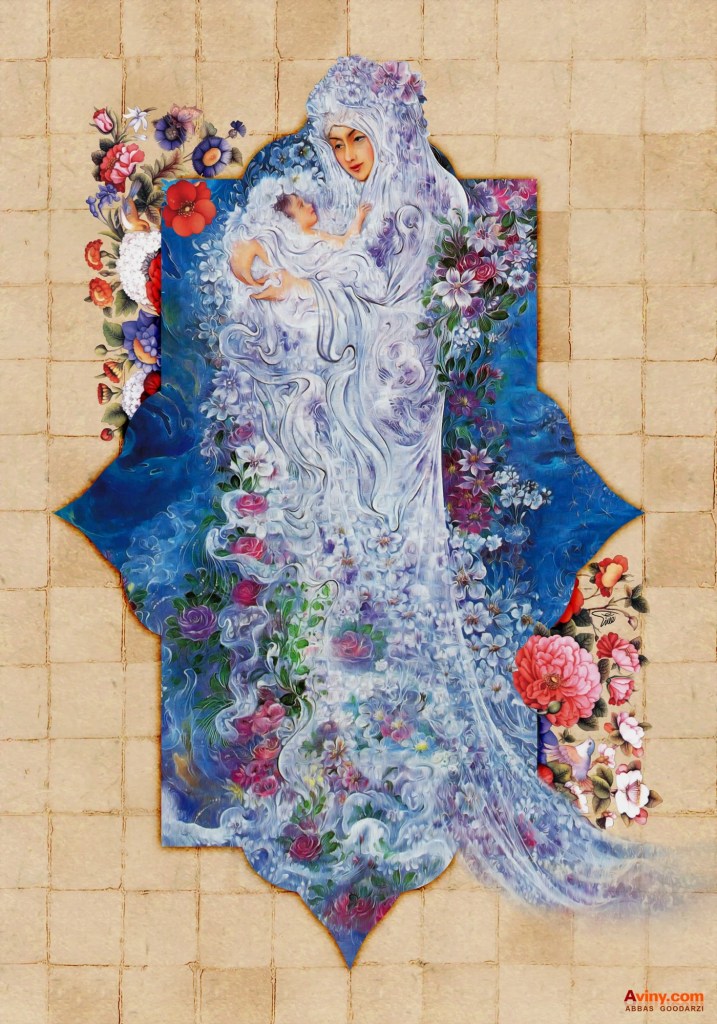
A Mother’s Day Reflection: Honoring the Women Who Shape Us

In Islam, there is no designated day to honor mothers —because every day is a day for mothers. The status of a mother is held so high that the Prophet ﷺ emphasized her three times over the father when asked who is most deserving of respect. And yet, in the world we live in, life moves so fast. Responsibilities pile up, struggles weigh us down, and gratitude—though present—can sometimes be unspoken, lost in the noise of daily survival.

This is why, even as a Muslim, I still allow and encourage my children to celebrate Mother’s Day. Because my children are not Muslim, and there is no compulsion in religion. But beyond that, I want them to carry a deep respect for women, to recognize the weight of motherhood, and to honor the role that women play—not just in their own lives, but in the world as a whole.

Allah has given women a sacred trust, a divine responsibility. We are the vessels through which He brings life into this world. It is not our creation—it is His. And yet, He has chosen us to carry it, to nurture it, to protect it, and to bring it forth into existence. There is no greater trust than this. It is an honor, but it also carries a profound weight. Because carrying life is only the beginning.

Motherhood does not end in labor; it is a lifelong journey. Mothers are the foundation of families, the unseen force that keeps everything together. Even in households where a father is present, it is so often the mother who carries the emotional and mental weight, the one who ensures that love, guidance, and stability remain. And for those of us who walk this path alone, the weight is even heavier.

As a single mother, I know the sacrifices that come with raising children on your own. The late nights, the silent tears, the constant questioning of whether you are enough. It is a relentless role, but it is also one filled with immeasurable love. And for that, single mothers deserve to be seen, to be acknowledged, to be celebrated.

While I do not believe that love, gratitude, and respect should be confined to a single day, I also recognize the beauty of taking a moment to pause, to express appreciation, to say the things that often go unsaid. Mother’s Day, in that sense, is not just a day for mothers—it is a reminder for all of us. A reminder to reflect, to give thanks, and to teach the next generation the importance of honoring the women who have shaped them.

And in Islam, we have some of the greatest examples of women who embodied strength, sacrifice, and unwavering faith.

Khadijah bint Khuwaylid (RA), the first wife of the Prophet ﷺ, was not just his partner but his greatest supporter. She was a successful businesswoman, a mother.

Fatimah (RA), the daughter of the Prophet ﷺ, was known for her purity, her devotion, and her deep love for her father. She endured hardship, yet she remained steadfast in her faith and her role as a mother. She raised the grandsons of the Prophet, Hasan and Husayn (RA), ensuring the legacy of Islam continued.

And Zainab (RA), the granddaughter of the Prophet ﷺ, is a testament to resilience. She bore witness to the tragedy of Karbala, yet she stood firm, carrying forward the truth of what had happened, refusing to let oppression silence her and yet all she saw was beauty.

These women were not just mothers in the biological sense; they were pillars of faith, strength, and wisdom. Their stories remind us that motherhood is more than just bearing children—it is about nurturing, guiding, and standing firm in love and truth.

I still take this day to celebrate my own mother, to thank her for all she has done. Because life is busy, and sometimes, in the midst of our own struggles and tests, we forget to say the words that matter. This day serves as a small but important moment to do just that.

So to all the mothers, in every form—those raising children, those who have lost children, those who mother in ways beyond biology—you are seen. You are valued. And you are loved.

May we never forget the strength, the sacrifice, and the immeasurable love that mothers give. And may we raise children who recognize, respect, and honor that love—not just today, but every day

The Illusion of a Good Character

Islam teaches us to conceal our past sins because Allah is the Most Merciful, and when we repent sincerely, He forgives.

But when those sins are not in the past—when they are patterns we continue to uphold, behaviors we refuse to correct, and lies we maintain—then they are no longer hidden sins; they are an active deception. And deception is a sin in itself.

The Illusion of a Good Character is one that needs highlighting in our communities from tik tok sheiks to speakers corner wanna be’s and in particular dating apps specifically for Muslims.

A person can wear the mask of good character (akhlaq), quoting hadith, speaking of sincerity, and pretending to have righteous intentions. But if, beneath that, they are manipulative, deceitful, and self-serving, then they are not hiding sins—they are living in hypocrisy. Allah says in the Qur’an:

“They seek to deceive Allah and those who believe, but they deceive none except themselves, yet they do not realize it.” (Surah Al-Baqarah 2:9)

The true sin is not in a past mistake that was left behind—it is in the continuous choice to uphold dishonesty. And when people discover this, they have every right to walk away. Trust is built on truth, and once that truth is shattered, it is rarely repaired.

The Consequence of Living a Lie is something that is often dismissed I’ve noticed, with the application of “only Allah can judge and forgive me” this statement seems to be used as a sweeping statement to excuse bad behaviour and to not have self accountability.

Whilst Allah is all forgiving, he has also given every person the right to make informed choices about who they allow into their lives. Yet breaking ties is also looked down upon often without our communities also so where is the line ?

Often I see many forgetting or choosing to overlook the point that If someone presents a false version of themselves, manipulating others into trusting them, they are committing ghish (deception), which the Prophet ﷺ warned against:

“Whoever deceives us is not one of us.” (Sahih Muslim 101)

The problem is not that their past sins have been exposed. The problem is that they were never truly left behind. And when a person repeatedly chooses dishonesty, they should not be surprised when others choose to leave.

In the end, there is no righteousness in maintaining a false image. True honor lies in sincerity, in repenting not just to Allah but in striving to be a better person. Pretending to be righteous does not make one righteous—only true effort and sincerity do. and this is where the Noor will shine through your face to the world