Not a religious blog just a revert and her struggles
Author: Talia Noa
I write about faith, growth, and navigating both struggle and guidance on this journey—sharing my personal experiences, not as a scholar, but as someone learning and growing along the way
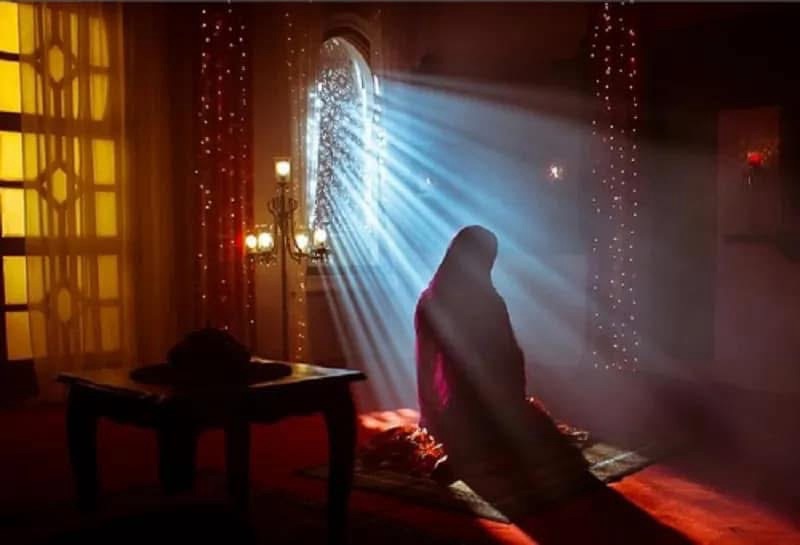
In the stillness of the early morning, when the world remains hushed in slumber, I kneel in prayer, tears welling in my eyes—each one reflecting the love and compassion Allah showers upon me. The blessed month of Ramadan magnifies these moments, making them more than mere rituals; they become intimate conversations with my Creator, where my heart is laid bare, and my soul is gently cradled in His mercy.
With each tear that falls, I feel the burdens of my heart lightening, as if they are being washed away by the very grace I seek. My soul softens, opening wider to receive His divine presence, and in that quiet surrender, I find a peace that words cannot capture. It is a peace born of knowing that no matter how flawed I am, no matter how much I stumble, Allah’s mercy is always within reach, His love always encompassing.
I find myself looking forward to these early mornings and silent nights with an indescribable joy. They are sacred pauses in the rhythm of life, moments where the noise of the world fades, and all that remains is my heart in communion with the Divine. It is in this darkness, illuminated by faith, that I find my true light—the reassurance that I am seen, heard, and loved beyond measure.
And as my soul fills with His love, I feel a gentle urge to extend it—to be kinder, more patient, more compassionate, not only with myself but with all of His creation. In these quiet hours, I am reminded that just as Allah bestows mercy upon me, I am called to reflect that mercy in the world. It is a love that does not hoard but overflows, a kindness that multiplies when given away.
So, I cherish these moments—before dawn breaks and before the night fades—because in them, I find the truest essence of Ramadan: a time of reflection, renewal, and a love so vast that it transforms my heart, one whispered prayer at a time.
The morning is quiet, though my mind is already racing with the tasks of the day ahead. The pull of responsibilities is strong—children to care for, things to organize, a never-ending to-do list. But before the world fully wakes up, I pause. I breathe. I remind myself that this day, like every day, is not just about getting through it. It is about how I move through it. With intention. With awareness. With Ihsaan.
This morning, I find myself tending to the small things—tidying up unnoticed, preparing something for someone who may never even realize it was me, offering a kind word without expecting one in return. None of these actions are grand or extraordinary. And yet, they matter. Because as I do them, I remind myself: Allah sees me doing them. And that alone is enough.
That is Ihsaan—the state of worshipping Allah as though I see Him, and though I cannot see Him, knowing with certainty that He sees me. It is not just in the moments of prayer or fasting, but in the way I speak, the way I give, the way I serve, the way I carry myself when no one else is watching. It is in the fine details, the quiet sincerity of doing something purely for the sake of Allah.
And this is born from Taqwa—God-consciousness, the awareness that this life is temporary, that the Akhirah is permanent, that every deed I do is a provision I carry with me for the journey ahead. Taqwa puts me on the road to Allah, but Ihsaan makes me stop and gather what I need to take with me. It is not just about performing deeds, but performing them with excellence, with sincerity, with love.
And yet, I know that perfection is not mine to reach. It belongs to Allah alone. I will falter. I will have moments where I am not as present as I should be, where my efforts fall short where I feel totally overwhelmed and unappreciated but I am human I will never be perfect so instead I remind myself that even in the yearning to be better, there is reward. Even in striving, even in longing to be closer to Him, there is grace.
So today, I move through my morning with that consciousness. Not seeking thanks, not waiting for recognition, but knowing that every small action, every quiet kindness, is seen by the One who matters most. Because in the end, that is what truly remains—not the praise of people, not the fleeting moments of this dunya, but the sincerity of our intentions with Allah. And intentions with Him are never, ever wasted.
This morning, I ask myself: How am I practicing Ihsaan right now? And in this moment, the answer is simple—by being fully present, by doing the small things with love, and by knowing that in every act, I am seen. Alhamdulillah for the chance to strive, to serve, and to draw closer to Him, one quiet deed at a time.
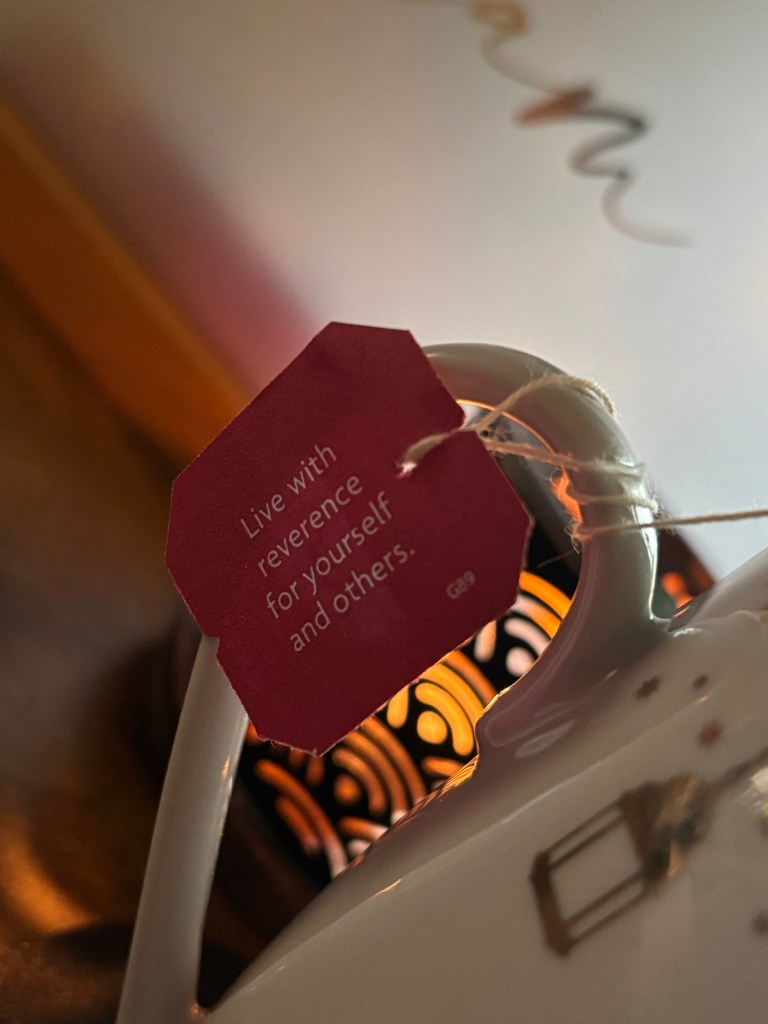
Early morning, as I sat drinking my rose tea, I noticed the small tag on the teabag. It read: “Live with reverence for yourself and others.” A simple message, yet one that instantly reminded me of Ihsaan.
Ihsaan is to worship Allah as though you see Him, and though you cannot see Him, to know with certainty that He sees you. It is to move through life with excellence—not just in our worship, but in how we treat ourselves and those around us. To live with reverence, with honor, with kindness, not because the world is watching, but because Allah is.
Even in something as small as making tea, there is an opportunity for Ihsaan. To begin with Bismillah, to express gratitude for the warmth in my hands, to pause and reflect instead of rushing into the day. Ihsaan transforms the ordinary into worship, the mundane into something meaningful.
Because at its heart, Ihsaan is about presence. In our prayers, in our words, in our smallest actions. And this morning, with my cup of tea in hand, I am reminded that nothing is ever truly small when it is done with consciousness of Allah.
Yesterday, I wrote about my choice to remain single. I wrote about responsibility, about my children, about trust—about how I cannot take marriage lightly because the weight of that decision is not just mine to bear. I wrote with certainty, with conviction, because I know my reasons. And yet, today, I find myself sitting with something much harder to put into words—the part that makes this choice difficult. The part that makes this decision something I carry, rather than something I simply walk away from.
Because what happens when feelings come into it? When Allah places something—or someone—on your heart? What happens when, despite every logical reason to guard yourself, to keep your life as it is, your heart does something else entirely?
This is where trust is tested. Not trust in another person, but trust in Allah. Trust in His plan, in His decree. Because the truth is, I am not unsure because of how I feel. I am unsure because I know what I have written before: that marriage, in Islam, is not about slow discovery. It is about stepping in with faith, with hope, with the best of intentions—but it is also about risk. And risk is something I cannot afford when my children are involved.
So, where do I place these feelings? How do I hold them without letting them consume me, without them shaking the foundations of the certainty I had yesterday? The answer, I know, is in surrender. In stepping back, in letting go of the illusion that I have to figure it all out myself. If something is meant for me, it will come. And if it is not, I ask Allah to remove it from me, and me from it.
Because what is written will unfold in its time—without being forced or rushed. Love, companionship, and marriage are not things to chase. They are not things to grasp at in fear of losing them. And when something feels forced, when it moves faster than the heart has space to process, when it demands urgency rather than trust—that in itself can be the alarm bell that it is not meant to be. Because what is truly written by Allah does not need to be forced into existence; it will unfold in its own time, in His time.
So today, I make this du’a:
“O Allah, if this person is not written for me, remove them from my heart and remove me from theirs. Do not let my heart be attached to what is not good for me. Replace what is not meant for me with what is better, and grant me peace and contentment with Your decree.”
And in this du’a, there is my answer. Whatever is written will come. And whatever is not, I trust will be replaced with something far better—whether that is love, or simply the peace of a heart fully content with what is.
Ramadan is not just about fasting from food and drink—it is about drawing closer to Allah, about cleansing the heart, about remembering Him in every breath, in every moment. And what better way to do that than through Dhikr?
In a world that constantly pulls us in different directions, Dhikr is an anchor. It is a reminder that no matter what is happening around us, no matter how fast life moves, we can always return to Allah with the simplest of words: SubhanAllah, Alhamdulillah, La ilaha illa Allah, Allahu Akbar.
Ramadan is fleeting. We count the days down from the moment we see the moon, aware of how quickly it will pass. But Dhikr keeps us present. It is a moment of pause, of reflection, of realignment. It softens the heart, purifies the soul, and brings peace in a way that nothing else can.
And the beauty of Dhikr is that it is for everyone. Whether you are fasting or unable to fast, whether you are strong in prayer or struggling, whether your heart is light or heavy—there is always space for Dhikr. There is always space to call upon Allah, to whisper His name, to seek His mercy.
“Remember Me, and I will remember you.” (Qur’an 2:152)
This Ramadan, let Dhikr be your refuge. Let it be your comfort in moments of exhaustion, your strength in moments of weakness, and your way of carrying the spirit of Ramadan beyond this month. Because in the end, it is not about how much we do, but how much we remember Him in all that we do.
There was a time when life felt unbearably heavy—when pain, loss, and confusion clouded everything. I have walked through darkness, carrying wounds that felt too deep to heal, experiencing things that left their mark on my heart. And yet, even in those moments, Allah was guiding me toward something greater. The best thing that ever happened to me was being chosen by Him to find Islam. In a world that felt chaotic, Islam became my refuge, my anchor, my light.
Astaghfirullah for all the times I have been ungrateful—for the moments I failed to see the blessings in front of me, for the times I focused on what was missing instead of what was abundant. The things we take for granted—health, shelter, loved ones—are the very things someone else is desperately praying for. Even at my lowest, I have more to be thankful for than to despair over. Alhamdulillah for everything.
This Ramadan, my reflections have deepened through the words I have written. Journaling has given me a renewed sense of purpose, a way to share the beauty of Islam, to extend light to others in a way I never expected. The messages I have received—from reverts who say my words have helped them make sense of things, from those unable to fast who have found a new perspective on Ramadan—have touched me deeply. Knowing that my reflections have resonated, that they have brought comfort, understanding, and hope to others, has been one of the greatest blessings of this month.
I reflect not just on gratitude but on the kind of person I want to be. Islam has taught me calmness, patience, and trust in Allah’s plan. I no longer want to live in frustration, sadness, or agitation. My heart seeks peace, my soul craves stillness. I want to approach every moment—every trial, every blessing—with grace and composure. A life of slow living, of being unbothered by what does not serve me, of surrendering my worries to Allah.
And as I embrace this peace, I realize something others have seen in me before I even noticed it myself. The Noor, the light I carry in my heart, shines through my face. People have told me they see something different, something radiant. I never fully understood what they meant—until now.
This Ramadan, I feel it. That light is the reflection of my faith, of the love and peace I have found in Allah. To know that what I feel inside is visible to others, that my heart’s transformation is written across my face, touches me in a way I cannot describe.
But this Noor is not just for me. This light, this peace, this purpose—I want to share it. I want to pour it into something meaningful, to use what I have been given to uplift, support, and help others. Because what good is a heart filled with light if it does not brighten the path for those who are still searching?
This is my Ramadan renewal: to live in gratitude, to embody peace, and to share the beauty of faith with those who need it most.
Someone asked me the other day why I’m still single as a Muslim . It wasn’t a new question. In fact, it’s one I’ve been asked many times, often accompanied by well-meaning advice:
Marriage is half your deen. Marry for the sake of Allah.
But what does that really mean? I have reflected on this deeply, not just in passing, but in the quiet of my nights, in my moments of solitude, and in the depths of my responsibilities.
It’s not that I can’t get married. It’s that I’m choosing not to.
There are many reasons why. One of the most profound is the responsibility I carry—the responsibility of raising truly special children. Autism is not a passing phase. It is not something that can be set aside or accommodated in a way that does not fundamentally alter the way life is lived. Actually, autism changes your life and the way you live. It shapes your routines, your priorities, the very rhythm of your days. And while I do not regret a single moment of this journey, I also did not sign up for it. None of us do.
Yet, here I am, entrusted by Allah with this path. And when you have been given such a trust, every decision must be weighed against it.
Bringing someone else into this dynamic is not a decision I take lightly. It is not a matter of simply wanting companionship or the security of a partner. It is about trust. How can I trust that someone will stand beside me and truly understand the weight of this life, when they have never lived it? How can I trust that they will love my children not as an extension of me, but for who they are—fully, deeply, and without condition? Because anything less is not enough.
The reality is, many women enter Islamic marriages with hope, only to find themselves trapped in circumstances they never foresaw. I read their stories every day—women who thought they knew their husbands, only to realize too late that they had no idea what they were stepping into.
In Western culture, relationships unfold gradually; there is space to understand one another before making a lifelong commitment. But in Islam, marriage often comes first, and the discovery of one another happens after. And by then, it is often too late.
I will not take that risk—not for myself, and certainly not for my children.
It is not that I reject marriage or I don’t trust the will of Allah. In fact, I would love to be in a supportive, loving partnership. I would love for my children to witness a healthy, happy marriage, to see what mutual respect and devotion look like. But at what cost?
If the risk outweighs the reward, if the uncertainty is too great, then is it not a greater act of love to remain as we are?
And so, I choose differently. I choose my children. I choose the responsibility that Allah has placed in my hands. I choose the role that I have been given, not out of resignation, but out of acceptance, out of love, out of the certainty that this is where I am meant to be.
To many, it may seem like a lonely choice. But I am not alone. One of my most favorite surah in the Qur’an, one that I repeat to myself every single day, is:
“Indeed, my Lord is with me; He will guide me through.” (Qur’an 26:62)
If I have Allah, how can I ever be alone? My comfort is in Him. My strength is in Him. And my certainty is in the fact that no matter what path I walk, He is walking it with me.
My soul belongs to Allah. Perhaps it was written for someone else too, but only Allah knows that which we do not.
“And they plan, but Allah plans. And Allah is the best of planners.” (Qur’an 8:30)
If my soul was written to be joined with another, then it will happen in its time, or in another life, or not at all. And I am at peace with that.
And if I am blessed with love in this life, then he would have to be one of the most compassionate, understanding, patient men to ever be blessed with. A man who sees the responsibility I carry and does not see it as a burden, but as an honor. A man whose kindness is unwavering, whose faith is deep, and whose presence brings ease, not hardship. Alhamdulillah—if such a love is written for me, then I will welcome it with gratitude. And if it is not, then Alhamdulillah still, for Allah is the best of planners, and He does not withhold except to give in greater measure.
Rumi once said;
“Try not to resist the changes that come your way. Instead, let life live through you.” This is where I am. This is the path Allah has given me. And if marriage is a door that remains closed, then I will walk the path that is open, with full conviction, with full trust in my Creator.
People may not understand. They may wonder, they may ask, they may assume. But the answer is simple: My children were entrusted to me by Allah, and I will not take that trust lightly. My life belongs to Him, and so does my choice.
And if I am blessed with love in this life, then Alhamdulillah. And if I am blessed only with the love of Allah and the love of my children, then Alhamdulillah still.
I woke later than usual this morning for Fajr, I’d had an awful night in pain and waking every ten minutes after I prayed tahajjud.
I had missed the adhan. Guilt ridden I rushed downstairs to make Wudu, trying desperately not to wake the entire house. I managed to fall and trip more times then I can count making so much noise.
Something’s different this Ramadan, there’s a sense of urgency like when your late for the train running desperately to reach it, that was me trying to reach Fajr before it was too late.
After I prayed i stayed longer than usual on my prayer mat and then it hit me….
We can leave this world at any given moment. There is no guarantee of tomorrow.
“Every soul will taste death. Then to Us will you be returned.” (Qur’an 29:57)
This life is fleeting, and the days we count are not just the days of Ramadan, but the days of our existence—ticking away toward an unknown but inevitable end. We spend so much of life focused on time and days such as counting the days of Ramadan from the first moon to the last, preparing for the last ten and then finally Eid but The real question is: how prepared are we? How prepared are we for OUR final day ?
If we are granted another day, it is not just another number in the calendar; it is another opportunity to seek Allah, to purify our intentions, and to strengthen our Salah. But that doesn’t mean it’s always easy. Sometimes, waking for Fajr feels difficult—when the night is long, when sleep is heavy, when exhaustion from work, young children, or ill health weighs on us. And yet, Allah is Al-Ghaffar, The Constantly Forgiving. He does not judge us by who we were yesterday, but by who we are today.
“And establish prayer and give zakah, and whatever good you put forward for yourselves—you will find it with Allah. Indeed, Allah sees what you do.” (Qur’an 2:110)
Yesterday, we may have missed a prayer. We may have been late. We may have lost focus. But that was yesterday. Today is what matters. Today is the first day, the day we stand before Him seeking forgiveness and renewal.
“And turn to Allah in repentance, all of you, O believers, that you might succeed.” (Qur’an 24:31)
Even in our struggles, whether through exhaustion or illness, Allah’s mercy is vast. He sees our effort, our yearning, our intention. He does not ask for perfection, only sincerity. And His promise is clear:
“Whoever comes to Me walking, I will go to him running.” (Hadith Qudsi, Sahih Muslim)
If we wake up tomorrow, it will not be a mere continuation of life, but a renewed blessing, a chance to bow before our Creator again, to whisper our duas in sujood, to seek forgiveness, and to realign our hearts with Allah’s mercy. Every breath is an opportunity; every Salah is a gift. May we not take them for granted.
“So be patient. Indeed, the promise of Allah is truth, and let not those who are uncertain disquiet you.” (Qur’an 30:60)
If today is all we have, If you have found yourself straying from the path then let today be the day you turn to Allah wholeheartedly and begin preparing for your last day.
Ya Allah, in the stillness of this night, I come to You—tired, restless, yearning for peace. The world is quiet, but my mind is loud. My thoughts circle endlessly, carrying worries I cannot control, fears I cannot silence, and regrets I cannot change. Ya Rabb, I lay them before You now.
I am weary of overthinking, of holding onto burdens that only You can carry. I do not want to live imprisoned by my own mind, restless even in moments of stillness. Ya Allah, soothe the storm within me. Quiet the chaos in my heart. Replace my anxiety with trust, my fear with faith, my uncertainty with the peace of knowing that You are in control.
Ya Rahman, You see what weighs on me, even when I do not speak it aloud. You know the pain I hide, the battles I fight, the silent prayers I whisper when no one else is listening. Tonight, I leave it all with You. I surrender, not in defeat, but in trust. I do not need all the answers—I only need to know that You are near.
Ya Rabb, as I bow before You in this sacred hour, I ask You to calm my restless heart. Grant me the kind of peace that only comes from You. When my mind is unsettled, remind me to turn to You. When my heart aches, remind me that You are the Healer. When I feel lost, guide me back to You.
Ya Allah, let me wake with a heart unburdened, with a soul at ease, with a mind that trusts in Your divine plan. And if peace is written for me, let it be a peace that draws me closer to You.
Today, I am reminded that no storm lasts forever. Even when the skies are heavy, when my heart feels weary, and when the weight of it all seems too much—Allah is near. He sees the silent struggles, the quiet strength, the moments no one else notices.
Strength isn’t always grand or visible. Sometimes, it’s in the way I wake up despite the exhaustion, trusting that Allah will give me the energy to face another day. It’s in the way I smile, even when my heart aches, believing that He is the healer of all wounds. It’s in the way I keep showing up, even when everything inside me wants to retreat—knowing that Allah never burdens a soul beyond what it can bear.
Strength is not just in standing tall, in winning battles, or in moving mountains. Sometimes, it is soft. It is the whispered du’a in the middle of the night, the quiet patience when things don’t make sense, the decision to try again despite the fear. It is choosing to believe in Allah’s mercy, even when the path ahead seems unclear.
So today, I remind myself not to doubt. Allah has carried me through every hardship, every heartbreak, every moment I thought I wouldn’t survive. And yet, here I am. Still standing. Still hoping. Still trusting.
That is strength. And it was never just mine—it was always from Him.



 Seeking Sakina