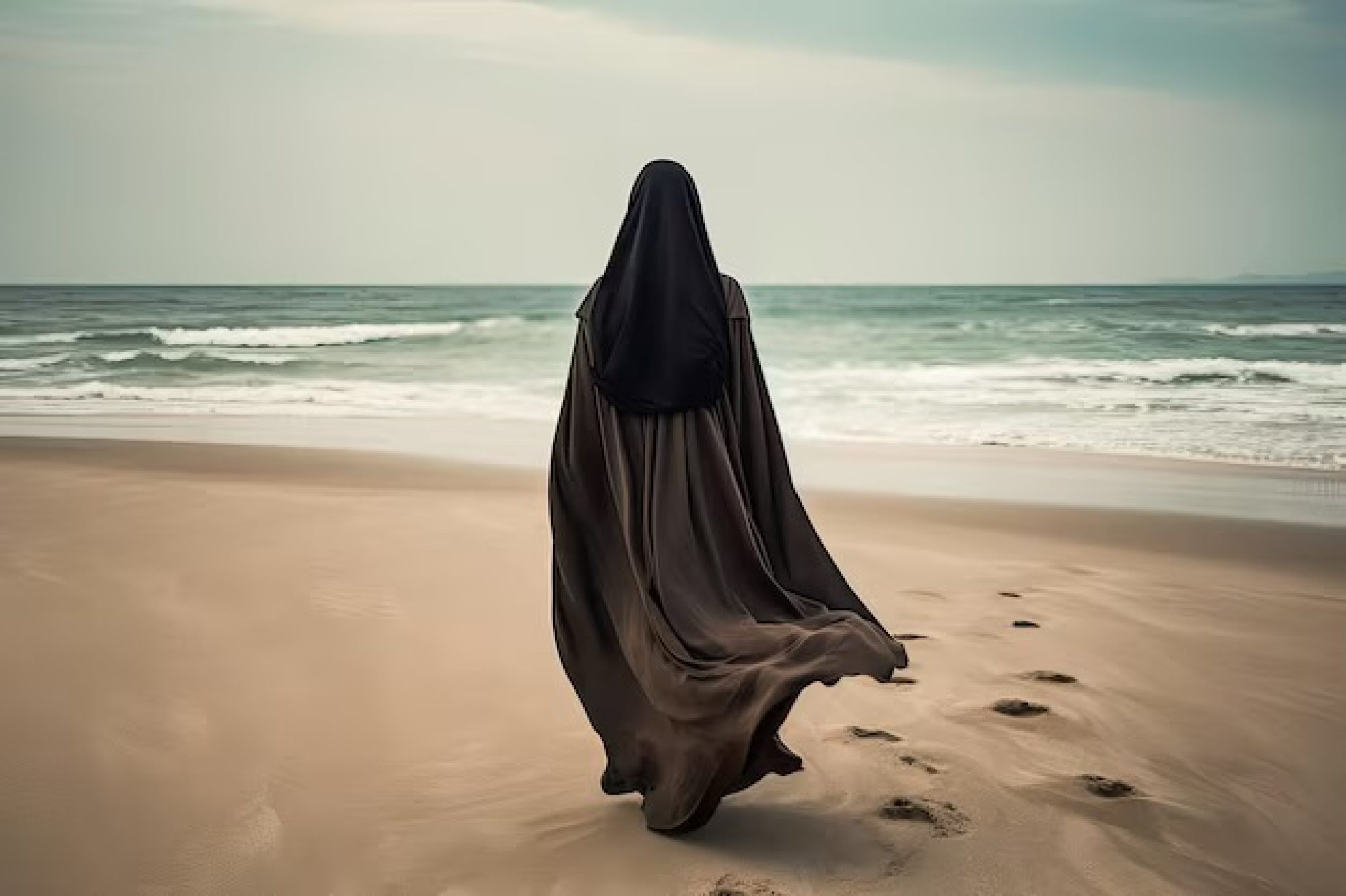
There is a quiet pull toward the niqab that doesn’t always begin with certainty. It doesn’t arrive fully formed with clear answers or neat reasoning. Sometimes, it begins as a feeling—persistent, gentle, and difficult to explain.
And the questions come:
Do I really understand this? Am I missing something?
Is it extreme? Is it unnecessary? Is it oppressive?
What will people think when I walk outside?
Will I be judged, stared at, misunderstood?
Am I putting myself in danger? Are my children safe beside me?
These questions are real and weighty, shaped by a world that often frames the niqab as restrictive, something imposed, something to be feared. But beneath all that noise, there is something else—a quieter truth.
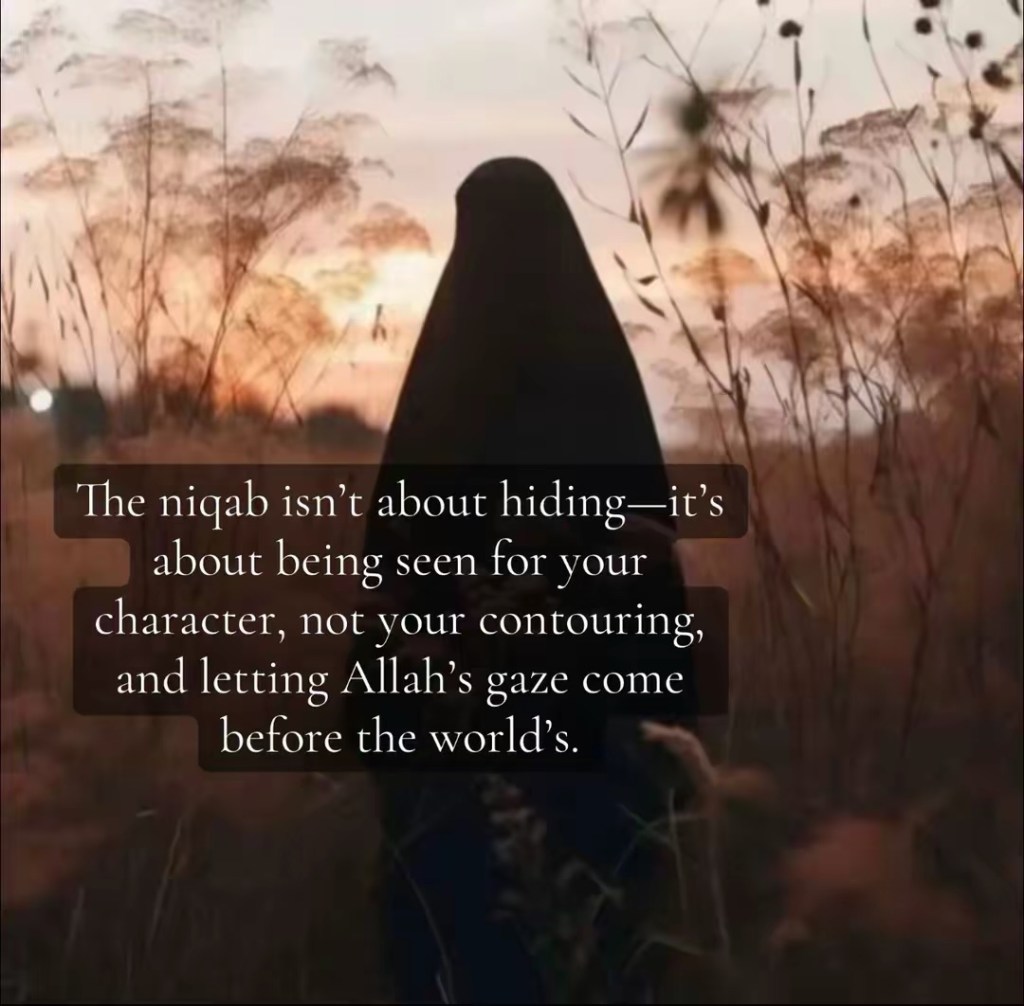
Because wearing the niqab does not feel like hiding. It is not about disappearing into the background, stepping out of sight, or erasing oneself. It is about being seen differently. It is about choosing the lens through which the world encounters you.
You want to be perceived for your character, not your contouring.
This distinction matters. Hiding is born from fear or shame. It carries the weight of withdrawal, a desire to escape observation. But covering, as an intentional act of devotion, is different. It is choice. It is intention. It is a form of turning inward toward Allah while still being fully present outwardly.
The niqab does not remove you from being seen—if anything, it can make you more noticeable. But what shifts is the basis of that perception. Without immediate access to the face, a woman is encountered through her words, her presence, her character. The face is no longer the first introduction; intention, behavior, and essence take precedence.
And in that space, a different awareness emerges: the awareness of being seen not just by people, but by Allah. This touches directly on the concept of Ihsan—worshipping Allah as though you see Him, and if you cannot see Him, knowing that He sees you. In the presence of the veil, the social gaze softens, and the inner gaze—His gaze—becomes more central. The niqab becomes a physical reminder that the most important observation is not external approval or judgment, but the awareness of Divine sight.
The questions about safety, about perception, about societal judgment do not vanish. They coexist with the pull toward this form of devotion. But the internal shift is clear: the niqab does not erase a woman; it redirects how she is known. It is not hiding. It is covering. It is living intentionally in a space where the first encounter is with Allah, and only then with the world.
And in that quiet, intentional space, the pull toward the niqab can be understood—not purely as a rule or a requirement, but as a lived experience of being known for what truly matters: the heart, the character, the devotion.
Discover more from Seeking Sakina
Subscribe to get the latest posts sent to your email.
 Seeking Sakina