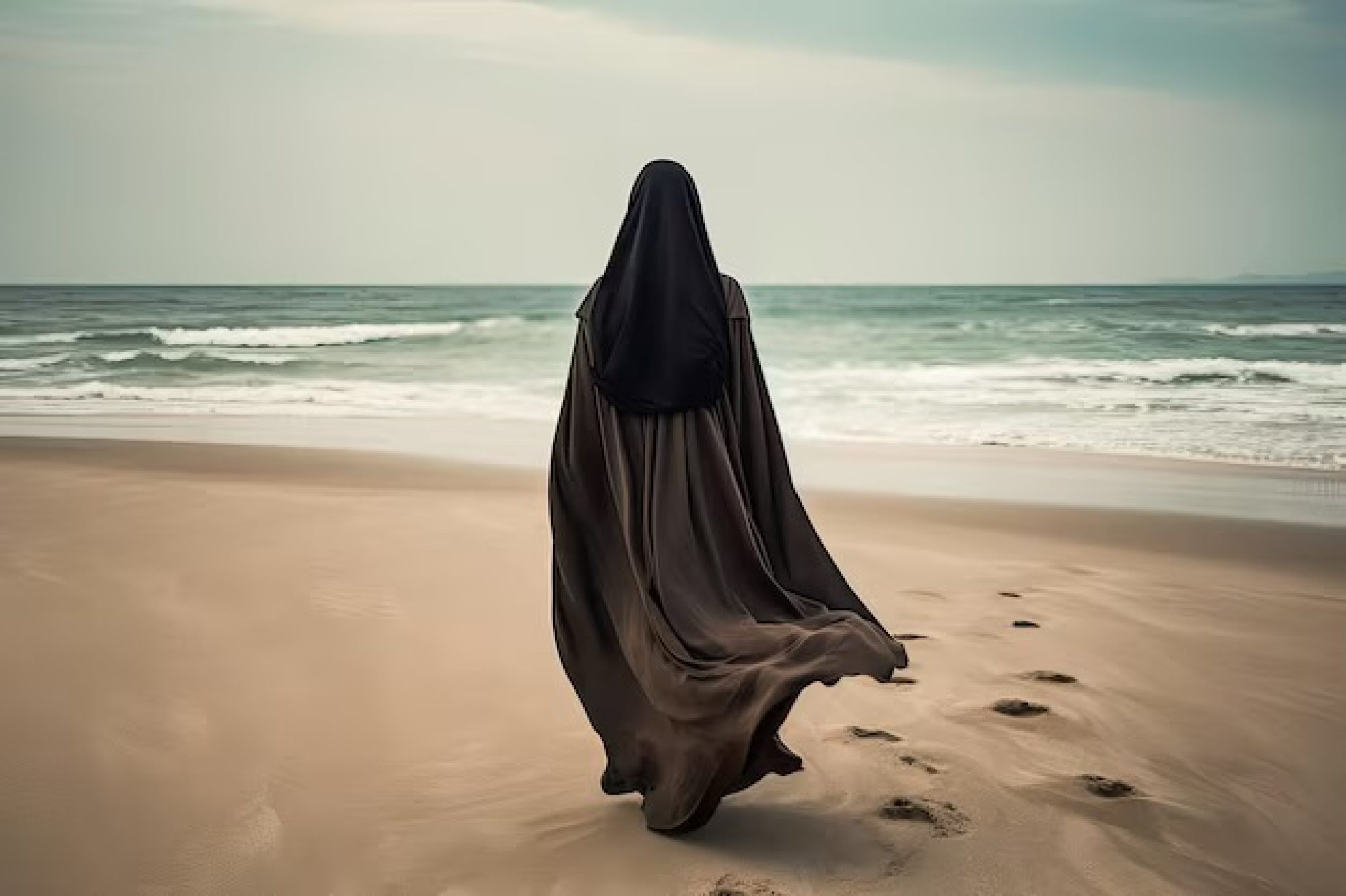

Once, feminism was simple in its promise: equality, autonomy, and the right to choose. Women should have the freedom to live, to think, to speak, and to dress as they wish — without coercion, without judgment, without interference. That was the meaning. That was the point.
But today, something has shifted. Western feminism has become a double-edged sword. It preaches liberation — loudly, performatively, selectively — but it rarely asks the people it claims to champion whether they actually want saving. It rarely asks if they feel oppressed. It rarely listens.
Take the hijab in Iran. Overnight, Western feminists scream about oppression, framing it as the ultimate symbol of female subjugation. Yet the women in Iran are not protesting the hijab as an obligation to God. They are protesting state enforcement by men, the policing of their bodies, and the criminalization of choice. Muslim women understand the hijab as a religious practice — an obligation to God, not man. The problem begins when man enforces it, and that is what Iranian women are resisting.
Even when choice is at the center, Western narratives erase it. Many Iranian women wear the hijab or niqab by choice, exercising autonomy in a society that still limits them in countless other ways. Their voices are overpowered by stories that demand oppression where it might not exist — or where it is complex, layered, and self-defined.
Meanwhile, Western feminists are silent about Palestinian women navigating occupation, surveillance, and militarized violence daily. Afghan women forced into the burqa are abstracted into hashtags, their experiences flattened into a single narrative of oppression. Worst-case scenarios are presented as universal, as if they define the lives of all women in a country. Afghan women in regions not under Taliban control, or Muslim women choosing to wear the hijab as a matter of faith, are erased. Hijab-wearing women are portrayed as universally oppressed, when in fact many understand it as a religious obligation to God — a choice, not submission to men.
Closer to home, in Europe, women who choose to wear the burqa or niqab are vilified, legally restricted, and socially shamed. Where is their freedom of choice? Where are the feminist voices defending them? Choice, it seems, only matters when it fits a preferred narrative. Western feminism assumes its standards — nakedness, hypersexualized visibility, rebellion, and indulgence — are the universal measure of liberation, erasing the autonomy of women who choose modesty, privacy, or observance of faith.
Worse still, freedom has been reduced to exposure and excess. Liberation is celebrated as being naked, hypersexualized, publicly performing private acts, drinking, taking drugs, rebelling without restraint. Modesty, self-restraint, and moral accountability are dismissed as oppression, while indulgence and exhibition are glorified as liberation. Freedom without discipline, autonomy without responsibility, becomes a rebellion that mirrors a perpetual teenager screaming against authority. True freedom is not measured by exposure or indulgence; it is the ability to choose what to reveal, how to act, and how to move through the world with integrity.
This is the hypocrisy: feminism now screams for liberation in places it can romanticize, moralize, and perform for, but ignores the autonomy of women who make different choices. Feminism has become a theatre of judgment, not a movement for equality. It has lost its meaning — it has lost the principle that made it radical: the right of every woman to decide for herself.
The niqab, the hijab, the veil — whatever you call it — is a double-edged act. A woman who sees but cannot be seen frustrates the coloniser, asserts power quietly, and preserves her own autonomy. That choice is real freedom. Western moralizing, hashtags, and performative outrage? That is not freedom. That is hypocrisy.
Feminism should be about listening before screaming. About supporting before judging. About amplifying voices, not replacing them. About teaching women how to own themselves, not how to expose themselves or indulge without boundaries. About recognizing that autonomy, modesty, and faith are choices too. The movement that once demanded equality must return to its first principle: women must have the right to choose — even if their choices don’t fit your narrative of liberation. Anything less is not feminism — it is colonialism dressed as concern.
Discover more from Seeking Sakina
Subscribe to get the latest posts sent to your email.
 Seeking Sakina