Lately, I’ve been reflecting on my relationship with the Quran, and I’ve realized just how separate I feel — not only from mainstream Islamic circles but even from what are often called “open-minded” groups. I’ve had to step back, twice now, because I’ve found myself frustrated by dynamics that distract from what really matters: understanding the Quran itself.
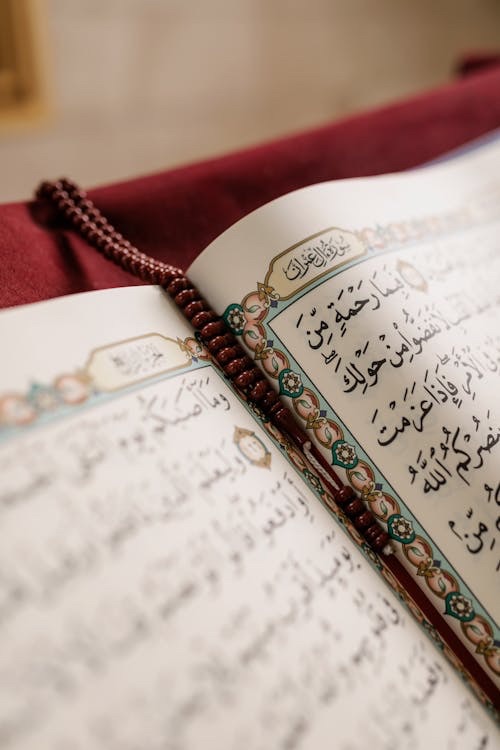
For me, the Quran has never been about memorizing exact words or perfect recitation. Arabic is beautiful, and context, tone, and nuance matter — a single word can mean very different things depending on the situation, the tone, or the surrounding words. Living abroad, I’ve seen how a single word in Arabic can shift meaning dramatically depending on context and tone. Arabic is a deeply contextual language, and even tone, emphasis, or word placement in a sentence can subtly shift meaning. For example, سَلام (salaam) can mean peace as a greeting, a state of being, or a prayer for safety; قَوِيّ (qawiyy) can mean physical strength, moral fortitude, or divine power; and علم (‘ilm) can mean knowledge, knowing, or science, depending on context. That’s why classical Arabic scholars spend years mastering fiqh of language, grammar, rhetoric, and context, not just memorizing words. Literal translations rarely capture these subtleties fully. Even someone who doesn’t speak perfect Arabic can still engage deeply with the Quran and understand its guidance, wisdom, and hidden meanings.
The Quran, for me, is a book revealed in 7th century Arabia. Some verses are deeply tied to that historical and cultural context, and they can’t always be applied literally today. But the spiritual and ethical lessons — about patience, mercy, gratitude, reflection, and justice — are timeless. These lessons can be understood, applied, and lived out now, without needing to replicate 7th-century circumstances exactly. The Quran is intentionally layered and open to interpretation, which is why it can guide different people, in different times and places, in ways that are meaningful and relevant.
I’ve watched people debate pronunciation and correct each other, often relying on internet sources that vary widely in reliability, and it exhausts me. These debates, and the posturing that comes with them, pull my attention away from the essence of the Quran and my connection with Allah. It’s not that my faith is weak — it’s that I don’t want it to be shaped by ego, competition, or endless argument. I want clarity, depth, and understanding.
I’ve facilitated and led group circles for years, so I know group dynamics well: there’s always someone trying to dominate, someone people-pleasing, someone who wants to override leadership. It’s normal, but it isn’t for me. I want to engage with the Quran on a level that informs life, society, and self-understanding — the hidden meanings, the wisdom, the guidance — and that doesn’t require debating words or performing in a certain way.
I want to arrive at Ramadan grounded, ready to meet its challenge. Ramadan tests us physically, mentally, spiritually, and emotionally — on every level. Approaching it stressed out, weighed down by debates and unnecessary tension, isn’t the way to do it. Stepping back allows me to clear the noise, focus on what truly matters, and meet this sacred month with presence, reflection, and connection.
Ultimately, the Quran is about understanding, reflection, and connection. That’s what I seek, and stepping away from the noise allows me to cultivate it.
Discover more from Seeking Sakina
Subscribe to get the latest posts sent to your email.
 Seeking Sakina