This week has felt like a series of quiet but decisive curveballs, the kind that don’t arrive loudly but still manage to change the shape of things. My perception of certain people shifted almost overnight. It wasn’t dramatic, and it wasn’t fuelled by anger or hurt; it was simply clarity. I started to see people as they are, not as I hoped they might be, not as I had framed them through patience or loyalty or benefit of the doubt. And once that shift happened, there was no struggle in stepping back. It only took one moment of seeing clearly for something I had been holding to loosen its grip entirely.
People talk about 2025 as a year of shedding, of veils lifting, of cycles closing—the year of the snake, the year of truth surfacing. I remember reading those things with disbelief, dismissing them as pattern-seeking or spiritual trend language. There was one line in particular about relationships being revealed for what they truly were, about a long cycle ending, and I remember thinking, no, not this one, not now. But clarity doesn’t ask for permission. It arrives when it arrives, and once it does, there is no unseeing it. At the same time, there was another situation I had written off entirely, assuming it belonged to some distant “next year,” only to realise that timing, like everything else, has never belonged to me.
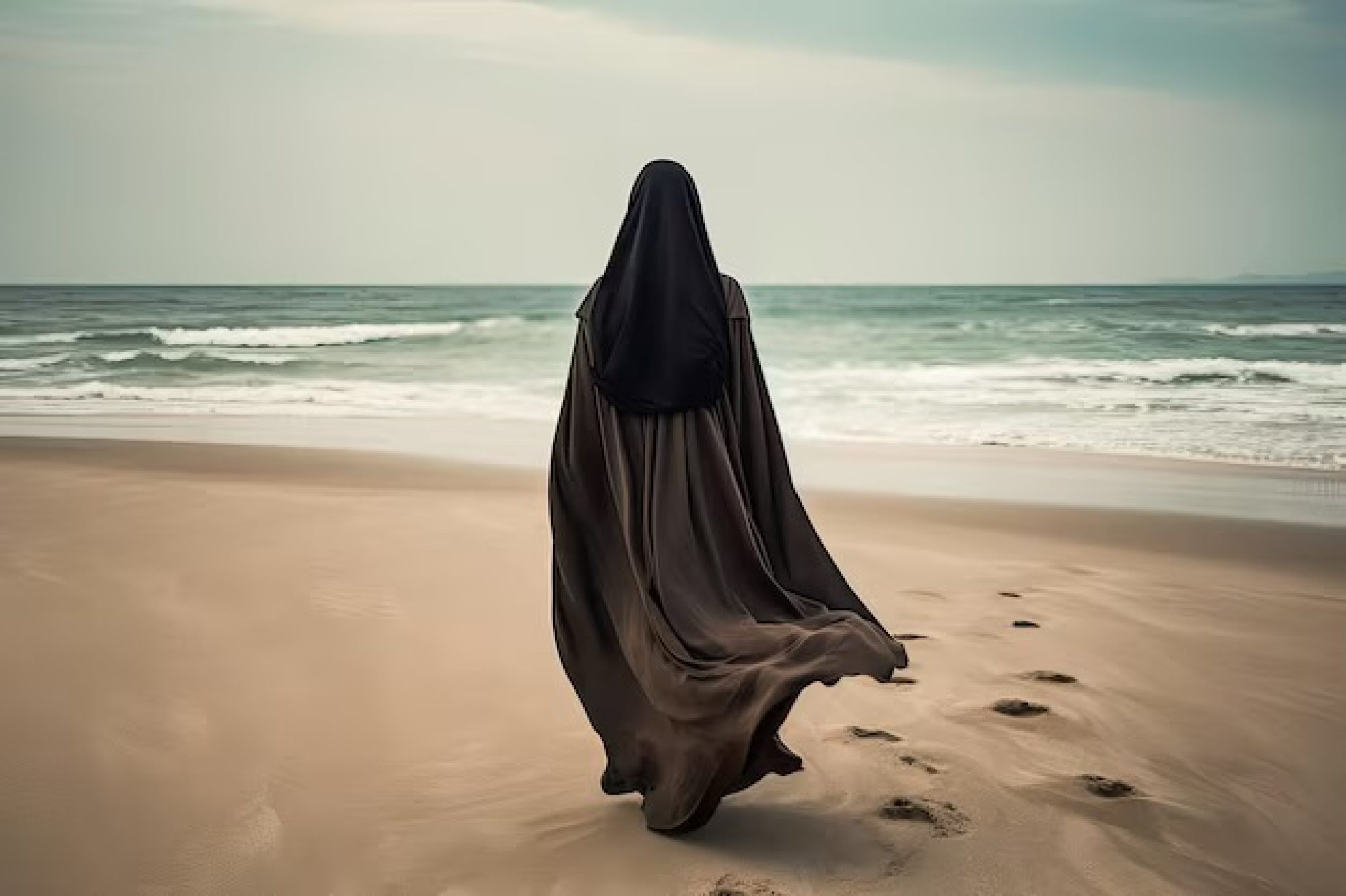
What surprises me most is not the events themselves, but where I am internally despite them. In the midst of disappointments, reversals, and uncomfortable truths, I have reached a place I used to dream about but never quite believed I’d inhabit. It isn’t enlightenment, and it isn’t numbness. It’s peace. A deep, anchored peace where what happens around me no longer disturbs my inner core. Not because I don’t care, but because I trust. Trust not in fate as randomness, not in “what will be, will be,” but in God—Allah—being fully in control. Trust that the outcome was never mine to orchestrate, only mine to walk through.
I may want things to unfold a certain way. I may believe an ending should look different, or that someone should choose differently. But everything happens for a reason, and more often than not, that reason is hidden from us. And that is where the beauty lies—not in knowing, but in trusting without knowing. In Islam, the word that comes close to this state is taqwa—not fear in the simplistic sense, but a deep God-consciousness, a reverent awareness that shapes how you move through the world. When you reach that state of trust, something else happens quietly alongside it: you begin to see people clearly. You recognise intentions before they are acted upon. You sense agendas without needing to confront them. And instead of trying to manage, correct, or save anyone, you let them walk their path.
Because it isn’t my role to guide people. The Qur’an is clear about this. “Indeed, you do not guide whom you love, but Allah guides whom He wills” (Surah Al-Qasas, 28:56). And elsewhere: “Allah guides whom He wills and misguides whom He wills” (Surah Ibrahim, 14:4). That truth removes such a heavy burden from the heart. People are not lost or found because of me. Their journeys unfold by divine decree. If someone is guided away from my life, that too is by the will of Allah. Everyone learns in their own time, and no amount of love, logic, or patience can force a lesson that isn’t ready to be received.
There’s a modern saying that people come into your life for a reason, a season, or a lesson—and while it sounds simplistic, it holds truth. Not everyone is meant to stay. Not every ending requires blame. Sometimes nothing “went wrong” at all. Sometimes it simply reached its appointed conclusion. And when you truly accept that, life becomes gentler. Loss no longer feels like failure. Distance no longer feels like rejection. It feels like alignment.
The greatest beauty is not just understanding this, but trusting it. Trusting that whatever enters your life and whatever leaves it was always meant to. Trusting that even when struggle returns—and it will, because struggle is part of being human—you now know how to find your way back to stillness. The lesson is never to avoid hardship, but to learn how not to live inside it.
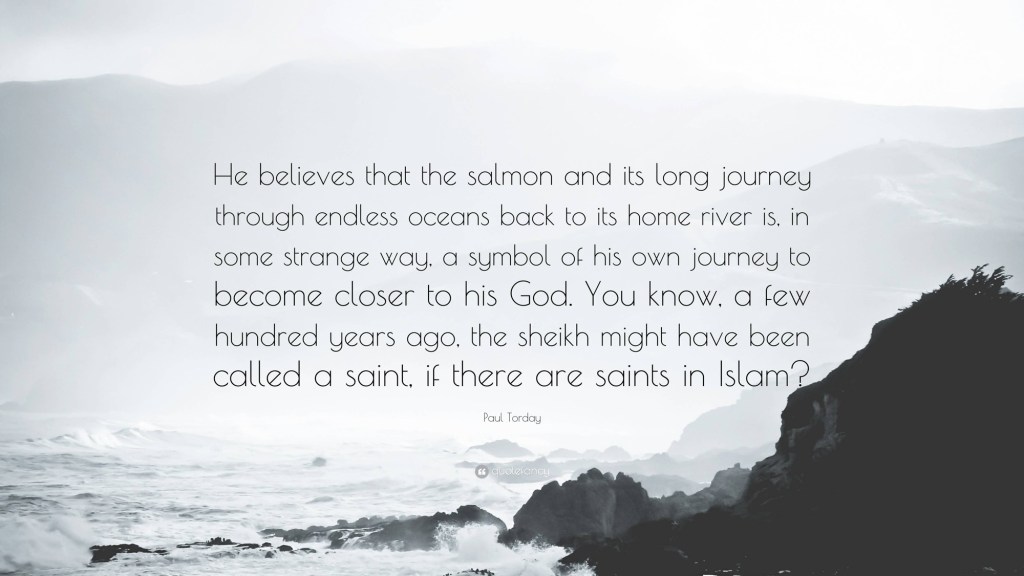
Salmon do not question why they must swim upstream, struggle against the current, fulfil their purpose, and then die. They do not resist their nature or argue with their design. It is written into their very being. And yet humans, gifted with awareness and faith, spend so much time questioning their own journey. Perhaps the question itself is the struggle. Perhaps peace begins when the questioning softens into acceptance.
Acceptance does not mean passivity. It means trust. And trust, I am learning, is the foundation of a peaceful life. A faithful life. A life that moves forward without needing to control every outcome. And I am deeply grateful to be standing in that place now, even knowing I may stumble out of it again, because I finally know the way back.
Discover more from Seeking Sakina
Subscribe to get the latest posts sent to your email.
 Seeking Sakina