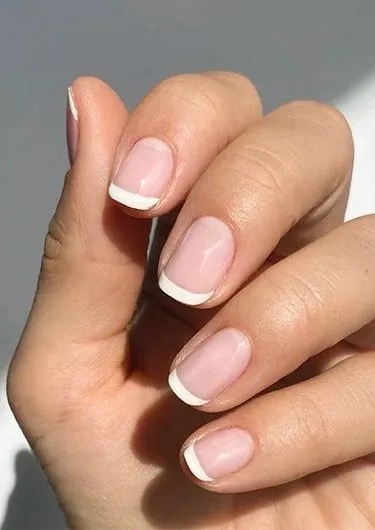
There’s something that’s been weighing on me for a long time, and I’m ready to say it out loud: I no longer believe that God rejects my prayer because I wear nail polish.
It sounds ridiculous when you say it plainly — but it’s a real thing, something Muslim women are told all the time. “Your prayer isn’t valid.” “It won’t be accepted.” “You need to remove it for wudu(ablution).” It doesn’t matter how sincere you are, how ready your heart is, or how desperately you need to stand before God — if you’ve got polish on your nails, you’re told you can’t pray.
But here’s my question: Who gets to tell me that my prayer isn’t accepted by God? They’re not God.
The more I sit with that, the more I realise how absurd it sounds. Islam teaches that God is Ar-Rahman, the Most Compassionate. Ar-Raheem, the Especially Merciful. A God who is closer to us than our own jugular vein. And yet, I’m supposed to believe that He would reject me because of a few microns of varnish?
I don’t buy it anymore.
And no — there is no verse in the Qur’an that says nail polish invalidates prayer. There is nothing in the Qur’an that even directly talks about it. All it says is to wash your face, arms, wipe your head, and wash your feet before prayer (Surah Al-Ma’idah, 5:6). That’s it. The idea that polish blocks water from reaching the nails is an interpretation — one made by male scholars in pre-modern times, long before breathable polish or the nuanced understanding of materials we have today.
But more importantly: the idea that God would dismiss a prayer because of nail polish — or makeup, or a tattoo, or anything superficial — is a human idea, not a divine one.
And let’s be honest — these rules disproportionately affect women. Men don’t have to worry about their appearance in the same way. They’re not told to scrub off a part of themselves to be worthy of prayer. This is part of a wider issue: so much of what we’ve been taught about religion came from patriarchal structures, from scholars who — though well-intentioned — never lived our lives, never had to carry the weight of being both a woman and a believer.
Some of the hadiths that people quote about cleanliness or prayer came hundreds of years after the Prophet. They were filtered through generations, through political climates, through human biases. And while there is deep wisdom in some of them, we have to be brave enough to ask: Is this really from God? Or is this from men?
Because I believe in a God who knows my heart. A God who sees me in my mess, in my struggle, in my quiet faith. A God who doesn’t need me to be scrubbed, perfect, or bare to come near Him — He just wants me to come.
And when I do? With nail polish on, mascara smudged, and life pressing hard on my shoulders?
I believe He hears me. I believe He accepts me.
And that is enough.
Discover more from Seeking Sakina
Subscribe to get the latest posts sent to your email.
 Seeking Sakina