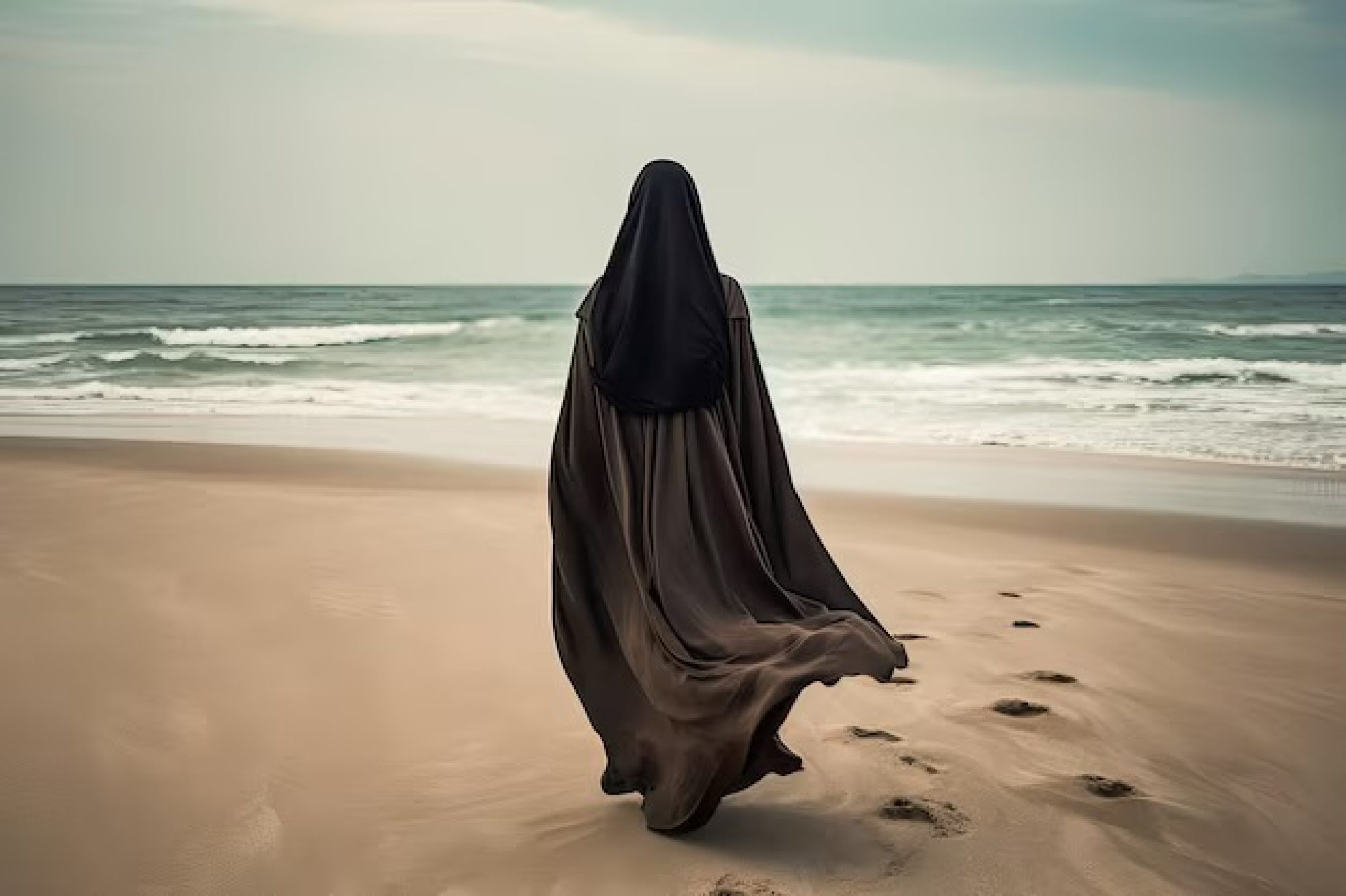

Today, I felt truly honored. A friend of over ten years reached out to me, seeking guidance about her daughter and Islam. It was a deeply humbling moment—one that made me reflect on my own journey, how far I have come, and how much Islam has transformed my life. If you had told me years ago that I would one day be a Muslim, I would have laughed.
The life I once lived—the nightlife, the wild experiences, the world I was immersed in—felt a million miles away from the path I now walk. But Allah chooses His reverts, and I have never felt that truth more deeply than in my own life.
My journey to Islam began in the quiet of my own bedroom, on my knees, in the final months of 2020, as the world was shutting down. I didn’t have a prayer mat; instead, I used a pashmina scarf spread out on the floor. I had no abayas, no proper hijabs—only the guidance of a few sisters in online groups that, sadly, no longer exist. Those sisters were my only source of community in the beginning, and I now understand just how vital support is for new reverts. I was completely alone in my faith, but I was driven by the need to pray, to connect with Allah, to find the peace I had long been searching for.
The journey hasn’t been easy. Every day I step outside in my hijab, I feel the weight of it—not just on my head, but in my identity. As a revert, the struggle with hijab is real. I still battle with it, even now. I’m not a girly girl; I would much rather throw on jeans and a big jumper than wear an abaya. But wearing hijab means owning the identity of being Muslim, and that can be daunting in today’s society. Recent events—the Southport riots, the accusations, the way the world turns to blame Muslims—have made it even harder. When I reverted, I didn’t sign up for that burden, but it became mine to carry, just as it is for every Muslim. We bear it for the sake of Allah, and we bear it together.
For a long time after reverting, I struggled with the complexities of Islam. I had entered the faith thinking it was one unified way of life, only to discover a minefield of opinions, sects, and interpretations. Like many reverts, I initially followed the Sunni path. I studied their scholars, their hadith, their way of praying. But the deeper I delved, the more unsettled I became. Certain hadiths, even those in Sahih Bukhari, did not sit right with me. I kept asking myself: Is this Islam? And if it was, why did parts of it feel so out of place?
Then I started reading about the Ahlul Bayt, the family of the Prophet (peace be upon him). I learned how they were treated after his death, the injustices they suffered at the hands of those who claimed to follow him. That was the moment of certainty for me—the stamp that sealed my heart as Shia. Once you have seen the truth, you cannot unsee it. If someone told you Saturn had no rings, but then you looked through a telescope and saw them with your own eyes, there would be no denying it. That is how I feel about being Shia.
When I read about what happened to the Prophet’s family, I knew I could never hold in high regard those who had oppressed them. There is no justification for it. None. And my iman could never be at peace until I stood firmly on the side of truth.

But Islam is not just about theology—it is about character. A person of true faith does not deceive, oppress, or harm others. The way the Ahlul Bayt were treated was the greatest betrayal of character, and that alone is proof enough for me. Good character does not harm the beloved family of the Prophet. And so, my heart found its home in the path of the Ahlul Bayt.
Now, as an older revert, I see things differently than I did when I first embraced Islam. I no longer feel the pressures that younger reverts do—the rush to marry, the fear of being alone, the overwhelming burden of fitting in. My only focus now is on my Akhira, my connection with Allah, and my personal growth in the faith.
Marriage is not a priority for me. I have seen too many sisters and brothers rush into it, only to find themselves trapped in abusive relationships under the false belief that they cannot leave. Divorce is not shameful in Islam, yet so many women are made to believe they must endure suffering in silence. I will not be one of them. I have been married before, and I know the weight of that commitment. If I ever choose marriage again, it will be because it genuinely benefits my deen and outweighs my peace that I find alone with Allah —not because of societal pressure.
One of the biggest struggles I face as a revert is holding onto my own identity. In many revert communities, there is an expectation that once you revert, your children must revert too—that you must drag them into Islam whether they are ready or not. But there is no compulsion in Islam. Allah chose me, not my children. If they come to Islam, it must be by their own free will, not because I forced it upon them. And so, my life is unconventional. My children still celebrate their own beliefs, and I support them in doing so. From the outside, it may look like I live a dual life, but this is the balance I have chosen. It is a test of my character, a test of my iman, and I pass it every single time.
Ours may not be a traditional Muslim household, but it is built on love, respect, and understanding. I remain steadfast in my faith, my sakina, and my devotion to Allah subhanahu wa ta’ala, while still allowing my children the freedom to walk their own path. And that, for me, is the ultimate testament of faith—not to force, but to lead by example.
This is my journey, my struggle, my truth. And Alhamdulillah, I wouldn’t change a thing.
Discover more from Seeking Sakina
Subscribe to get the latest posts sent to your email.
 Seeking Sakina